Picking up where I left off, before discussing the other city that I visited (Busan), I mentioned my encounter with an older local man who saw me as I was waiting for the subway to Seoul Station KTX (the fast train station).
When he first approached me, I was leery of what he wanted and where this encounter would lead. He spoke limited, broken English, but this did not seem to deter him at all. He asked me where I was from and how long I was staying there. I tried to carefully explain that I am from New York State (and not New York City). I tried to clarify this by using my fingers to trace the outline of NY State and point to where I am from. Eventually, I think he got it, but it took him a bit to understand that I was not from New York City. To be fair, I always have to clarify that I am from New York State and not New York City, as the rest of the world seems to only be aware of New York City.
When I mentioned that I would travel back to Japan, he brought up how “Japan is the enemy of Korea” and then said something about how Korea has been (or is) helping the US more than Japan. I think he was referring to it economically and militarily. Knowing a bit about Japan’s violent imperialistic past regarding China and Korea (among other places), I understood why he spoke this way (even though it was rather awkward for me). It also didn’t help that I really didn’t want to get into any long discussions about this while I was in a hurry to get to the high-speed train station (even though I had time to spare). It helped even less that he had been snacking on some kind of nut, and tiny bits of it kept firing out of his mouth while talking (one of which hit me square in the face!).
He also kept asking me what my thoughts were about Korea, and I kept trying to tell him that I hadn’t spent enough time here yet to have an opinion, but it seemed to take several repetitions of this before it sank in. I admit, I was rather impressed with his response, given his limited English vocabulary. He recognized that I still needed time to “evaluate” (his word) my time here. I thought our limited conversation was done, but alas, he followed me onto the train as it arrived. Luckily, I only had one stop to go, but it still felt like a long time for just one stop. While on the train, he spoke a bit more about Korea and Japan, I think (I honestly can’t remember now) before I arrived. I then waved goodbye to him, feeling relieved that the inquisition was now over but also rather fascinated by the whole experience. While I didn’t want it to be a long conversation, I now wish I had asked him how he learned the English that he knew (given his age) and what his experience with the outside (of Korea) world has been. Anyway, onward to Busan.
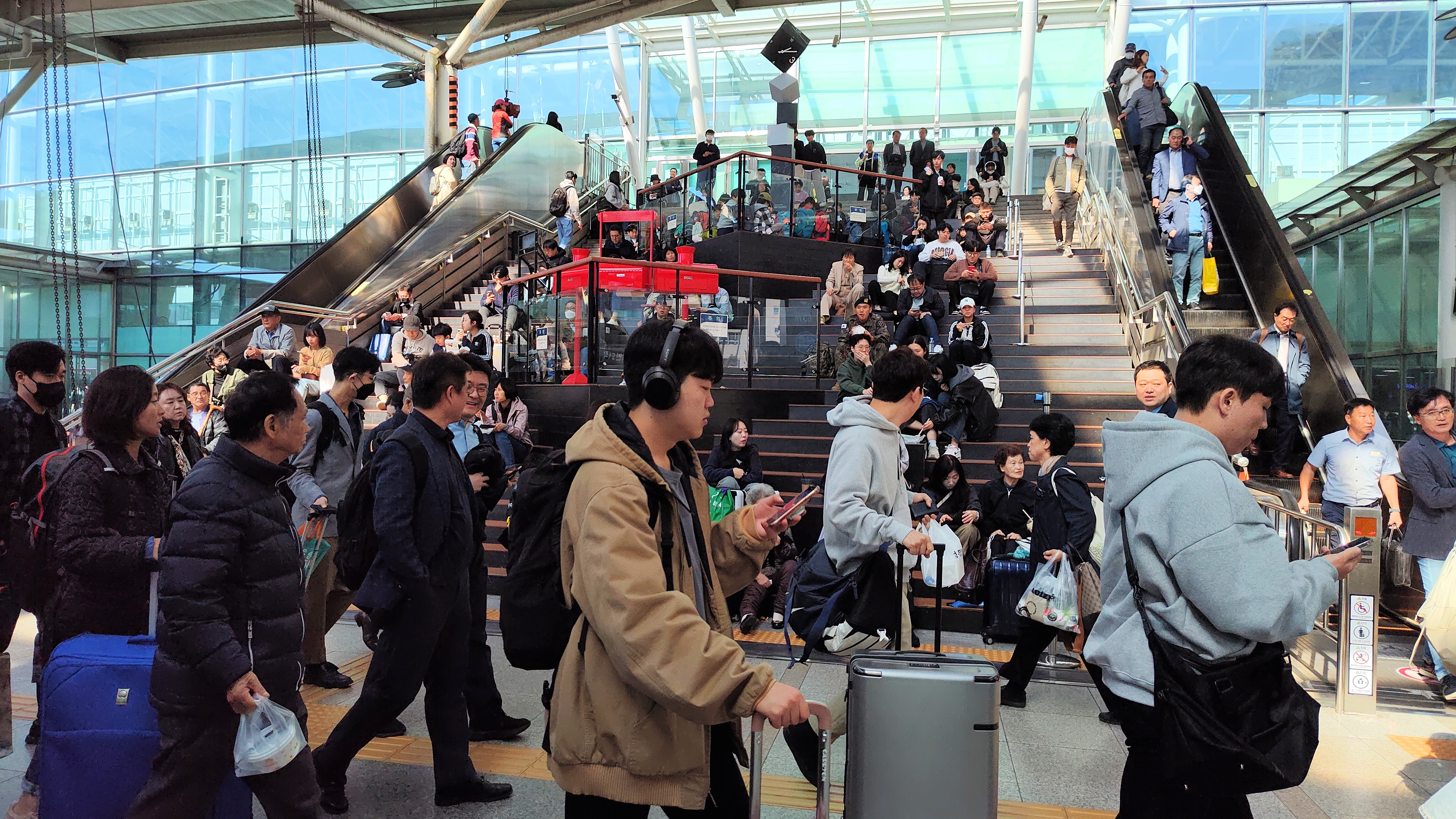
The stairs here are apparently the only real seating offered while waiting for your train.
The signage for your train is straight-forward. However, once you get down to the platform, it gets confusing, as there are two different train numbers listed on the board for the same departure time, one train directly behind the other. You have to already be familiar with the train system here, or else find a train worker to help you figure out where you need to go.
While the high-speed train here was not quite as “bullet-like” as I thought it would be, it still made for a noticeably faster trip to Busan than driving (the trip lasted just under three hours). I ended up paying for the “first class” seating, which I thought would give me a single seat (it did not for either train ride). The seats themselves seemed OK, but there was nothing about the seating or the car itself that screamed “first class.” There is an announcement screen above the doorway that scrolls with bilingual messages, but the announcements over the speaker were always in Korean. This is different from other big cities (and some not so big) that I have visited, where the announcements are at least in two, if not three, languages. There were also occasional postings of the train’s speed throughout the trip, I think. I remember checking my phone to convert kph to mph. I think the speed was close to 150mph (converted). Not bad, but I have zipped along train tracks at faster speeds.
Luckily, the hotel that I booked was just across the road from the train station. Having paid a somewhat substantial amount (at least I thought so) for my hotel in Seoul, I wasn’t sure of what I was going to get here since this seemed like a prime, convenient location. To my surprise, the facilities seemed fine, having a better internet connection, A/C, and shower unit. The view was rather decent, too (then again, so was the view from my hotel in Seoul).


Just like in Seoul, my first day was scheduled for a full-day trip around the city with a bright and early start. My feelings about my hotel being a surprisingly good deal started to wither when it came time to use the elevator. One of the shafts was closed for maintenance, leaving only the other two elevators available. Closing an elevator for maintenance is understandable, but doing so during peak travel season is not. This kind of odd and poor decision-making reminded me of China. Luckily, I managed to make it down to the meeting point in time. Before heading out, there was a scuffle between two cars ahead of us, involving a taxi and another car. We must have missed the initial incident, but the taxi driver and driver of the other car were clearly shouting at each other, with the older driver of the other car being pulled away by one of the female passengers. Someone in the back of the van asked, “Are they fighting?” It made for an interesting start to the day. It also reminded me of China.
The day’s itinerary included Haedong Yonggungsa Temple, Taejongdae Park, lunch, the Gamcheon Cultural Village, and the Songdo Skywalk along the shore.
Haedong Yonggungsa Temple
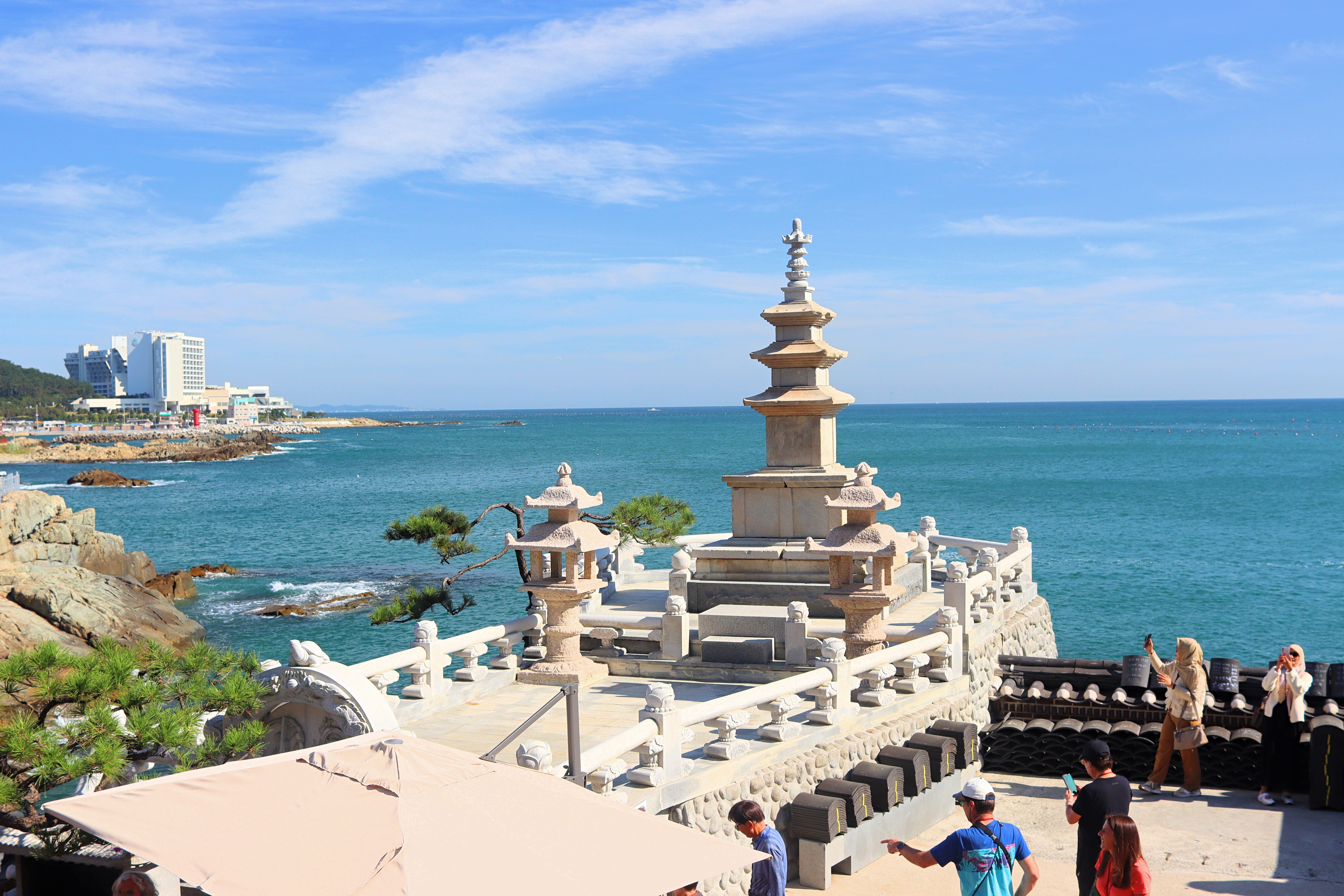
Haedong Yonggungsa Temple is located along the north-eastern shore of the city. It was built in 1376 during the Goryeo dynasty, and the main sanctuary was reconstructed in 1970.


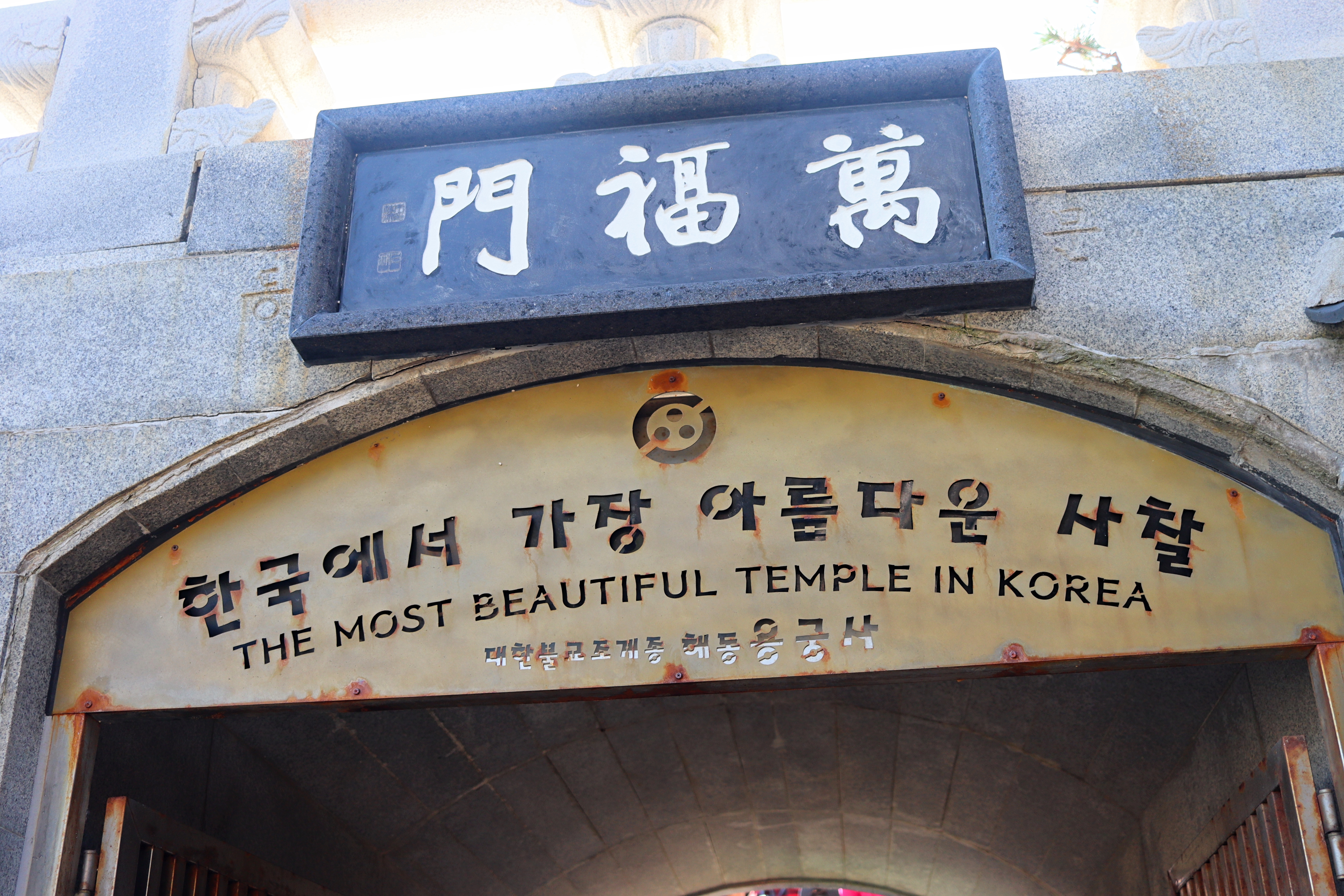
A rather bold statement

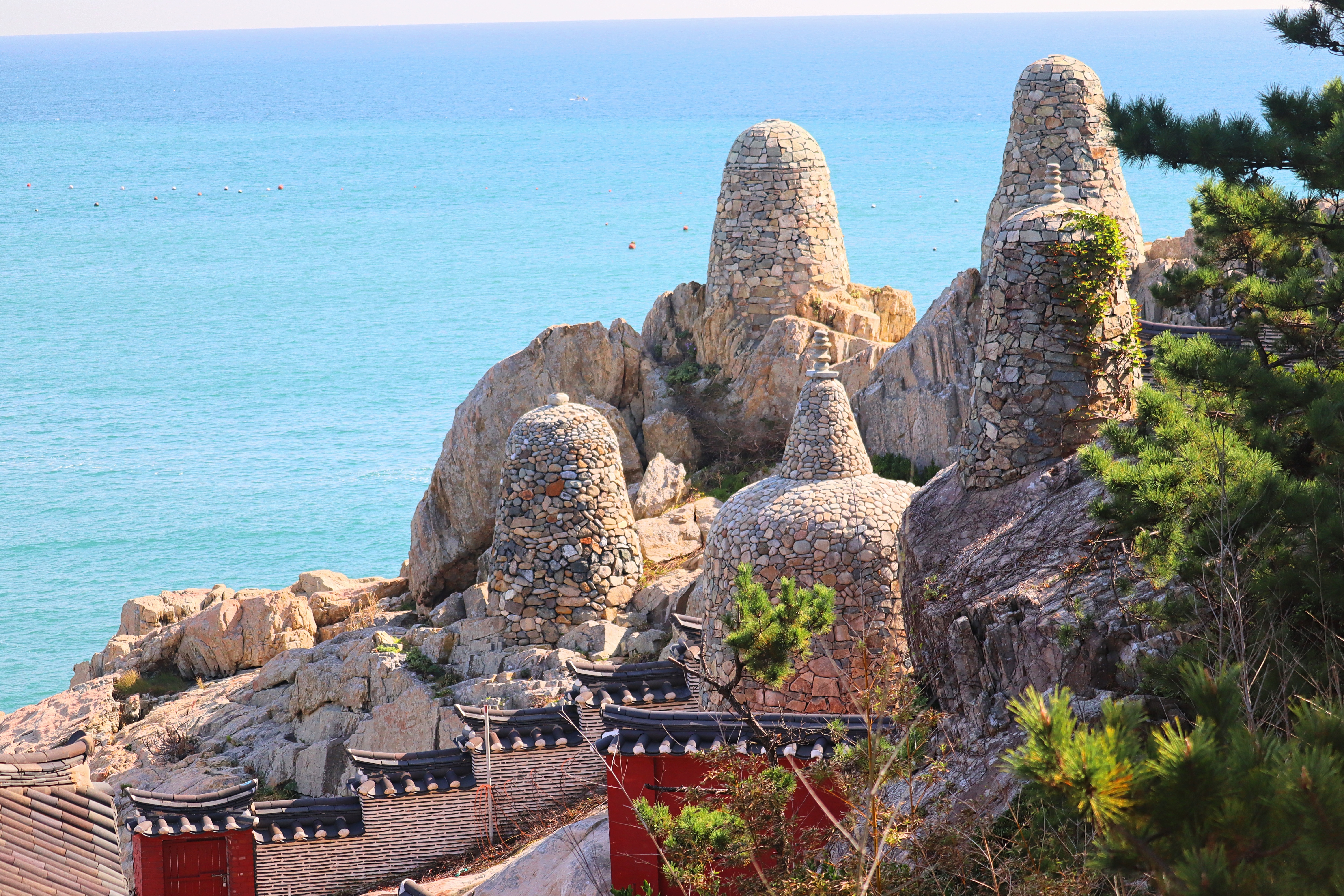

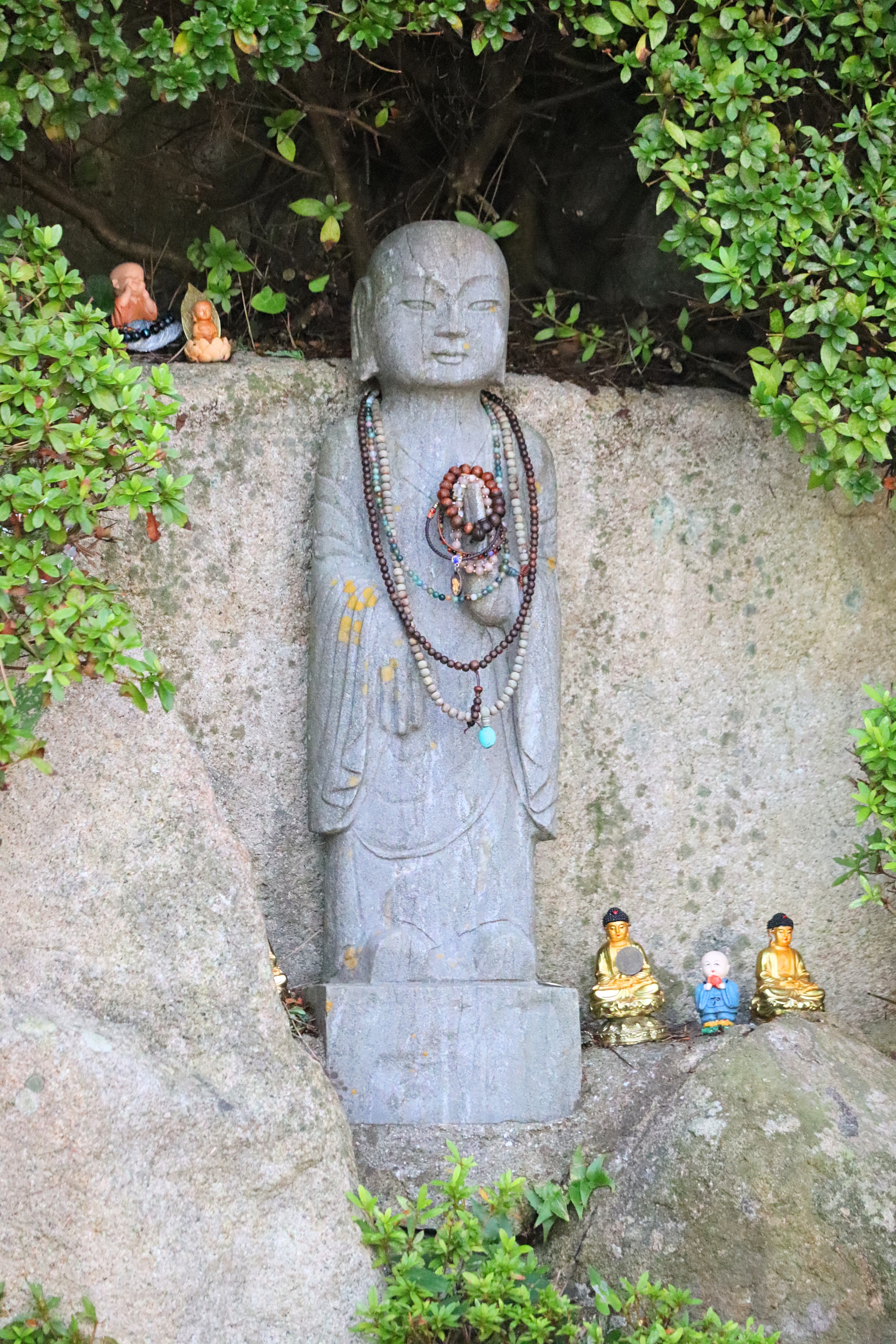

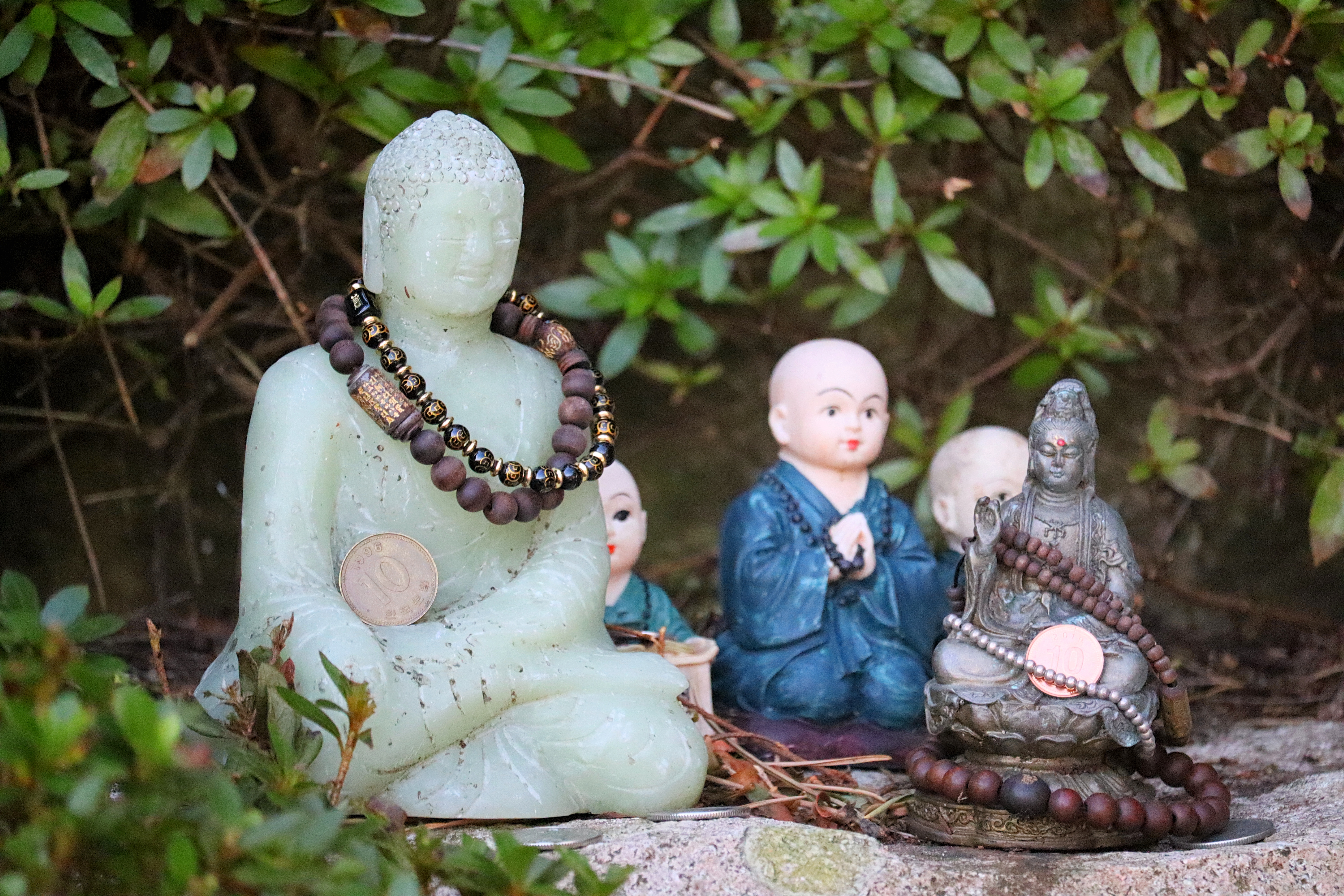

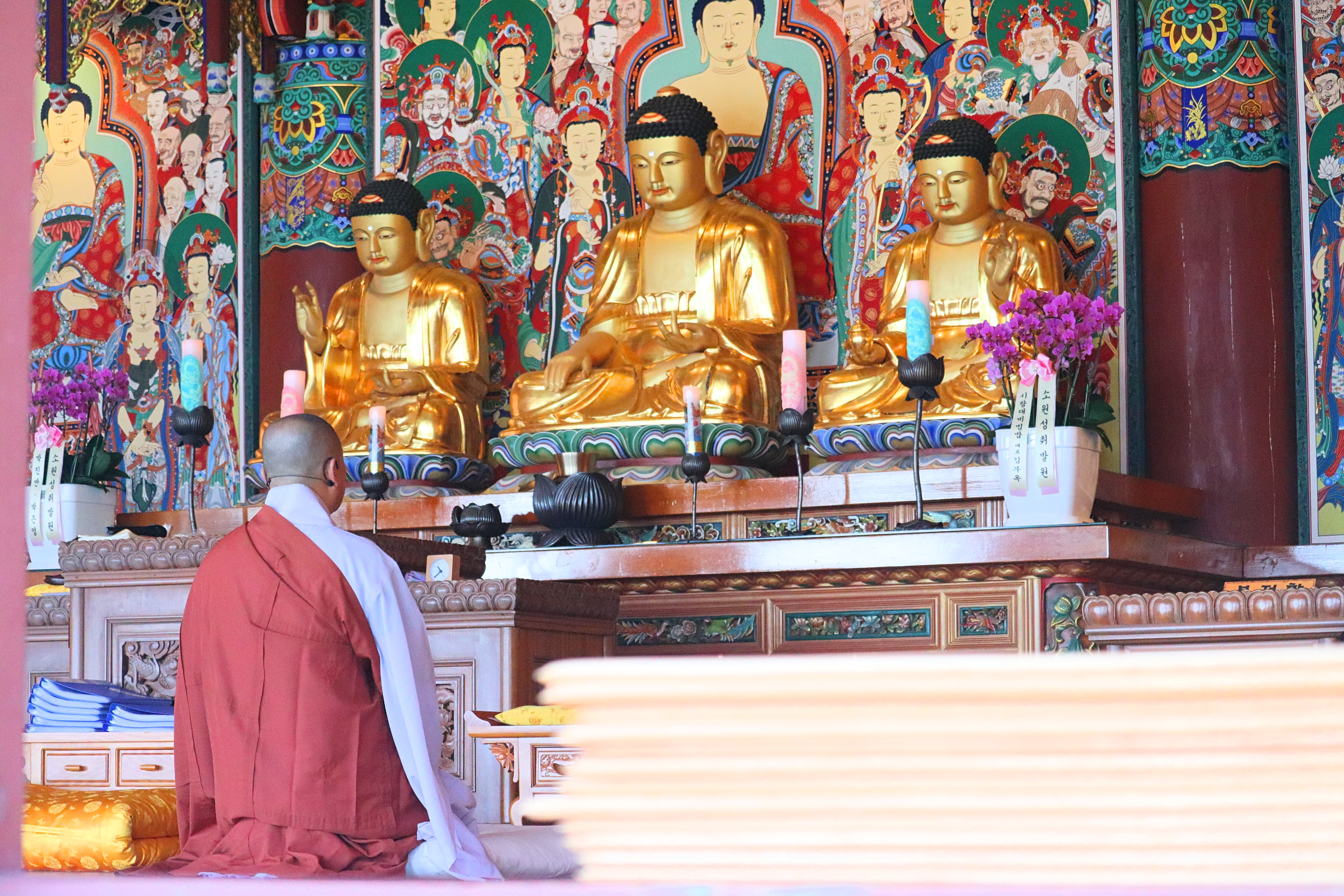
I didn’t’ notice this until I was exiting the temple, but when I looked back over at the divination statues, I noticed one of them in the back had something leaning against it. Upon zooming in my lens on it, I saw that someone had left a cleaning mop against it. I just found this rather amusing, given the kind of site this is.

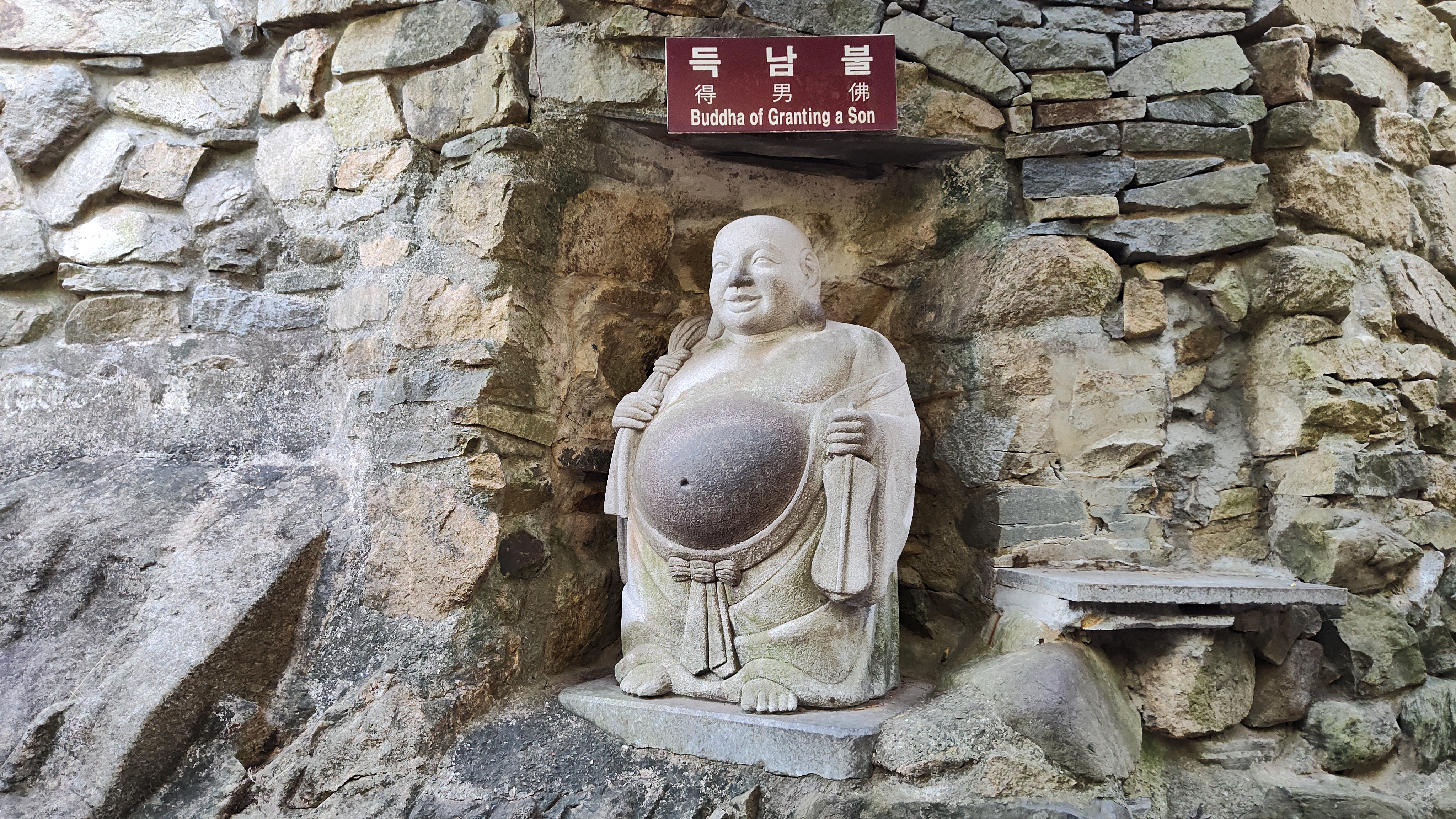
You should rub Buddha’s belly if you want to have a son.
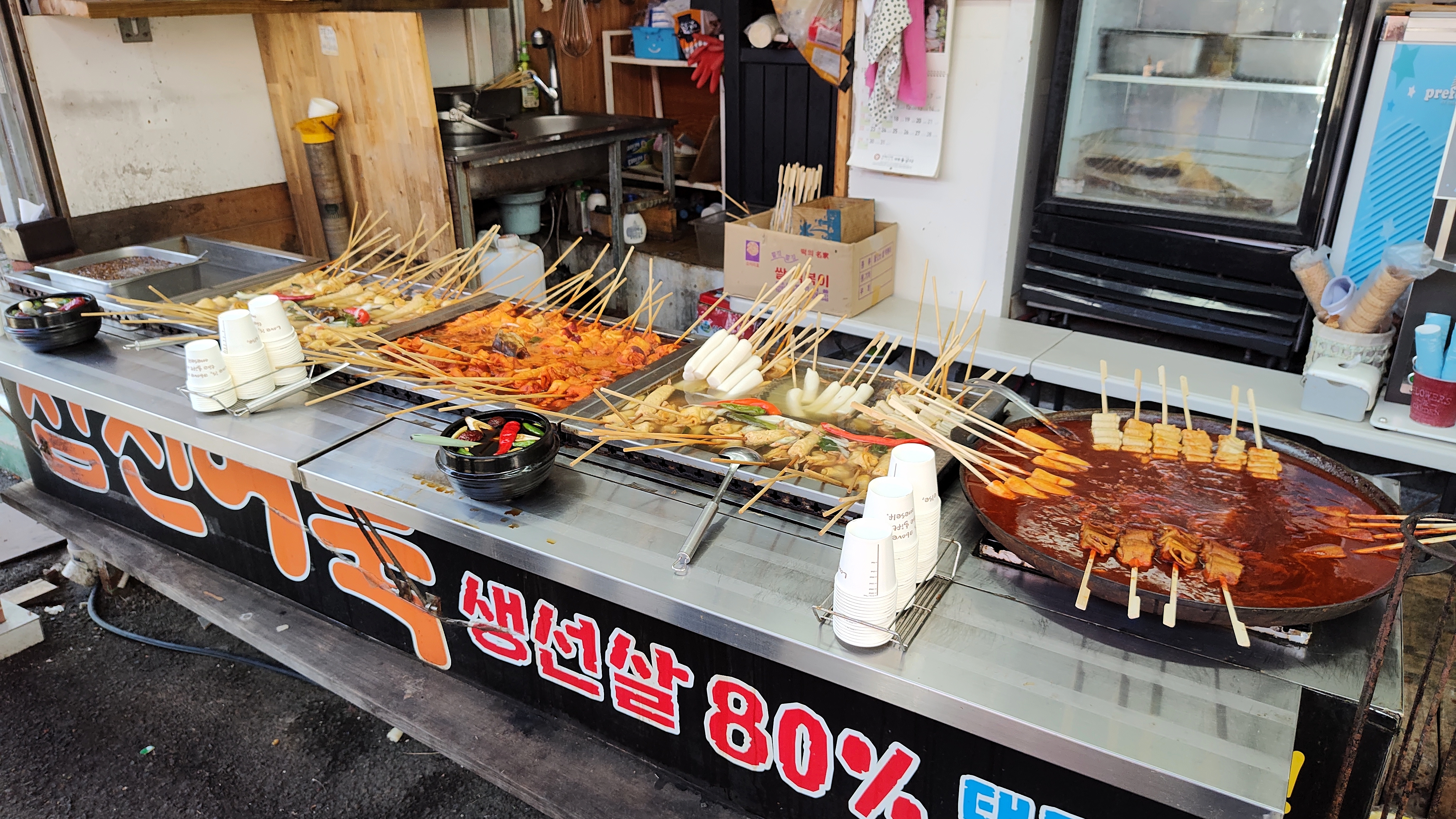

Taejongdae Park
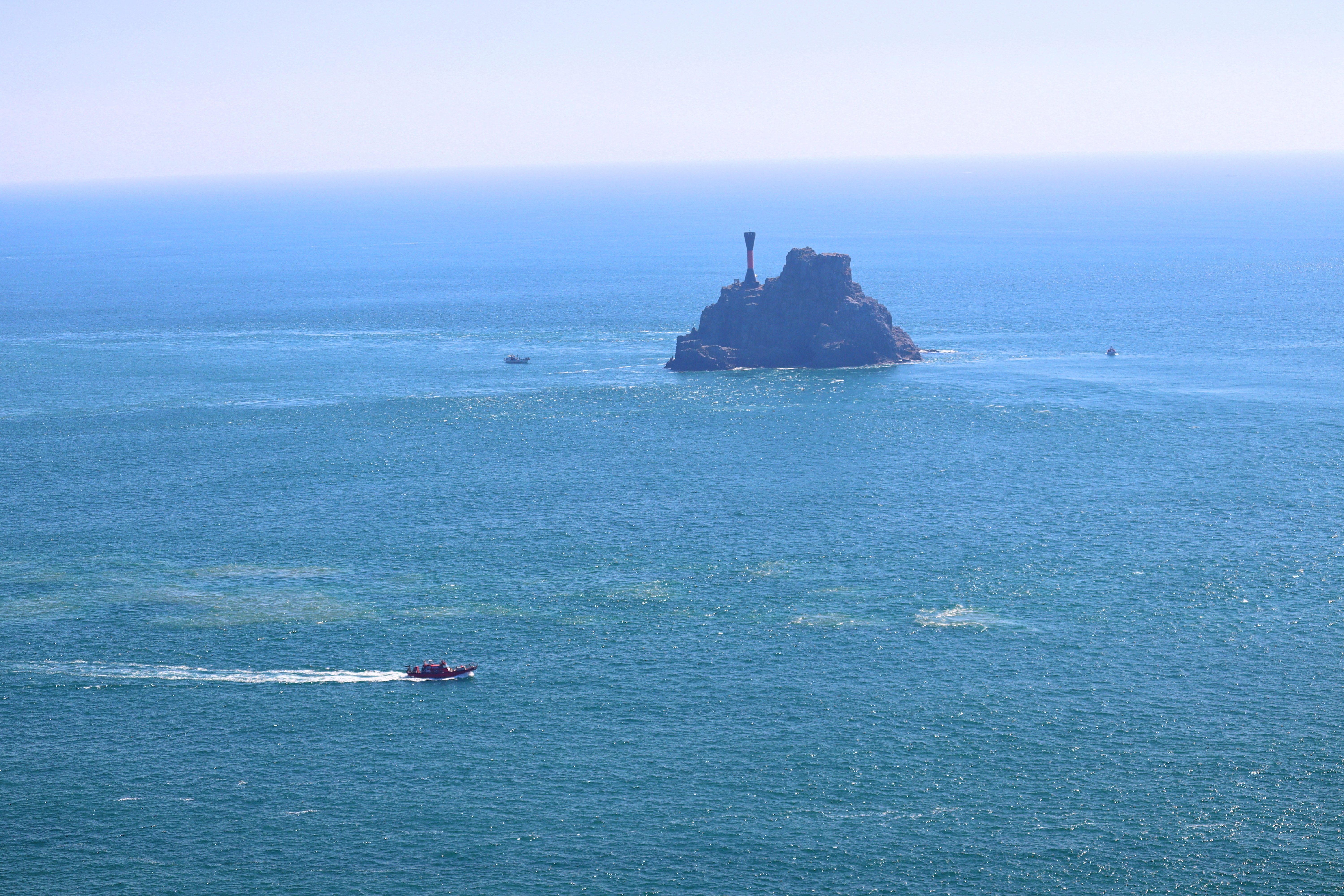
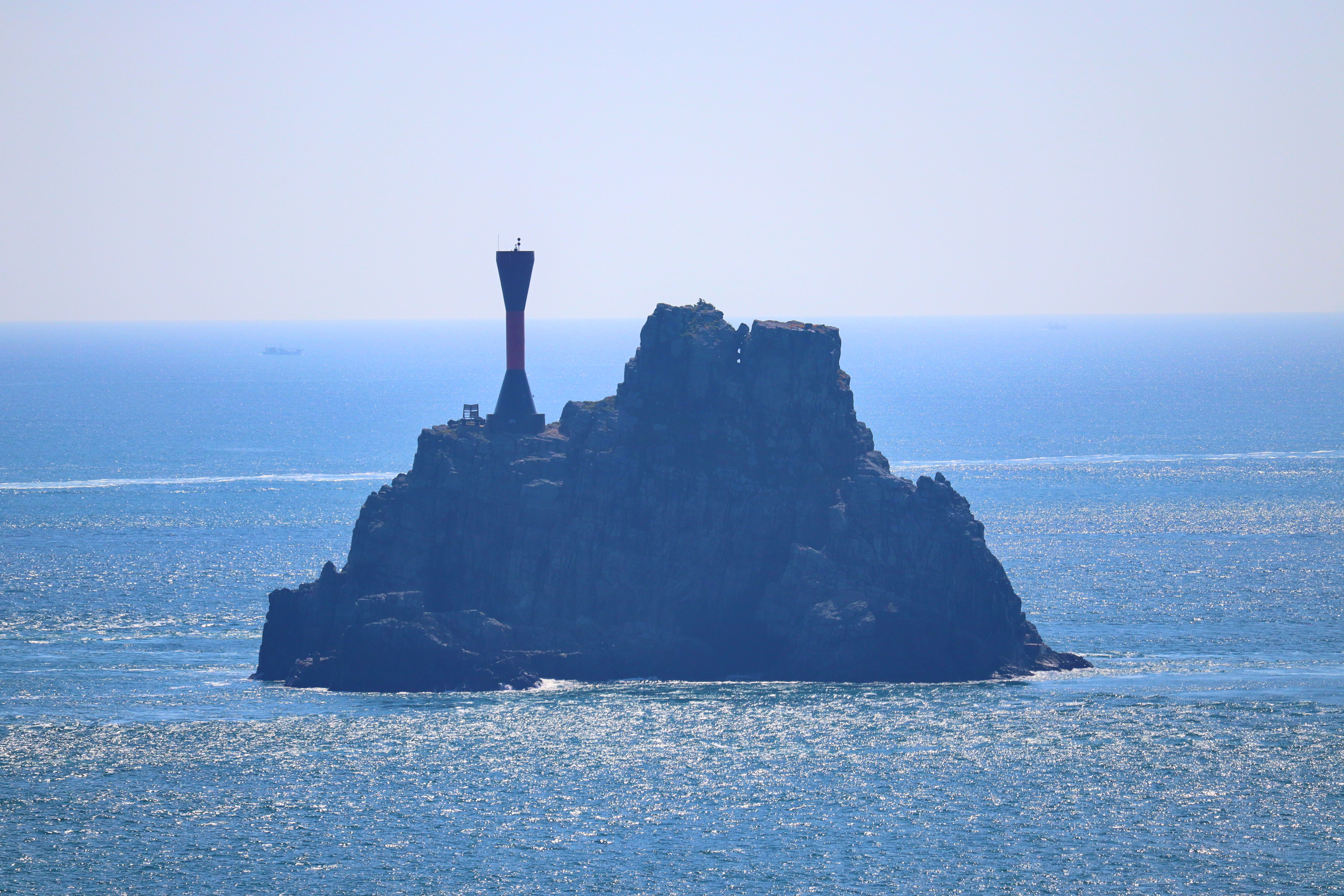
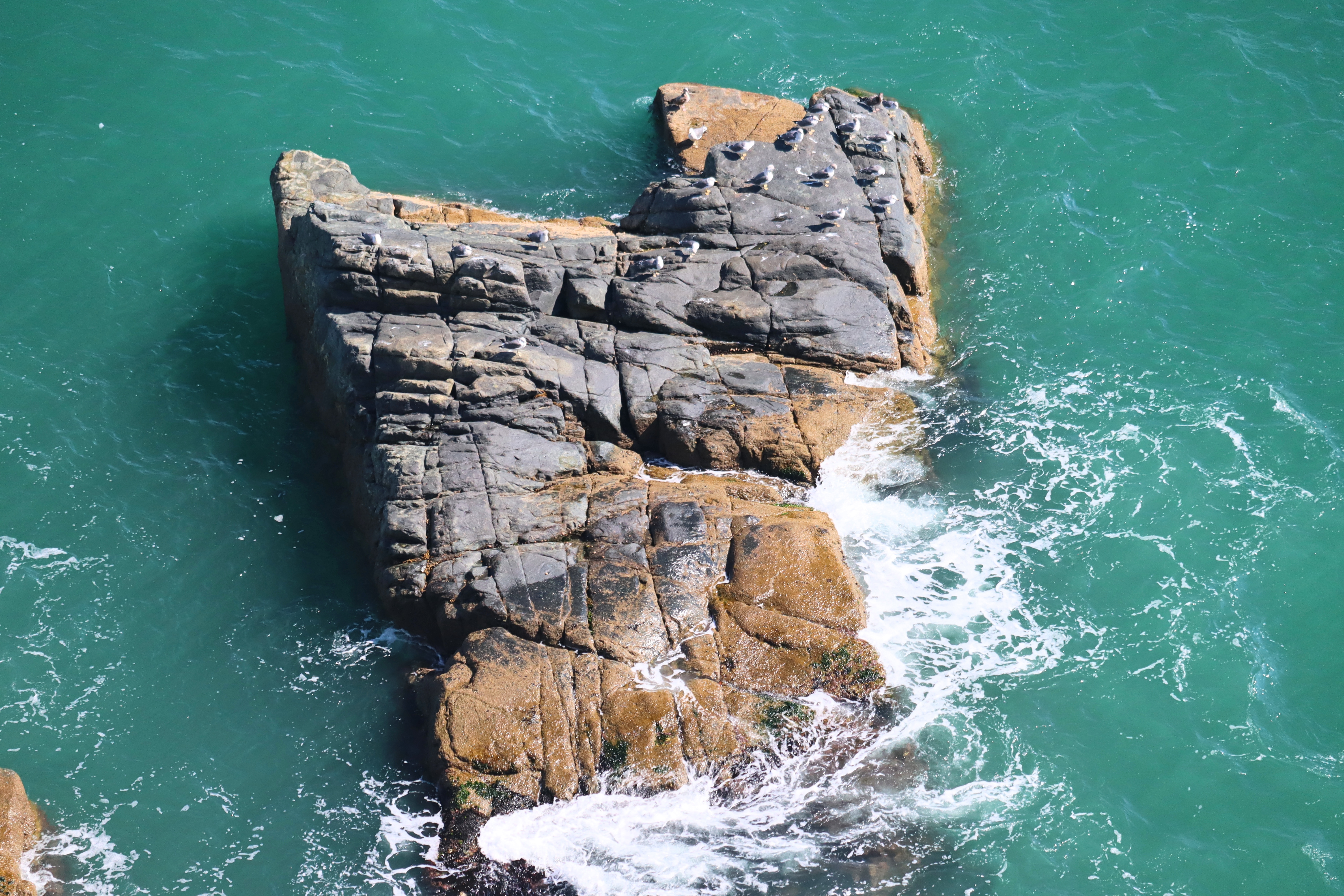
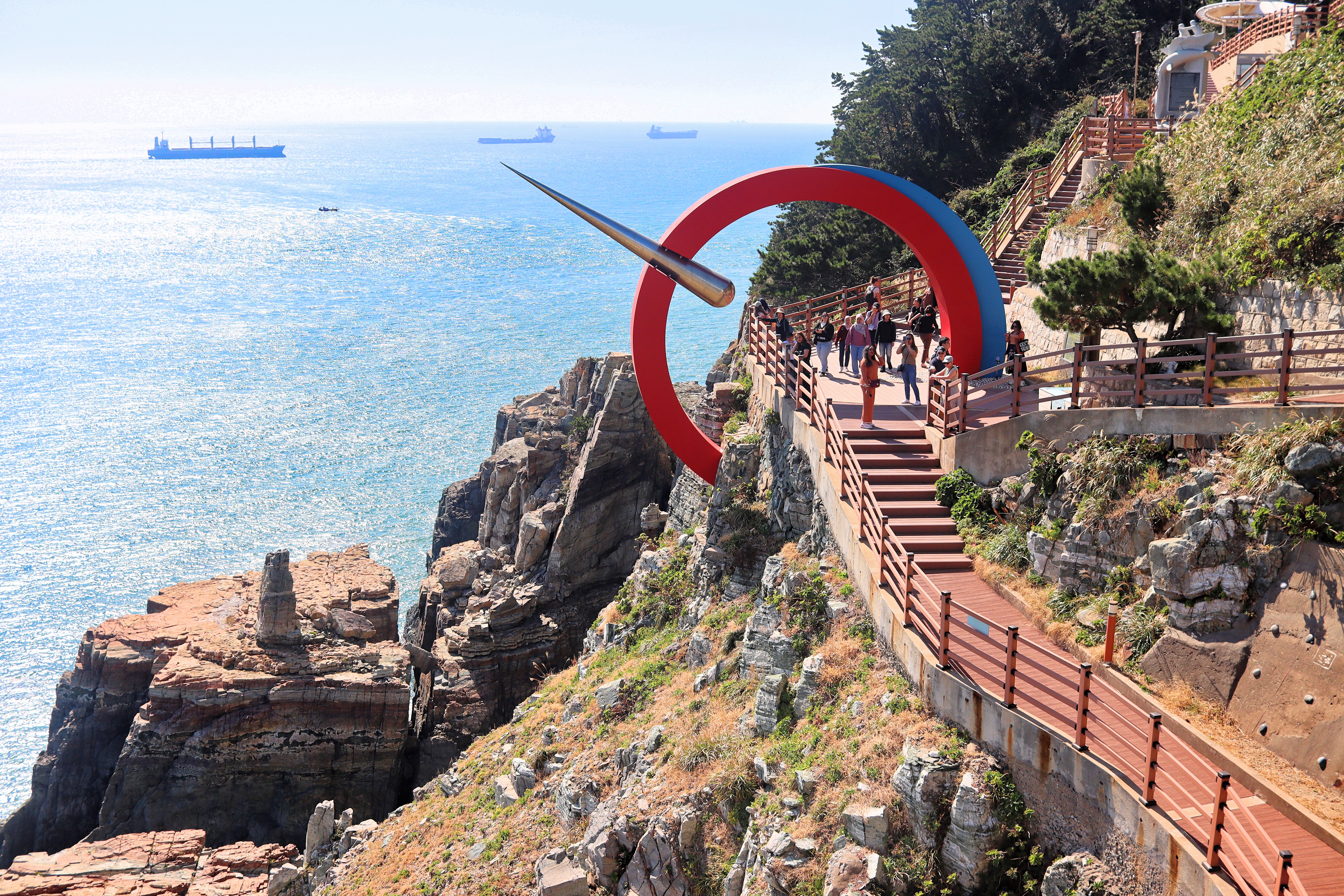
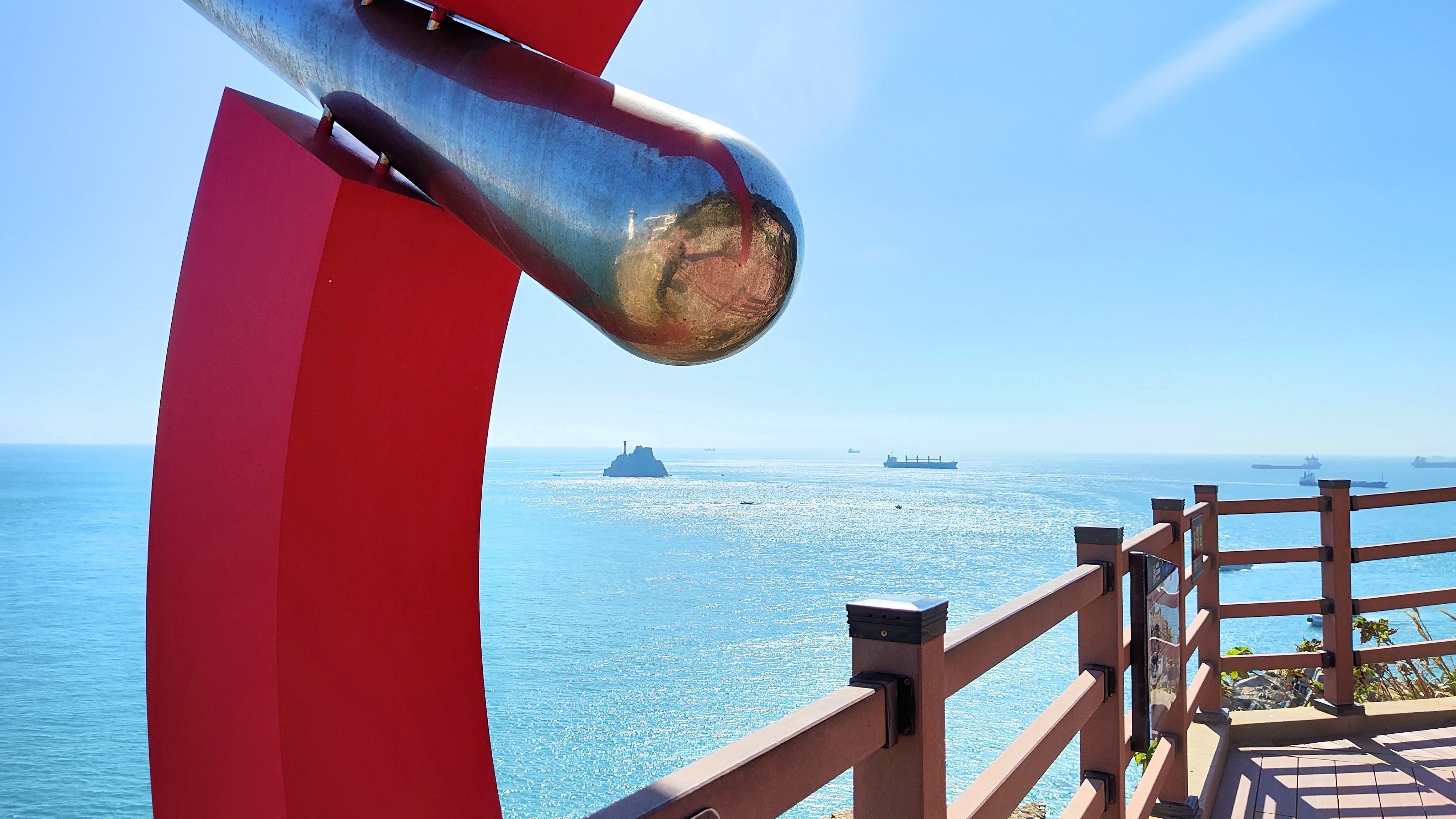
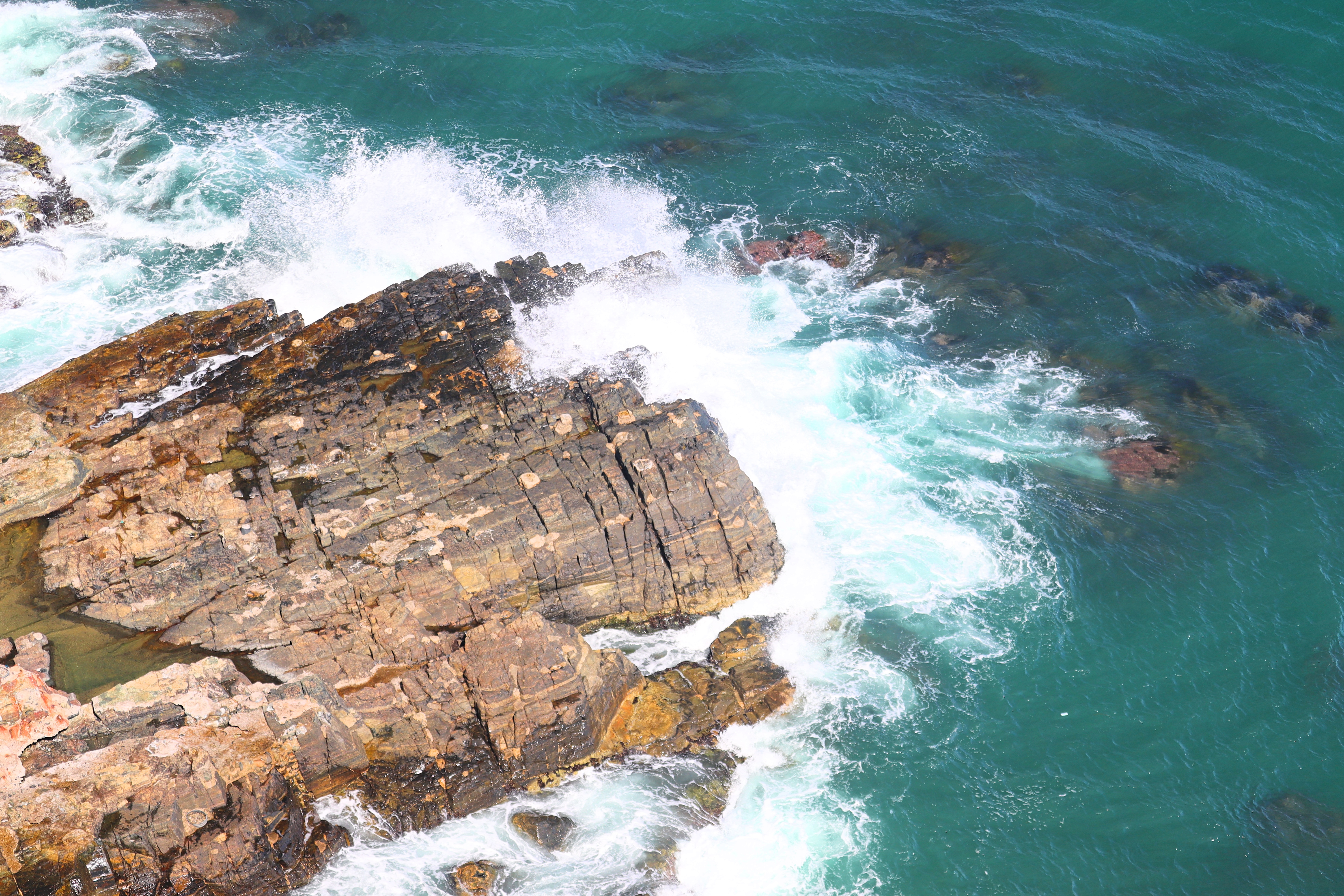
The next leg of the journey was to Taejongdae Park. Its cliffs overlook the surrounding seaside, and when the weather is nice (as it was all day long), it really enhances the experience (and the color). There is also an observatory (although it either wasn’t part of our day tour or wasn’t open to tourists at this time).

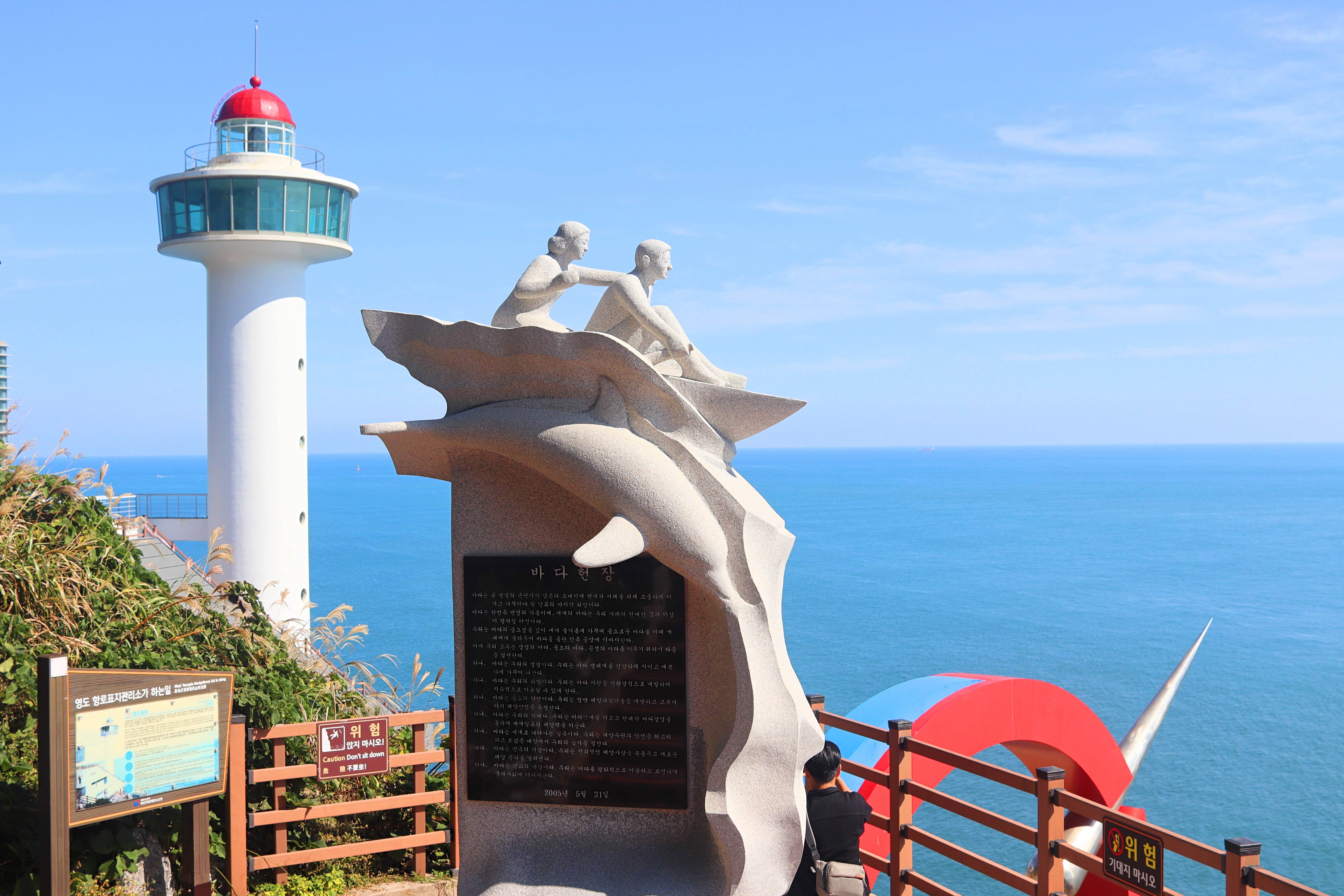

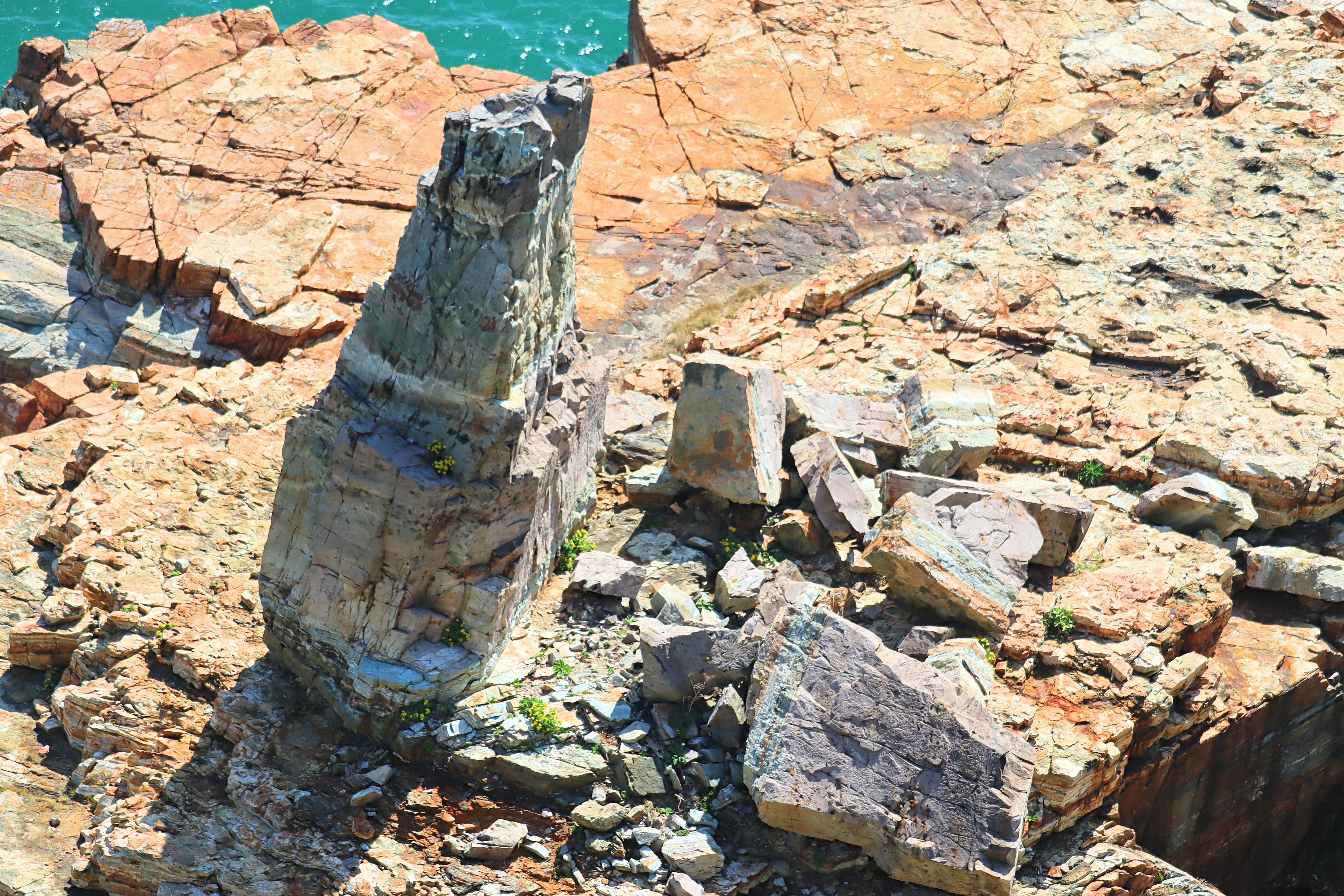
The tour guide mentioned that, according to Korean legend, this vertical stone is the spirit of a woman who vowed to wait there until her beloved returned, waiting until she turned to stone.

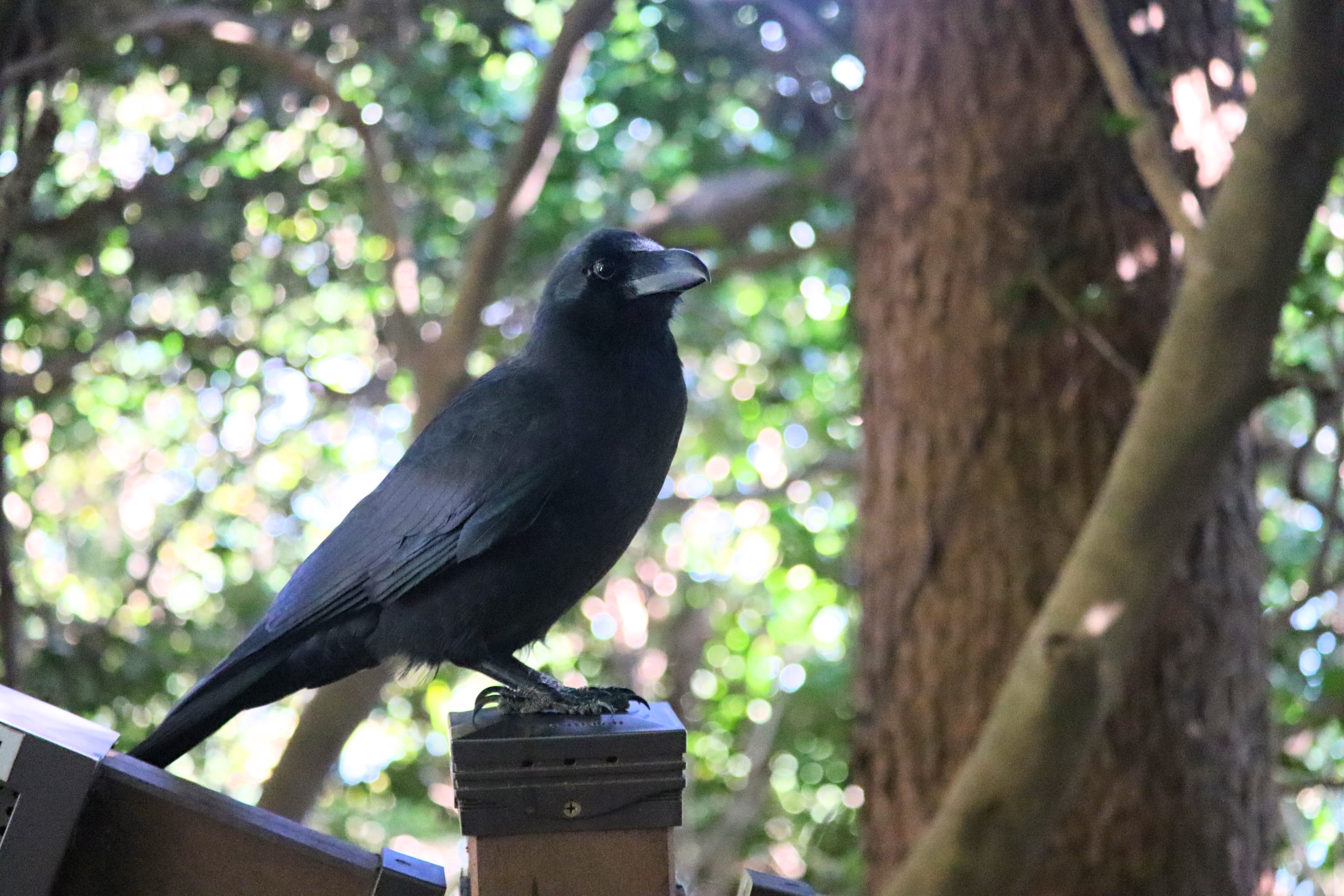
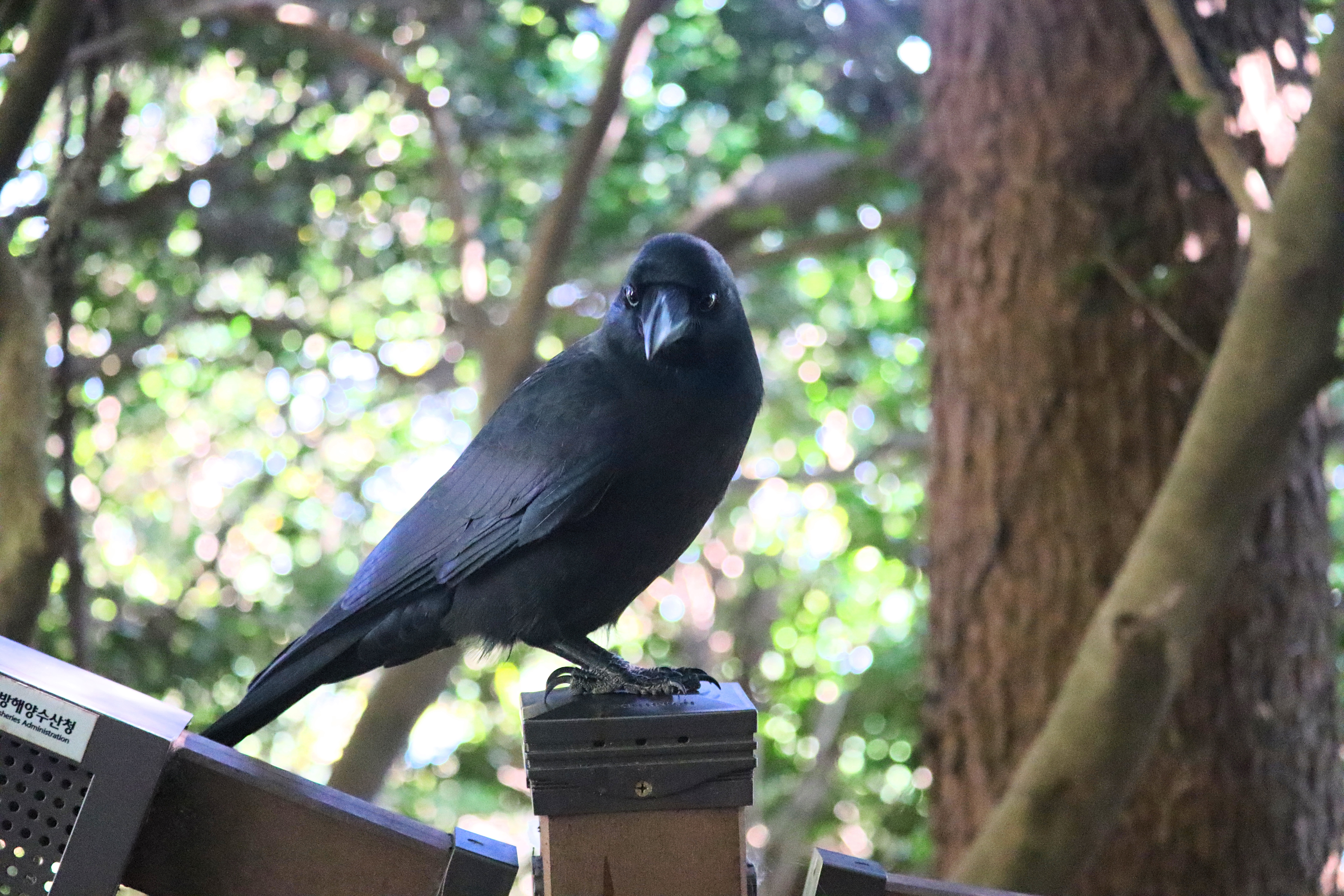
It was then time for lunch. We were given a few different options, but most of us decided to eat at the same place. We arrived just before another large tour group was scheduled to eat. We were able to order from iPads on each table (with photos), so this helped.
Unfortunately, due to the foreseen crowd, they had me move to a table closer to where some others from the group were eating, which happened to be directly in front of the very small path where the servers would zoom in and out of with people’s orders. For the majority of the time, I tried to eat with my head facing forward in hopes of not getting knocked in the head with a hot dish fresh off the stove. At one point, there was a man who was basically notifying (yelling) to one of the servers to take care of a customer who was ready to pay. I felt both anger at the man for being no help whatsoever to her or any of the servers, as well as sympathy for the servers from my days waiting tables.
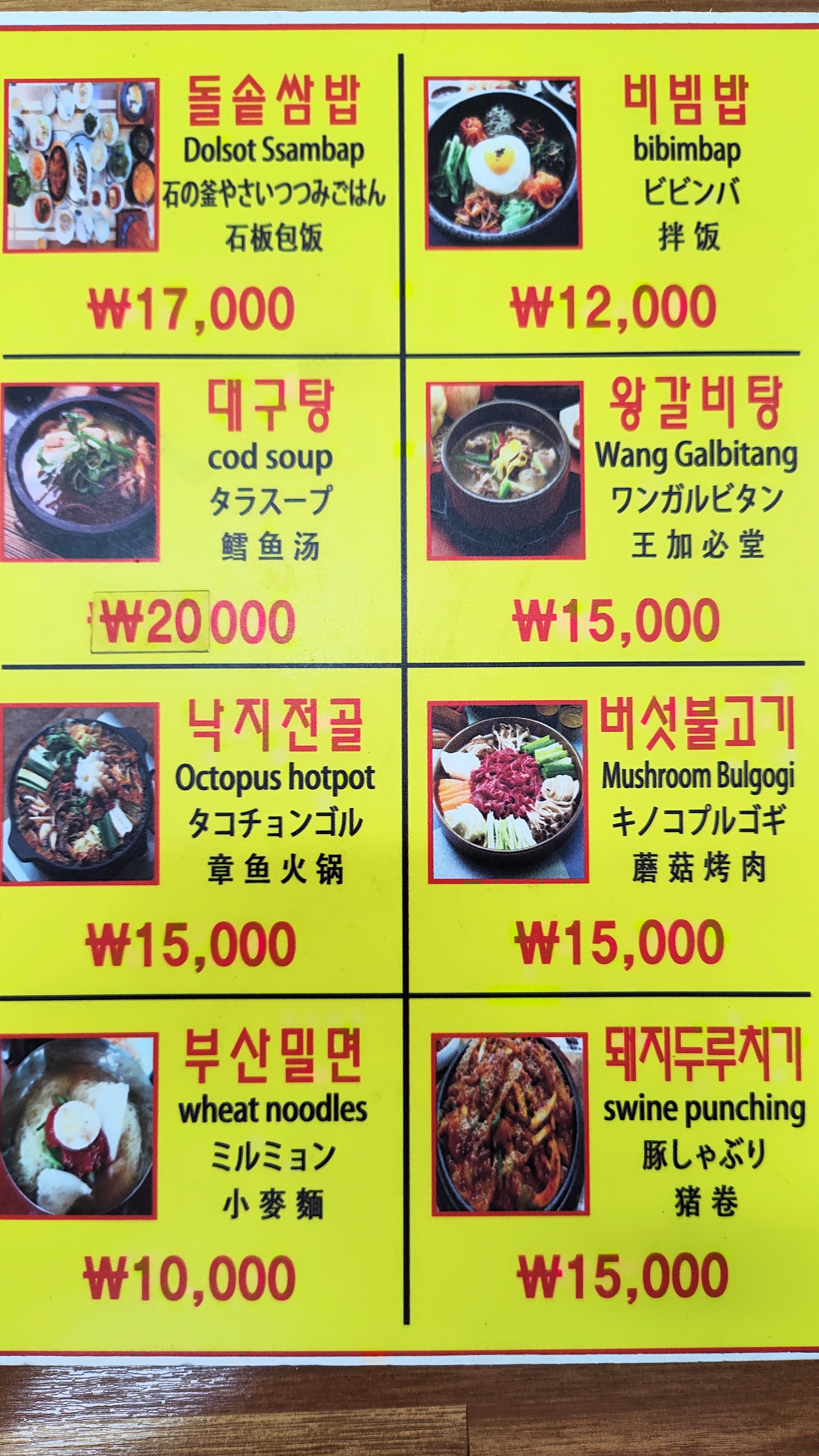


Although a bit chaotic, lunch was ultimately good. The tour guide of the other group that came in to eat after our group ended up helping to take orders and deliver dishes. I’m sure it was stressful, but you could tell that his group members also found it entertaining and heroic. It ended up being lunch and a bit of a show.
While waiting for the tour guide to get the van, I chatted with a few of our group members by the side of the road. We eventually talked about how we viewed both the Chinese and Korean locals in terms of how they behaved and dealt with each other. One of them (a man from Malaysia) said that he thought of the locals as being rather “rough.” When thinking about the traffic argument we saw first thing in the morning and the lunch chaos, I said that I agreed and stated that it reminded me of what it was like in China (with him saying how the Chinese are even more “rough”).
Gamcheon Cultural Village
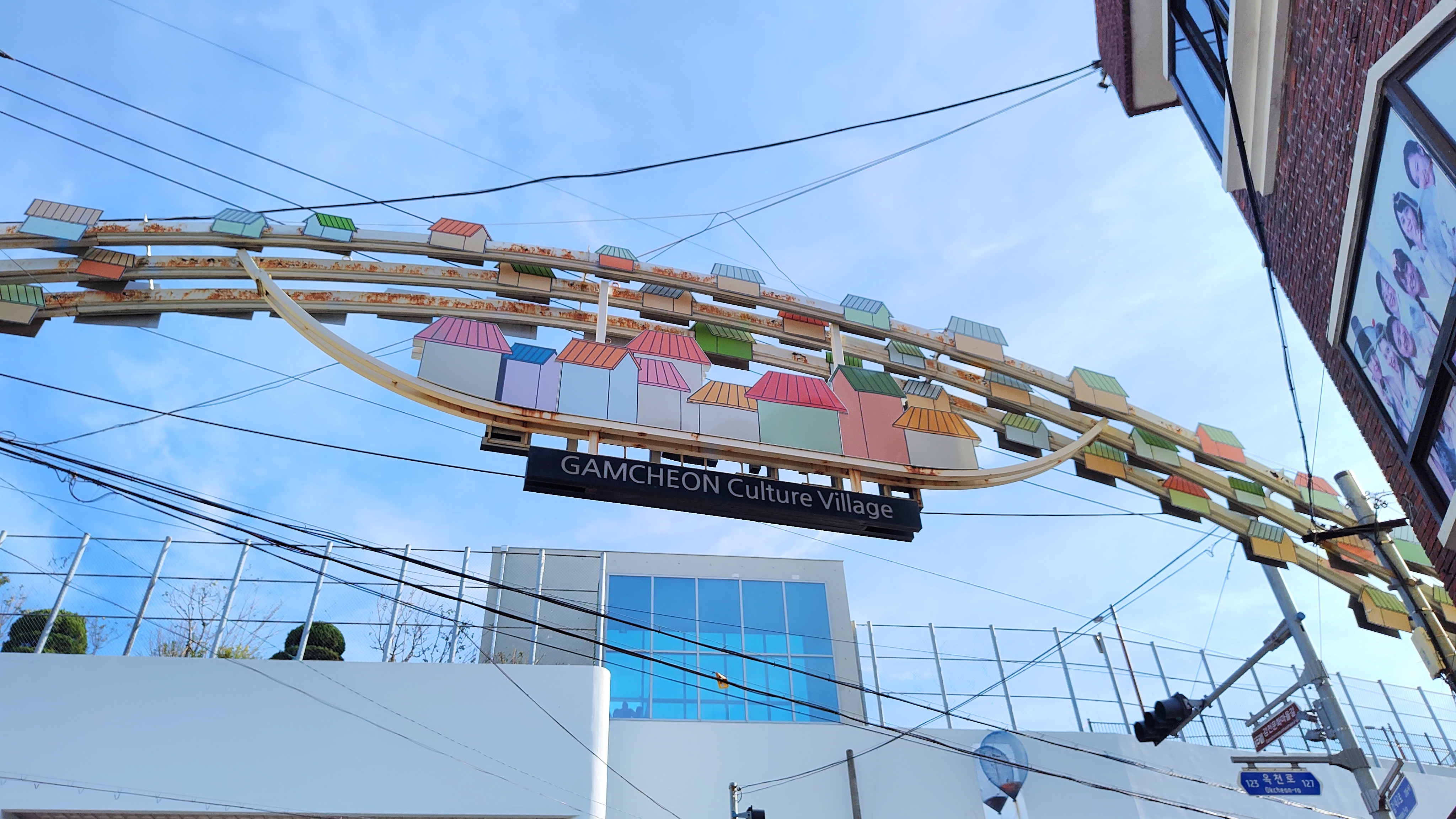
The next site has been described as South Korea’s own “Santorini.” It’s a rather bold statement, but then, the first temple we went to had a sign that read “The Most Beautiful Temple in Korea.” Although I haven’t seen the blue and white homes dotting the Santorini cliffsides in person, I have a feeling that the Greeks likely wouldn’t take kindly to the comparison.
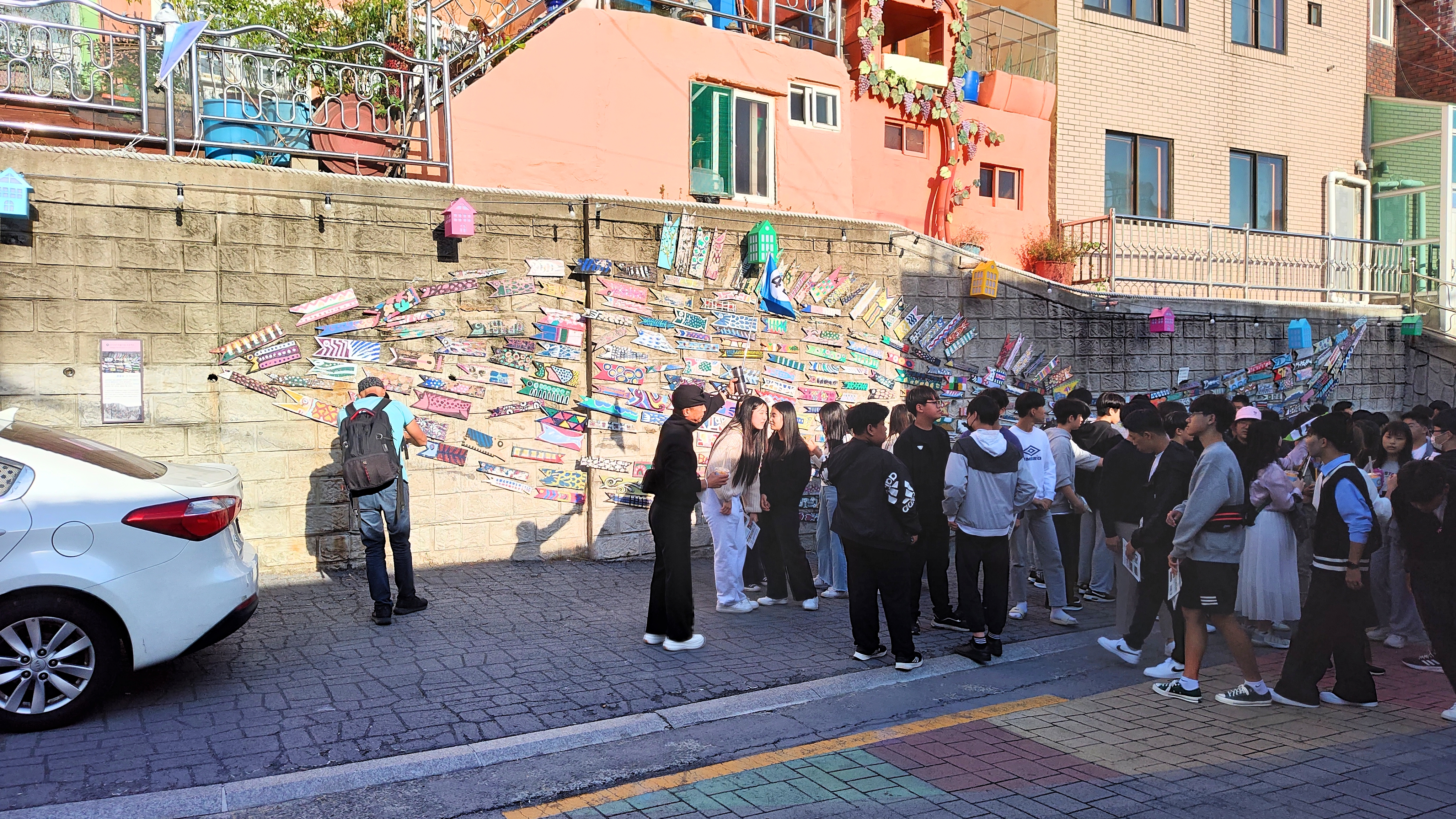
While it was nice to look at, the area definitely had a very touristy feel to it. After initially getting lost immediately after going down the wrong path and thinking that the map didn’t match up with what I was seeing, I had to have the guide help clarify it (having to return to the main street area where we started). It didn’t take long before I grew tired of all of the snack and souvenir shops selling things that had nothing at all to do with Korean culture. I did learn that this village was created as the result of people moving (fleeing) from the north decades ago and having to be as efficient as possible with the little space there is to build.


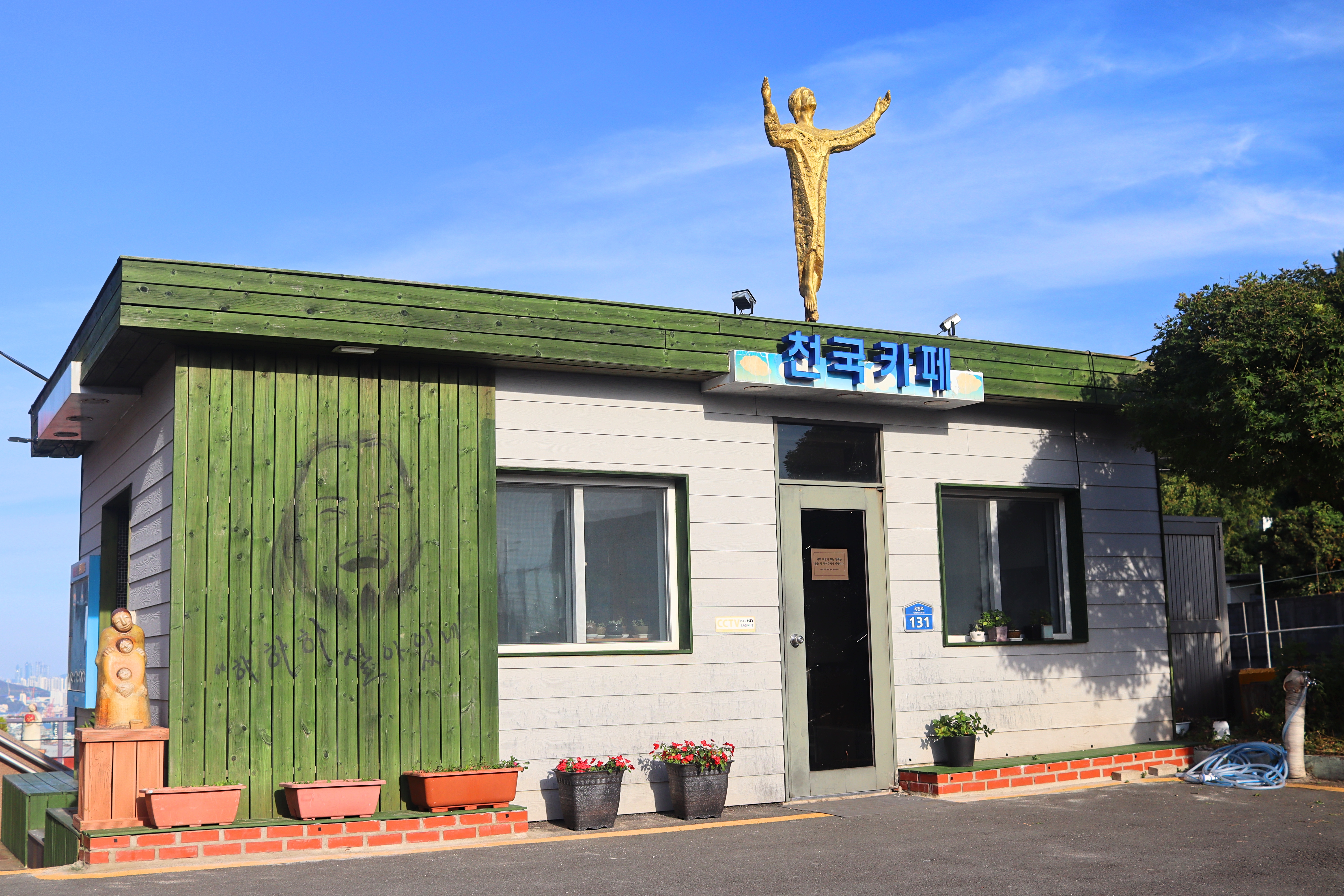
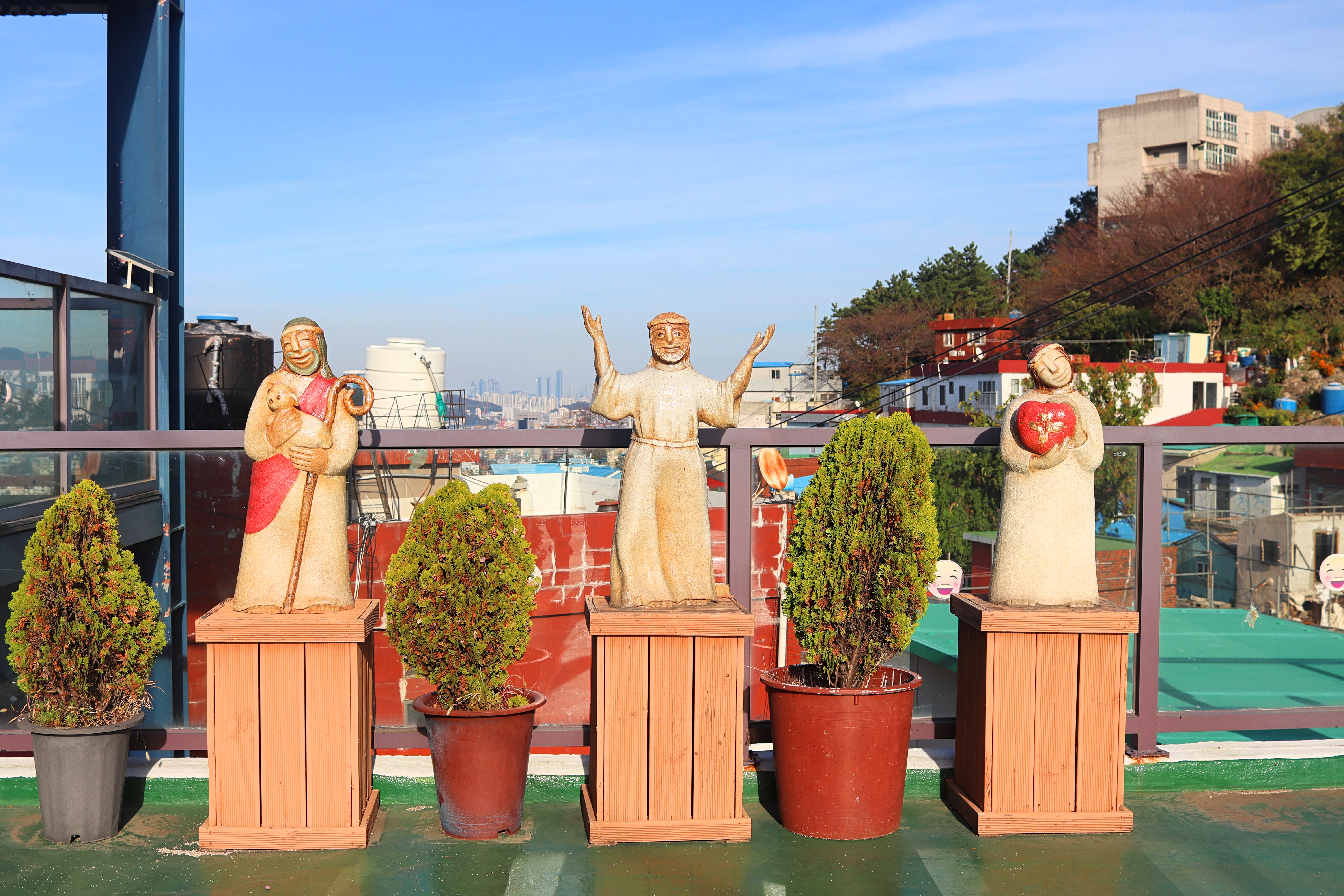
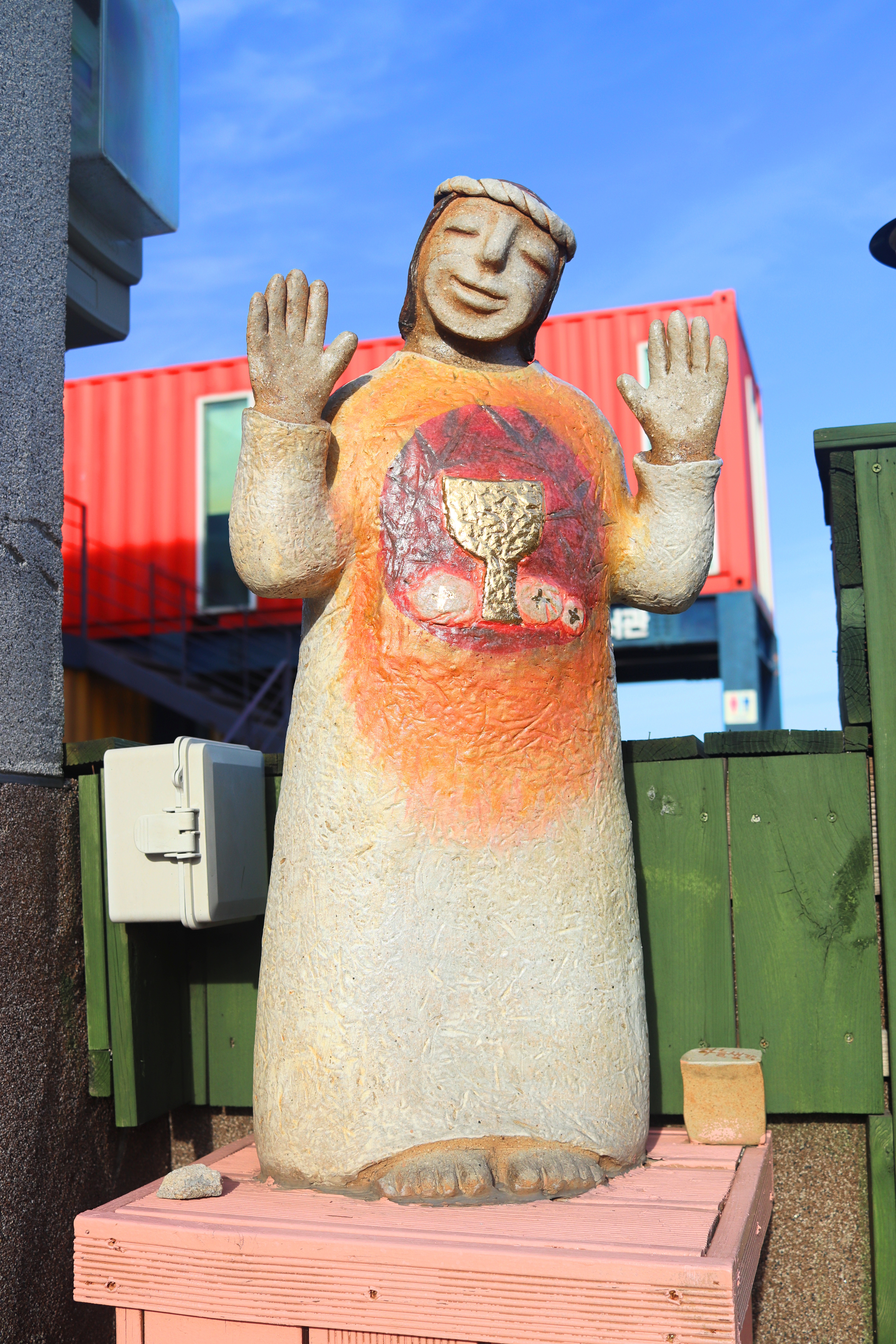
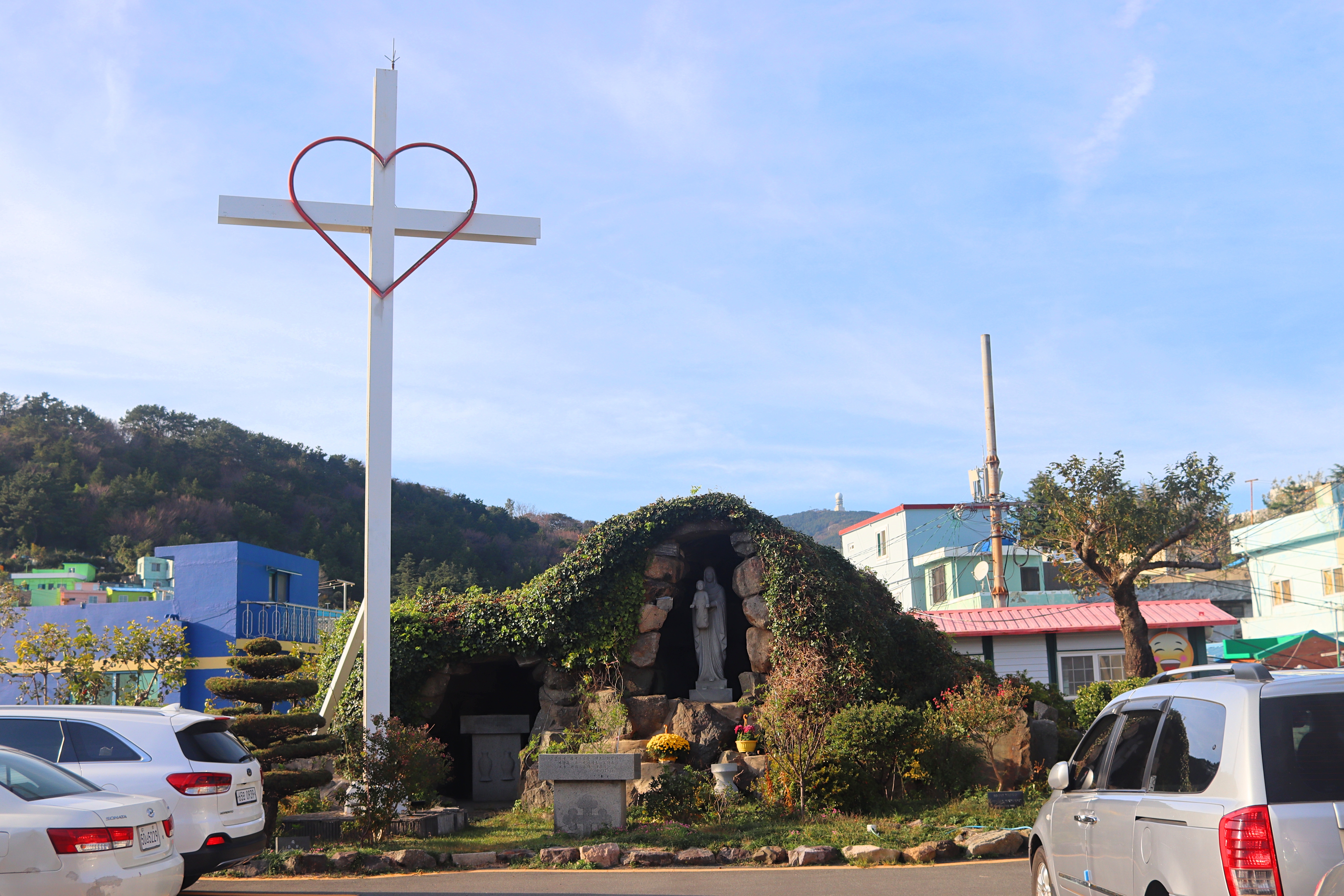
Oddly enough, after I walked back to the van to wait for everyone to finish, I immediately saw an interesting example of Korean-Christian fusion. Although Korean society (like much of Asia) was originally descended from Buddhist influence, there has been a rise of Christianity here. It was a small church that also had a nice view behind it. What I gravitated to most were the cute religious figurines scattered all over, welcoming everyone. Here was a chance to see some actual Korean culture mixed with western influence.





Songdo Skywalk
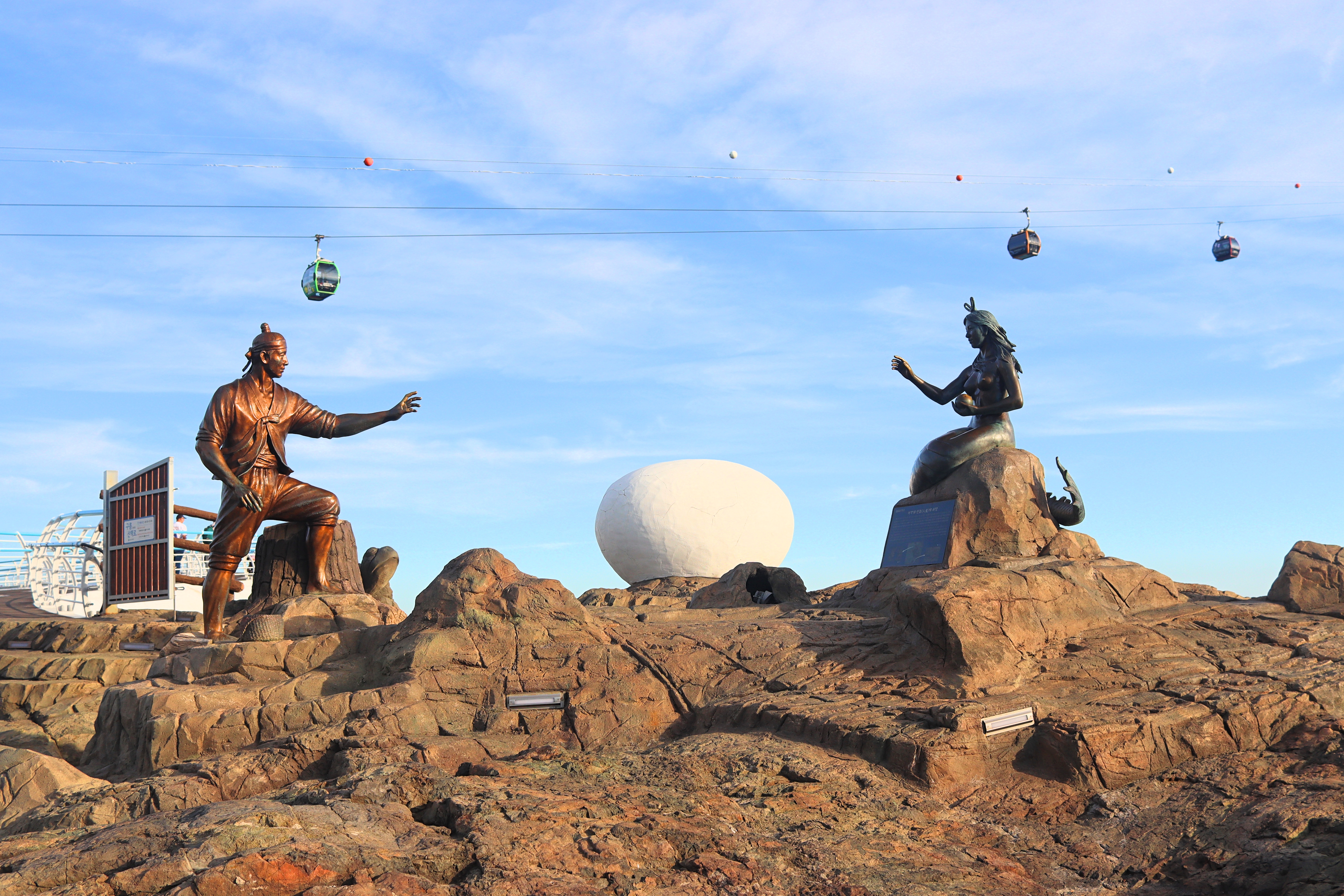
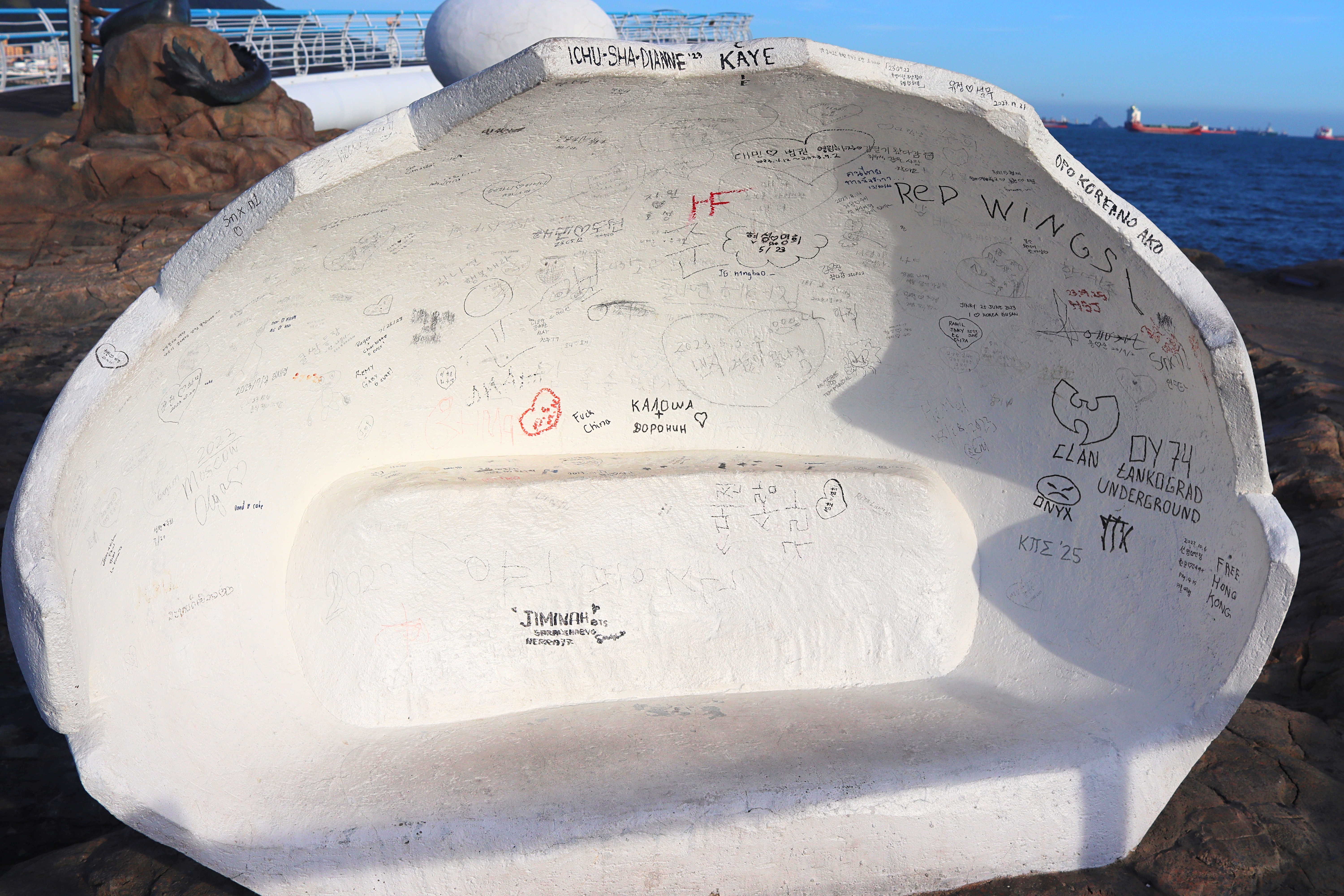
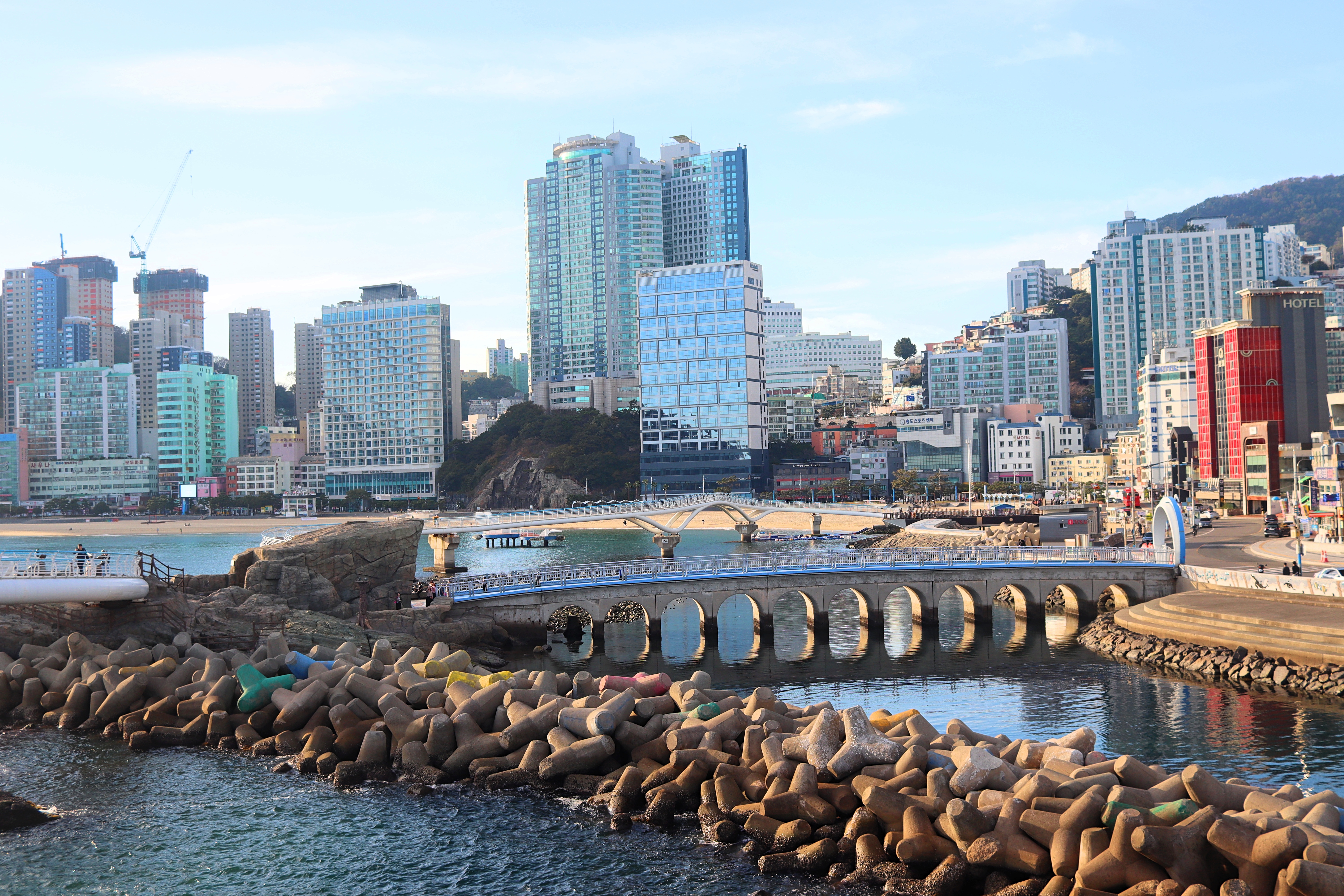
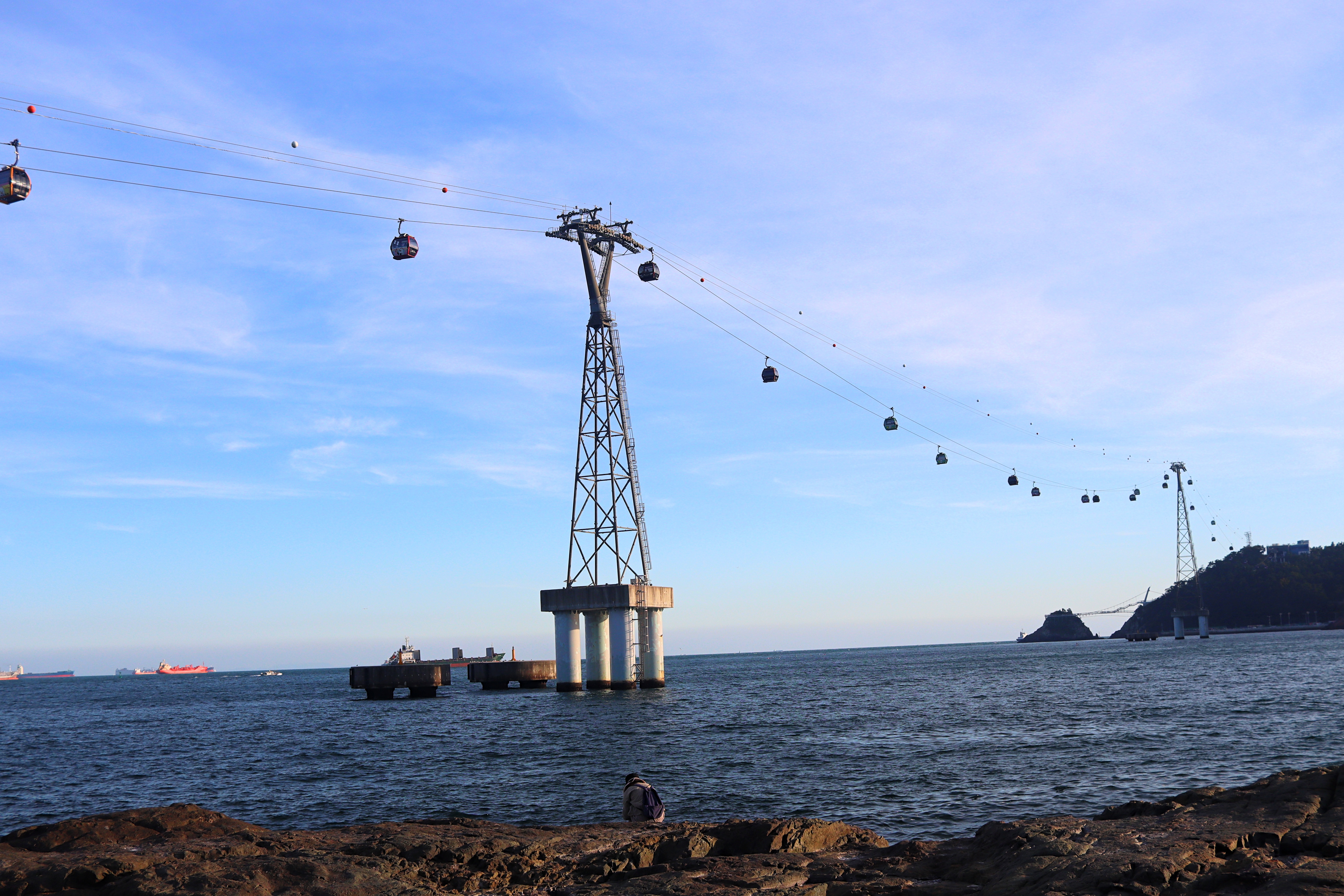
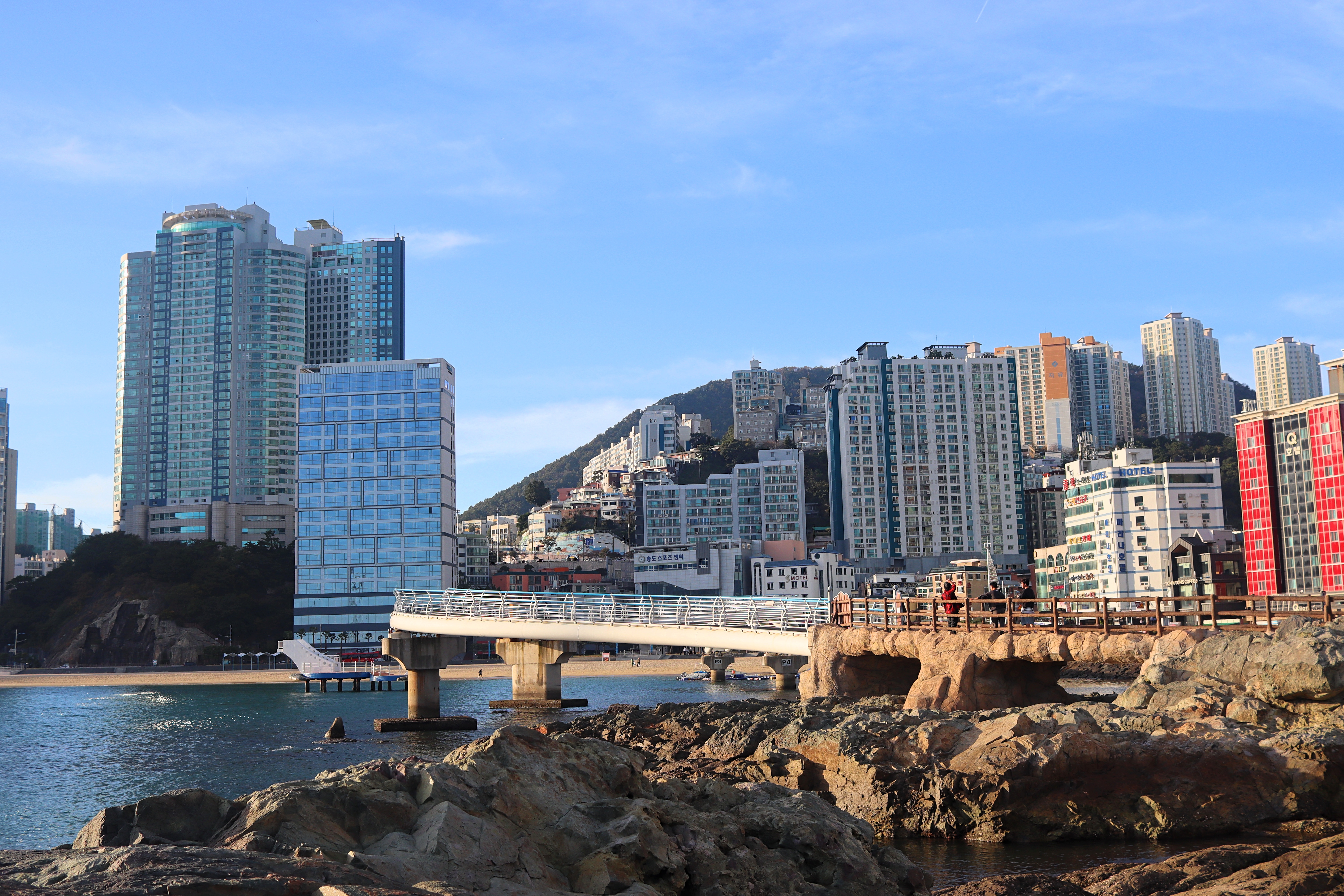
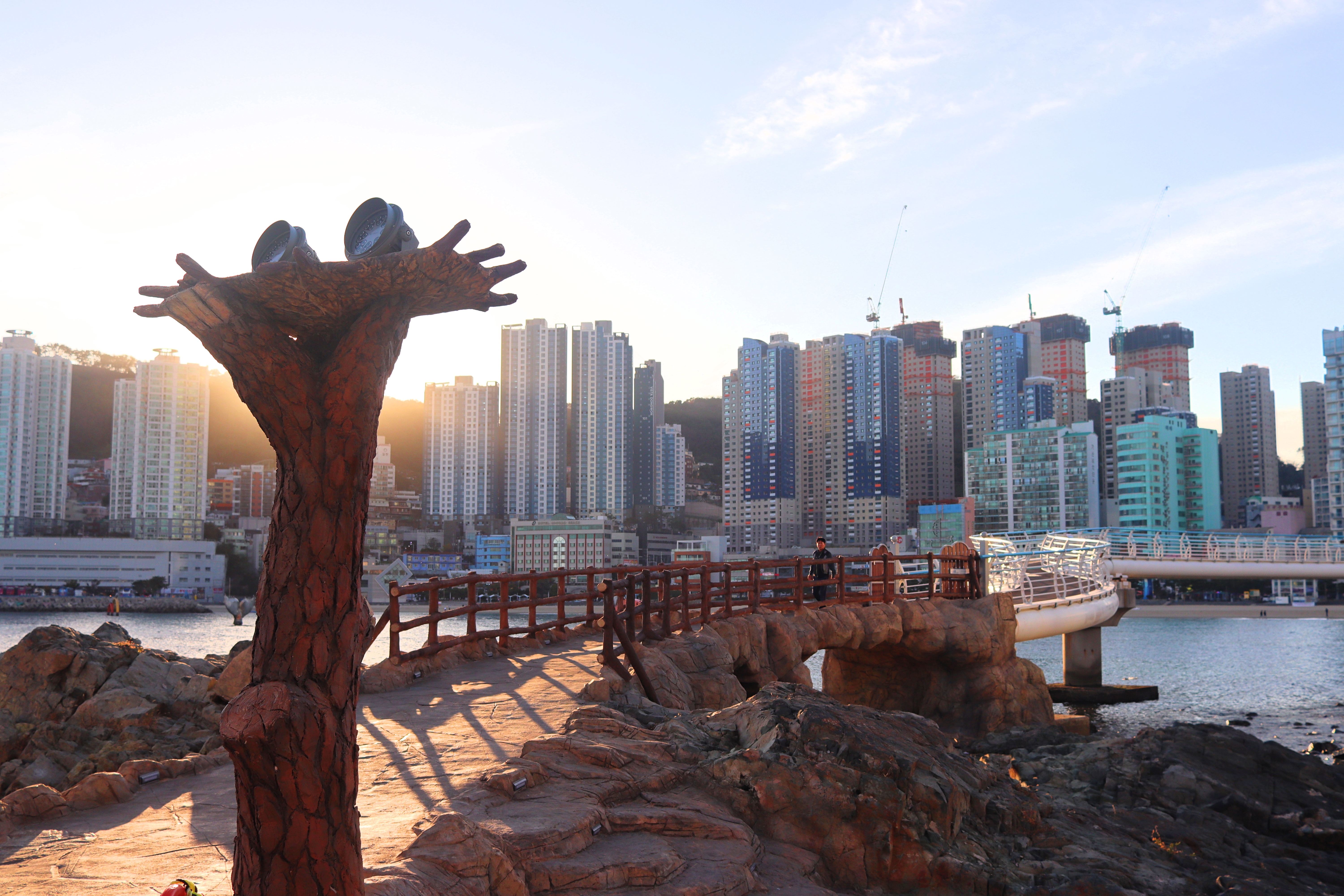
The last stop on the city tour was the seaside area known as Songdo Skywalk. This is where the “beach” is, as well as a cable car that goes further down the coast. It was a nice place to end the day, with the sun setting on the other side of the mountains.
Being so close to the waves (and seeing several other women scavenging for clams or mussels), I just had to get as close to the water as I could. This started off being a nice idea, that is, until a wave just big enough splashed across a lower flat part where it splashed high enough to rush across my foot. I say foot and not feet because I had an “oh crap!” moment just before the wave reached me, so I was able to get my left foot up before the right foot was submerged. It wasn’t long, but it soaked my sock and shoe enough so that I still wanted to sit for a bit, take them off, and let them try to dry some before leaving. It was somewhat successful. I then realized that this was now the second “incident” involving my right foot (the first being when I stepped in animal feces in Seoul). Seriously, what does South Korea have against my right foot (shoe)?

On the way back, there was a truck in front of our van with a strange statement, partly in English and the rest in Korean. Even the driver wasn’t quite sure what to make of it. It reminded me once again of the interesting and strange things I have seen while on the road in Asian countries.

You know, telling people not to do something just makes them automatically want to do it more. Not that any of us were kissing at this time, but still.
Overall, it was a nice day with more stunning glimpses of the vivid blue-green sea.
In the next chapter, I will go over the other day trip to some UNESCO sites. Bye for now!
Beautiful photography! And regarding your conversation with the older gentleman about Japan’s treatment of Korea, I noticed quite a bit of animosity when in Japan from storekeepers to Korean and Chinese travelers. Initially, I thought it was because they were in large groups, but obviously, there is more to it than that.
Fascinating post.
Thank you! Well, I do think them being in large groups has something to do with it. Etiquette in Japan is definitely valued, and I have seen large tour groups while traveling around Asia. It can get loud and a bit chaotic.