After braving the bitter cold in Harbin, China, I decided to say good riddance to the cold and headed to Ho Chi Minh City, Vietnam. I decided to visit here for many reasons, some of which include the weather during this time of year as well as high praise from other people who had visited this city. And, of course, Vietnamese food is wonderful! I was also curious to see the city that was so terribly bombarded, napalmed, and attacked with Agent Orange by the US during the Vietnam War and what it was like nowadays.
After I arrived in the afternoon (and spent a good 1.5 hours at the airport in total due to waiting to get my landing visa and to get through immigration), I really didn’t have time nor the energy to try to venture out into the still unfamiliar city. Instead, after I arrived at my apartment and got settled, I was hungry, and since I was surrounded by food places, I went and found some street snacks near by.


First full day: The Cu Chi tunnels (sounded like “koo-chee”)
I had originally planned on doing a half-day city tour first, but there weren’t enough people signed up for me to do it the next day. Instead (with the help of my Airbnb host), I opted for the Cu Chi Tunnels half-day tour. Once I had decided to go to Vietnam, I told myself that this was one of the things I must do while here. What better way to try to get more perspective from the other side than to tour some of their tunnels?
On the way to the tunnels, we first stopped off at this art studio/warehouse, where we saw some of the local artists creating pieces using tiny broken pieces of egg shells. They were really quite beautiful. Inside the store, I saw a sign that said they could ship to anywhere in the world. I wanted to take photos, but there was also a sign out front saying “no photos” inside.


While here, the tour guide asked where I’m from. I answered “from America,” and she went on to inform me (caution me, I guess) that the first thing we would do at the tunnel site was watch a propaganda video and that it might make me feel uncomfortable because it is very biased (obviously, it’s a propaganda video, so that sort of goes without saying), but she also tried to assure me that Vietnamese people in general don’t harbor ill feelings towards Americans (at least not nowadays). I told her that I wasn’t worried and that it’s history, and history isn’t always pretty (especially when learning about violence and war).
After taking another look around, we finally headed back to the van and ventured on to the tunnel area. After taking a look around the greeting center filled with old guns from the US, China, and Russia, we were taken to the outdoor theater and shown the propaganda video. I was preparing myself to be confronted by raw footage of shell-shocked men, women, and children suffering the ravages of war. Instead, we were shown an old, grainy black and white video that basically just showed footage of villagers going about their daily routines, followed by footage of some Vietnamese soldiers in “action” (a.k.a., not involved in actual combat but instead just showing examples of how they prepared for enemy invaders).
There was no heartbreaking footage whatsoever. Instead, it truly was a propaganda video that was narrated and edited to describe Washington, D.C., as “wanting to see this peaceful city dead, but that the locals refused to give in.” Aside from the cheesy narration, “patriotic’ music in the background, and terrible sound quality, there was nothing remotely heavy to take in. I’ve seen photography and actual footage from the war that is absolutely confronting and devastating. So, if any of you ever decide to go here and are “cautioned” about this video, trust me—don’t worry about it.
-

- Rocket launchers


Anyway, after viewing the video, we were led to see one of the typical booby traps (in an area that used to have much more grass around). We were then shown one of the tunnel entrances. This is a claustrophobic’s nightmare. I was amazed to see men larger than me actually able to fit into the opening. It goes to show you how amazing and hearty the Vietcong were (then again, I’m sure they were a bit smaller-framed than typical foreigners are). Anyway, here is a peak.
-

- I’m going in…
-

- But not without my leaf hat
-

- This feels like some kind of Vietcong version of “whack a mole.”
-

- Not quite as easy getting back out.
While waiting for other people to get their photos taken in the hole, this seemed a bit like a strange version of Vietcong “whack-a-mole” with the popping up and down from the tunnel opening. I’m not claustrophobic, but I was a bit hesitant to try squeezing in there. Getting in proved to be easier than getting back out, but it all worked out.
After taking turns getting our “whack-a-mole” photos taken, we were taken around the property to see the other tunnel openings and systems of ventilation that were used. We were also informed of the many ways in which the Vietcong utilized their knowledge of combining certain ingredients that would repel or attract certain insects, critters, and snakes that could be used to their advantage as weapons against invading US troops. Talk about being clever and resourceful.


-

- I was told to look scared. I may have been channeling something else though but I’m not sure what exactly.
-

- Ventilation holes
During the tour we saw an old American tanker that was on display.
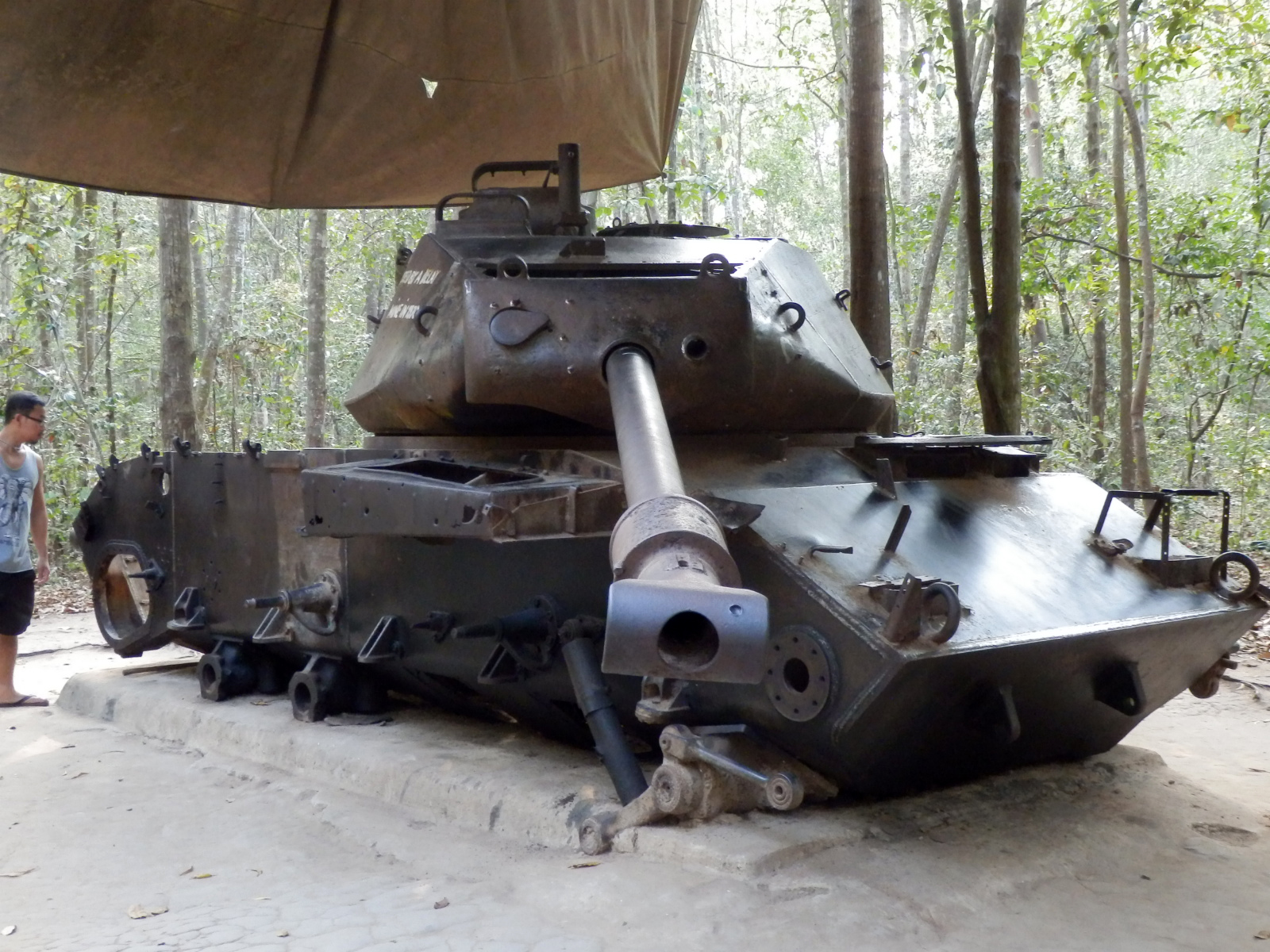
An old American tanker
In addition to using their local environment to their advantage and plating landmines, they also created other nasty and barbaric surprises for invading troops. It’s not surprising that so many returning war veterans developed PTSD. See below…


-

- It’s unnerving to think that these rice patty field folks had the time and notion to create these barbaric devices. It’s no wonder so pany Vietnam war vets came back with PTSD (the ones who made it back, anyway).

One of the barracks where the Vietcong members worked on creating weapons and tools to help with the tunnels.
Throughout the tour, we could hear random explosions and gunshots in the distance. As we came upon where this was coming from, we were informed that we were now at the shooting range. If we wanted to pay extra, we could have a chance to fire some of the kinds of guns that were used during the war. These included the M16, M30, AK-47, some type of machine gun (so it said), and a few others. I was hesitant to try this, and I was certain (just from the sound of them) that these guns were intense and probably produced a lot of kickback. I figured this out because I have fired guns before (ex. a.22 rifle and pistol, a 20-gauge shotgun, a.38 pistol, and some other kind of high-powered rifle), and I was careless enough to leave space between myself and the butt of the gun. My carelessness allowed for the gun to kick back, and I wound up giving myself what is referred to as a “cookie cutter” wound from the scope on the corner of my right eyebrow. I also bled.
Eventually, I decided to try the M16, and I paid to shoot 10 bullets. Luckily, earphones were provided, but the sound was still loud enough to be unnerving. The gun did produce a kickback, which made me nervous to pull the trigger again, but as I fired the rest of the bullets, my nervousness went away. I can’t imagine what it must be like to be in battle and constantly firing off rounds with these kinds of weapons (especially with no ear protection).
-

- No, this wasn’t me or an M16. I believe this person was shooting the AK-47.
-

- I choose the M16
-

- People on our tour enjoying some ice cream with the sound of gun fire in the background.
Further along, we were shown a site where sandals were made from old tires. We were also told that the Vietcong would wear them correctly, as well as backwards, to create tracks so as to confuse potential invading soldiers. Apparently they also wore them frontwards and backwards to help them last longer.
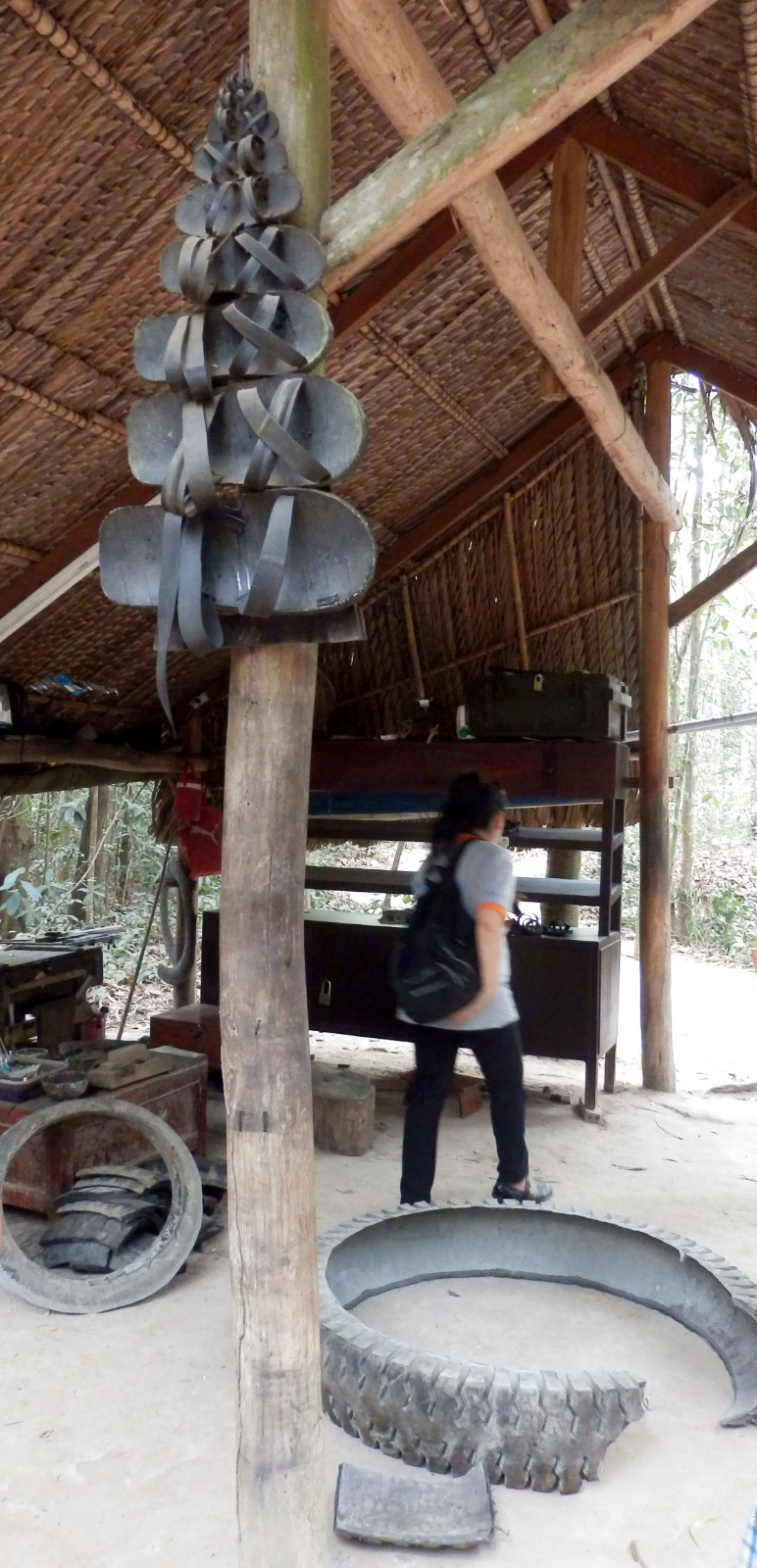
These were shoes made from old tires. We were told that they would wear them on backwards to leave tracks in the dirt to confuse American troops, as well as to help the shoes to last longer.
The last big part of the trip was the chance to actually travel through a tunnel. We were told to go in small groups and wait after each group finished because of the limited oxygen below. The lighting was limited, and the space was just big enough that one could walk, but only if you were hunched down a lot. For a better understanding of what this felt like, take a look at the video I took while down there. Some parts of the walk were totally darkened. While inside, it’s hard to imagine people constantly traveling through these tunnels for miles on end, especially if carrying things like artillery. Then again, if your city or town were being invaded and attacked by a major foreign force that carpet bombed, napalmed, and sprayed toxic chemicals to ruin your food supply, I guess you could be capable of a great many things in order to survive.
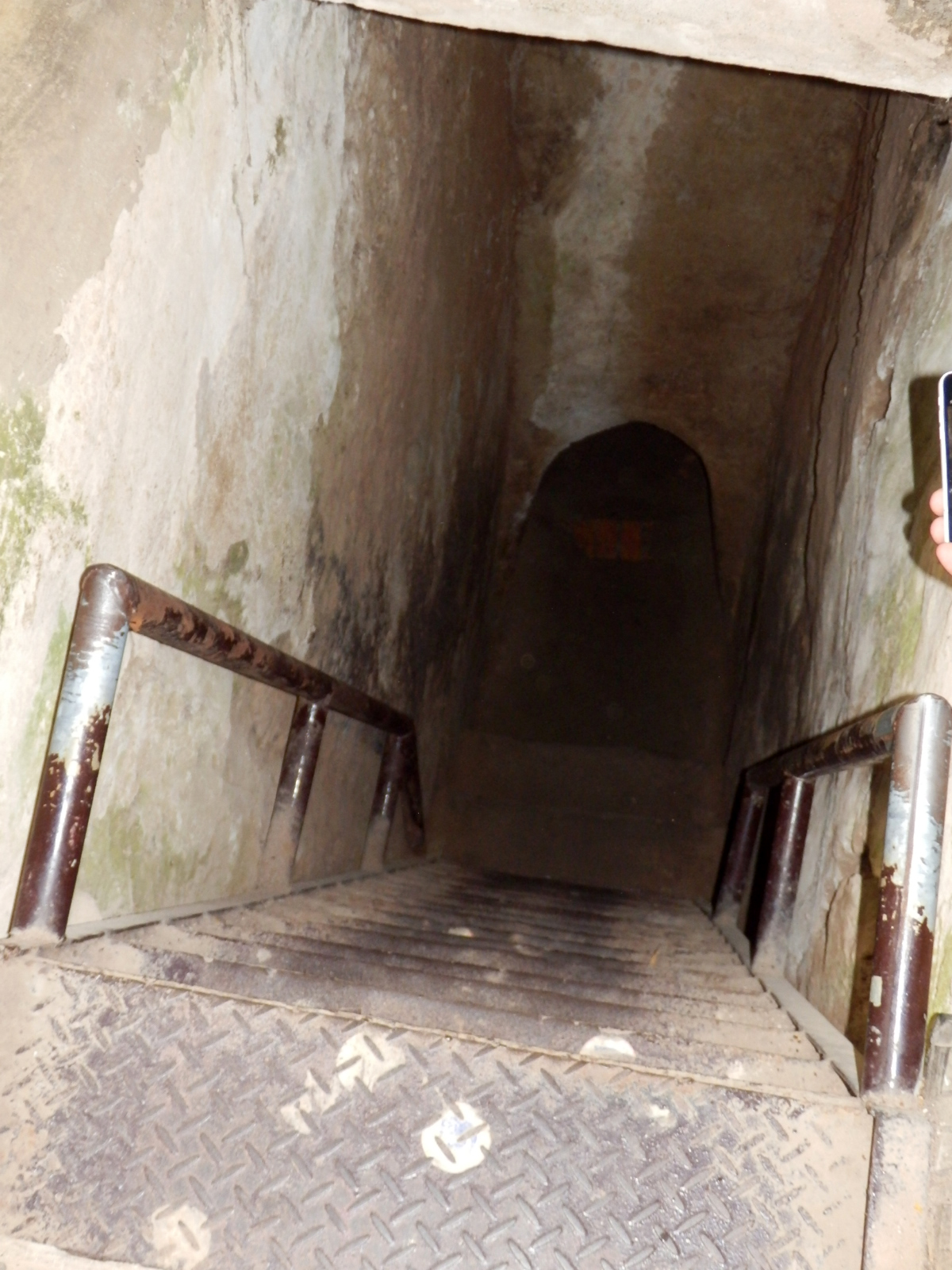
The exit of the tunnel
After making it out of the tunnel, we were then treated to some tea, along with some kind of starchy vegetable that we were told was a kind of potato. It was served with a small bowl of crushed peanuts and sesame seeds for dipping.
-

- The tour guide described these as potatoes, though I’m not sure if they are in fact potatoes. They are a starchy potato-like plant that was eaten a lot during the war by the Vietcong.
-

- Another view of this strange alien-like starch.
This “potato” was eaten a lot by the local soldiers, and the Vietcong would only cook once a day during the early morning so as to avoid creating smoke that might be seen by enemy troops.
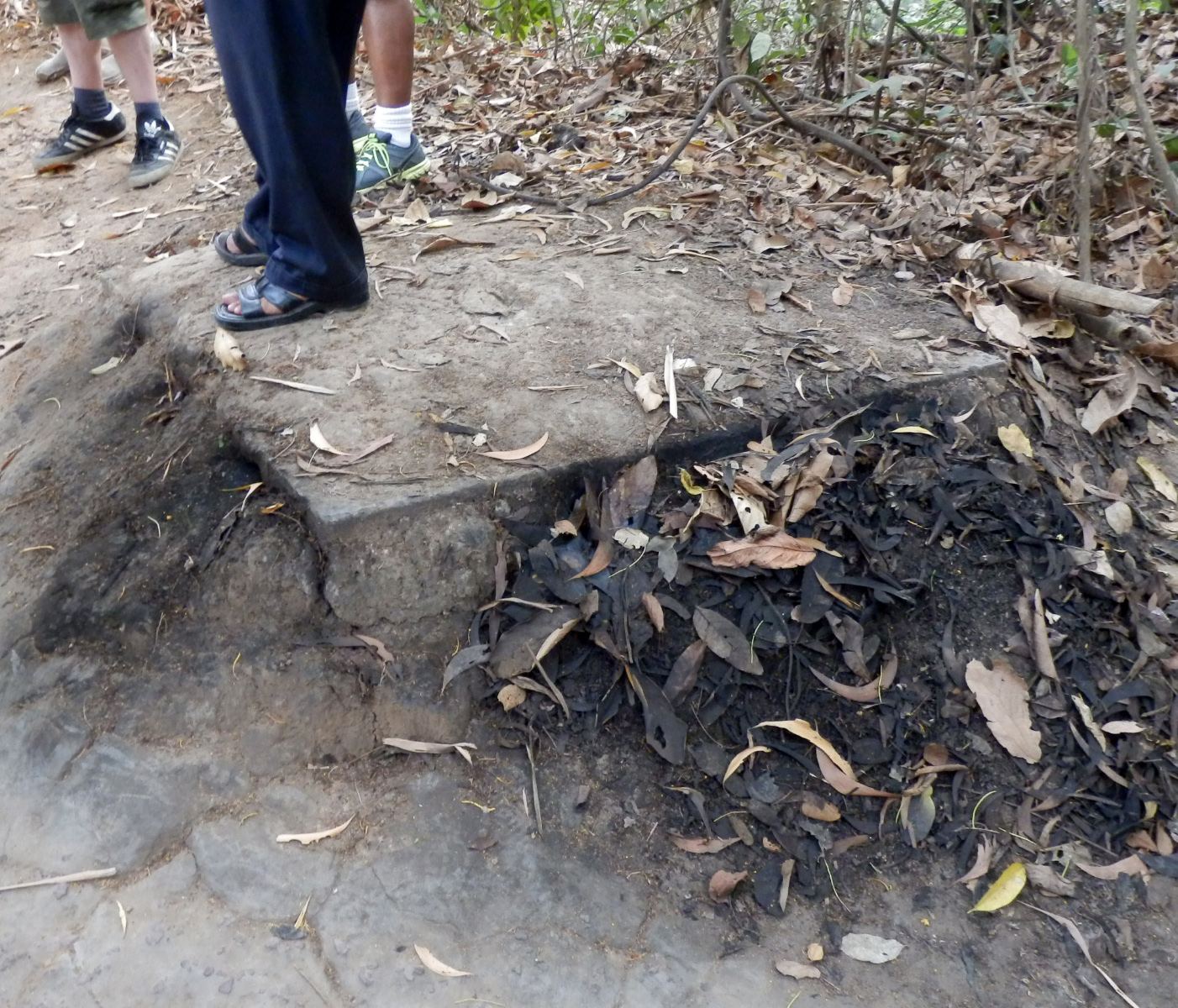
The Vietcong cooked only once a day early in the morning so as to avoid the US soldiers seeing the smoke.

After this tour, it’s amazing to see how clever and resourceful the VC were, especially when up against a military power like the US. But this proves that brute force and big bombs are not always enough to defeat your target. It also highlights the horrors of war and the depths of darkness and carnage we humans are willing to create.
Second day:
City tour (War Remnants Museum, Notre Dame Cathedral, Old Post Office, Reunification Palace, Jade Emperor Pagoda)
The day started off with a visit to the War Remnants Museum, which houses photographs, articles, and pieces of war shrapnel (as well as a few tanks and a helicopter). We were told that, as part of the tour, we would only have 40 minutes to look around. I wasn’t sure if this was enough time or not, but after I got inside, I realized that, no, this was certainly not going to be enough time. The museum has four floors, and there are indeed many historical photographs and articles to get through, and 40 minutes isn’t nearly enough time to take it all in. Anyway, here are the photos I managed to get during that time.
I knew there was a big antiwar movement throughout the US, but I didn’t realize how much the rest of the world was united against the US invading Vietnam, which can be seen by the many different international propaganda posters here as well as some of the heroic acts that some US soldiers did in defiance of their orders. Though this exhibit was very one-sided, it’s hard to argue with the antiwar sentiment given all of the atrocities and horror that took place.


*Caution*
Although the next couple of photo galleries are necessary to fully understand the horrible realities of war, there are images that people may find graphic and disturbing.
-

- The remains of a Vietcong member after being blown up by a grenade.
-

- Two Vietnamese victims being dragged to death behind this US tanker.
-

- US Senator Bob Kerry


-

- Remnants of explosives used
-

- Gas maks
-

- The results of exposure to Agent Orange


-

- This photo listed below the phrase “Quagmire” says it all.
-

- A peasant farmer stands between the craters left by bombs.

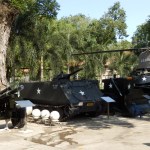

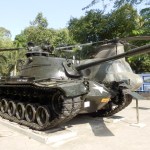

There were other photos of US soldiers interrogating, torturing, and killing innocent civilians. The story above about Sen. Bob Kerry’s unit and the horror that occurred that night stuck with me through the day. I couldn’t believe that such carnage would take place, especially against women and children. I didn’t get a chance to visit the 4th floor. However, after everything that I had seen, it was easy to see why the image of WWII American heroism was totally diminished by what occurred in Vietnam. Everyone should see this exhibit, particularly hawkish warmongers who don’t seem to understand what war truly entails and ultimately how devastating it can be for people fighting on all sides.
And now, onto less heavy sites.
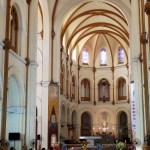
The next stop was the Notre Dame Cathedral and the Old Post Office, which is located just across the street from it. This church was built back when the French were occupying Vietnam. The post office was also built by the same architect who designed the Eiffel Tower, Gustave Eiffel.
-

- Notre Dame Cathedral
-

- The Old Post Office


Next up was the Reunification Palace, which used to serve as a palace for the ruling administration but is now a museum. We were shown different rooms where meetings were held, guests were received, the family lived, and the underground bunker that was used to communicate with the armed forces during the war.


-

- Gifts for the president’s family.
-

- The old library


-

- The idea of the in home theater is apparently not a new concept.
-

- The president’s get away chopper.
The last place we visited was the Jade Emperor Pagoda, but this ended up not being as interesting as I had hoped. The inside looked just like every other temple I have seen so far, and the lighting was also not good for taking photos. Here is the most interesting photo I took during that time.

Day 3: The Mekong Delta
Day 3 included sight-seeing at a floating fisherman village, followed by a ride in a wooden bassac boat along the Mekong, and then on to see all the different items that can be made from coconuts.
The first part was a visit to a little rest stop area with a lot of greenery.
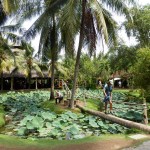


Afterwards, we were taken to the main ticket office, where we were given a summary of what we would see that day as well as the boat that would take us to our destination.
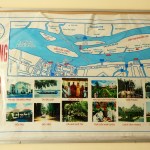

There is an island nearby that is called Con Phung, which used to be called Tan Vinh Island (and also referred to as Dao Dua, meaning coconut religion). We were told we weren’t going to see this island because of how crowded it gets with tourists. Instead, we would first head to a small floating fishering village. Our tour guide, Ms. Han, showed us the different fish that are captured here, along with what happens when you dump fish pellets into the water of tens of thousands of hungry fish.

-

- Before…
-

- After…
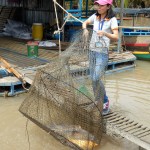
-

- Ms. Han explained that while the fish are all exicted to eat, it’s a great opportuity to get a free foot treatment (referring to the practice of sticking one’s foot in a bowl of tiny fish that each nibble tiny bits of dead skin off one’s feet).
When asked if anyone else would like to try getting a free foot treatment, only two of us—a girl from Japan and me—decided to try it. The moment the Japanese girl put her foot in the water, she yelled and took her foot back out because of how ticklish it felt. When I put my feet in, the fish didn’t seem as excited and didn’t really nibble as much as I thought they might. It also didn’t feel quite as ticklish as I thought it would (but maybe it’s worse when the fish are really tiny). We jokingly chalked up this lack of interest in my feet to them having already eaten.
The next place was a boat ride over to the opening of the delta area, where we would get to ride in a wooden bassac boat and float along for a bit on a quiet and peaceful part of the river (despite the number of other tourist boats also floating along).


At the end of the waterway, we got to a little eatery, which included a live music performance of local songs about Vietnam. We also got to try some local sweet tea with a type of citrus juice, honey, and some fruit.


After some fruit, tea, and a performance, we were given a chance to see a python that is kept in a cage behind the gift stand. Ms. Han took it out and draped it over herself, then asked if anyone else would like to follow suit. I and a couple others did. My motivation was thinking back on when I was a kid visiting my aunt and uncle in Melbourne, FL, and remembering how my sister was brave enough to hold a python (or some kind of larger snake) and how I chickened out. Now was the time to redeem myself. Take that, Andrea!


As I was holding the python, I noticed where its “butt” area was, and I wondered what would happen if it wanted to poop on me. Funny enough, a few moments after we began moving toward the restaurant for lunch, I noticed a funny-looking little black blob on my forearm. I tried to wipe it off by rubbing my arm on something, but it just moved around. It didn’t come off. I finally had to wait for a moment when no one would see me, and I took out a tissue to finally get it off. In retrospect, I suppose it’s better to get pooped on by a python than to be attacked by one. I can also say, “You may have held a python before, but have you ever been shat on by one? I have!”
After my python poop encounter, we headed toward a main “road” where we would take what looked like a small pickup truck that only had some gate side panels (similar to a “motorbus” in Chiang Mai but with no roof) and head along the dirt road toward the restaurant. But first, we walked along a trail through an area where some locals lived. Along the way, we encountered some interesting plants and flowers, including some cacao plants.



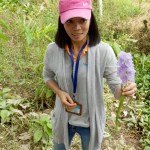


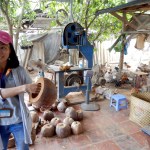

After passing by a little coconut nick-knack shop (I didn’t realize how many things could be made from a coconut), we finally arrived at the restaurant. This place serves locally caught “elephant fish,” prawns, and even turtles. It also has hammocks for guests to utilize after a fine meal.

-

- elephant fish, named for it’s larger than normal size for this kind of fish.
-

- A puffed up fried sticky rice ball.
-

- Freshly made spring roll
-

- Slices of the fried sticky rice ball.
-

- A type of fried spring roll with pork


-

- A delightful way to end a nice lunch on a hot day.
As we finished lunch, we headed towards our bassac boat to see how local coconut candy is made. Along the way, we saw some more of the restaurant grounds and flowers.


Alas, we finally made it to the coconut production “hut” (I’m really not sure what else to call it). Here, we were shown from beginning to end how a coconut is opened, processed, and produced into candy. They also sold some coconut wine, along with other gifts. You can take a look at how to open a coconut, as demonstrated by Ms. Han.
-
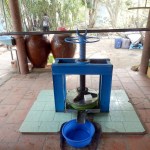
- The milk extractor


-

- I decided to buy a package of the cocao flavored kind.
-

- Coconut wine
-

- Think that nothing can be mde from the base/roots of a bamboo tree? Ha! Think again.
-

- I’ve got a lovely bunch of coconuts…
-

- Water coconut plant that is found along the Mekong Delta


-

- A complimentary sip on the boat ride back
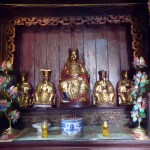
After having the “coconuttiest” day ever, we took a final boat ride back to shore to see the last part of the trip: A famous pagoda (one of many in this city) that I now shamefully cannot remember the name of: If someone happens to recognize it from the images, please let me know.
Anyway, before going inside, we were told a bit about the smiling Buddha, how he has big ears that can hear everything, and what his finger position means (3 fingers pointing up and one pointing down). We were told that it means that he can send you up to heaven or down to hell (and back again, apparently), but that everyone can change their fate if they behave well (or vice versa).


-

- Like Buddha, like tour guide

-

- This image of a jolly and rotund diety is certainly a good way to get people interested in Buddhism.




Some interesting information that Ms. Han told us during our trip. 1) No school in Vietnam is free, so if one wants to go to school, their parents have to work hard to save up enough money and basically forego any kind of indulgence for themselves. 2) Her parents are farmers (like many people who are not from the city) and have never been to the city or met any foreigners. 3) Her father refuses to wear the new shoes that she bought him, saying that they are not good for wearing when working in the water. 3) I now know what a “1000-star hotel” is. According to her, a “1000-star hotel” refers to how some poor people’s homes have damaged roofs or missing parts of their roof, and because of this, you can see 1000 stars at night. Therefore, if you stay in a house like this, you are staying at a “1000-star hotel.” The same is also true of the “1000-star toilet.”
It was also interesting to note that even after the war, to this day, there still seem to be some mixed feelings between northern and southern Vietnam. Our tour guide described the south as being more friendly and gave us an example of the difference in dining out in the north vs. the south. According to her, in the south, if you go out to eat, the servers help each other out with each other’s tables because there is a sense of working together, as well as a sense of needing to thank the customer for visiting because they are contributing to the restaurant’s success. Whereas (according to her) in the north, if you go out to eat, the servers feel no need to help each other out and instead focus only on their own tables and feel no need to help each other out as they don’t gain anything from this (no extra money for their efforts, I guess). Also, their attitude toward the customers is that the customer should feel grateful to the servers and restaurant for providing them food and service. I haven’t been to Hanoi or anywhere in north Vietnam, so I can’t verify any of this. I hope to be able to get there, though, so if and when I do, I will keep this in mind.
Days 4 & 5: Beach time in Mui Ne
I decided that while in Vietnam, I needed to try out a beach. Vietnam is said to have some great beaches, and I wanted to go there. After being told that Ho Tram was still relatively new and not very developed (“boring,” as my Airbnb host referred to it) and Vung Tau being described as perhaps not quite as clean as I would have liked, I decided on taking the 4-5 hour bus ride out to Mui Ne. It’s a cheap and “down-home” beach get-away place for tourists and locals, with lots of coastline and quite a number of hotels and guest houses. They range from posh 4-star ratings to really simple, bare-bones places. It also has a unique climate that is pretty much dry year-round, so you can avoid the seasonal weather upheavals that occur elsewhere in the country.
The place I stayed (of course, booked through Airbnb; I feel like I should be a spokesperson for them) was a guest house, though rather old and run-down. I knew that if I wanted to get some beach time in, I’d have to forego paying for an expensive seaside resort. Besides, the owner told me I could use the beach area at the nearby 4-star hotel that was only a 3-minute walk from his place. He was right. I was able to walk through the lobby and just head toward the waterfront without anyone asking for verification that I was staying there. The water itself was OK. Not bad by any means, but not great. The sand area had some garbage, which is disheartening, but the water seemed clean. The water had many random pockets of warm and cool parts, too. It did have some modest waves, though, so that was fun. But it wasn’t crowded; in fact, the pool outback just before the beach had more people than the beach area. Anyway, enough chatter, and onto the photos.




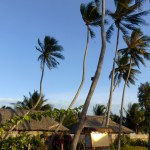

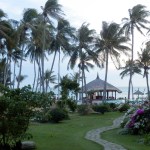


Another reason I choose Mui Ne is because of some of the attractions. There are places like the white, yellow, and red sand dunes, the fisherman’s village, and a place near my guest house called “Fairy Stream.” There were two tour options for seeing the white sand dunes: a 4:30 a.m. sunrise jeep tour or an afternoon jeep sunset tour. I choose the 4:30 a.m. one, despite being a lifelong hater of early mornings. I chose this because I figured not as many people would be up for this timing and it might be quieter (I was proven wrong, as usual). The owner of the guest house offered to take me on this tour himself for a bit less money than the official Jeep tour cost. I thanked him for his offer and took him up on it. The next morning, we left (albeit 30 minutes late while waiting for him) for the dunes.
When we arrived, I soon saw that there was an option to drive a 4-wheeler up along the dunes. I was nervous because I had never operated a 4-wheeler before. I also didn’t know there was an option to do this and didn’t have enough money to rent one. So Duc, the guest house owner/chauffeur, lent me money to use it. While trying to drive it along the sandy ground (which is not easy, by the way), there was more than one occasion where I felt like I might get stuck, slide down sideways, or even over-turn. During these moments, I tried to disguise my fears by looking like I was trying to get a good photo (which was partly true). Eventually, my engine did stall out, and I had to ask for help (OK, several times). After spending perhaps an hour in total (some of which included having to backtrack because the dune seemed too steep, as well as forgetting where the original entrance path was), I managed to get some decent photos. I’m actually glad to have taken the 4-wheeler up. It would have taken a lot longer to get around the place on foot.






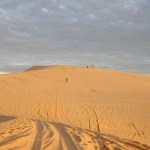
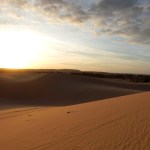

After that, he drove me to a place called Red Rock Canyon. I soon realized that the term “canyon” was being used very loosely. I took a few photos, but I decided that was all I needed, and we soon headed to the next place, which was the red sand dunes. Though the color of the sand was interesting, I really didn’t get any shots that were interesting, and again, we headed back to his truck for the next stop. The next place was an area along the shore known as “fisherman’s village,” where many fishermen gather to sell their daily catches.
-

- The so-called “canyon.” Is it a canyon? No. But the rich red-orange colored soil was interesting.


We then drove back to the guest house, and he told me that very nearby was a place called “Fairy Stream.” After he drove back, I walked along and soon found the path toward the stream. Once I reached it, I saw a few foreigners walking along while holding their shoes and walking barefoot along the stream. I didn’t realize you were not supposed to wear shoes here, so I had to carry my sandals along with my small bag while trying to hold up my long PJ pants that people often get while in Thailand. I first headed left and soon wondered what all the fuss was about. Sure, the red-orange clay/mud mixture was interesting and felt nice to walk in, but the scenery wasn’t anything too special. I decided to head back in the other direction, hoping that my persistence would pay off. Luckily, it did. Here is what I saw going in this direction.


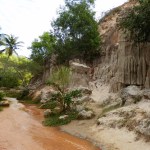
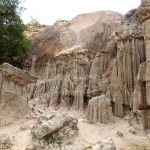


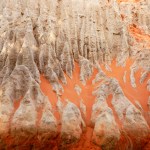


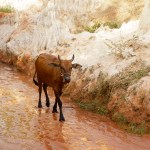


Before taking another long bus ride back to HCMC, I stopped by to have breakfast at a small family-run eatery.


-

- Some breakfast in Mui Ne
Day 6: Time for some good Vietnamese cooking
Of course, there was no way I was going to visit Vietnam without taking a cooking class to guarantee some authentic, yummy cuisine. I looked up different cooking classes and ultimately decided to go through the well-known Hao Tuc cooking school, located above the restaurant with the same name. We made three dishes and were also given some dessert. In my class, there were only four people. Two were a couple from Switzerland, and the other was a man from France. They had apparently met the day before on a street food tour and were already chummy with each other (as well as speaking in French). I wondered if I would be like the left-out American who couldn’t speak French, but they soon began chatting with me and were really quite engaging. This is another reason why I like taking cooking classes. You get to meet people in an “intimate” setting (unless there are a lot of people signed up for the class) and share in a common cultural activity. Anyway, here is the menu.

-

- First plate for the soup

-

- the chef describing the “lady finger” vegetable

-

- Preperation for the chicken salad

-

- Sweet, sour, salty, spicy dipping sauce

-

- Using a classic Vietnamese vegetable cutting tool
-

- Chilis in ice water


-

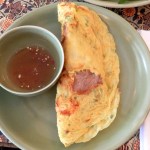
- Vietnamese pancake


-

- creamy mango dessert
In short, here is a glimpse of some other food I had while in Vietnam. I also went to this great restaurant called Cuc Gach Quan. It’s a fantastic family-owned and operated place that creates great, trendy modern Vietnamese food. Unfortunately, because of the trendy dim lighting, I was also not able to take great photos of the wonderful food. The ones I did take were too grainy and not worth posting. Anyway, just take my word for it. If you ever visit HCMC, then you must go there at least once. But here are the photos of other foods that did come out better.

Crispy fried noodles with seafood
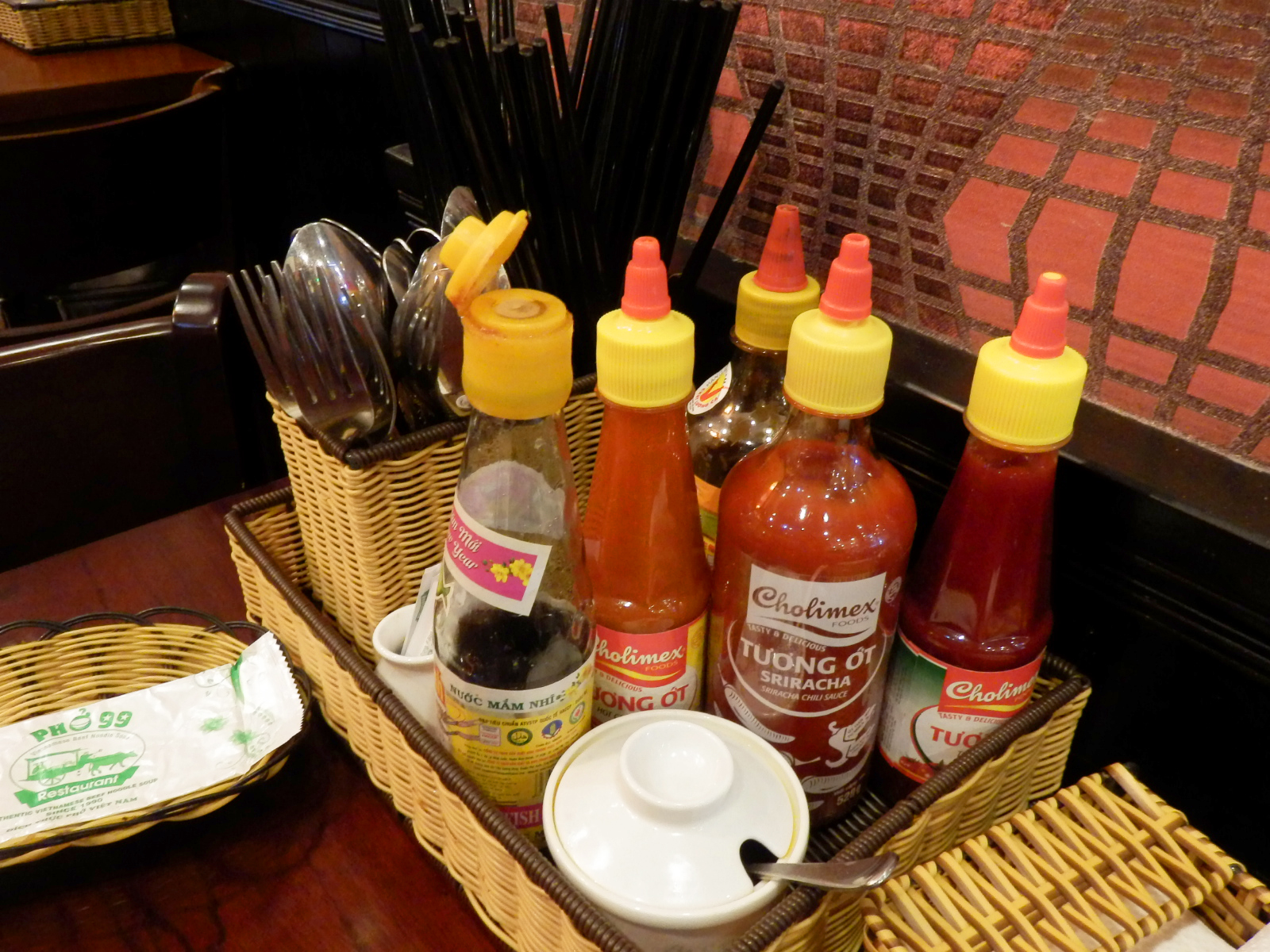
Now, THIS is how you accommodate the customer with condiments.

Typical accessories with your bowl of delicious Pho.
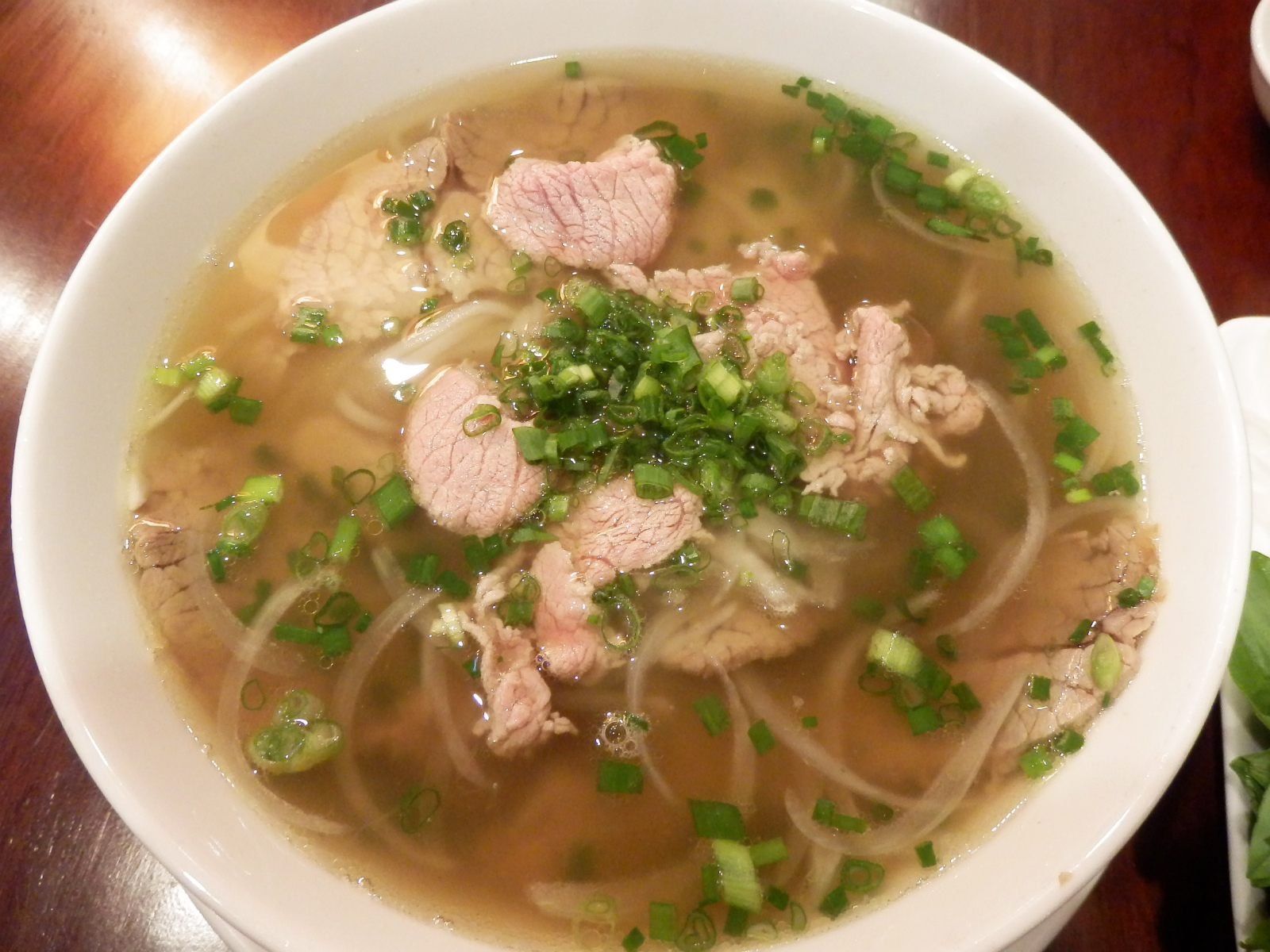
Vietnam’s famous beef noodle soup in all of its delicious glory.
After 6 days in Ho Chi Minh City (or Saigon, as the southern half still calls it), I would recommend visiting here, and I would love to come back to experience more sites and flavors (even if it means having to deal with the infamous motorbike congestion and craziness again).


Leave a Reply