It’s been exactly a year since I last updated my blog with a new adventure. As I am currently finishing up my online master’s degree at the time of creating this, the final course will happen over Chinese New Year, so I realized that the Christmas holiday would be the only time that I would have to travel without having course work due. I also don’t want to travel during the world’s largest annual mass migration, especially due to the COVID restrictions eliminating international travel and the government’s further restrictions due to hosting the 2022 Winter Olympics.
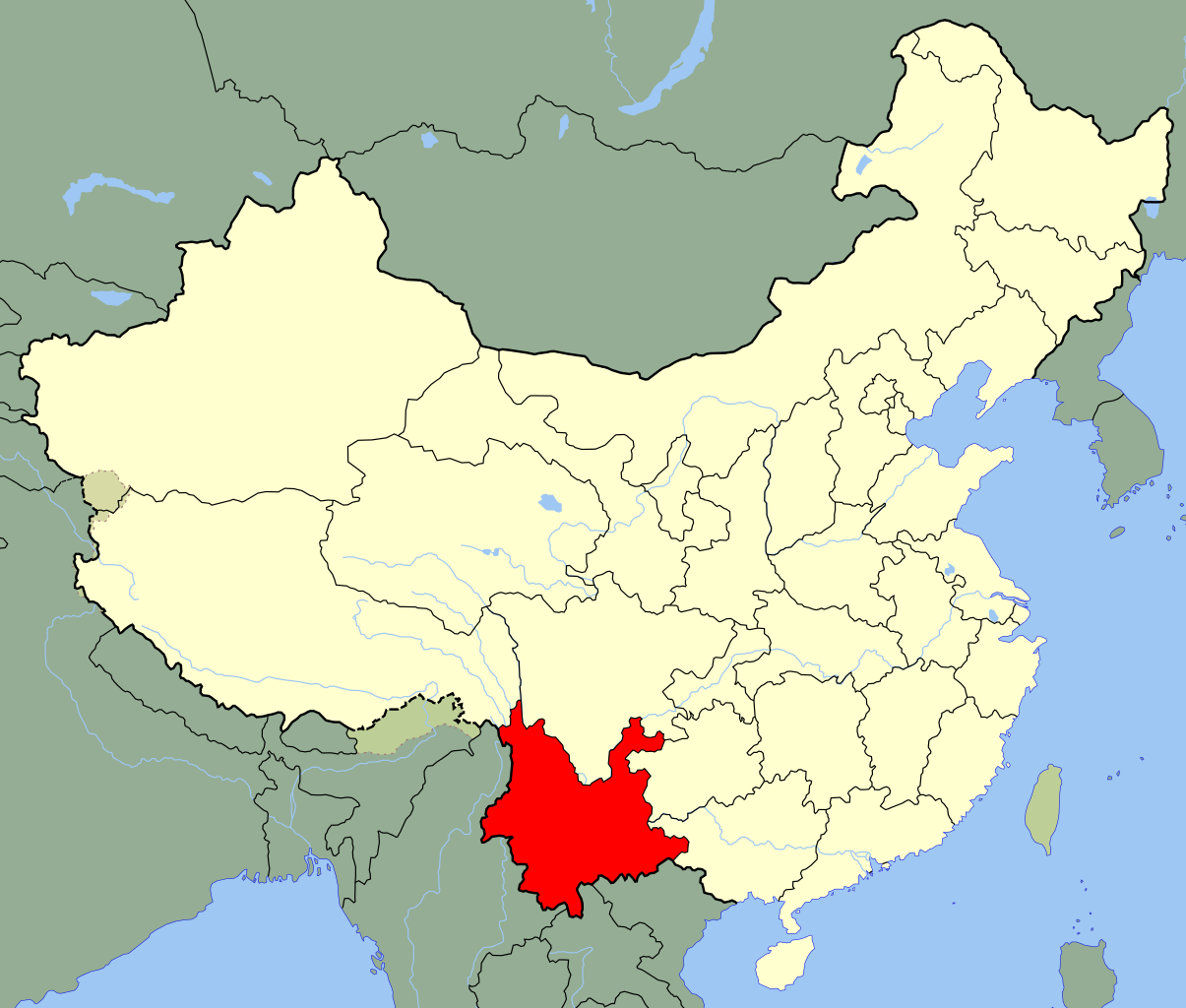
Admittedly, my original plan was not to return to Yunnan but to explore parts of western Sichuan province (right above Yunnan), which is located in the south-western part of China, bordering Vietnam, Laos, Myanmar, and Tibet. Unfortunately, due to COVID restrictions and the recent (at this time) cases announced in Shanghai, certain sites in Sichuan required extra testing and/or documentation to prove your health status. So, I decided that it wasn’t worth the additional hassle.
Since this trip would occur during the winter, I felt that my options for travel were quite limited. I have already seen the ice and snow festival in Harbin, as well as having already visited Beijing in May of 2018. I thought about visiting Xi’an (China’s original ancient capital), but I decided not to after reading about how dusty and polluted it gets in the winter. It also wasn’t an option due to the recent outbreak of some other disease, resulting in strict lockdowns. Therefore, I took another look at Yunnan and decided to see other parts of it. This time, I was hoping to see some of their rice terraced areas down south, which, like many other rice terraced areas, were created after more than 1000 years of construction.
Instead of looking for a tour company, I looked for a local guide in Yunnan, just as I had for Sichuan. I had contacted the guide I used for my trip last year, but I didn’t hear back from him. So, I found another local guide named Jerry (derived from his Chinese name, Jùn Wěi 俊伟). Jerry is a native of Yunnan, so he is quite familiar with the area and has done other tours throughout it. His English is also quite good. So, after some emailing back and forth about tailoring my itinerary, I confirmed my plans. He is of the Han majority (what China and the world refer to as Chinese people), but since he is a native of Yunnan, he is also familiar with the many ethnic minorities of Yunnan, including the Hani 哈尼 people of the Yuanyang 元阳 area.
The trip was only four full days, as I didn’t want to take up my entire holiday break traveling (and I didn’t have the funds to do so anyway, even if I wanted to). I visited two areas: Yuanyang to see their rice terraces and Donguchan to see the “Redlands.”
I had seen the rice terraces of Guilin a few years earlier, so I thought it would be a nice thing to see here, too. Even though the weather and drive time caused us to not see quite as much as I had hoped, it was still a good trip overall.
Day 1: Yuanyang 元阳
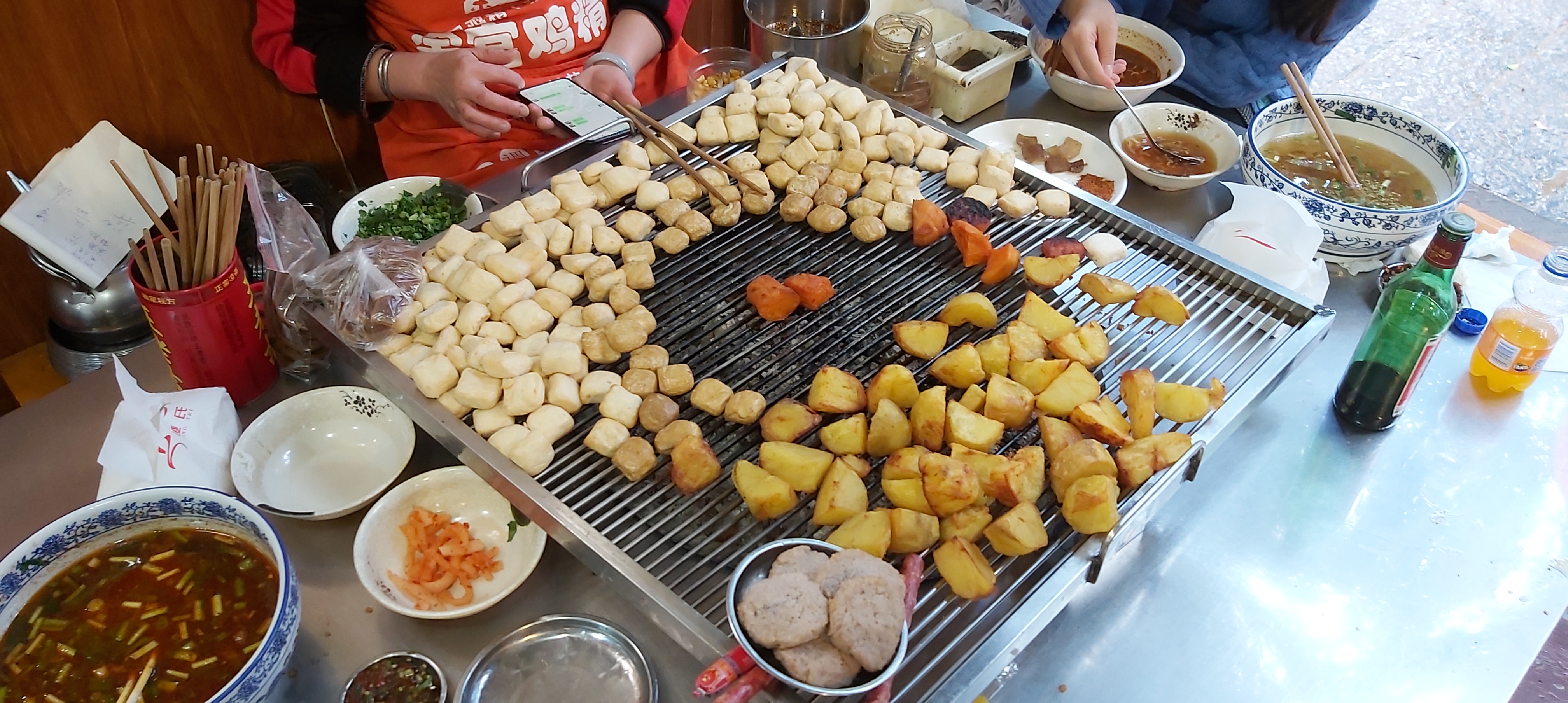
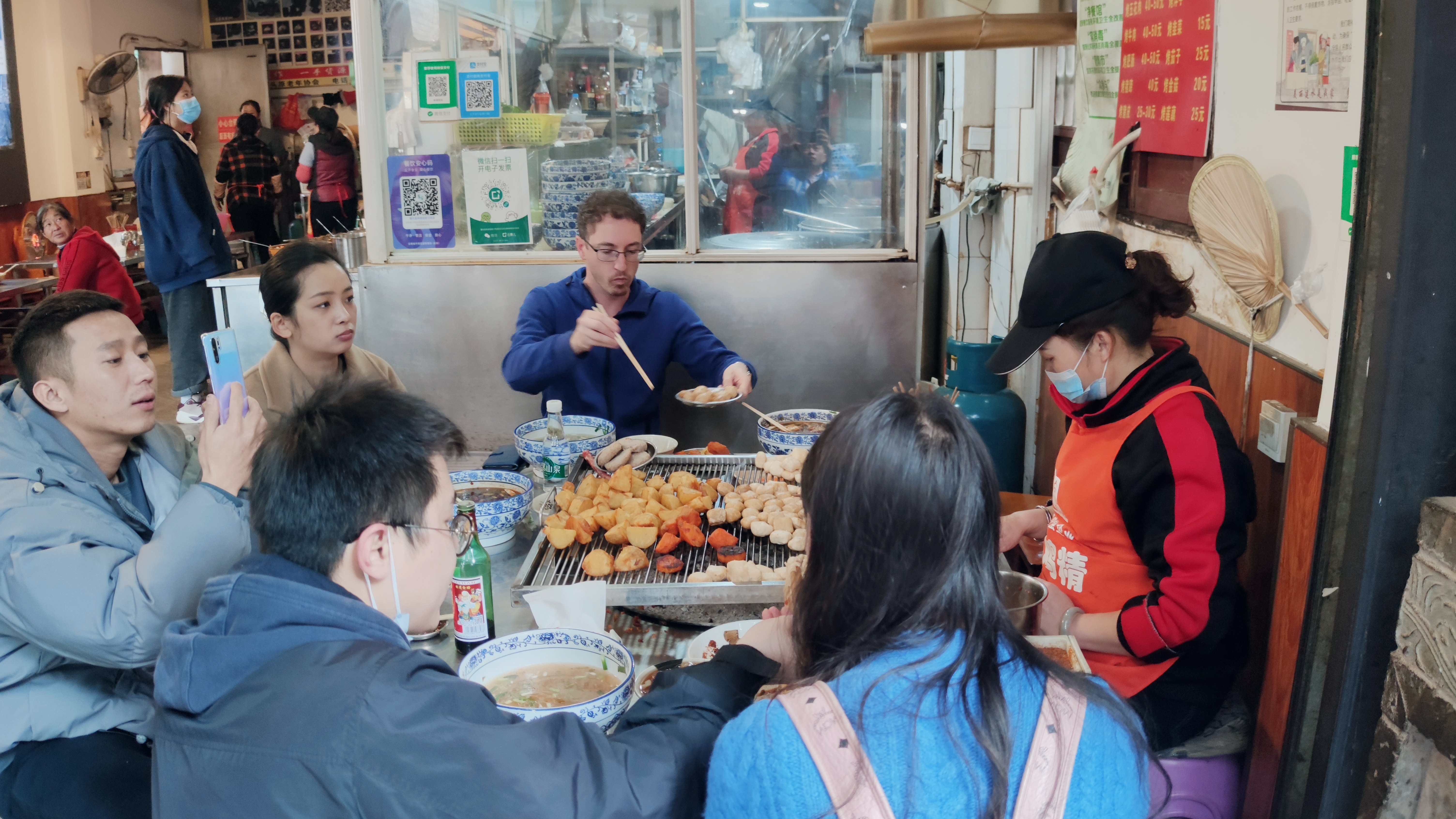
After picking me up at the airport, Jerry drove us two and a half hours to have a late lunch in a town where their claim to fame is their baked tofu that uses special “pure” well water nearby. This baked tofu appeared on an episode of the first season of “A Bite of China.” We ate at a small local place with informal communal dining on little stools. It consisted of a few women seated at grilling stations with many pieces of tofu to bake, as well as potatoes, sweet potatoes, and some sausage.

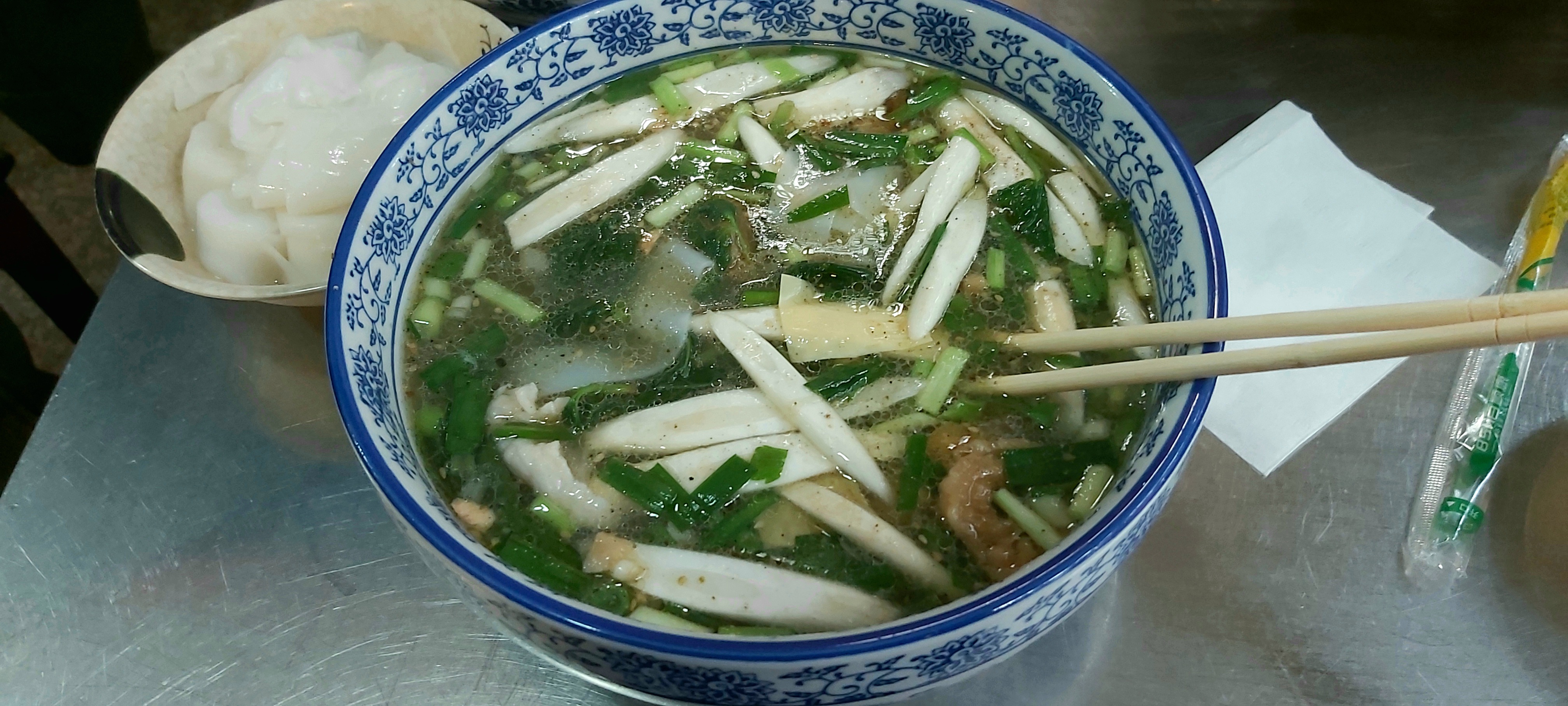
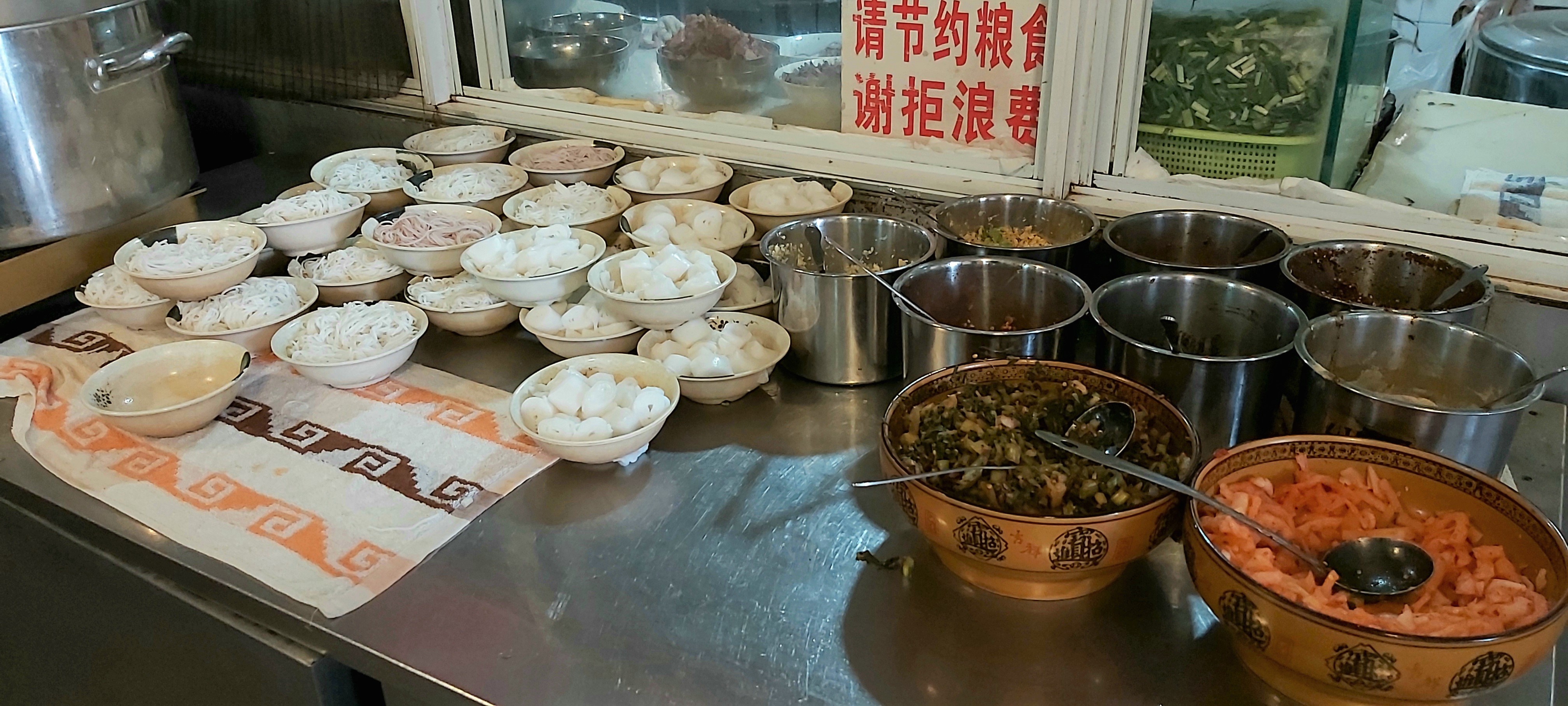
Our meal also consisted of a soup with a choice of regular rice noodles, flat rice noodles, or local red noodles.

Since Jerry also likes to take photos, he decided that he should capture a moment of me indulging in the local food.

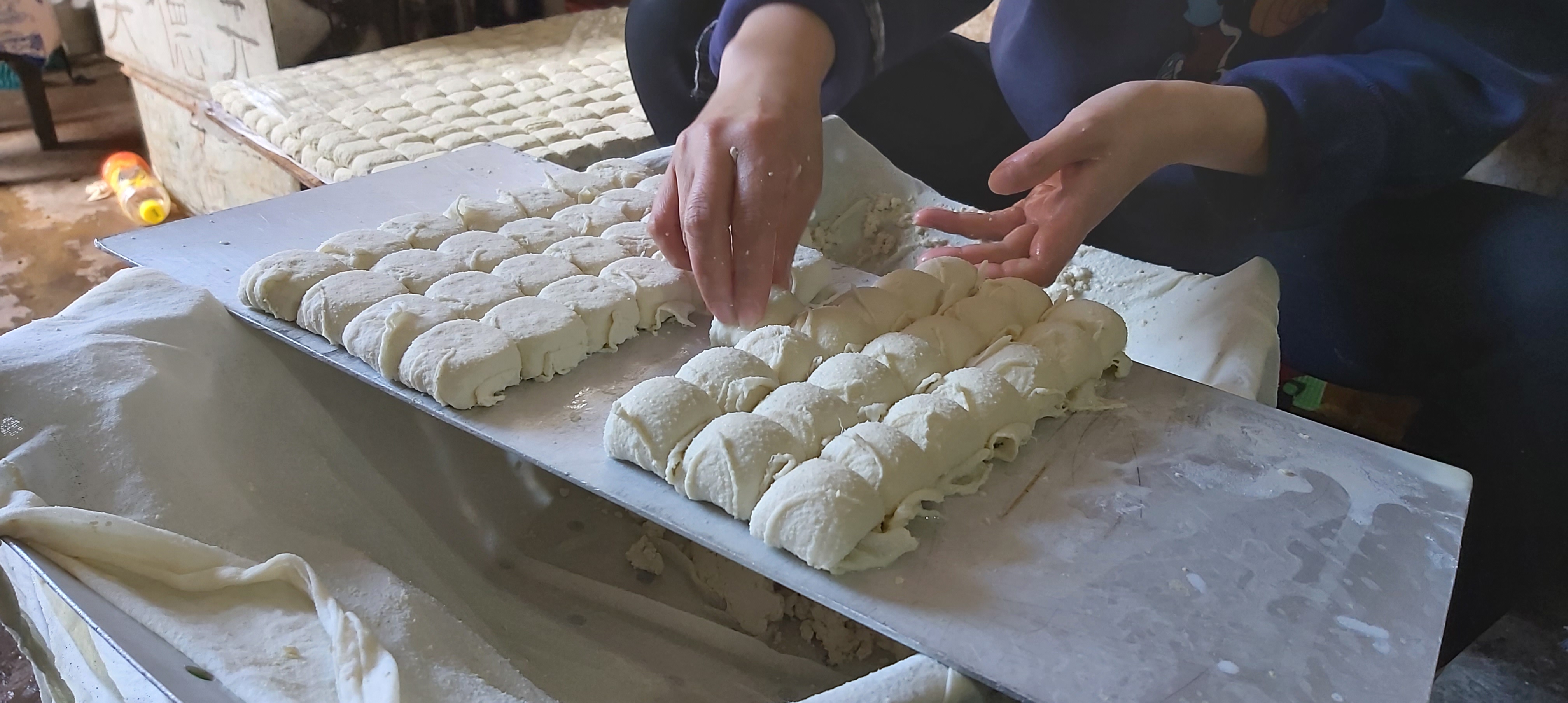
After a filling lunch, he then took me to a nearby area to show me the well where the locals retrieve their water from. Along the way, we found a place where some women were preparing the tofu, rapidly shaping and then wrapping the soft tofu into blocks before being shelved to dry.
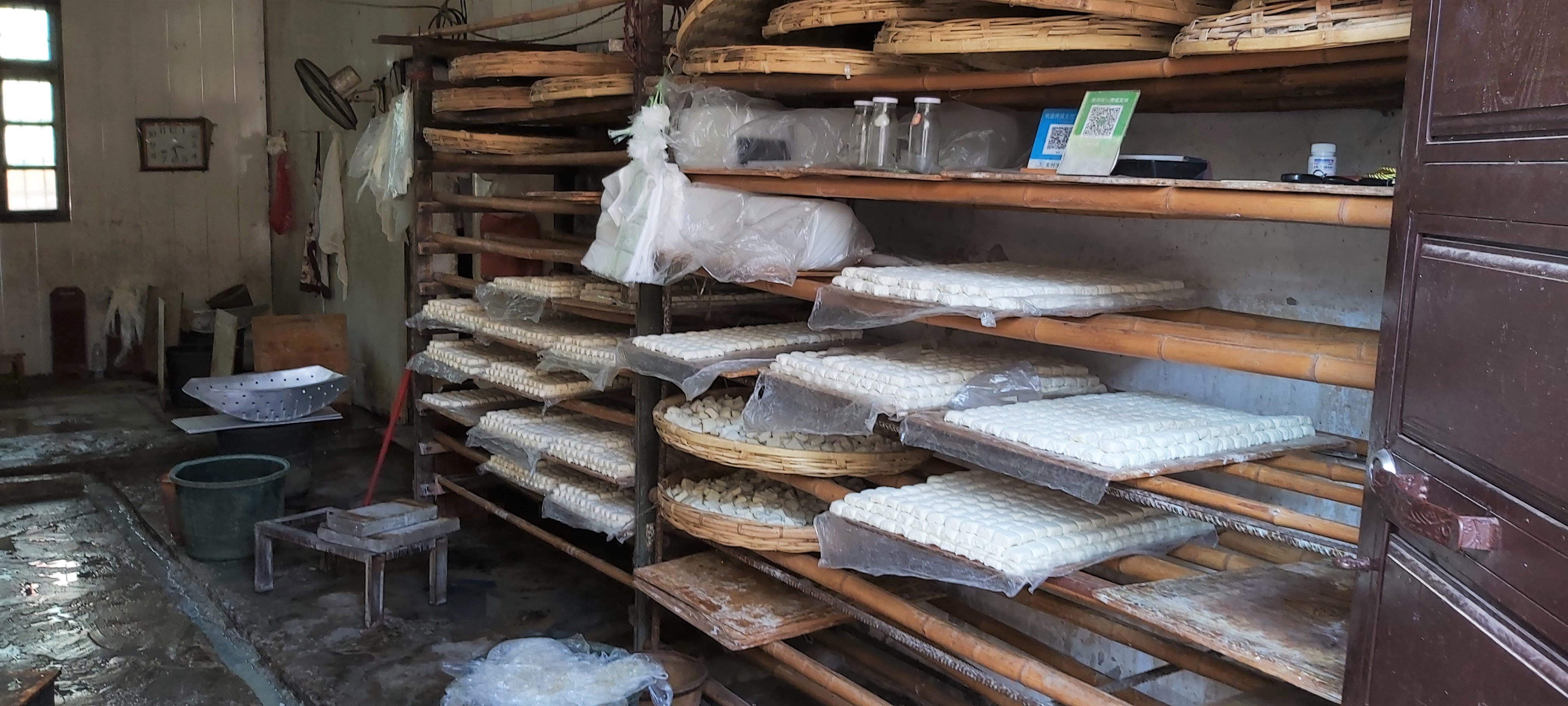

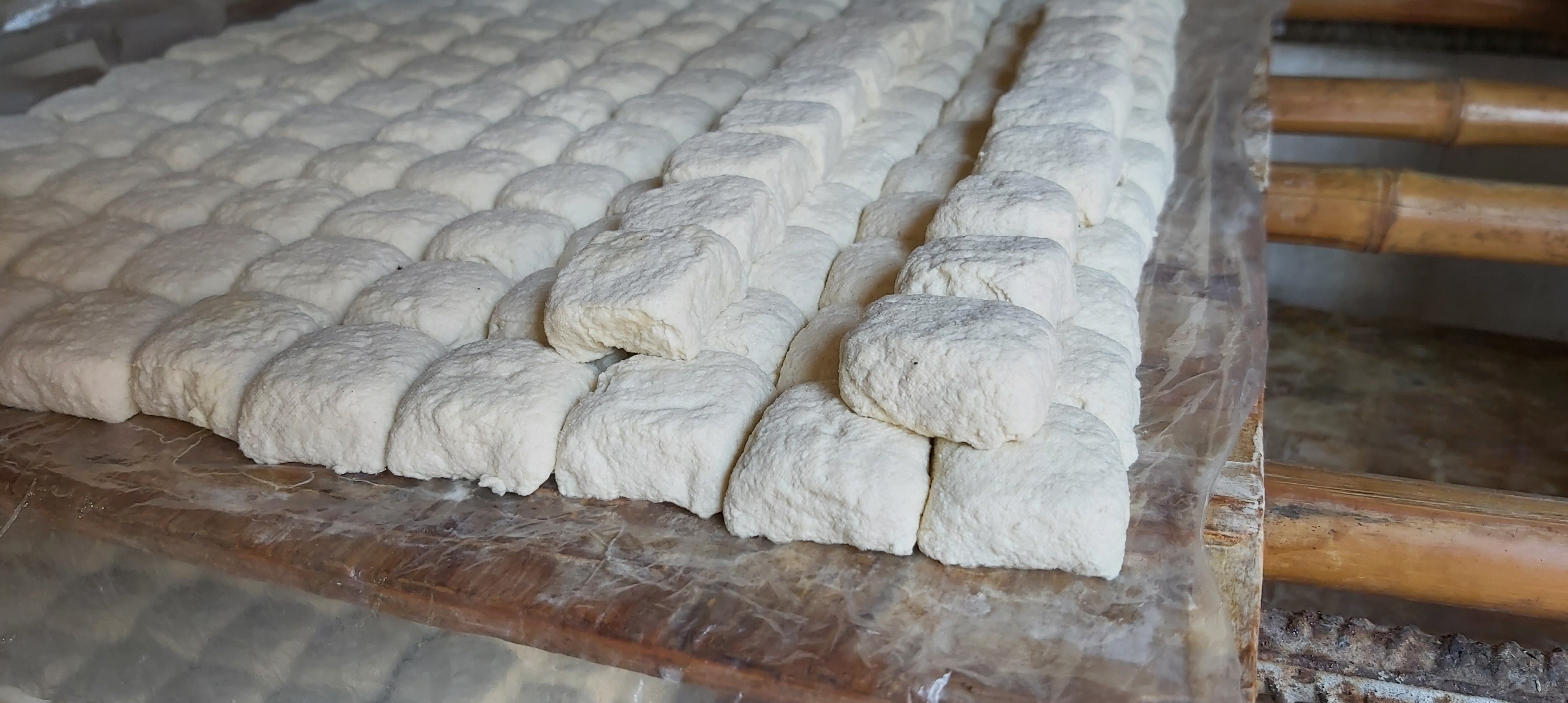
We then headed over to the well area, where we saw locals busily fetching their pails of water. The well water is believed to be pristine, which is part of what makes the local tofu so good. Above the well is a small drink shop selling tea and other drinks made from this well water.


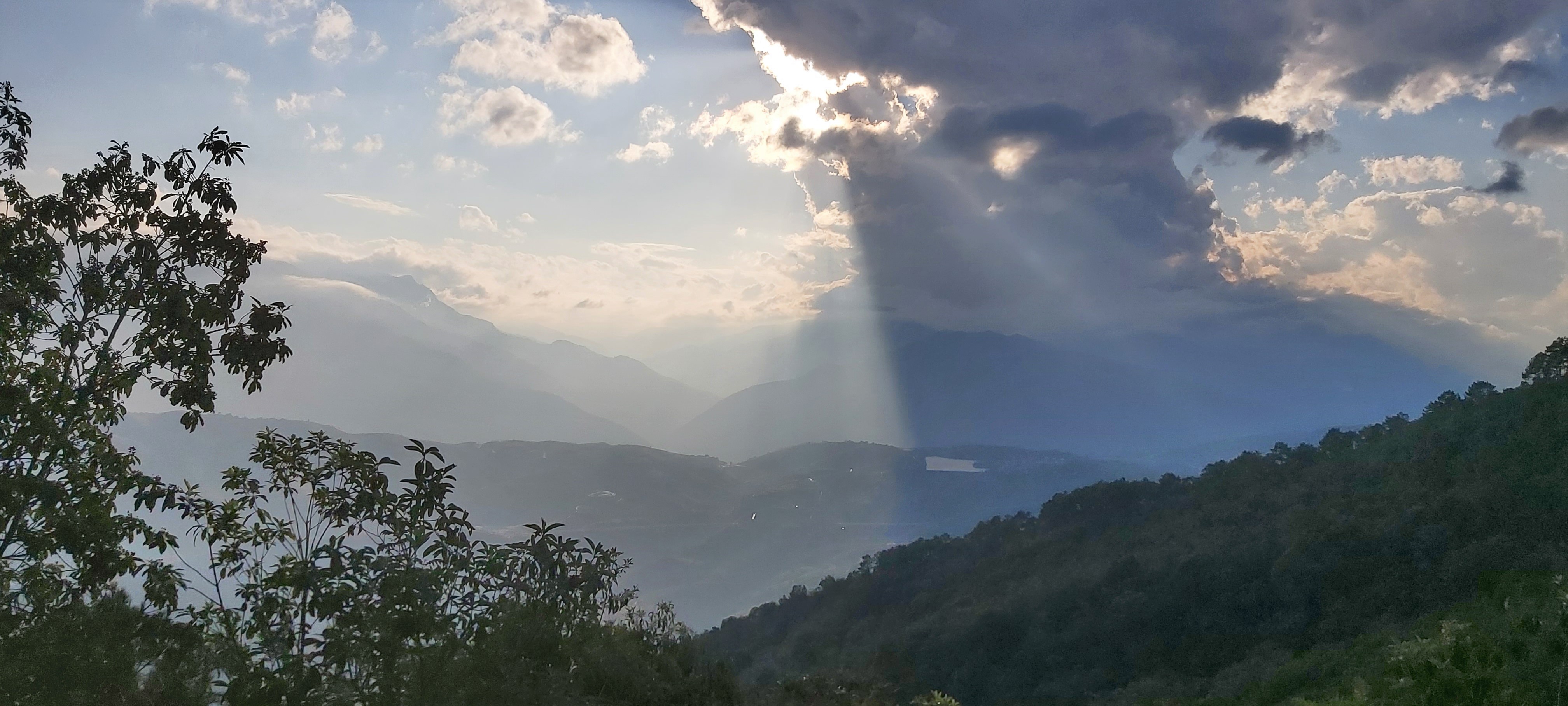
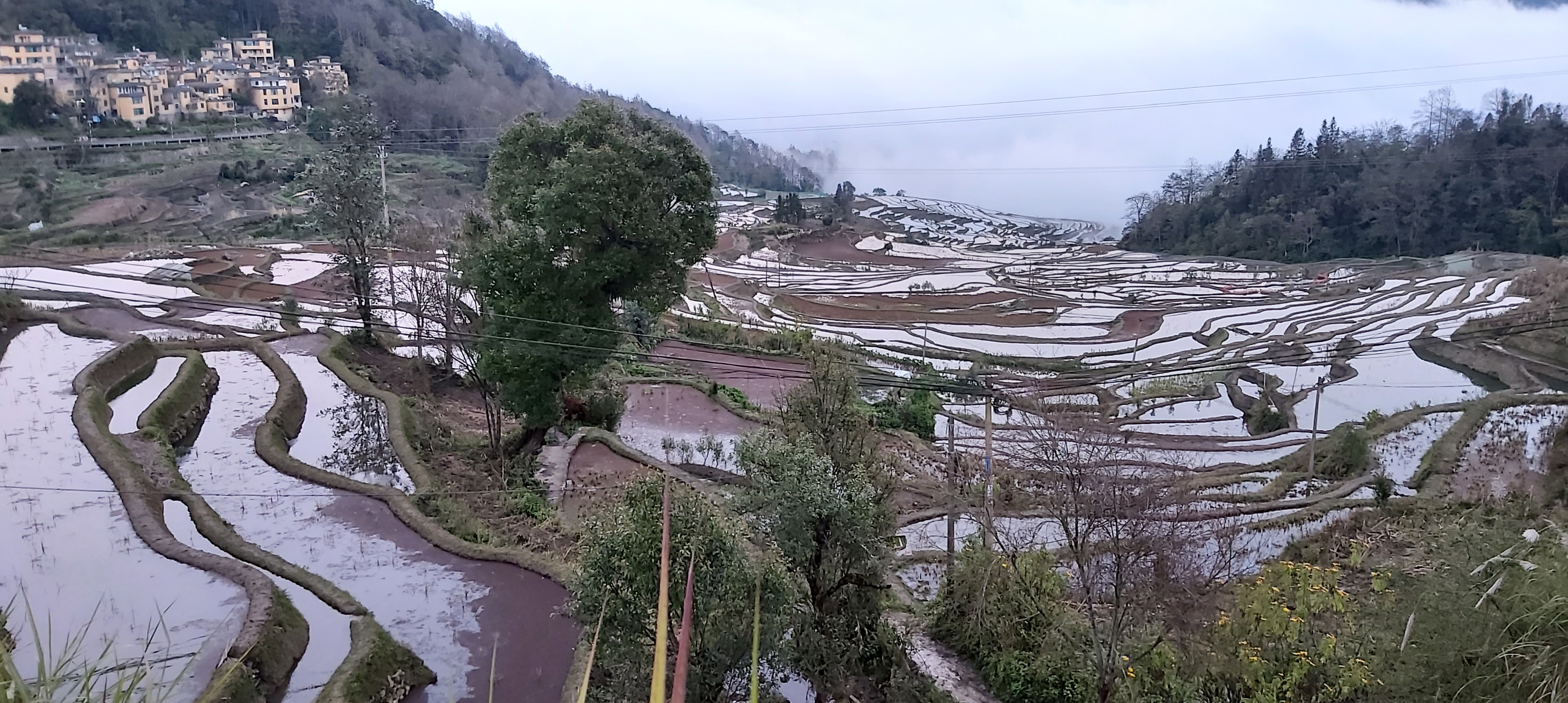
On the way to the hotel, we passed by some nice scenery with some rice terraces. The light was getting low, so it became more difficult to get shots that were well lit and in focus.

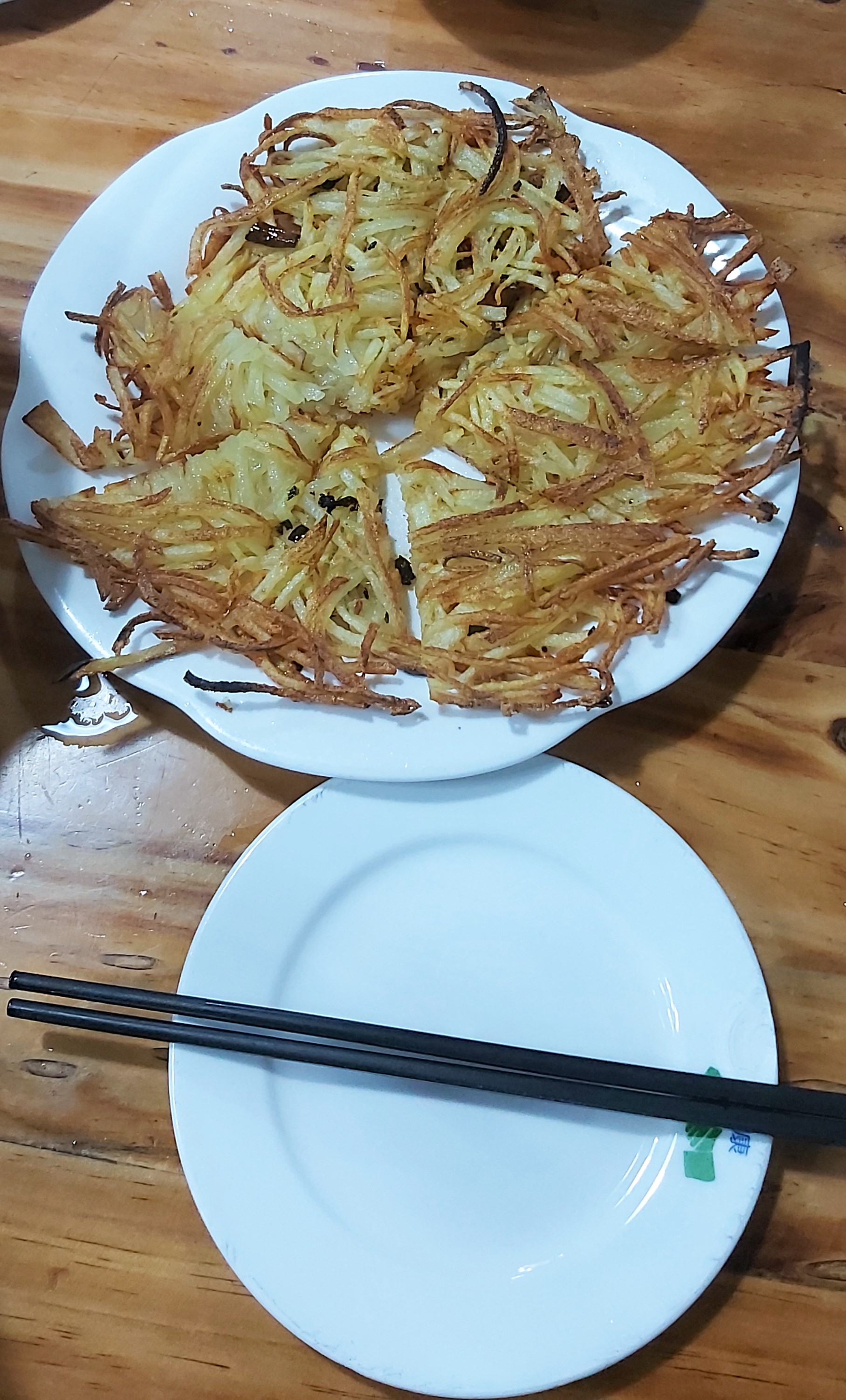
After we arrived to the hotel and checked-in, we walked back out for some dinner. I was delighted to know that the restaurant we went to could make potato pancakes. Since we had eaten a late lunch, we decided to order a “light” dinner.

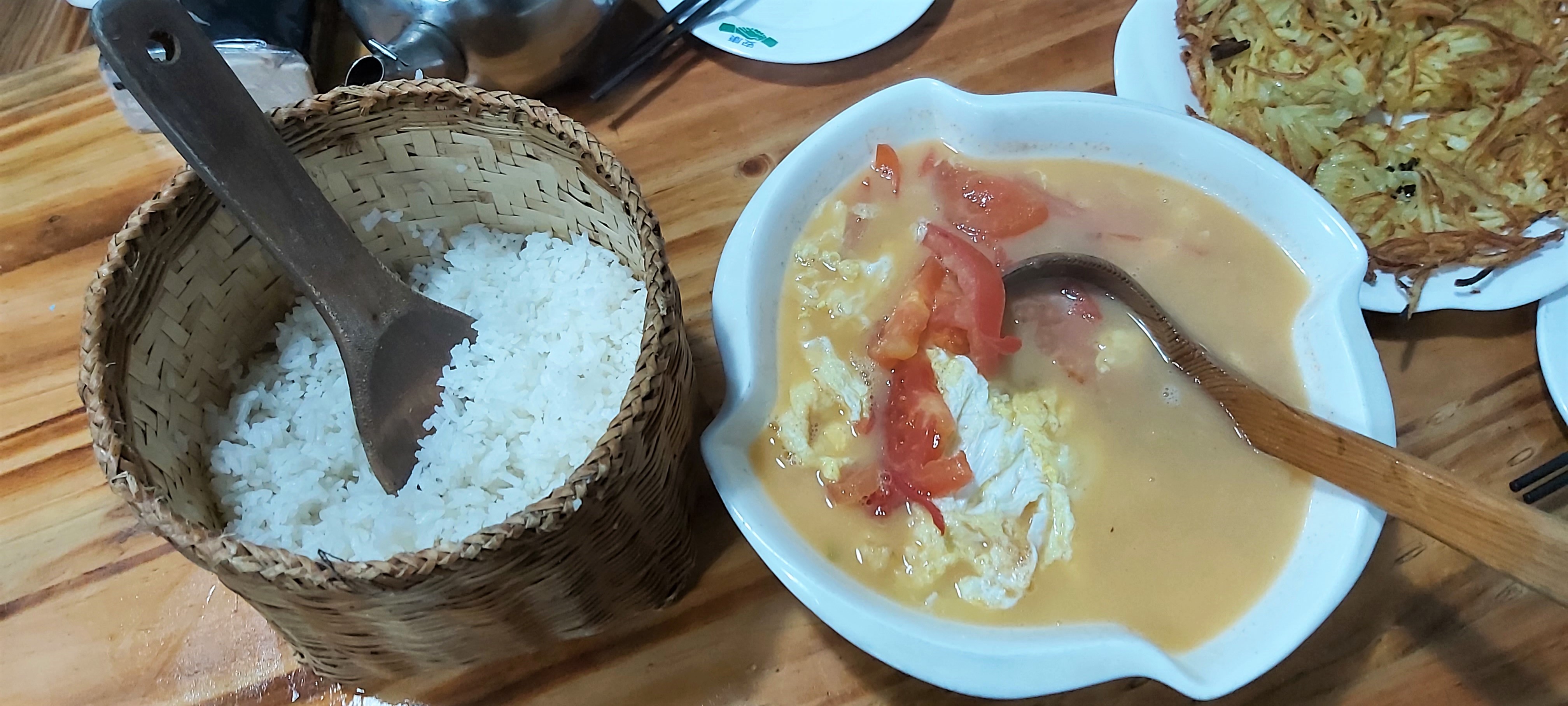
After that, we just walked back to our rooms and relaxed for the rest of the evening.
Day 2: Yuanyang 元阳
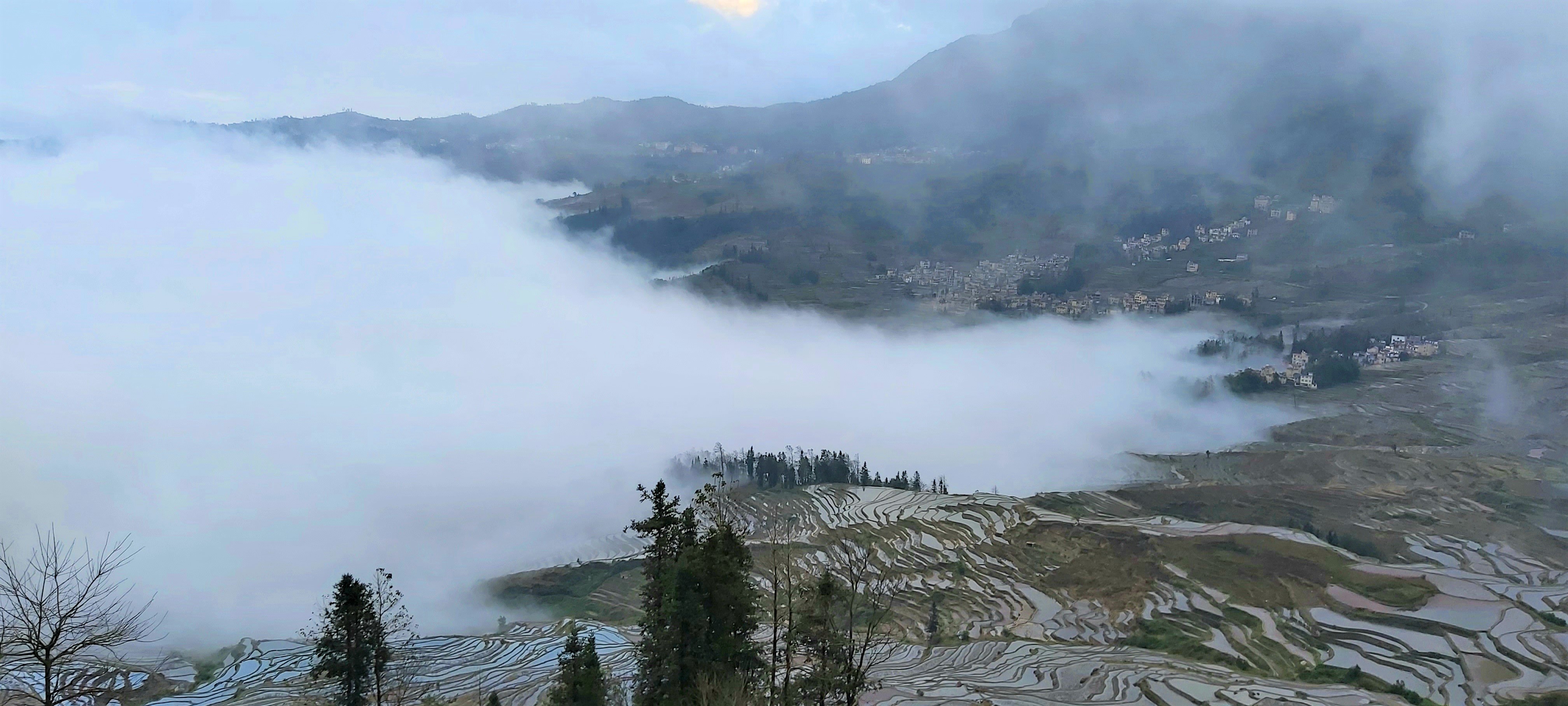
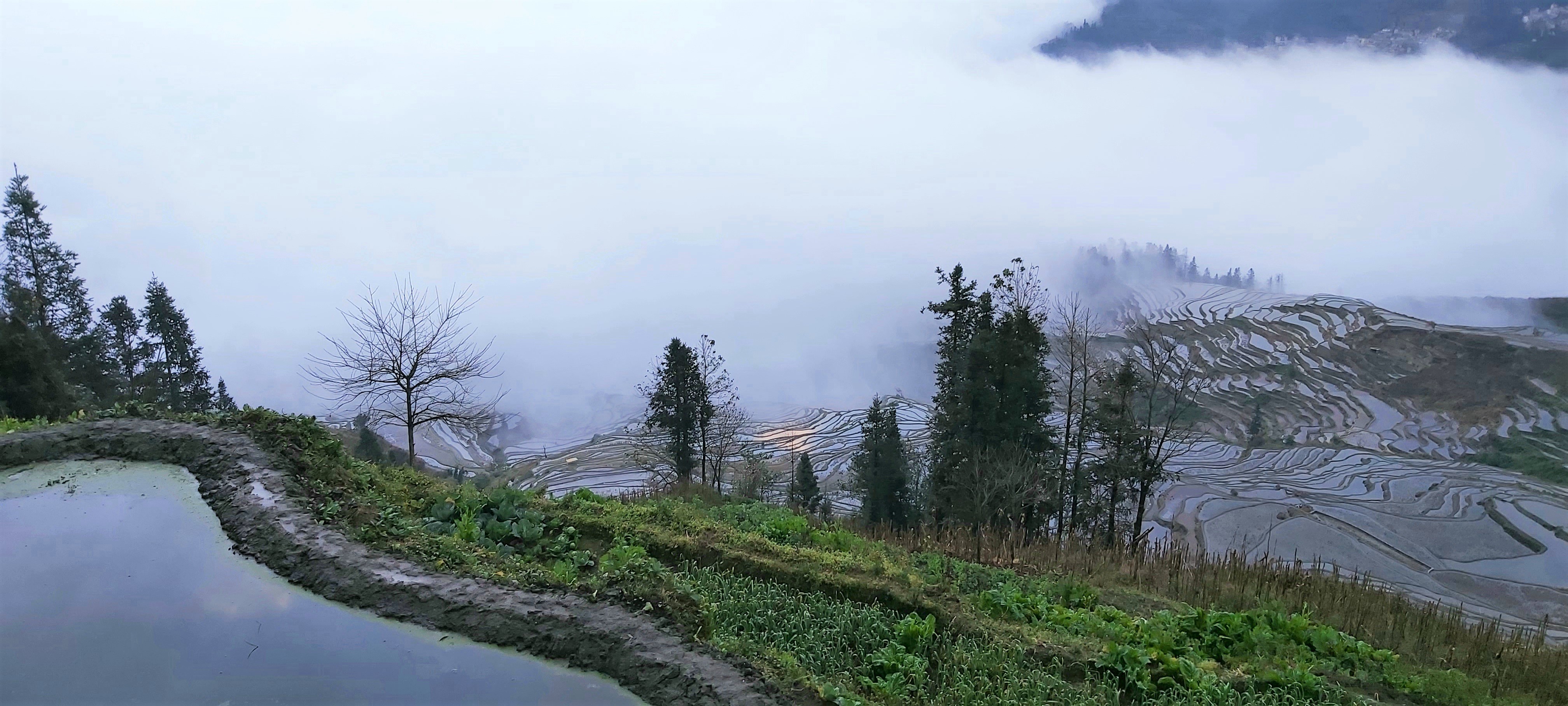
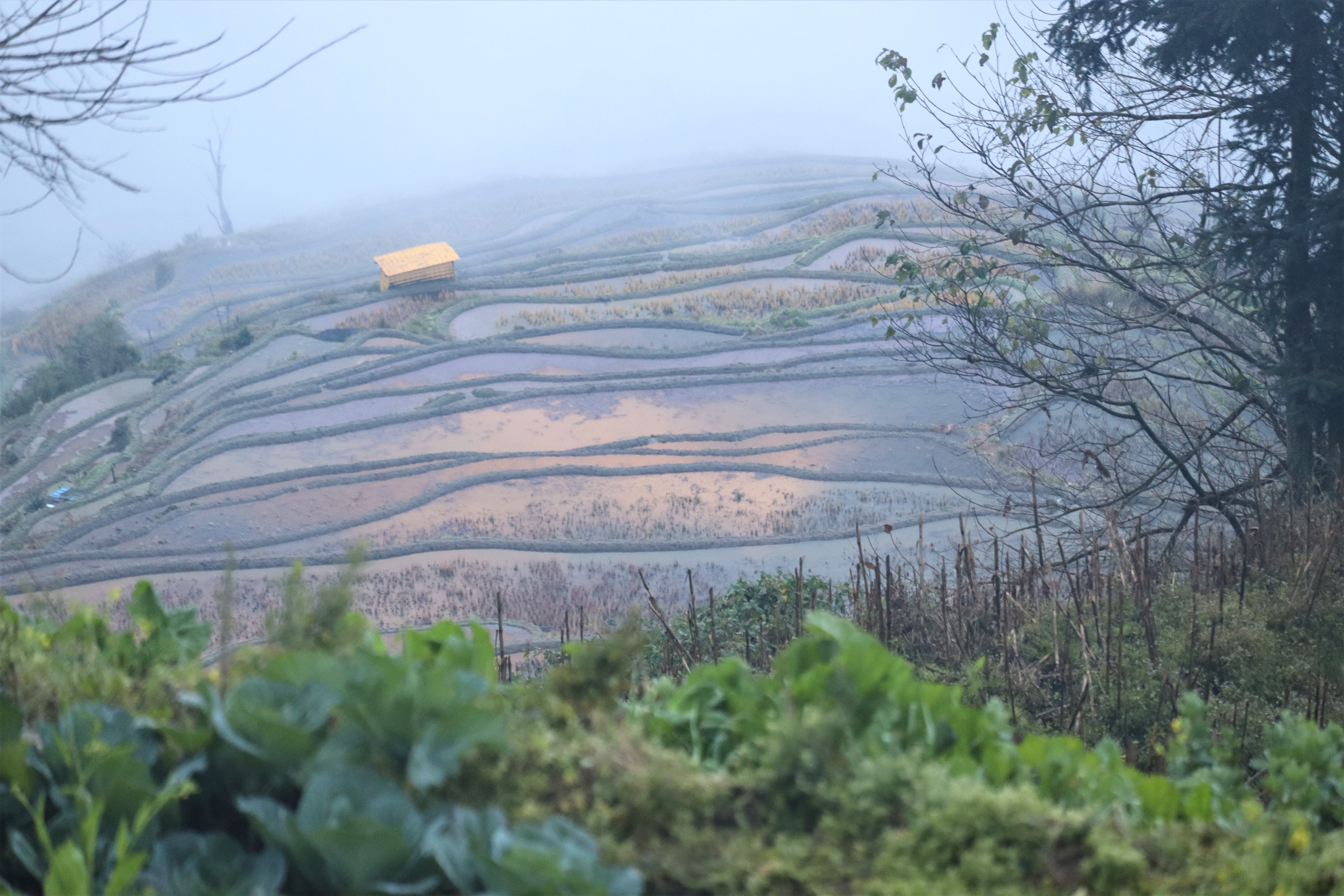
I was told that winter in Yunnan is part of the dry season. However, being up high in the mountainous region, this did not stop us from encountering lots of rolling mist, clouds, and light rain, making photographing a difficult task. The rolling clouds and mist proved to be quite unpredictable, so we had to make quick judgment calls. Given the weather conditions, I think we decided correctly.
That morning, all of the guests had hoped to rise early to see a glorious sunrise. What we actually saw was quite the opposite. The clouds and mist were so heavy that when looking out of the windows, there were no terraces in existence. In fact, it was so thick that nothing existed. It reminded me of my time at Zhangjiajie (also known as the “Avatar Mountains”) a few years earlier and what a disappointing trip that was for the same reason.
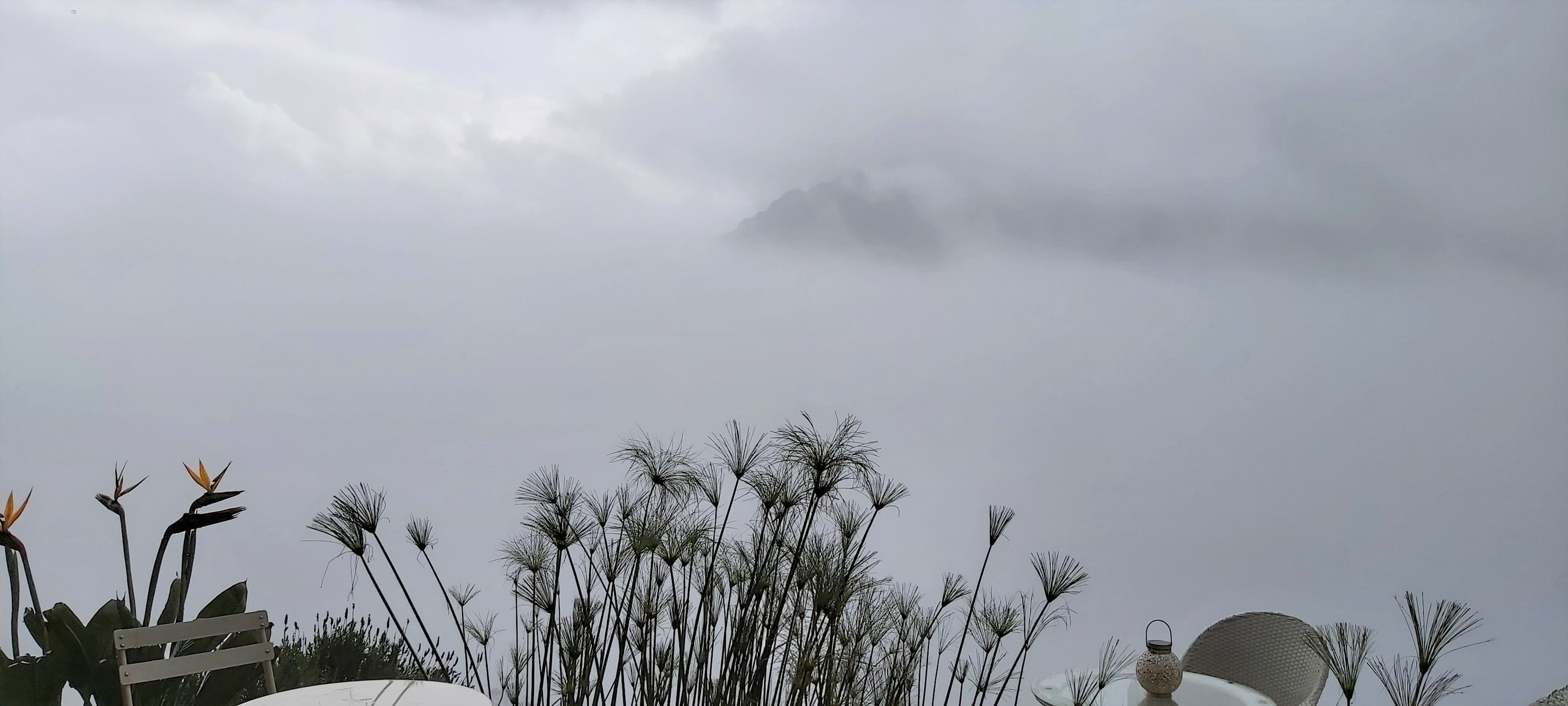
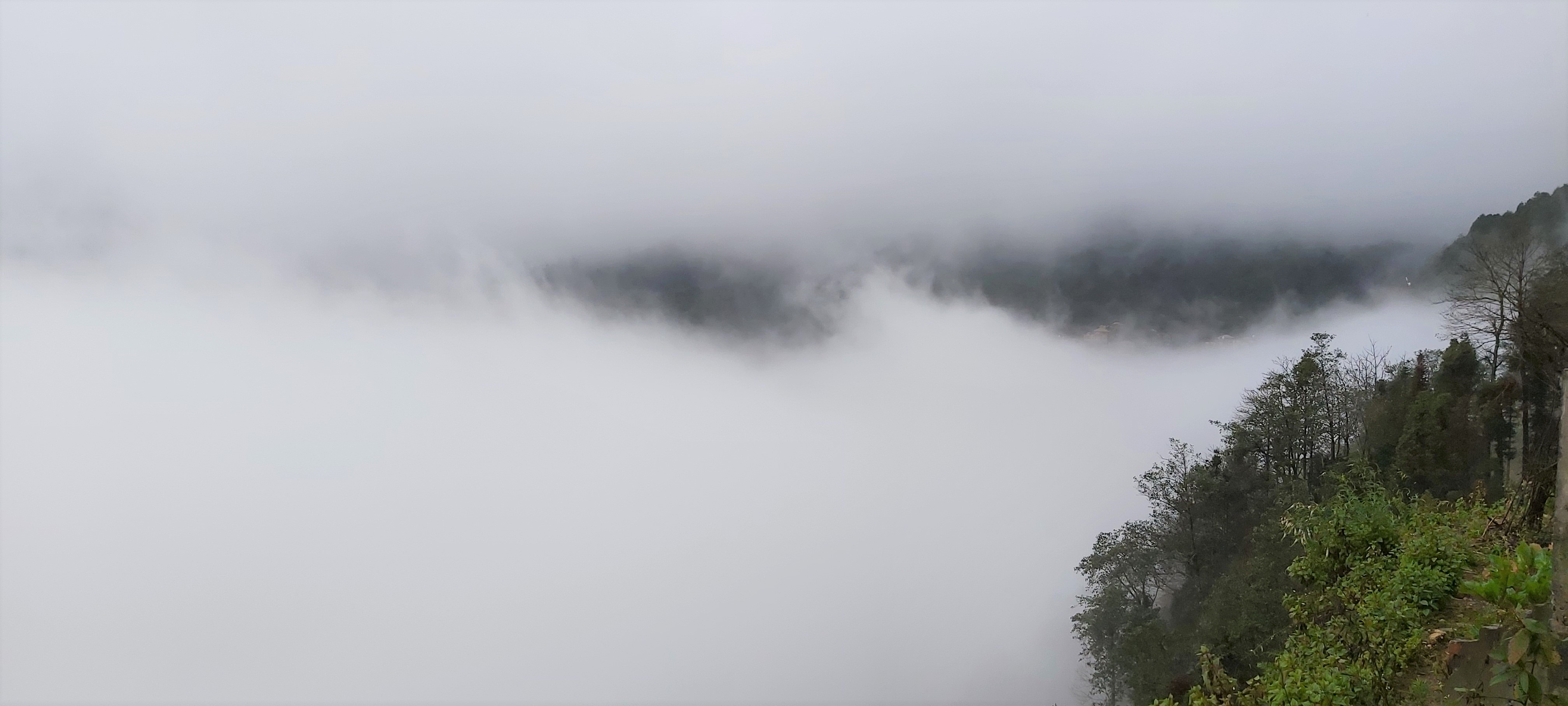
When Jerry and I arrived close to where the car was parked, he realized that he had forgotten the car keys. He said I could stay and wait for him to return, but I decided that since it was raining a bit that it made more sense to just head back to the hotel and relax for a while. So, we did.
A few hours went by, and the rain and clouds still hadn’t ceased. So, we decided to have a late lunch and wait for the weather to get better, as forecasted. The potato pancake made its second appearance, along with a sweet and sour pork dish and a green soup with eggs.
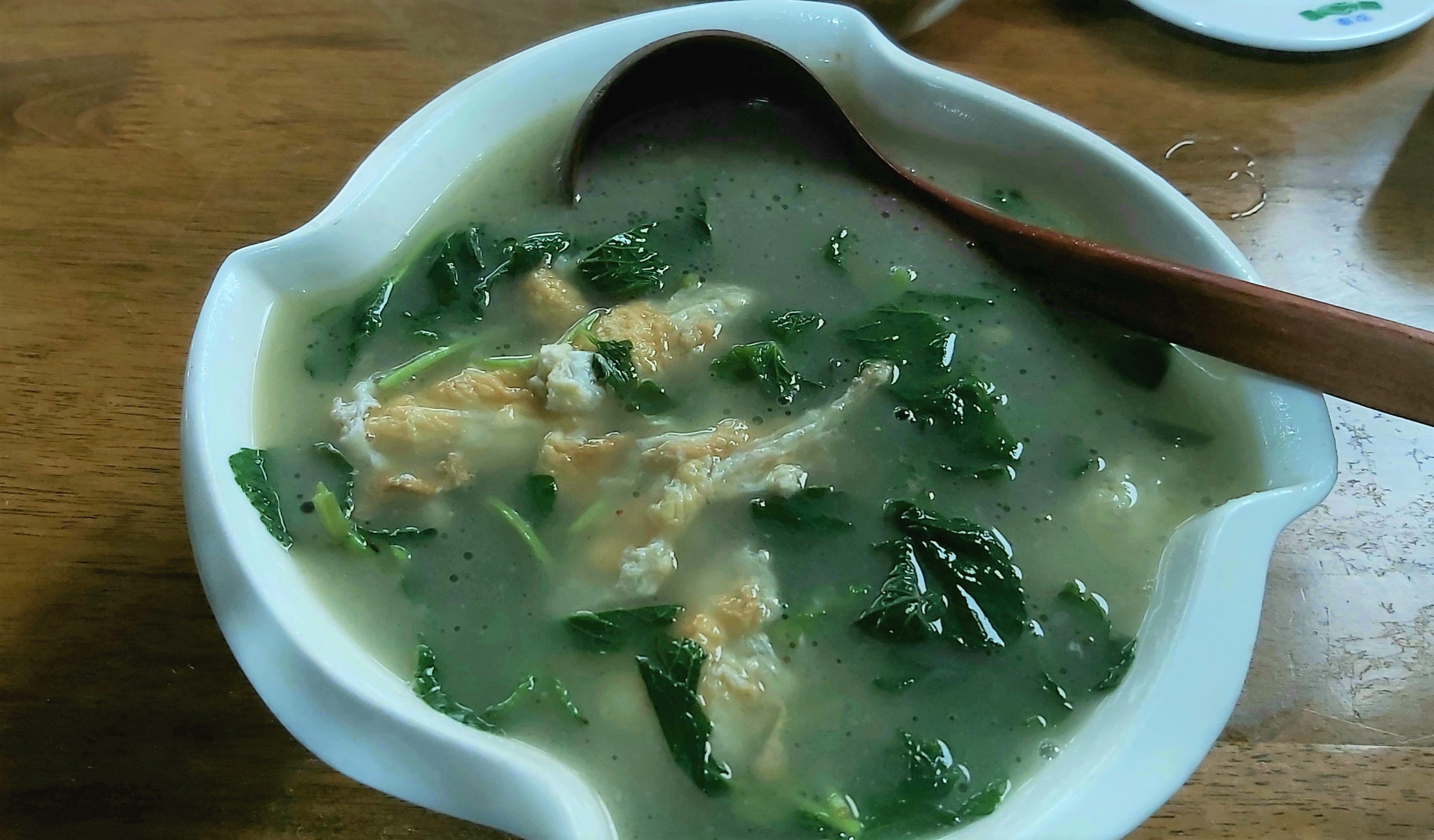

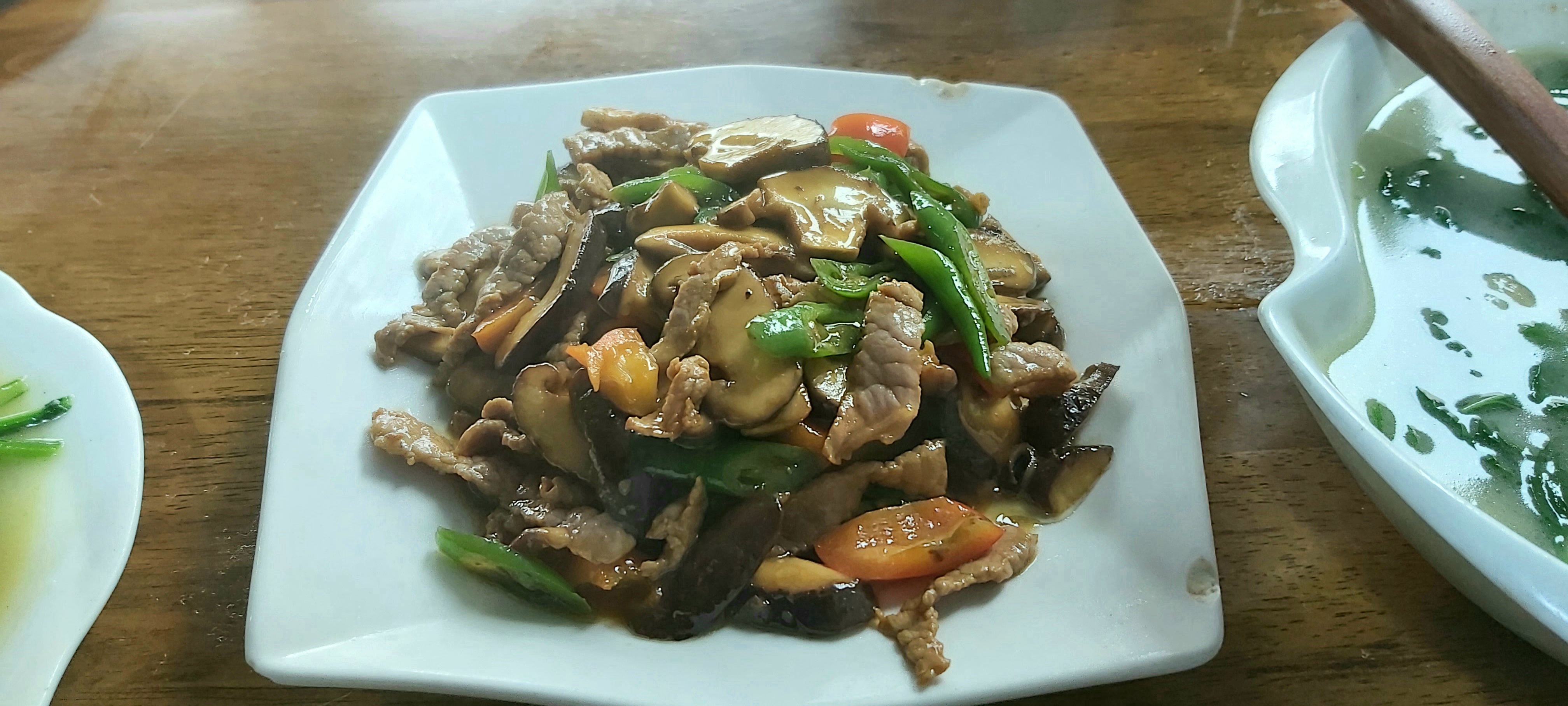
By the time we finished lunch, the weather seemed to be improving, so we high-tailed it out of there and headed toward the Azheke 阿者科 (ā zhě kē) village, known for its “mushroom” houses. On the way there, we stopped for some photos of the valley as the clouds were dissipating.
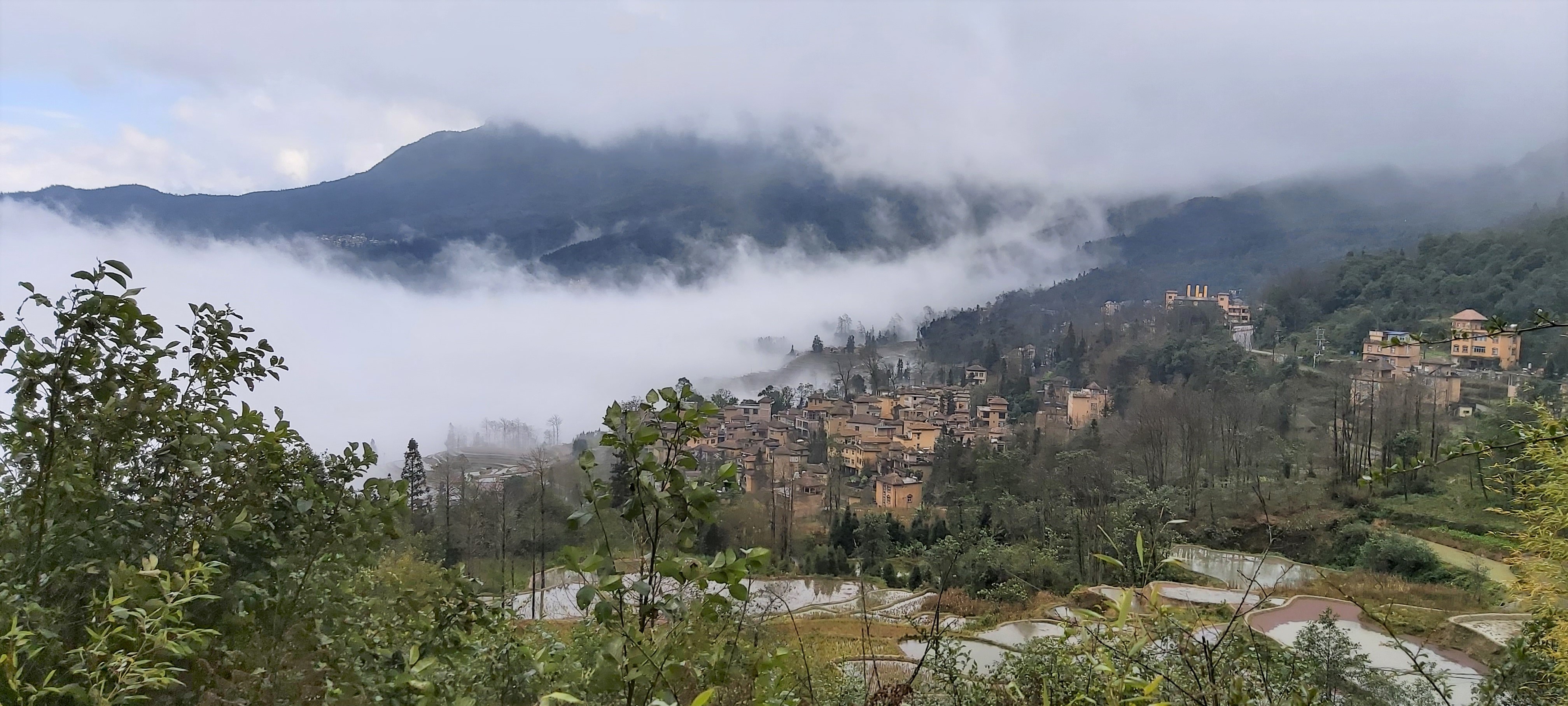
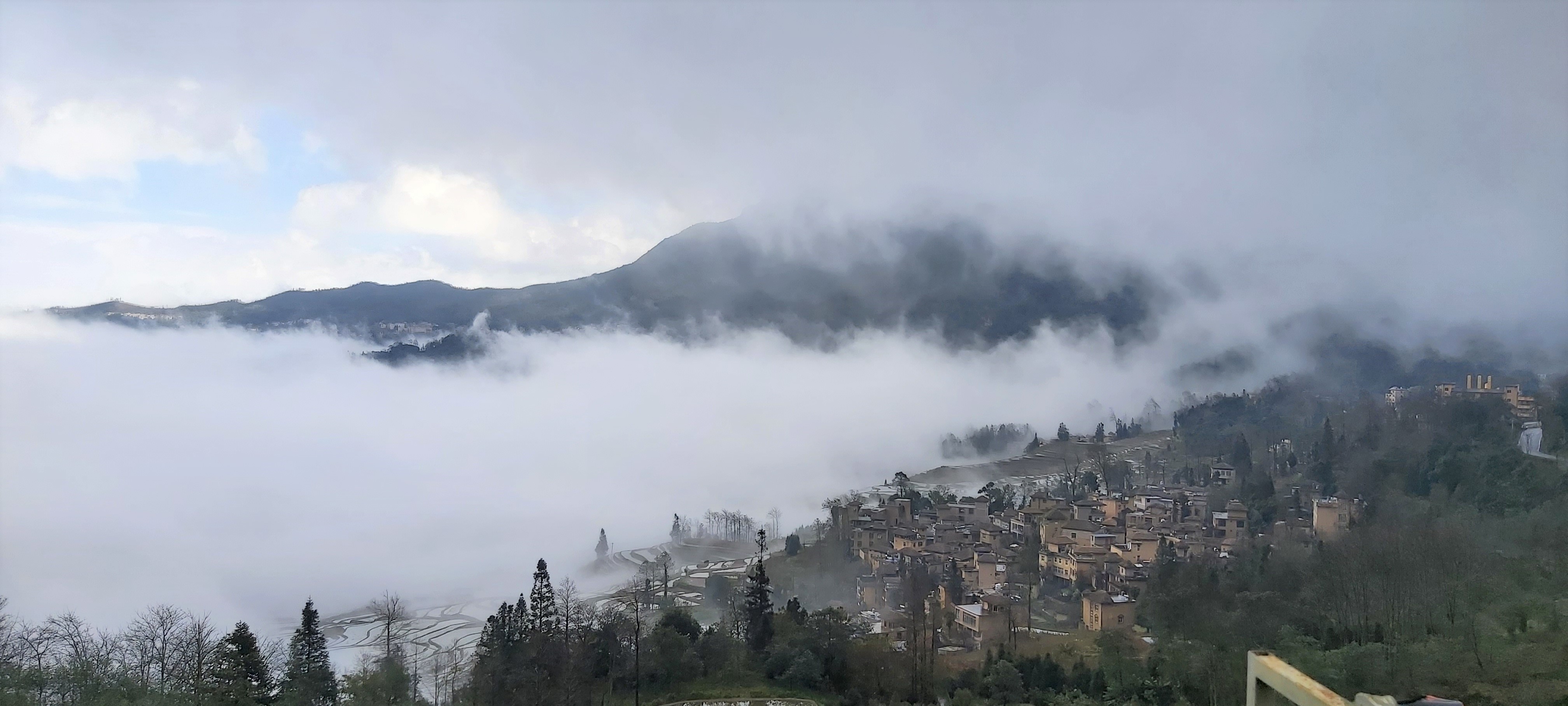
While taking photos from the rooftop (of what looked like a small hotel of sorts), I was seen by a woman who worked there. I couldn’t understand what she said but I realized that she was disapproving of me going up with my camera. Not letting this stop me, I went on ahead up the stairs to the roof to join Jerry. After Jerry and I had come back down, he told me that she was wondering if I was here alone. Jerry then informed me that as part of government law, citizens are to keep an eye out for any “suspicious” activity or people and report them to local authorities. Yes, remnants of the Mao era continue on.
On the front of this little hotel was a painting representing the Hani people.
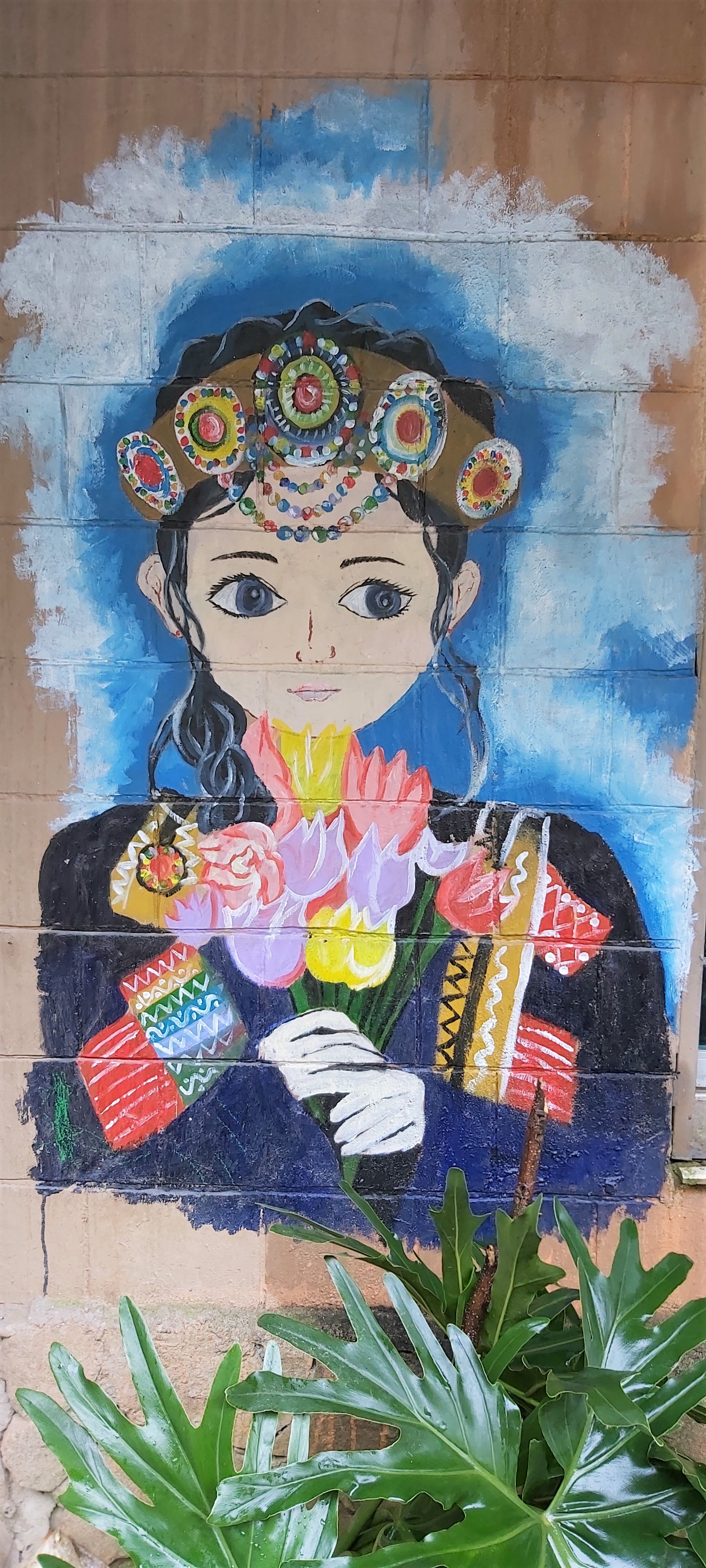
We then continued on toward the Azheke village to see the mushroom houses and the views of the terraces there.
Before we arrived, Jerry had told me repeatedly about his friend, “Lanzi” who is a local Hani woman and often makes videos about different parts of the area to put up online. Some of her videos had made her and the area become more well known as a tourist spot. I was told that she wanted to know what activities I wanted to participate in and that she was excited to have a foreigner coming.
What I was not told before arriving, however, was that she would also be joined by two of her “friends,” both of whom had cameras ready and pointed at me to record the tour. I saw them and quickly realized that my time here was going to be recorded and likely put up on Chinese social media. I was already not happy this this notion, and was made even more unhappy when she presented me with a “gift” (which would later need to be returned) of a Hani-style vest that they insisted I wear during my time there.
I didn’t need to try it on to know that I would look ridiculous wearing it over my coat, and I was not at all eager to be followed and have my entire tour recorded so that I could play the token foreigner dressed up in local garb. I know I must have looked hesitant, and I’m sure that I looked even less eager about the whole thing as I was heavily encouraged to try on the vest. It is one thing if you are aware that something like this will happen and readily agree to participate in it. It’s quite another thing to not be told about it and then just expect to go along with it, despite not being okay with it. I was having yet another Chinese experience of not being given certain details ahead of time and then being pressured to be agreeable and perform so that others don’t lose face. I tried to quietly tell Jerry that I was not okay with being filmed, and he told me to not take it seriously and basically to just go along with it.
From that point on, I did what I could to sabotage the video by refusing to look into the camera or even at Lanzi while we were talking and discussing information about the different parts of the village. Maybe my description of this sounds a bit mean, but I can’t tell you just how irritated I was with this whole situation. While I did feel a bit bad about messing up the recording of this guided tour, at the same time, I felt like I was being used, and this was made all the worse knowing that I was the one paying for this experience. I felt like I was no longer in control of my plans, that it was no longer my trip to experience, but rather, it was now my duty to go along with this uncomfortable display for someone else’s social media project. This experience made me very aware of why photographers should ask if people are okay with being photographed or filmed.
This resulted in Lanzi and Jerry doing most of the conversing (in Chinese) and him translating information to me. I tried not to be overtly hostile by simply nodding and “aahhing” when necessary.
After walking up and down the jagged stone path, we came to the mushroom houses. We passed by a small forested area next to the village, and I was told that the people here believe that the spirits that protect the village live within these woods. I was also told that they get their water from a mountain spring.
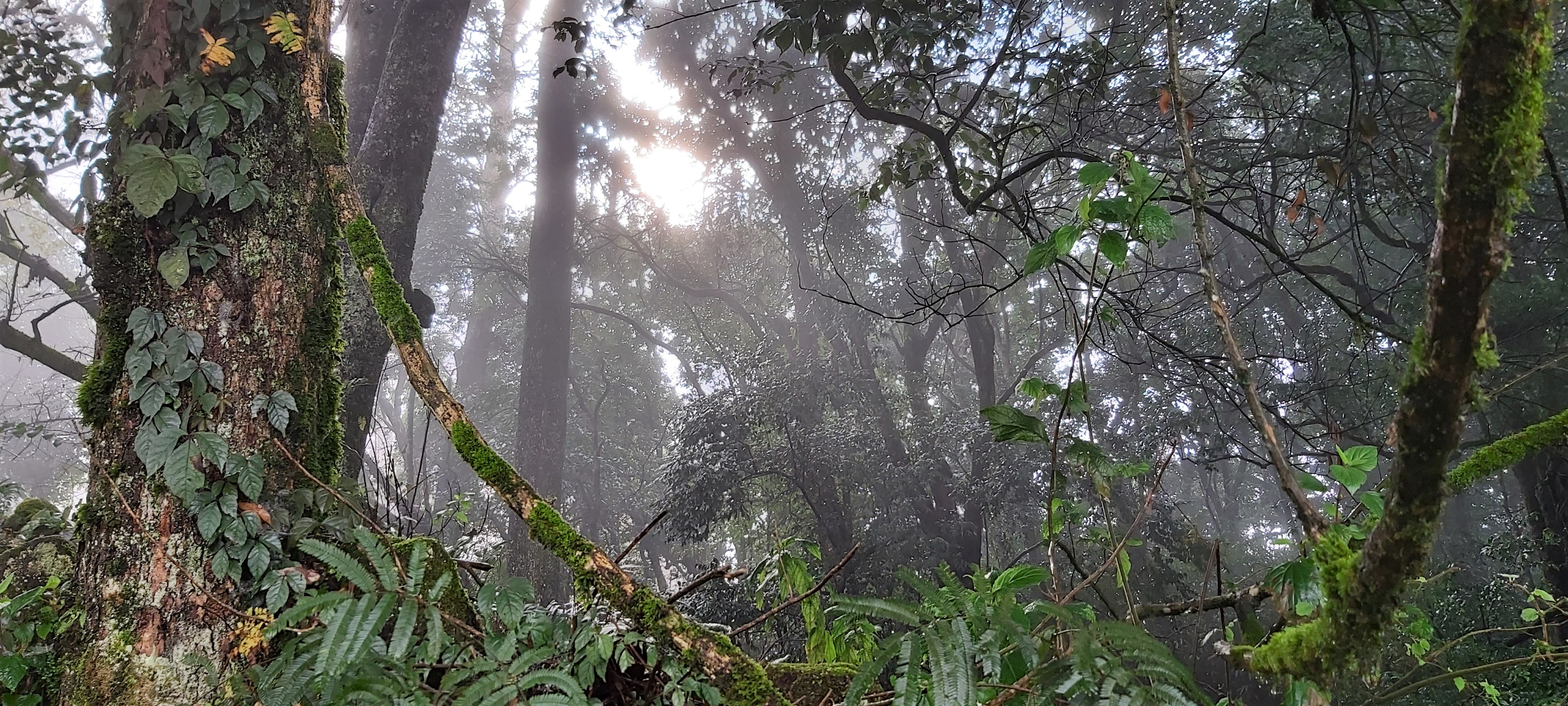
Jerry told me that some of the houses were built in the style of the original mushroom houses but were not that old. The original houses here were around eighty years old and were made of a combination of mud and rice plants (the rice plants being used because of their sticky, glutenous texture that is used to bind everything together). Animals would be kept (and still are) in the bottom part of the house due to the moisture and darkness, and people would live in the upper areas.
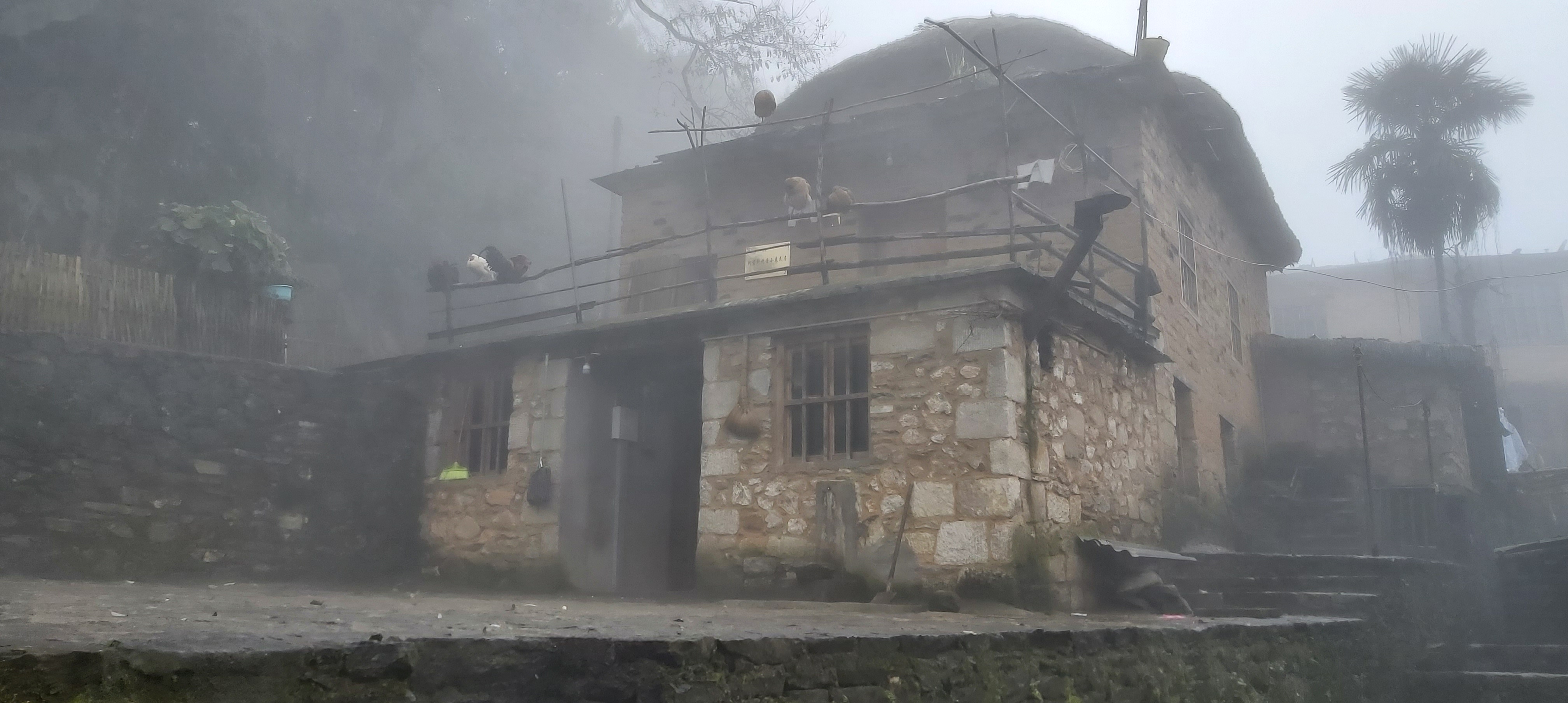
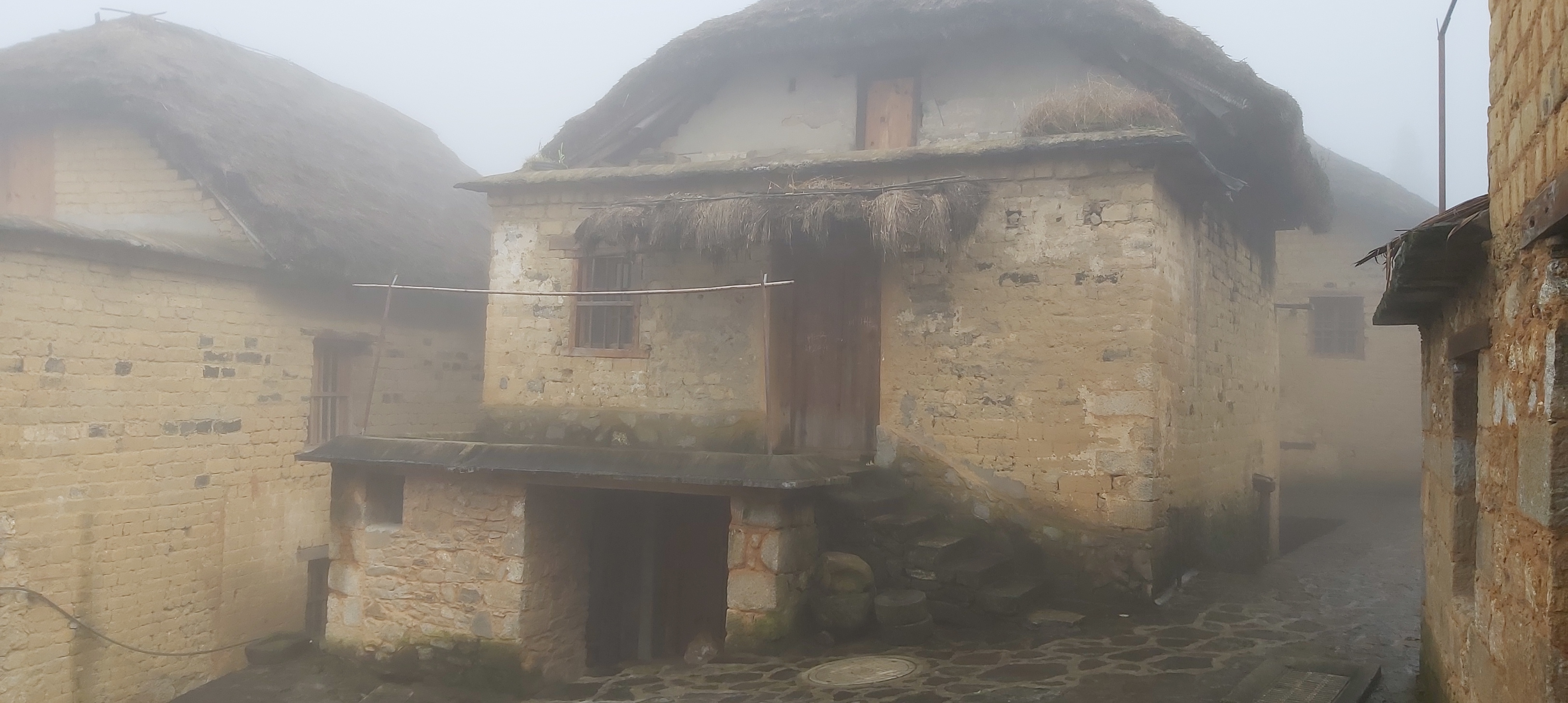

As we passed by the houses, we were taken to a pavilion of sorts where their ancestors would conduct their animal sacrifices. I was told they didn’t really kill animals here, but rather, they cut up pieces of beef or pork to show respect and appreciation for the spirits that watch over them.
It was then time to go over to the terraces nearby. Before stepping onto the edge of one, I asked Jerry if it was okay to walk on because it looked muddy and slippery. He said it would be fine. I had my backpack on one shoulder instead of both (which, in hind sight, seemed a mistake) and began to follow Lanzi across the edge of one of the terraces. I started to walk but soon felt as though I was losing my balance a bit. As I went to take another step, I knew that if I stepped into the water, it was high enough to completely soak my shoes. Yet, as I moved forward, still not completely balanced, I ended up stepping into the water.
I don’t know if I thought that I might slip and fall if I tried to continue walking forward, or if I actually thought that the water was shallow enough not to matter, or if I subconsciously sabotaged myself (and therefore, the rest of this recorded tour), but I chose to step sideways into the water instead of trying to move forward. My foot quickly sank into the water, which went just above my ankle, completely soaking my shoe and sock. I quickly let out a sound of irritation and shock and looked in horror at my soaked shoe, then quickly tried to plant my foot back onto the edge of the narrow terrace path. I was surprised that the water wasn’t quite as cold as I thought it would be. Jerry and Lanzi both saw this, and Jerry quickly suggested that maybe we should head back to the car. I don’t remember if I said anything out loud, but I might have said something like “yeah!” and I immediately turned around to do just that.
Before I stepped off of the terrace path and onto the stony pathway, a woman who was also following along with us somehow slipped and fell right on her butt while on the stone path. She appeared to be okay and was laughing about it, and I remember being grateful that there was this brief distraction from my now-exasperated self. I then headed back up along the path without saying a word to anyone as Jerry said a quick goodbye to Lanzi and her video crew.
After using the toilet, I got back into the car. Jerry soon followed and told me that he had a spare pair of shoes for me to borrow (which would end up being painfully small). After eagerly removing the gifted vest and throwing it over the car seat, Jerry grabbed it so he could return it. He asked if I wanted to continue seeing the other areas of the terraces. Seeing that the weather was now decent, I decided to seize the moment and agreed (I certainly didn’t want the day to end this way). With my now painfully small borrowed shoes, we walked back down the stone path and turned toward the terraces that faced the valley.
The mist and clouds rolled along quickly, creating numerous moments of clarity and cover, so I tried to take as many photos as I could.
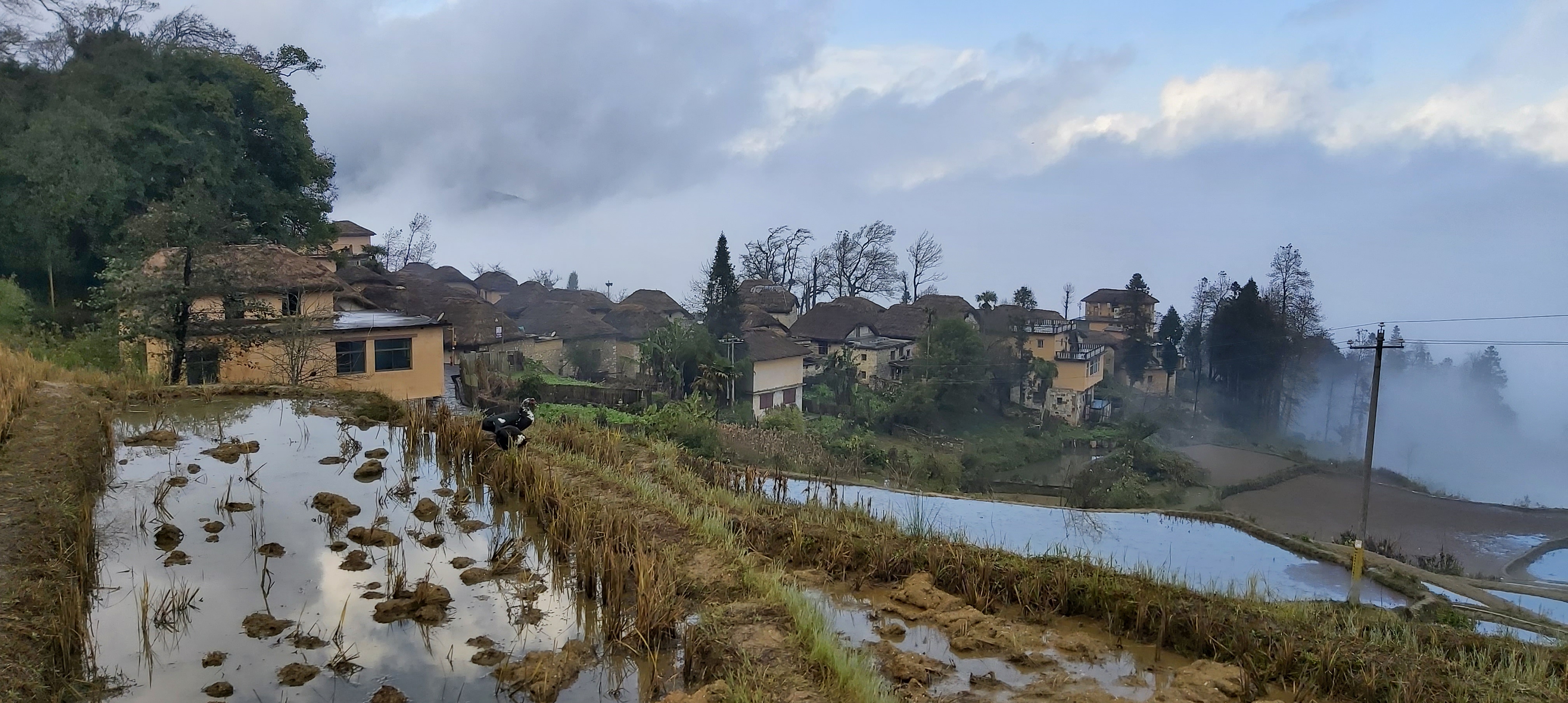

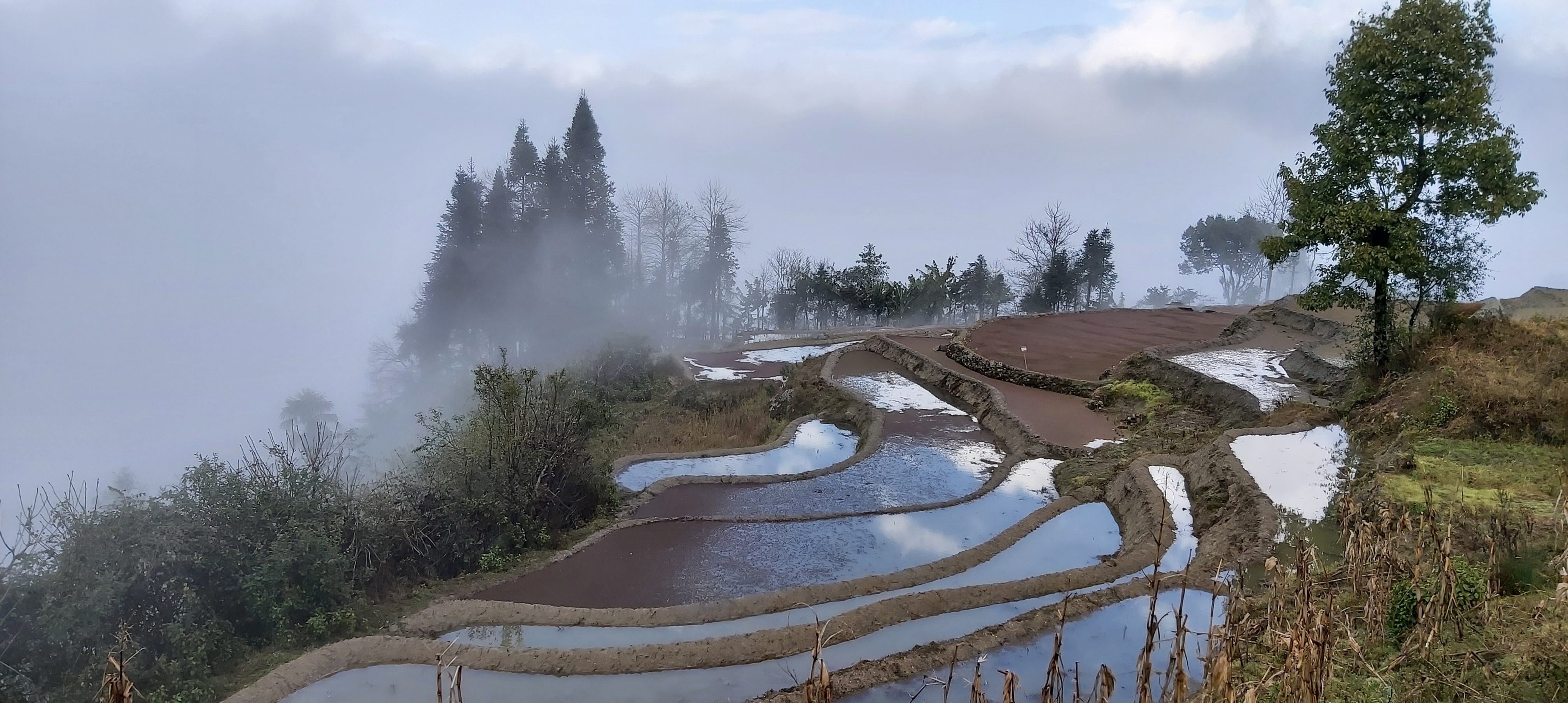
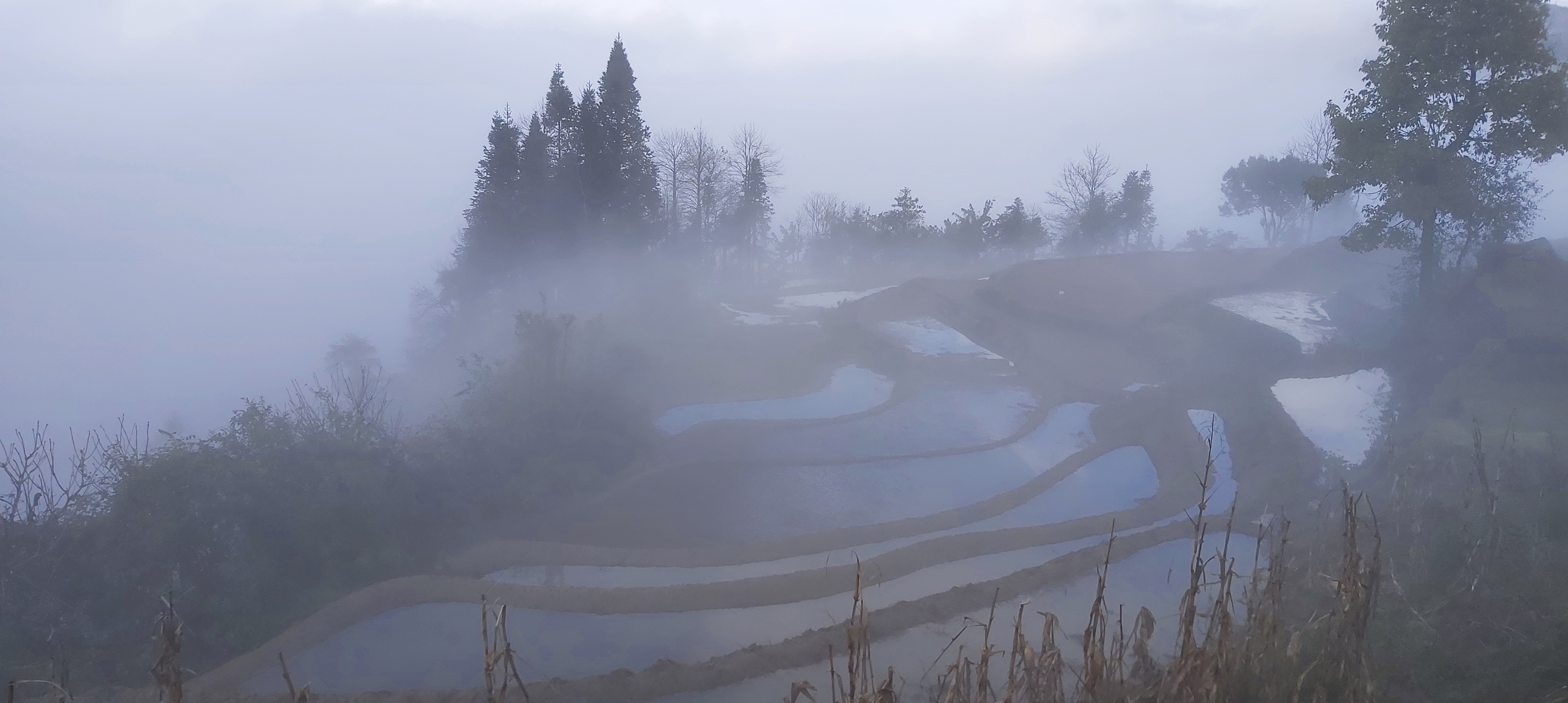
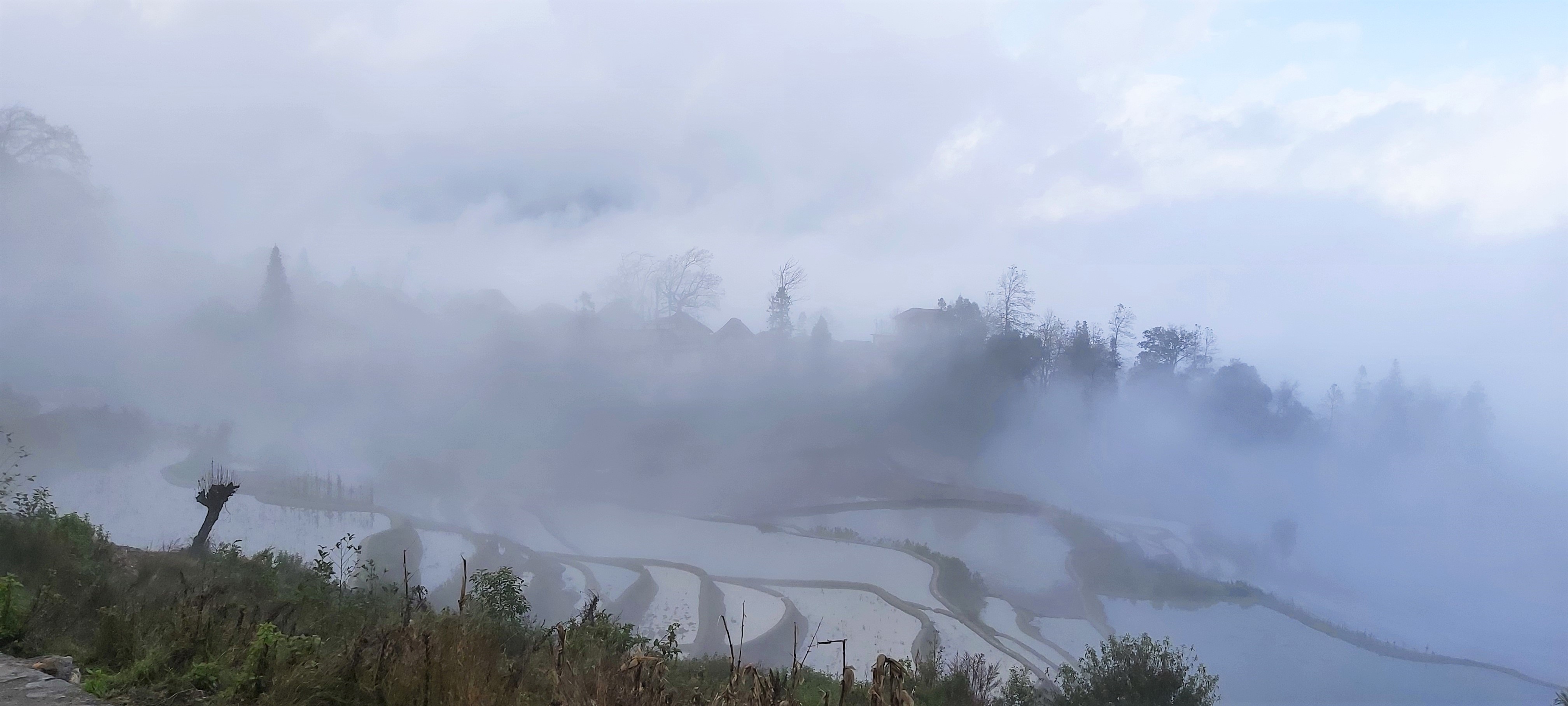

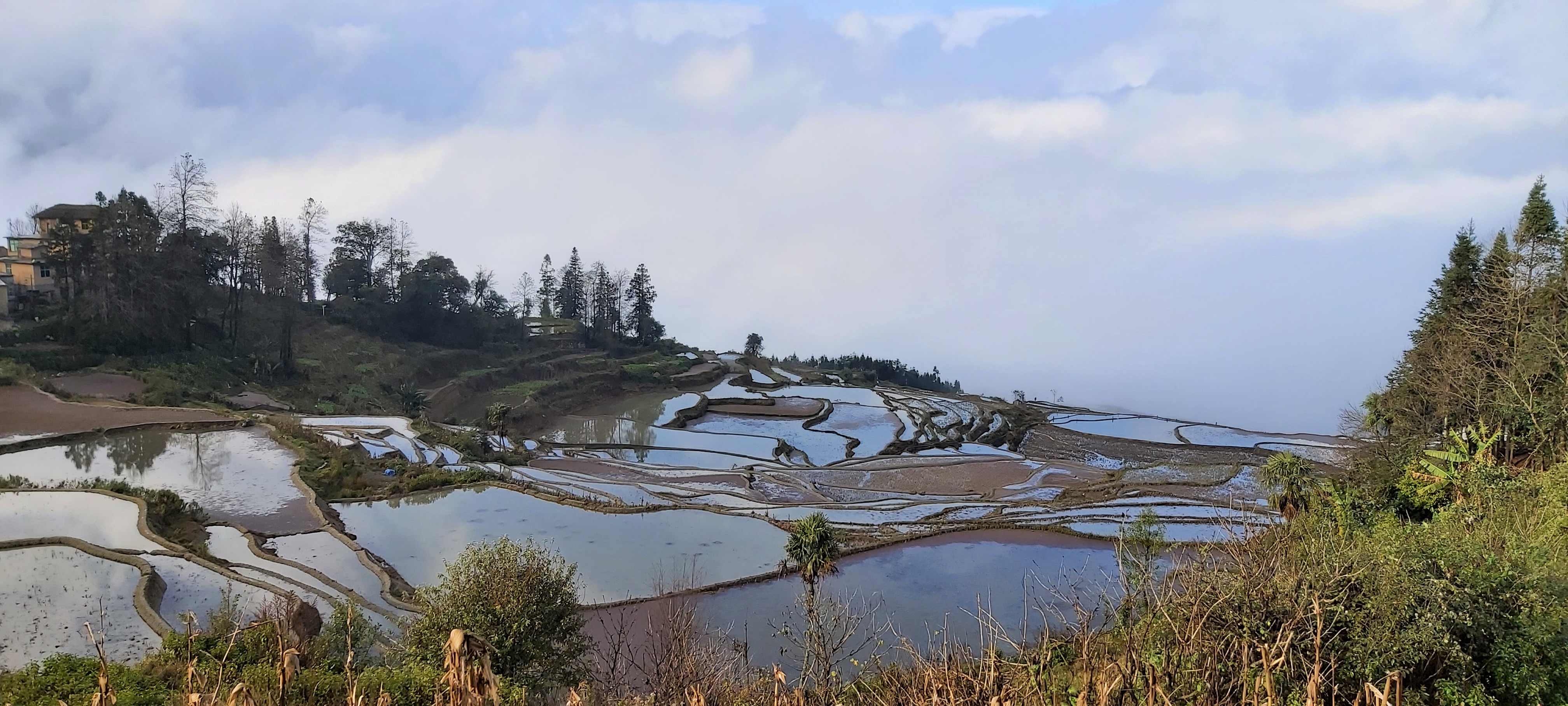


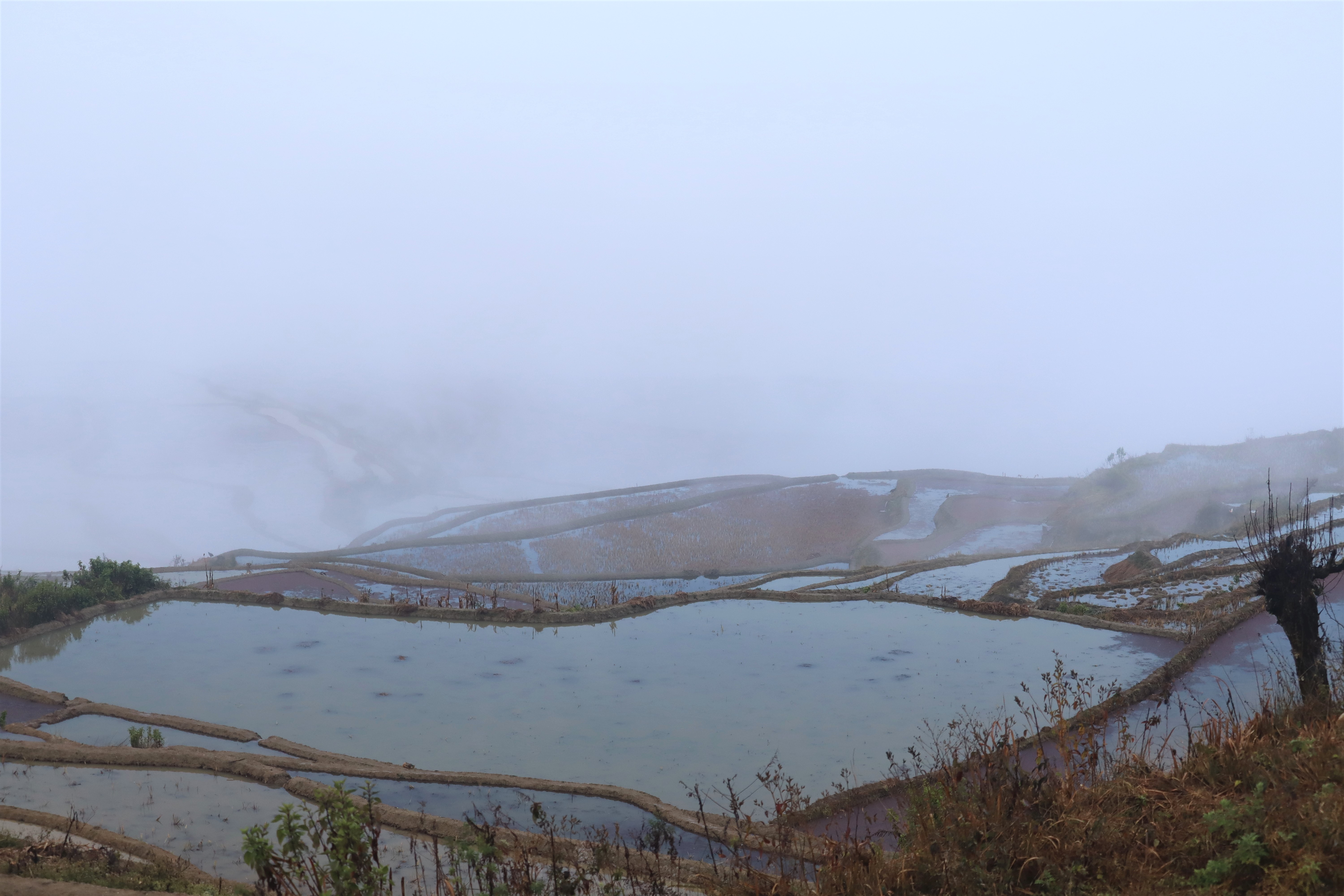

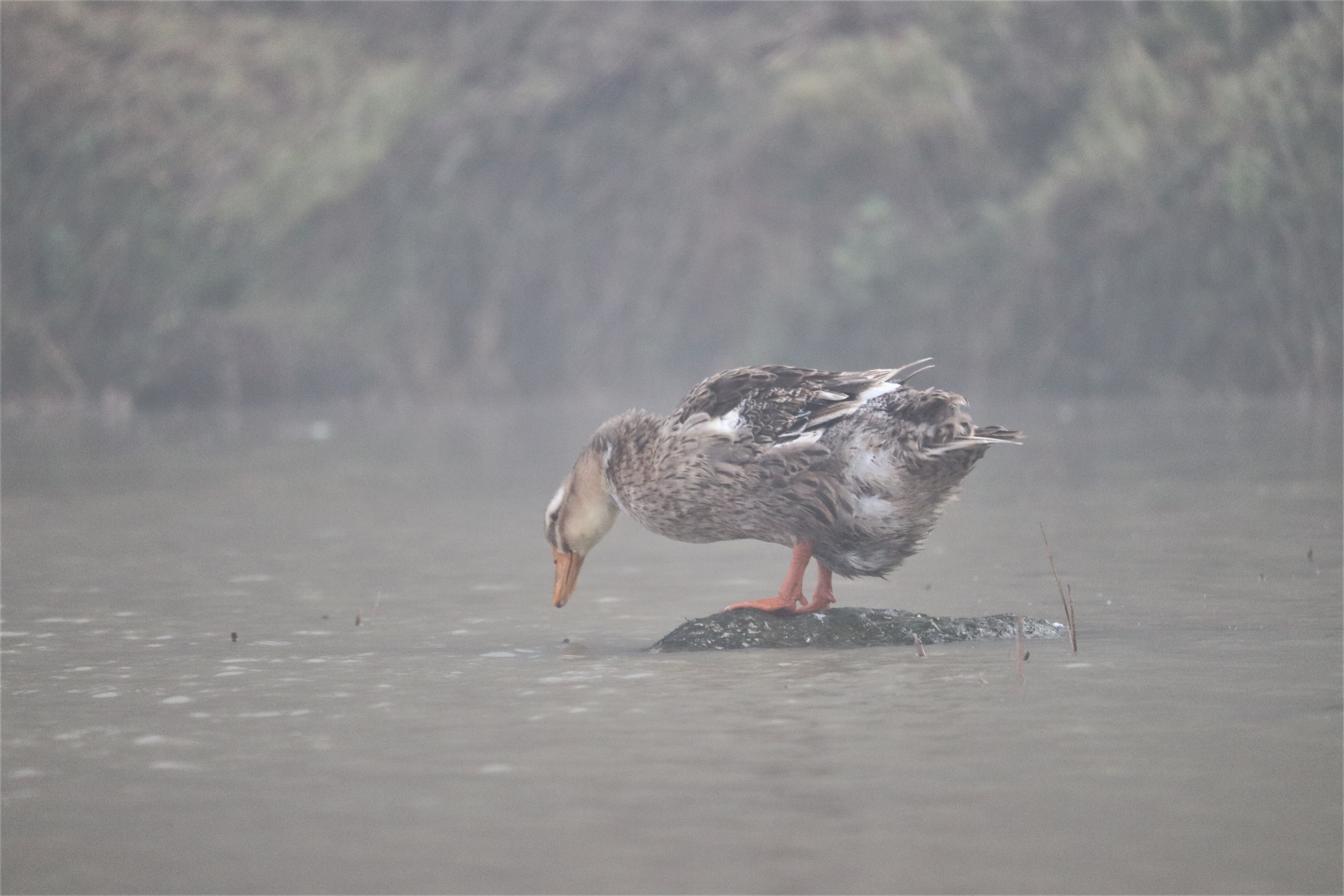
As I looked around, I heard voices not too far away. I turned around to see Lanzi and her crew, accompanied by several more tourists. She appeared to be laughing and enjoying discussing something with them. This made me not feel bad anymore about sabotaging the tour video earlier.
With that feeling of irritation and guilt gone (well, mostly), I continued to get whatever shots I could with the remaining visibility.


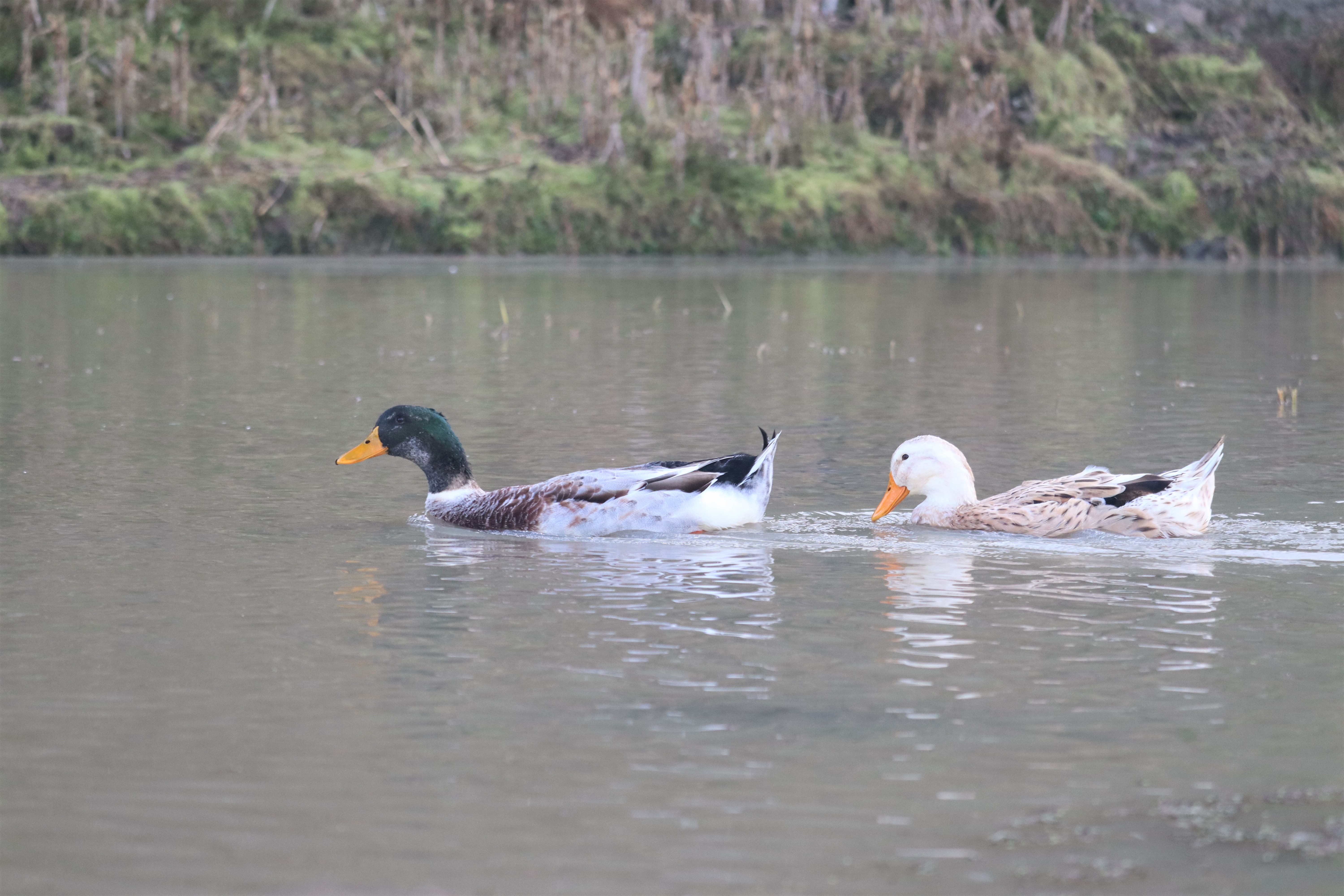

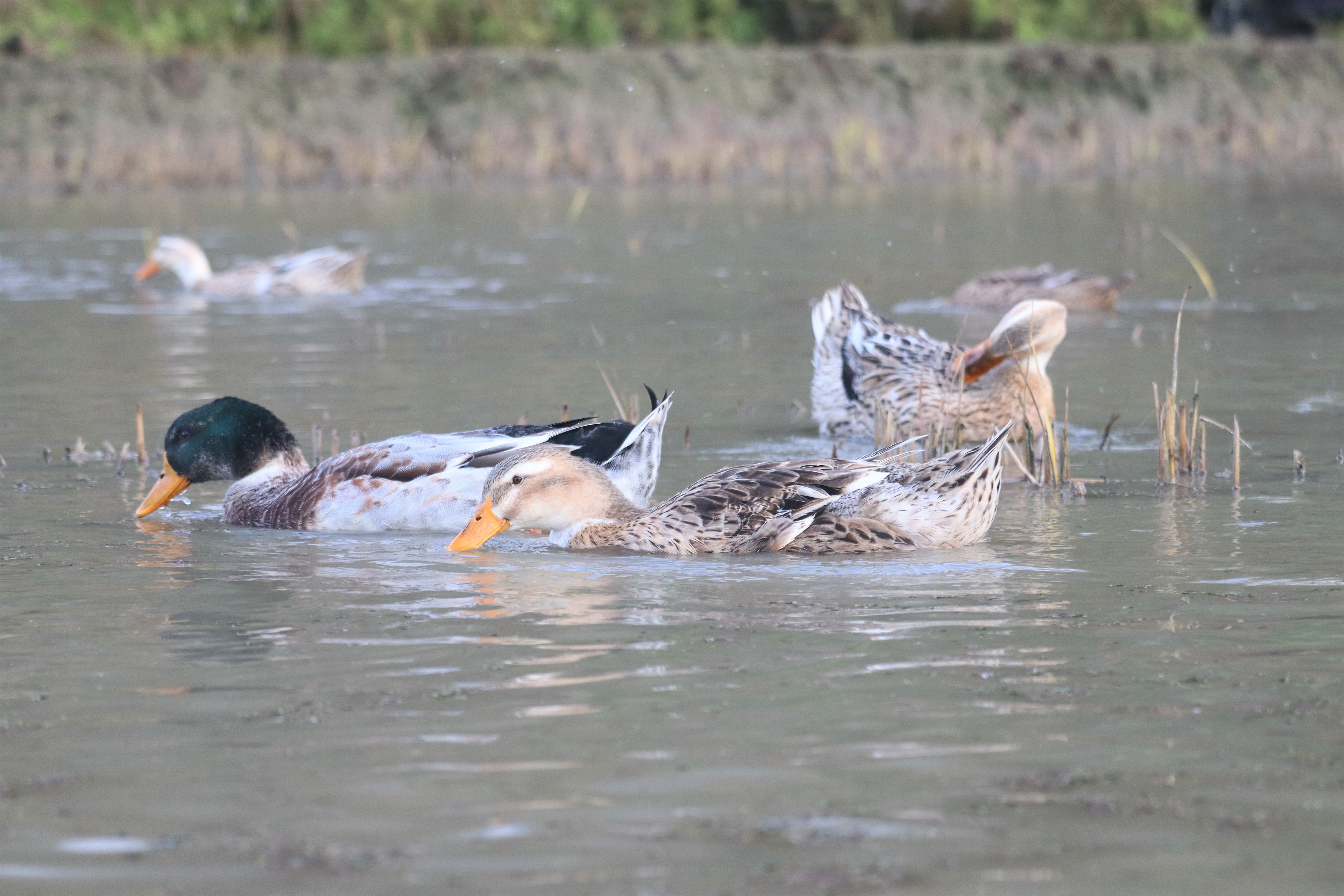


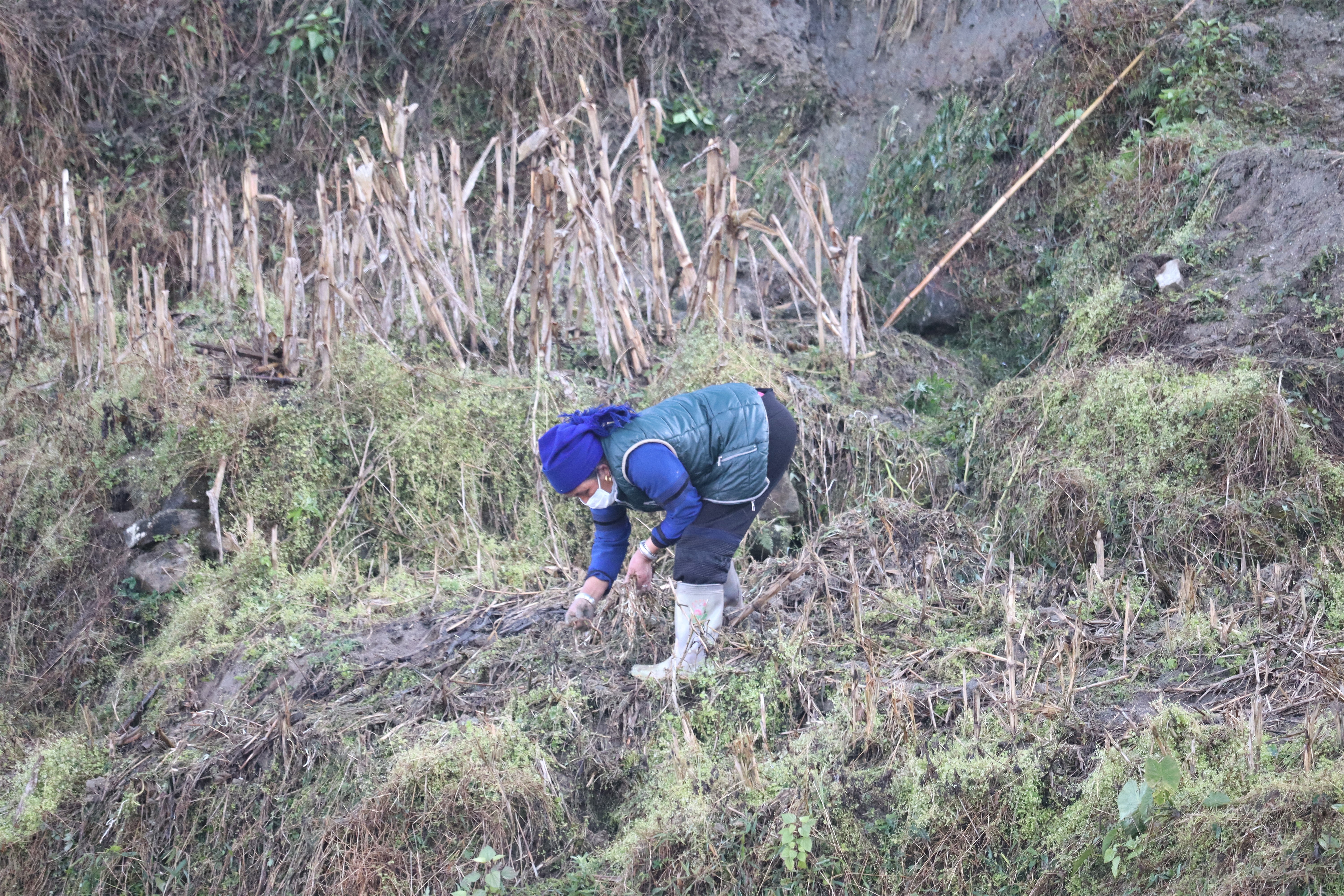
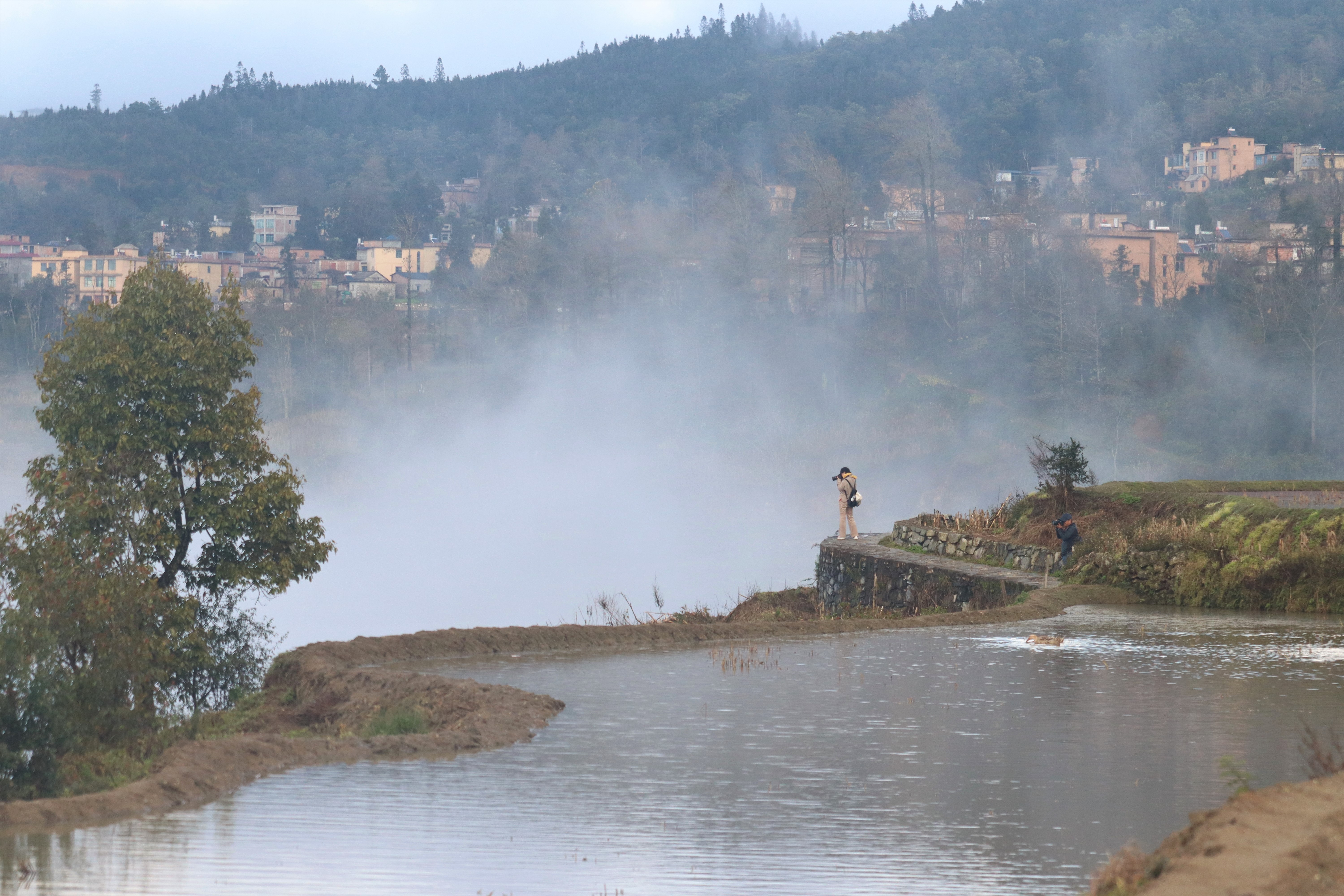

When the clouds began rolling up over the terraces again, we decided to leave and go to one more spot before heading back to the hotel.

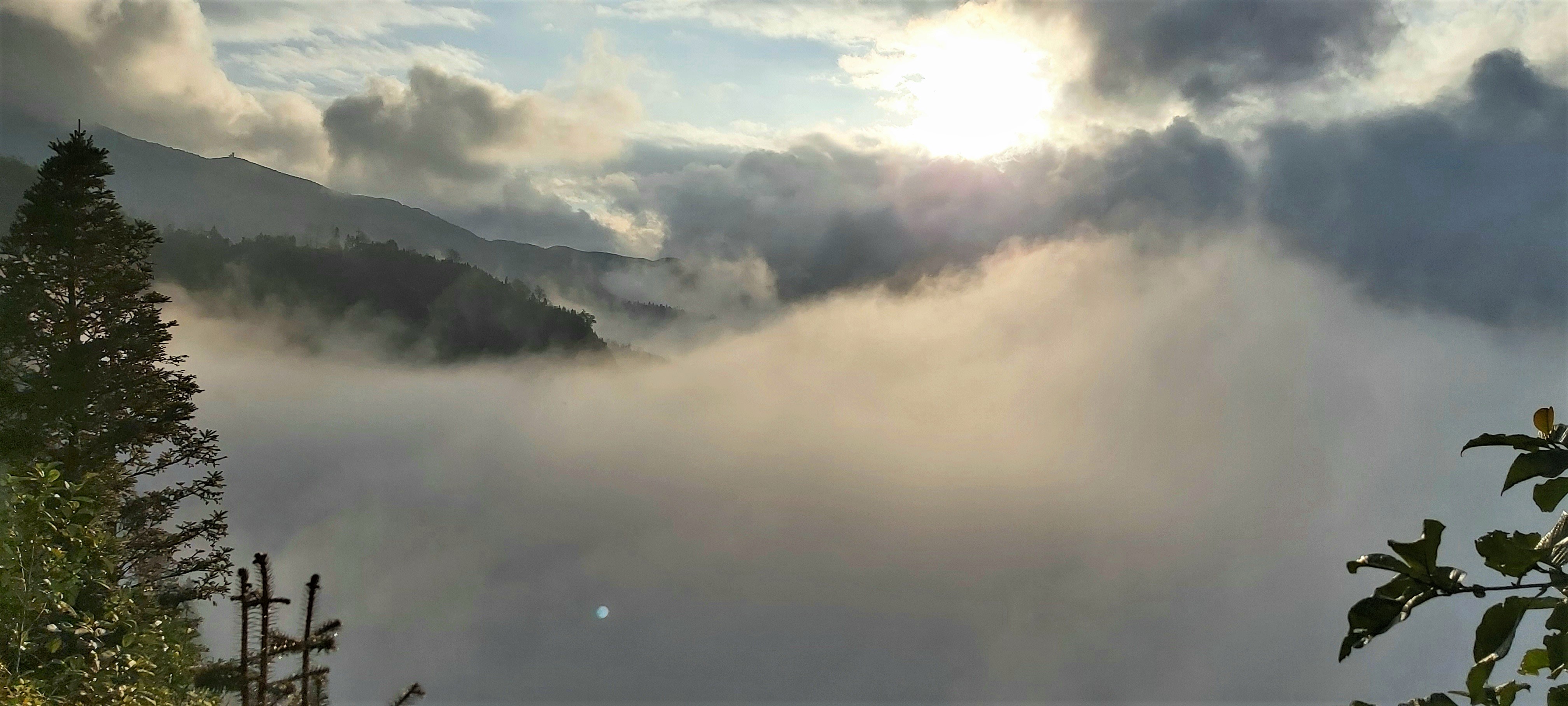

After getting the best photos we could of the Bada valley before the clouds rolled in again, we headed back to the hotel.
The idea of staying at this hotel was that it overlooked another part of the valley with many terraces. There was nothing much to see in the morning, but luckily, the clouds dissipated just enough for me to snap some more photos before being totally engulfed again.
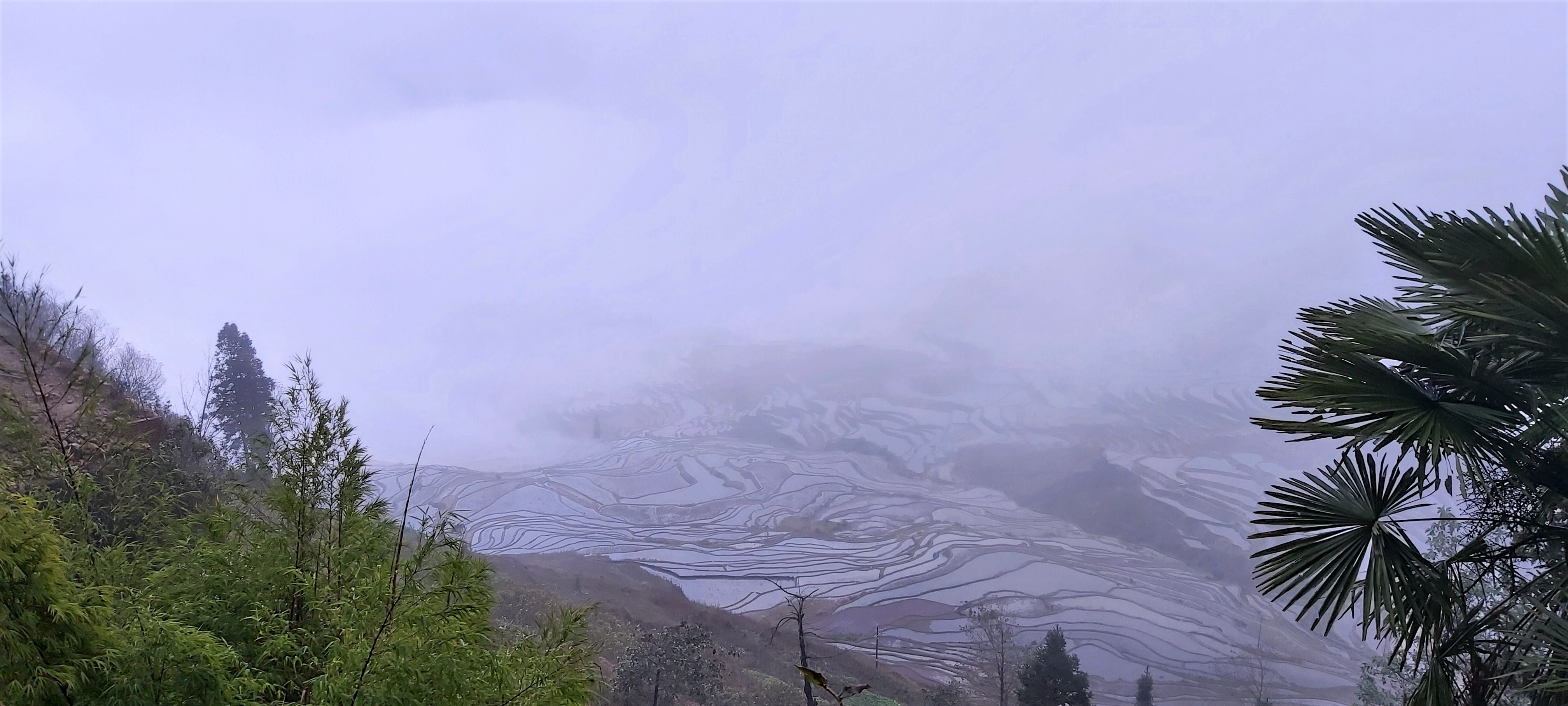
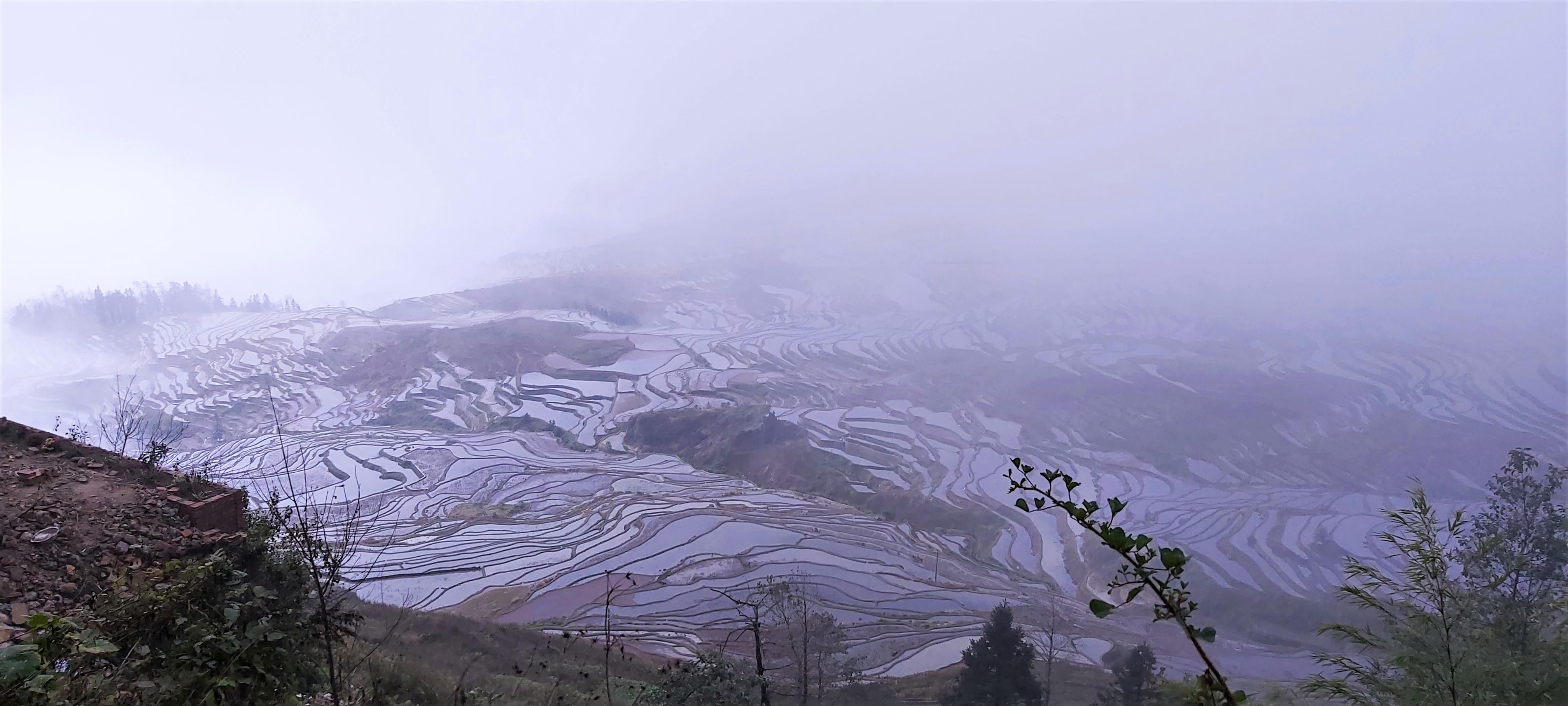

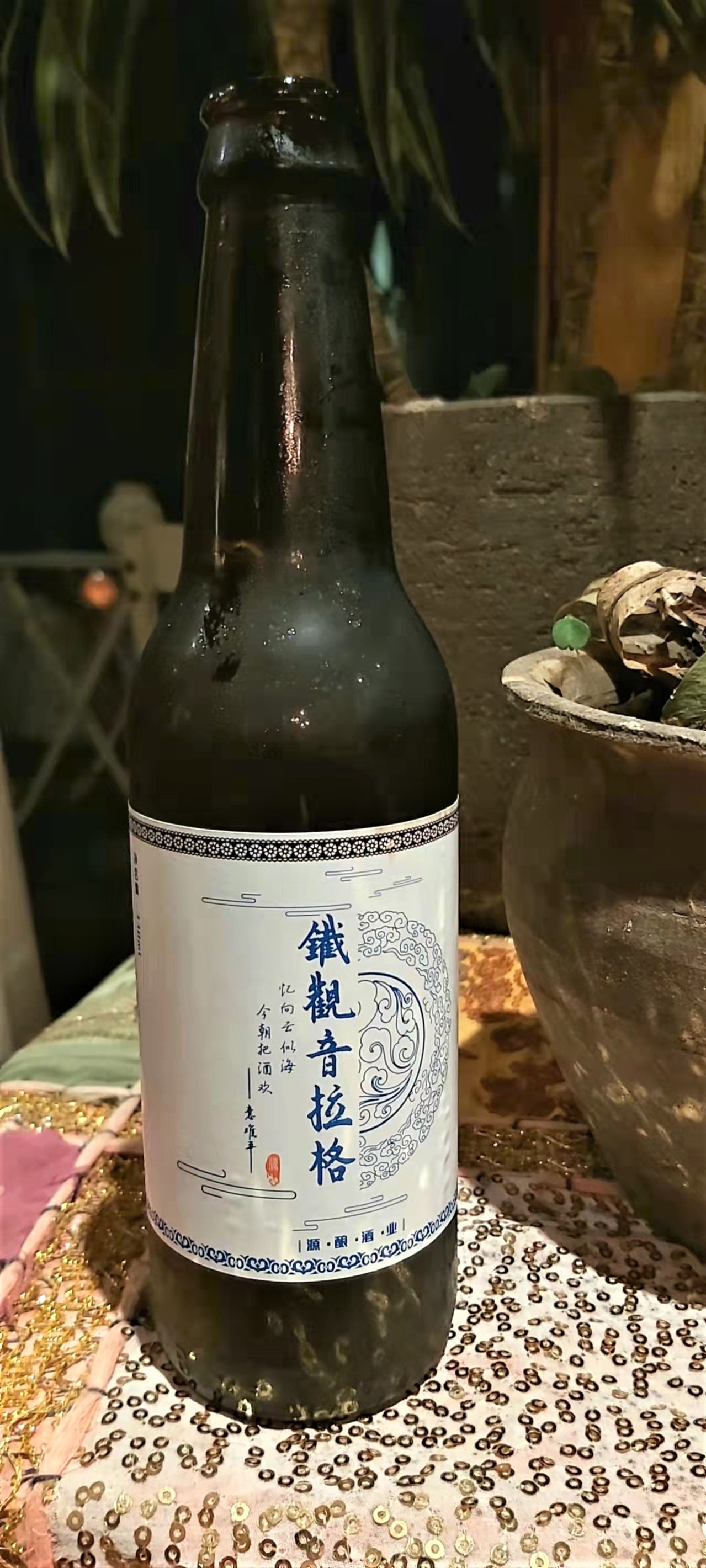
That evening, we ate dinner with a couple that Jerry had met earlier. The man was American and the woman was French, and they were working in Beijing. Jerry told me that the hotel doesn’t normally serve dinner (just breakfast), but that the manager invited him for drinks and offered a special dinner for us. So, we were taken into the small kitchen area and asked what we wanted. We opted to try some of the local red noodles. We didn’t know that it would be in a soup or that the portions would be so large, though. I am not a beer drinker, but the French woman said that even though she too doesn’t drink beer, I should still try the green tea-flavored beer. So I did, and it was light, interesting, and actually tasted like green tea.
The place has a few cats, several of which repeatedly tried to climb between us and on us as we were eating. I had no problem with glaring at them and shooing them away, especially since I am allergic to cats!

On the morning of check-out, the weather had improved a lot (although there were still bouts of rolling clouds). So, before and after breakfast, I got any photos I could, with and without the rolling clouds.
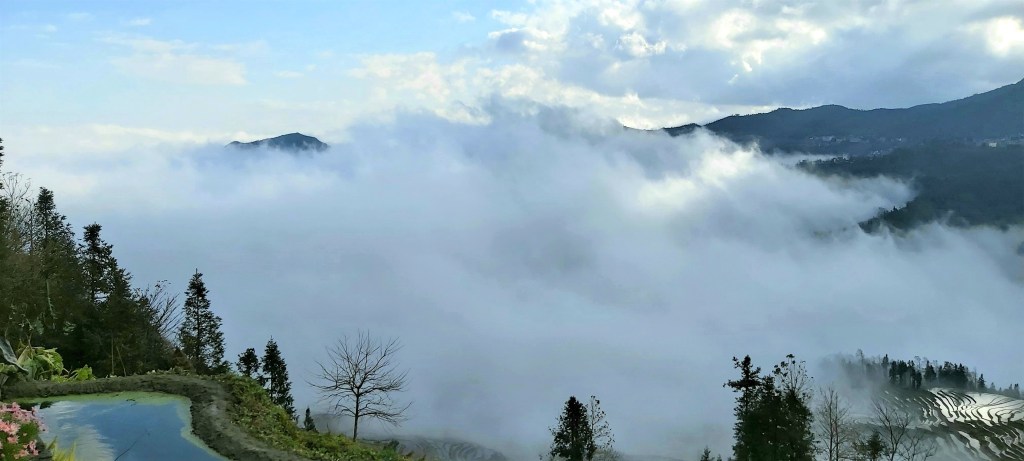
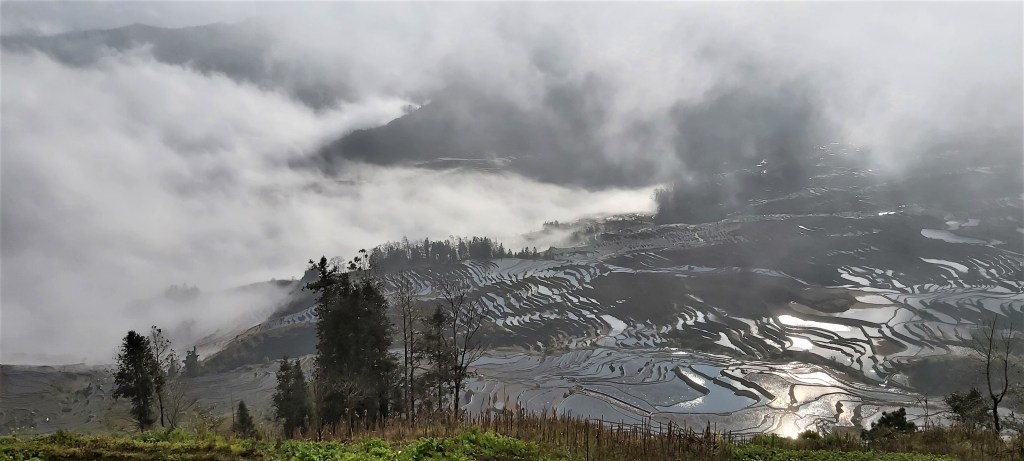
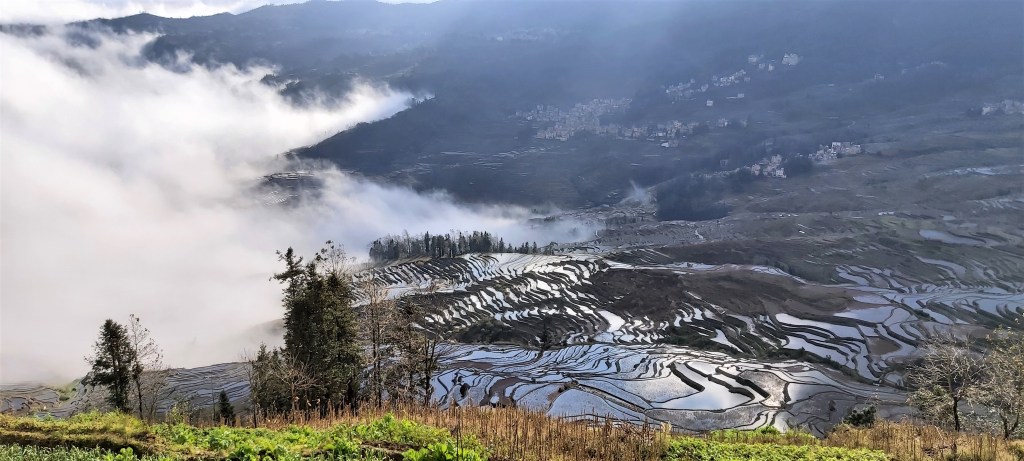
Needless to say, it was difficult to get decent images with low light and heavy cloud cover, but I tried anyway.


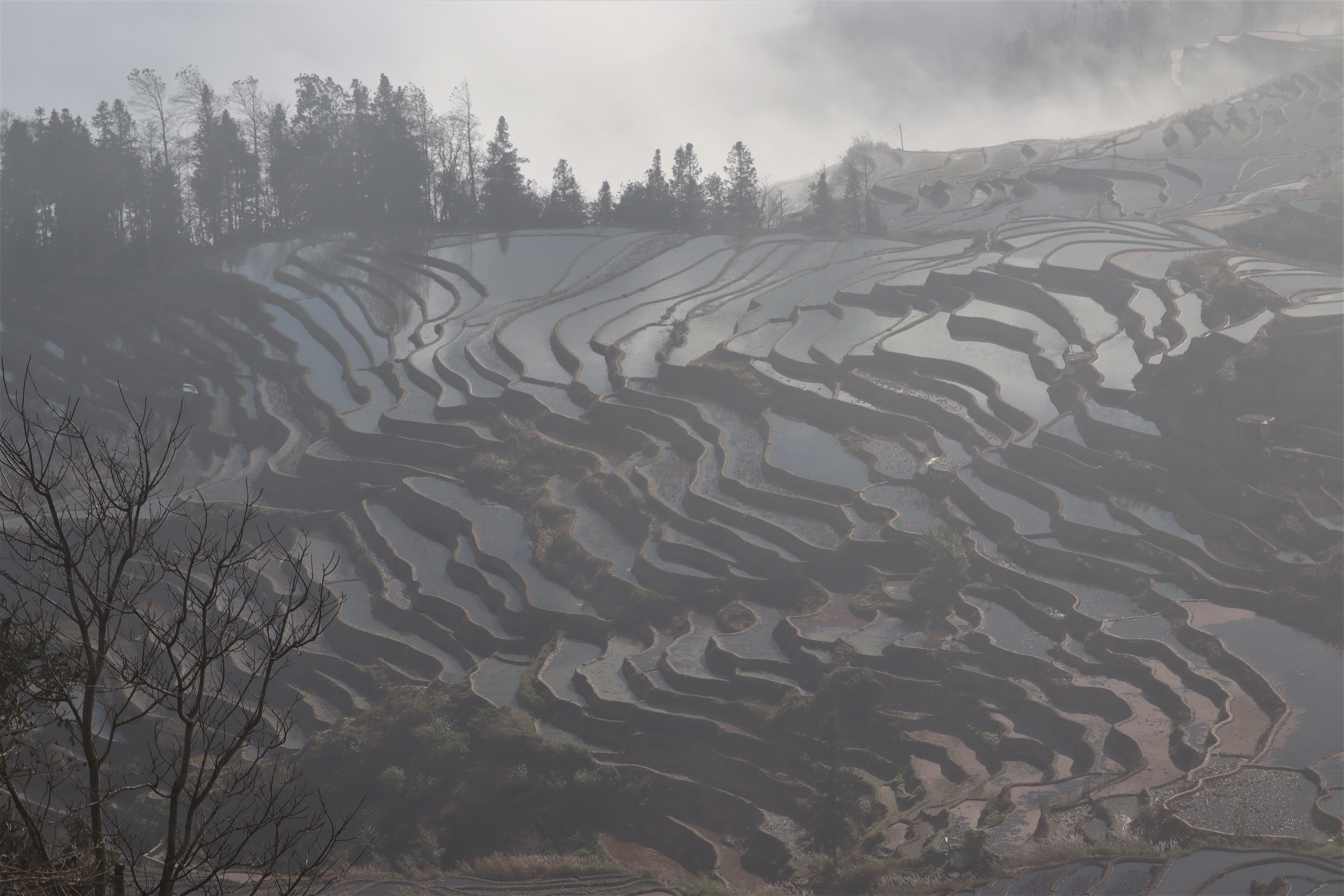
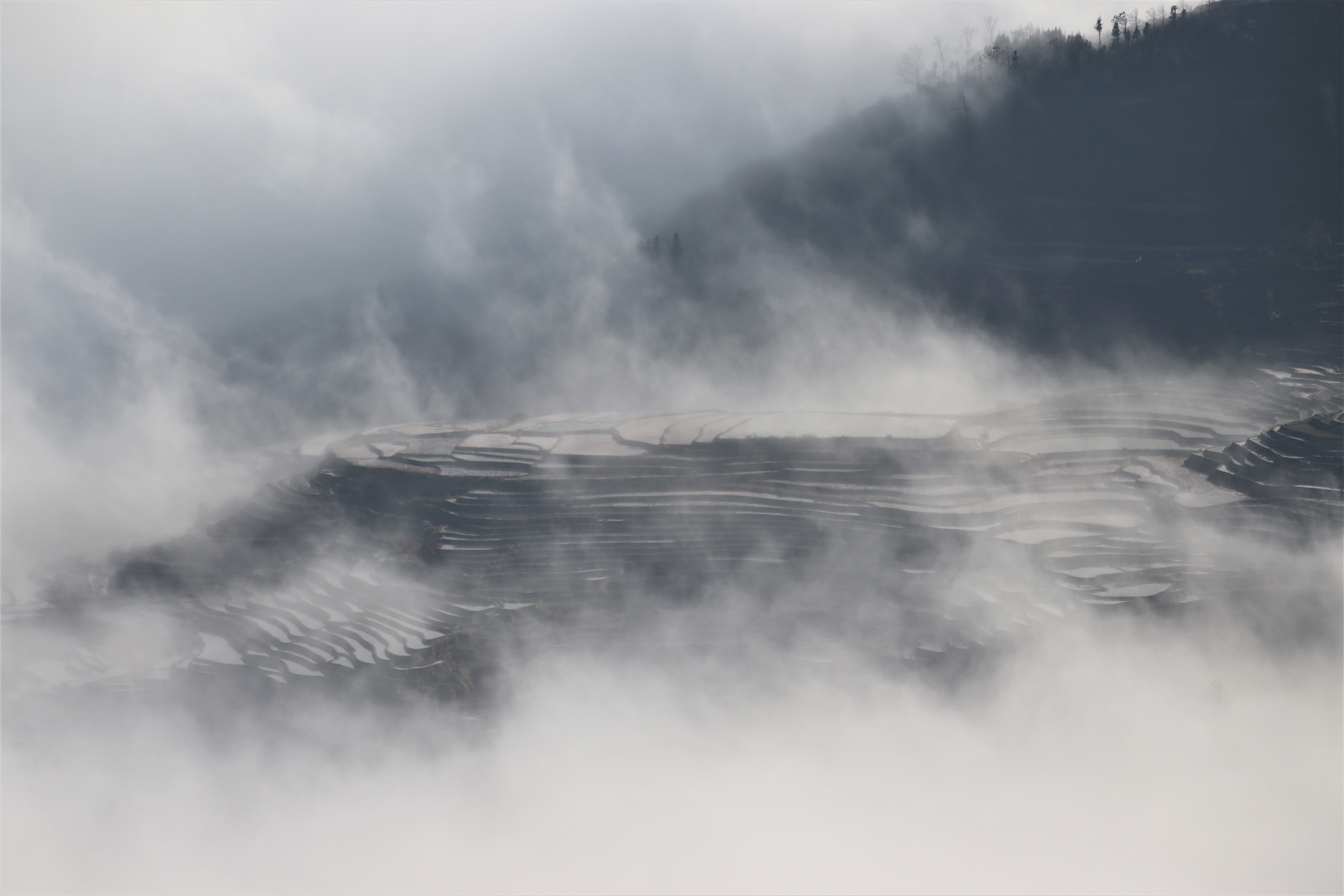

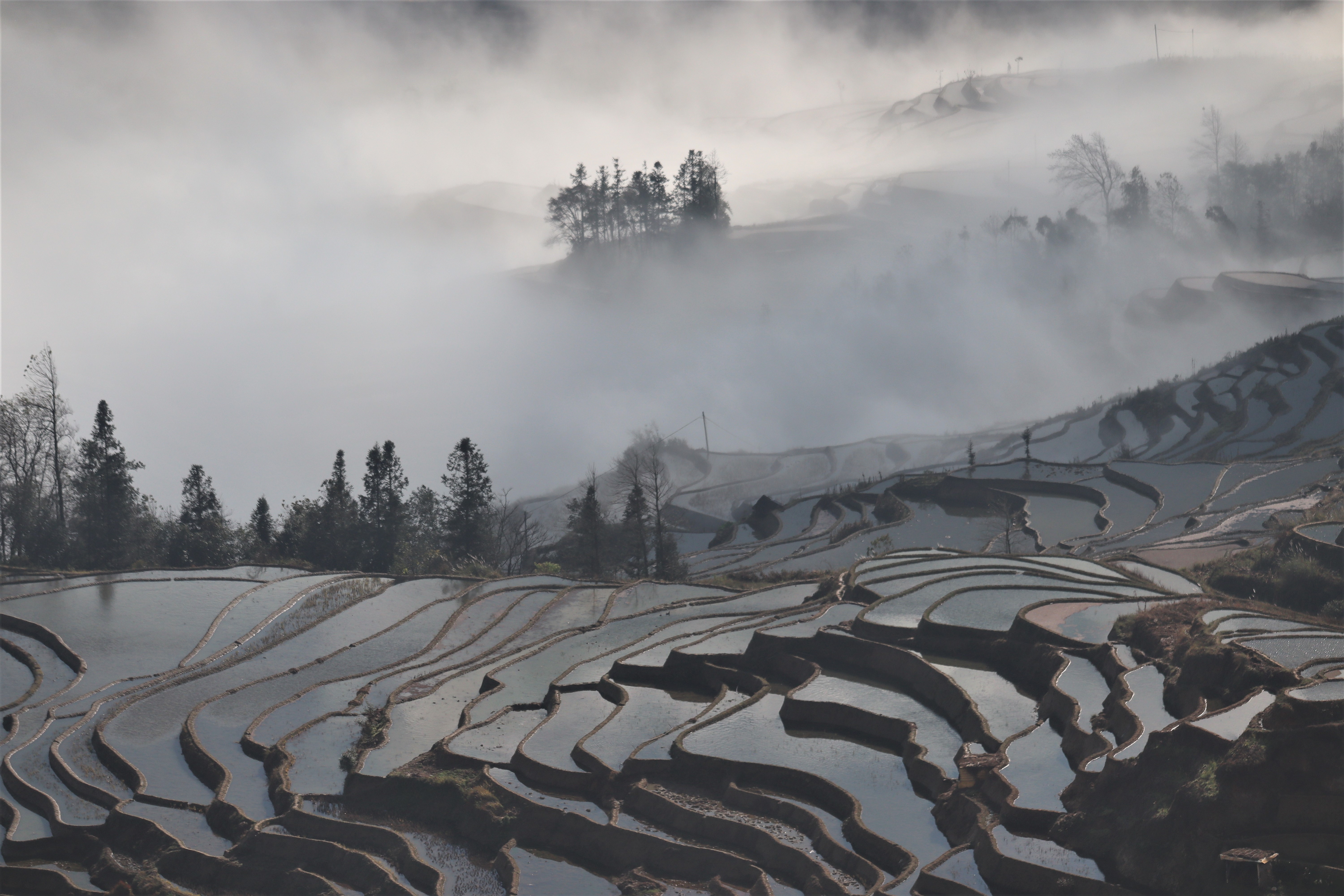
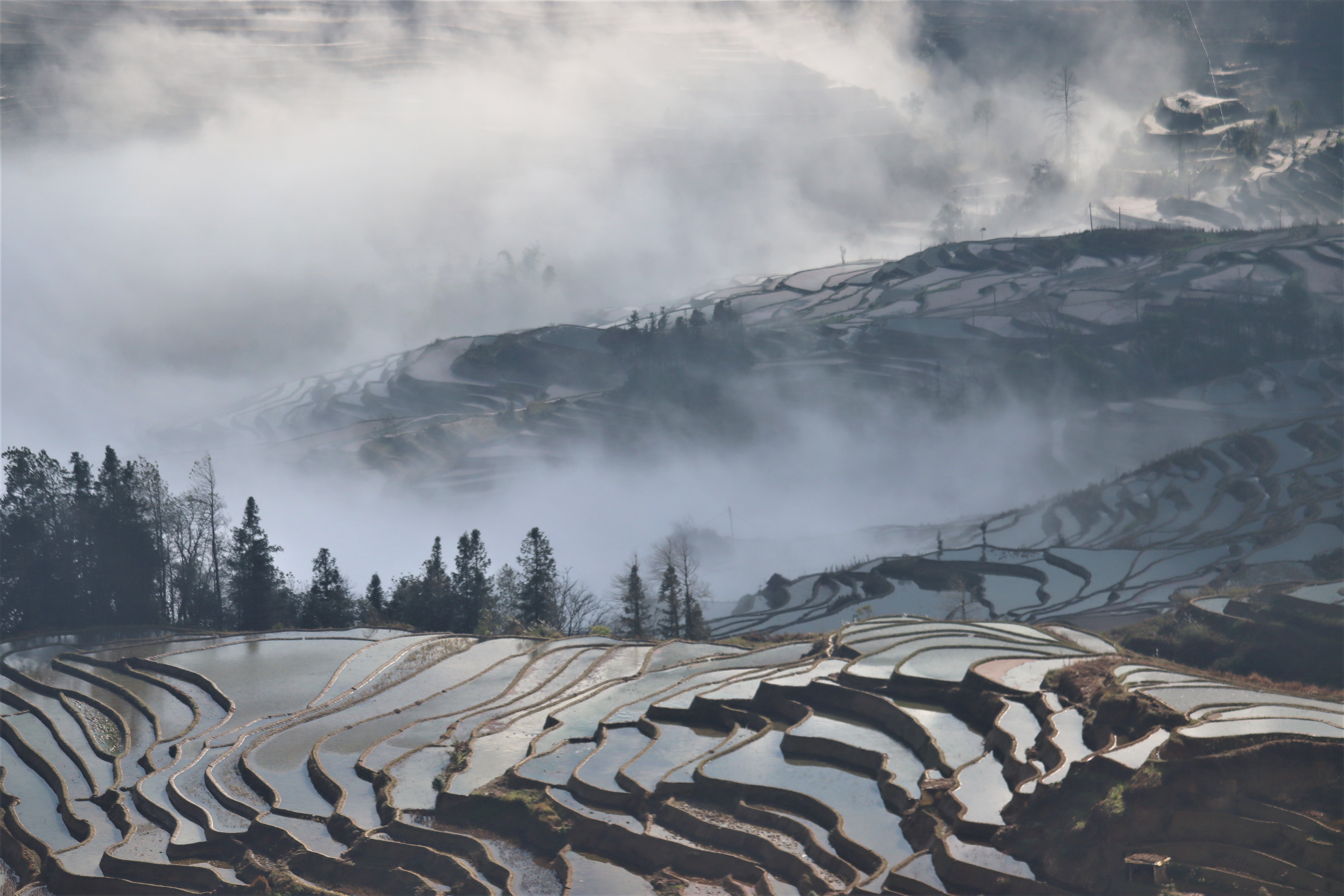
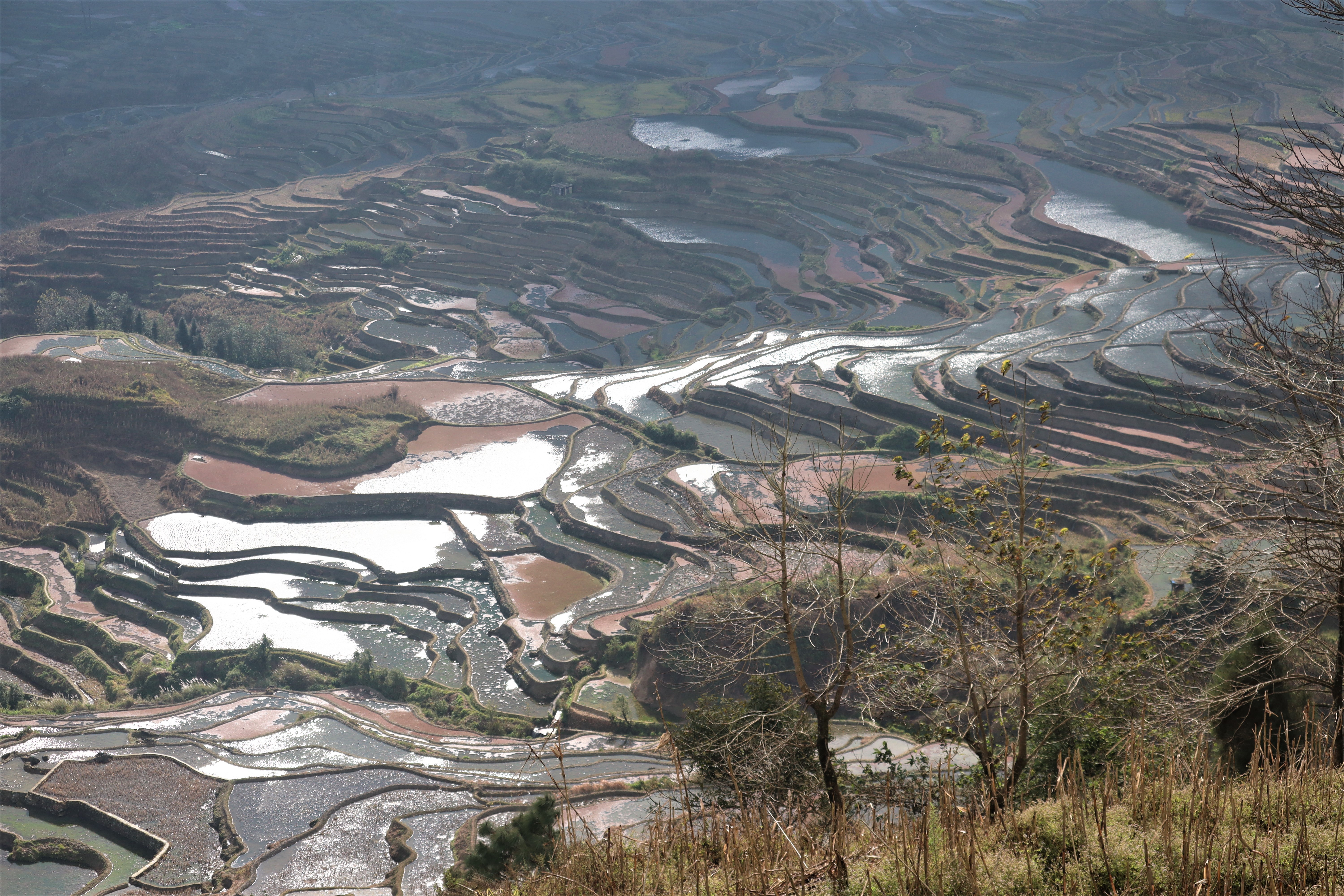
Before leaving, Jerry insisted on taking some photos of us striking a pose. I’m not really interested in endless photos of myself, but I decided to indulge him.


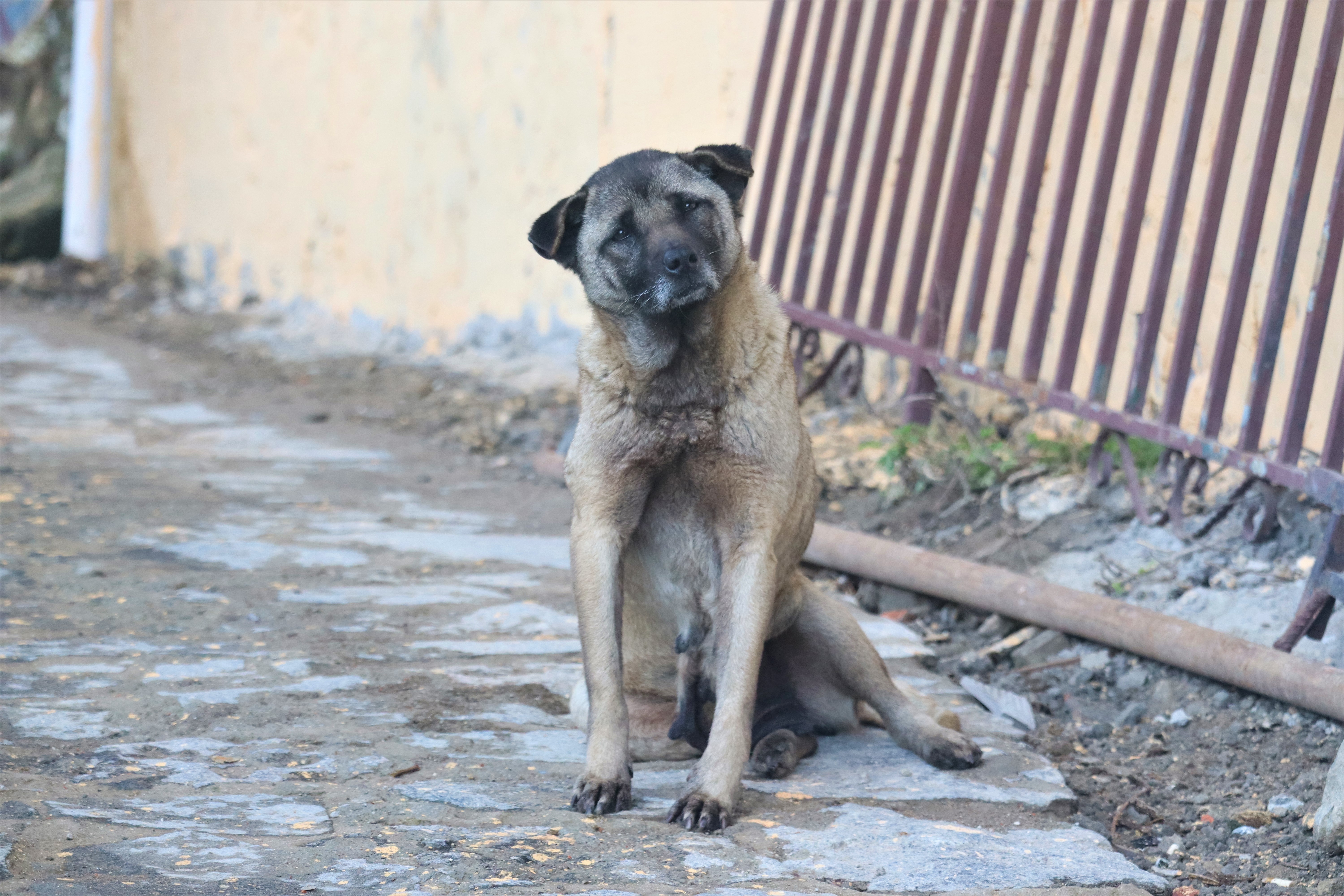
As we were leaving, we passed by one of the resident dogs. I will leave you with this image before going into the second part of my trip.
Stay tuned for the second half of my Yunnan trip!


Leave a Reply