After finally having no early morning obligations, I was able to have breakfast a bit later, as well as have time to walk across the street to the beach to walk through the water before having to check out. I arranged for my next accommodation to pick me up and transfer me there, so that was helpful.
I arrived at my homestay in a seemingly quiet neighborhood. Upon checking in, I was told that for two of the three nights I would be “upgraded” to the top floor room, then I would need to move to a different room for my final night. I didn’t ask why; I just said “OK” and was shown to my room. I was pleased with the surrounding views. It reminded me a bit of a European setting. This made sense since Da Nang and Hoi An were some of the original places that the French first landed at, and I was staying in the “Old Quarter.” Hoi An’s “Ancient Town” area is also a UNSESCO-listed site.
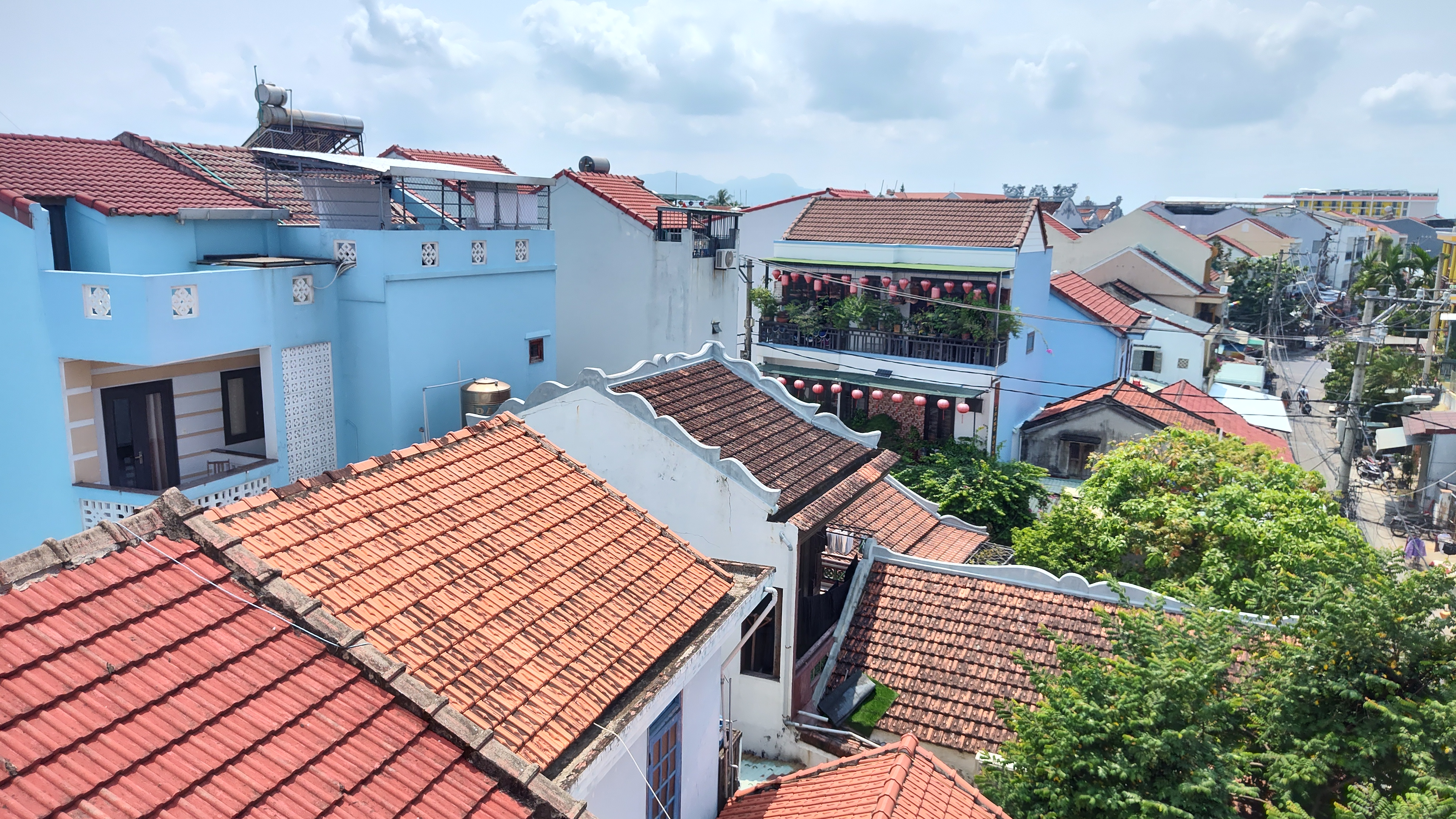
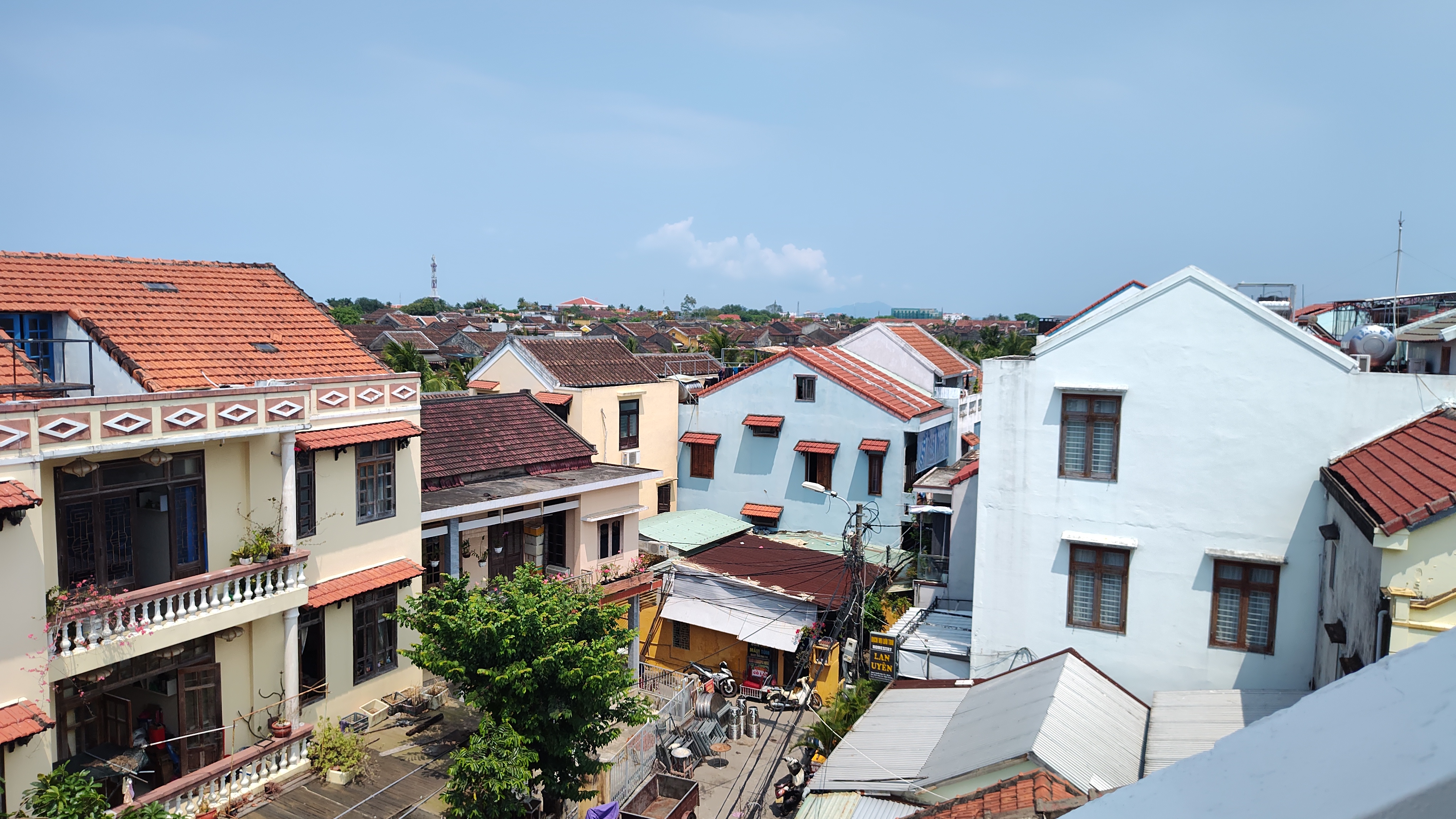

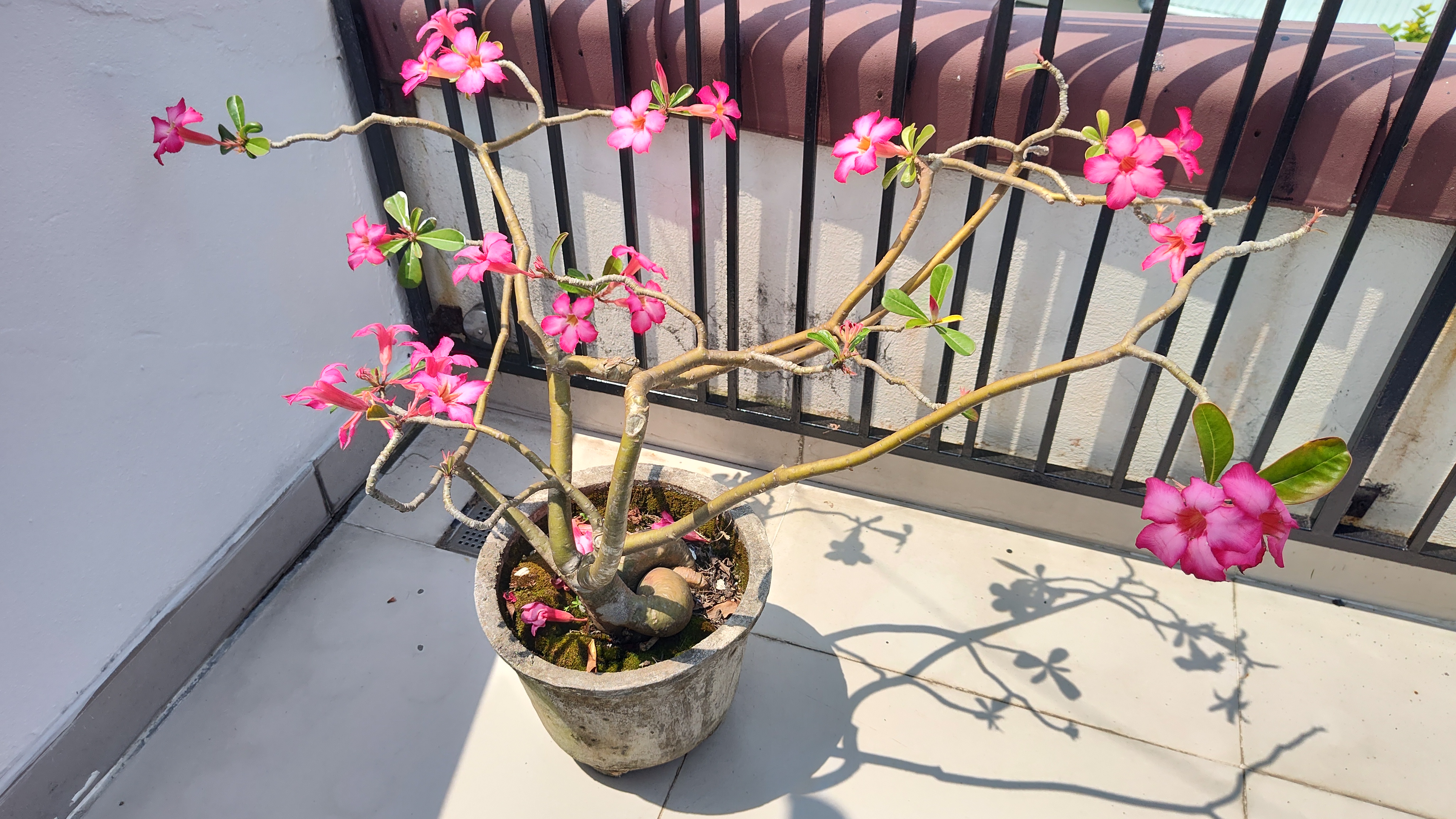
I didn’t really explore much around the immediate area since I was tired and hot. I had an evening tour booked, so I just decided to rest until it was time for dinner.
When I finally went out to eat, I was surprised at just how crowded it is here at night! There is some foot traffic during the day, but it is noticeably louder and busier at night, regardless of whether it’s a weeknight or the weekend. I would later find out that the booming club music gets played each night, too. I was close enough to the river to be able to hear the activity going on in the more commercial areas. Never the less, I decided to take in the sights and sounds while looking for dinner.


Ghost Walking Tour
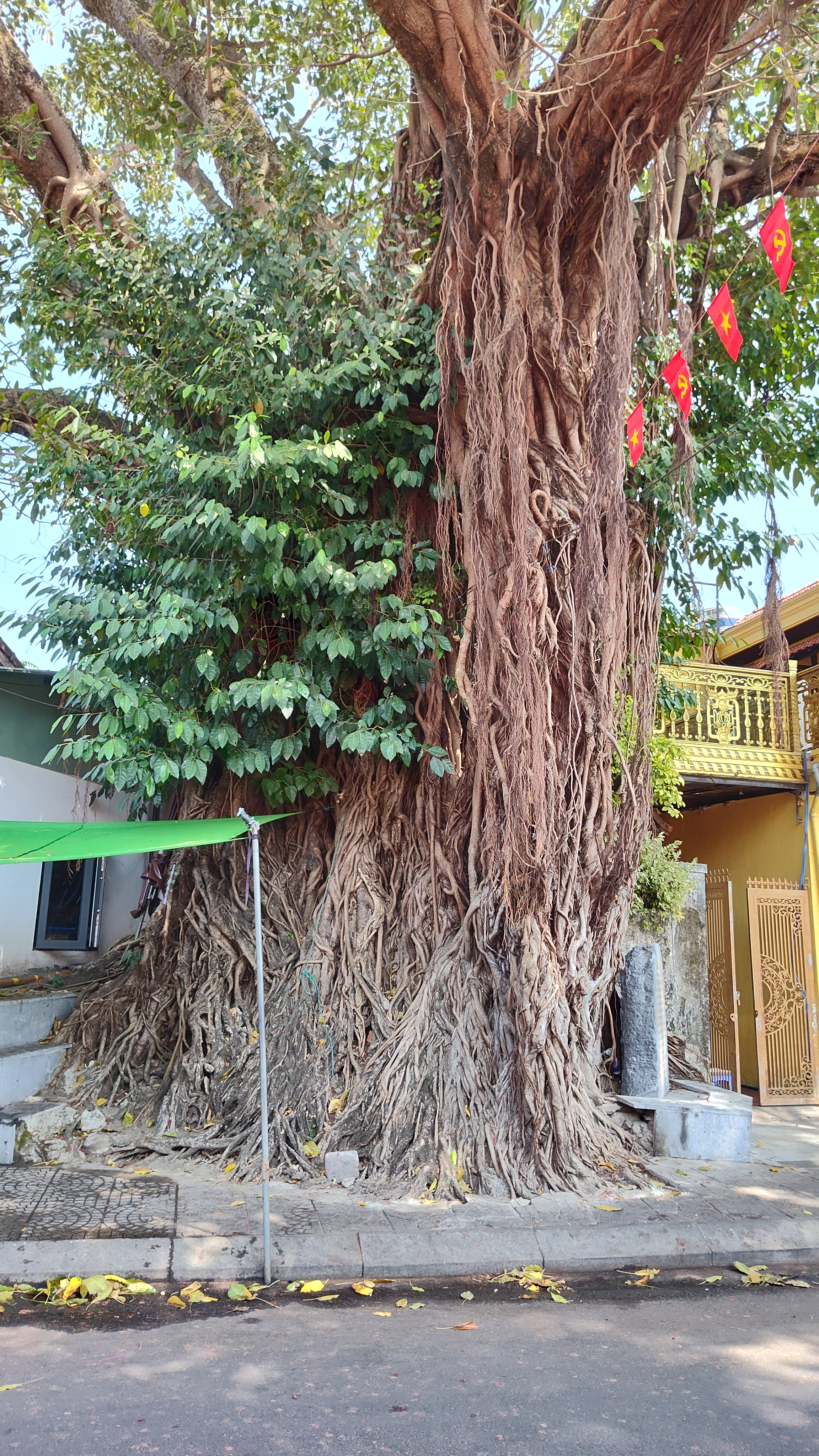
The first tour I did here was an evening “Ghost Walk.” The designated meeting point was next to a tree that is said to be somewhere between 300 and 400 years old.

I ended up being the only person to sign up for this tour, so once again, I unexpectedly got a private tour! As the guide herself pointed out, the term “Ghost Walk” made it sound more exciting than the tour content. What this walking tour really was about was some of the customs that the Vietnamese have regarding death. It was here that I learned the difference between a temple and a pagoda (a temple is where people of different faiths gather to worship any number of deities, and a pagoda is specifically a place of worship for Buddhists). I’m obviously not an expert; I’m simply saying that this is how it was explained to me.
I learned that (unsurprisingly) the Vietnamese share a number of customs with traditional Chinese culture, including a national holiday known as “Tomb Sweeping,” where everyone goes to visit their ancestors’ burial site to give offerings as well as do some cleaning or maintenance around the grave or tomb. She also said that in addition to doing it on Tomb Sweeping Day, people will also do this locally on whichever day a relative dies. She also mentioned that if a burial site seems unkept due to not having any relatives, then others will help by giving offerings and saying prayers for them to help them carry on better in their afterlife.
Since it was nighttime, it was quite difficult to get any decent photos, so I decided to just focus more on taking in the evening sites. I also tried to remember what else she said, especially about how there used to be cohabitation among neighborhoods of Vietnamese and Chinese families, as well as a particular building where multiple owners have tried to establish their businesses but ultimately failed due to being cursed by the previous owner out of vengeance (so the legend goes).
Lanterns
A final bit of information is how you can tell the difference between a traditional Chinese lantern and a Vietnamese lantern. A traditional Chinese lantern is a simple red color with no patterns (aside from perhaps some writing). A Vietnamese lantern will come in many colors and have different patterns.
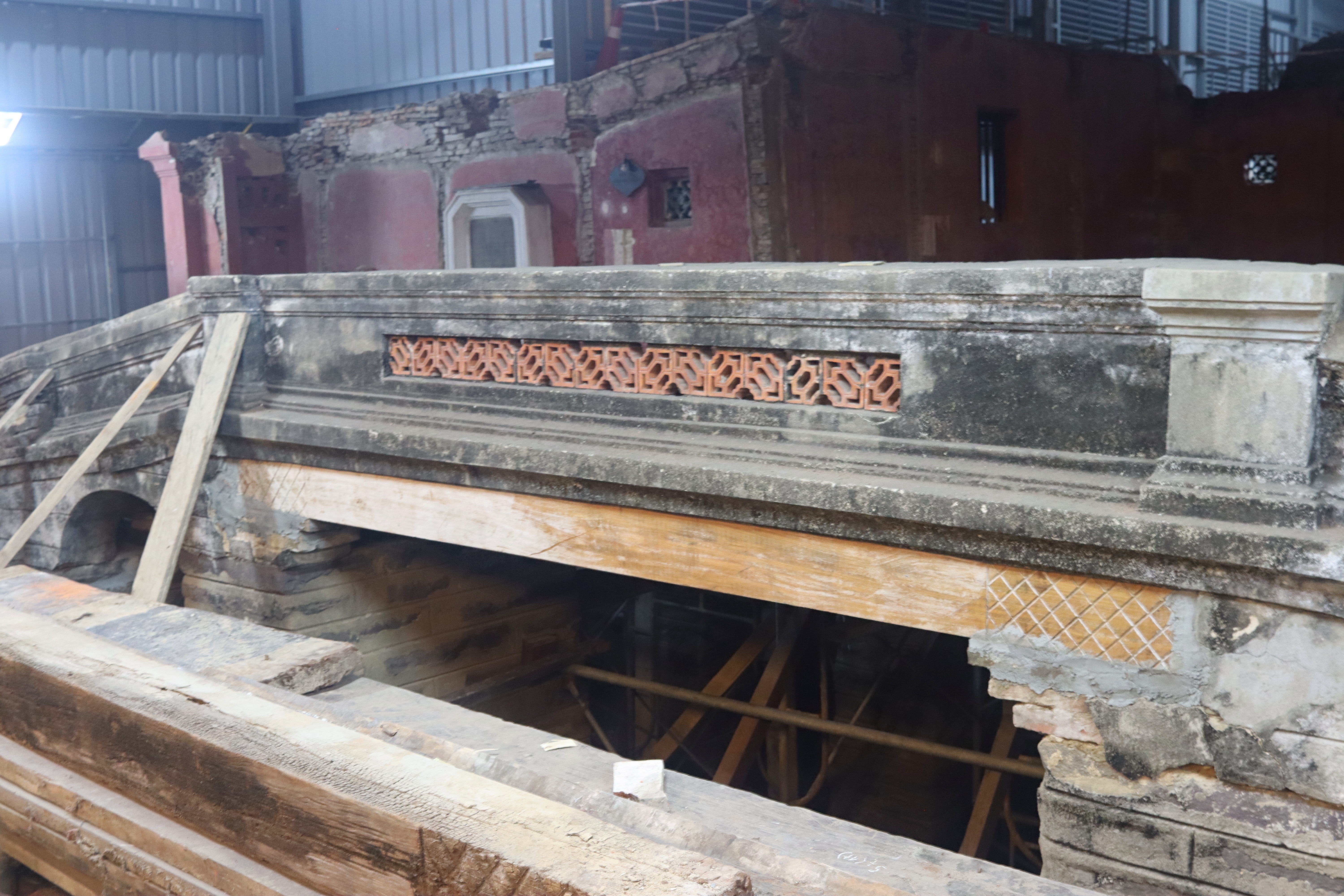
The last place we visited was the old Japanese bridge, which was built in the 17th century. The bridge represents a Japanese monster called Namazu. The legend includes the head being located in India, the body in Vietnam, and the tail in Japan. It was built to “impale” Namazu to ensure the prevention of these disasters in these countries and promote peace and prosperity. Of course, while here, it was undergoing renovation.
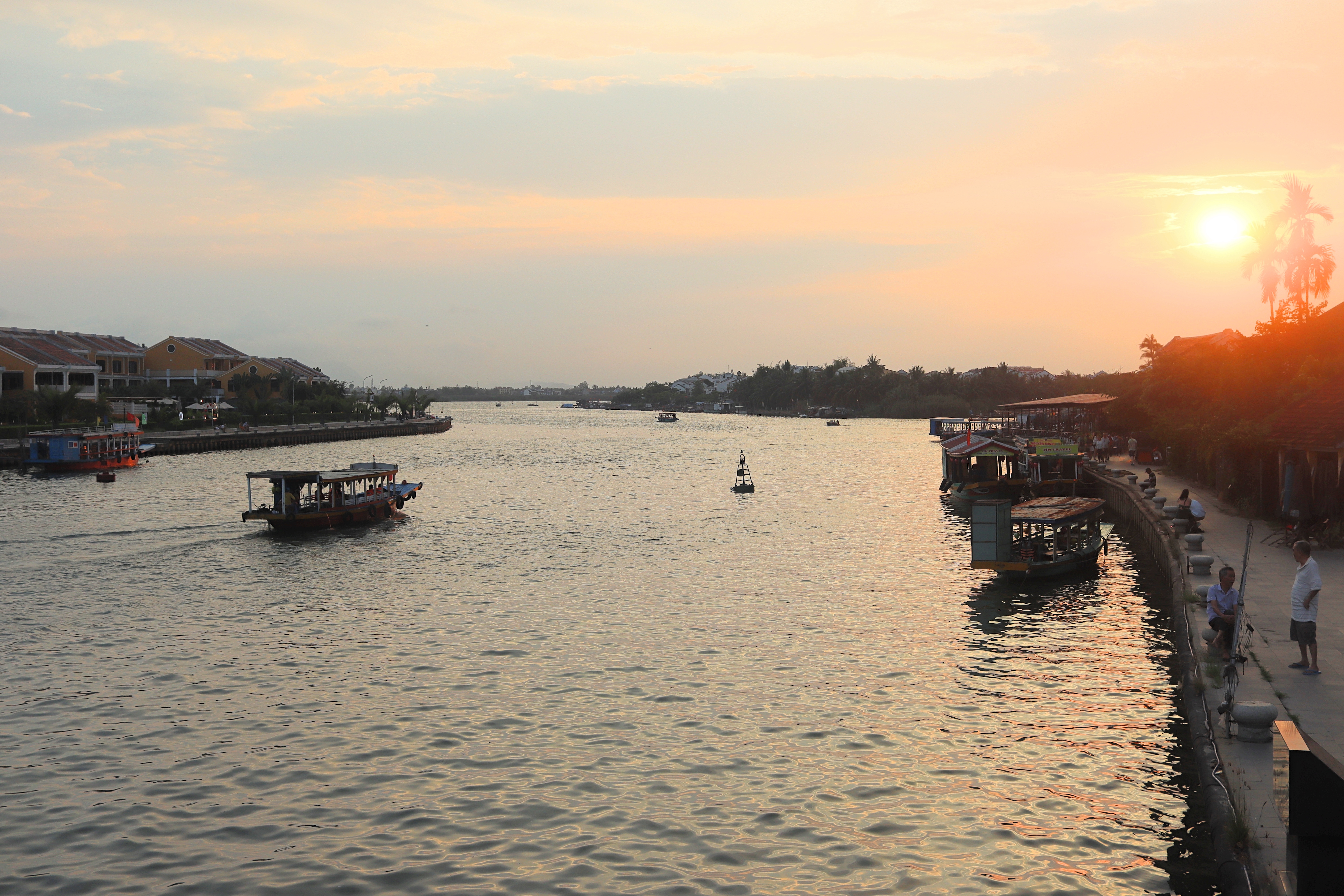
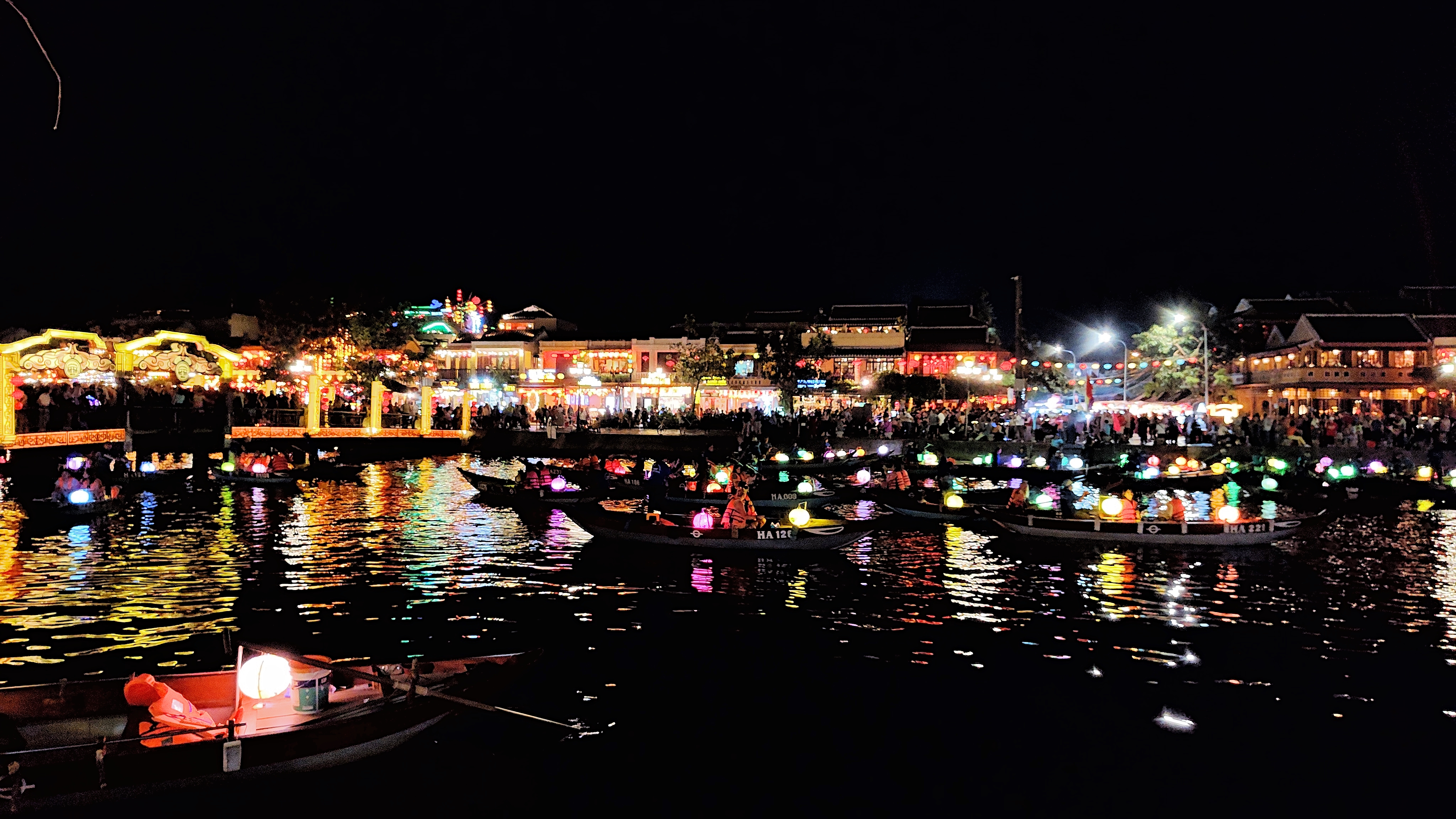
When the tour was over, I said my thanks and goodbyes to her and tried to capture a bit more of the evening’s colors and craziness. Here, the Hoai River was full of boat riders and people placing small paper lanterns with a candle inside on the river’s surface to float along. My guide had mentioned that this comes from an old tradition in which Vietnamese people believe that lighting a candle and placing it into a lotus lantern to float along the river can bring health and happiness. She also mentioned that this has resulted in a lot of trash building up along the shores.
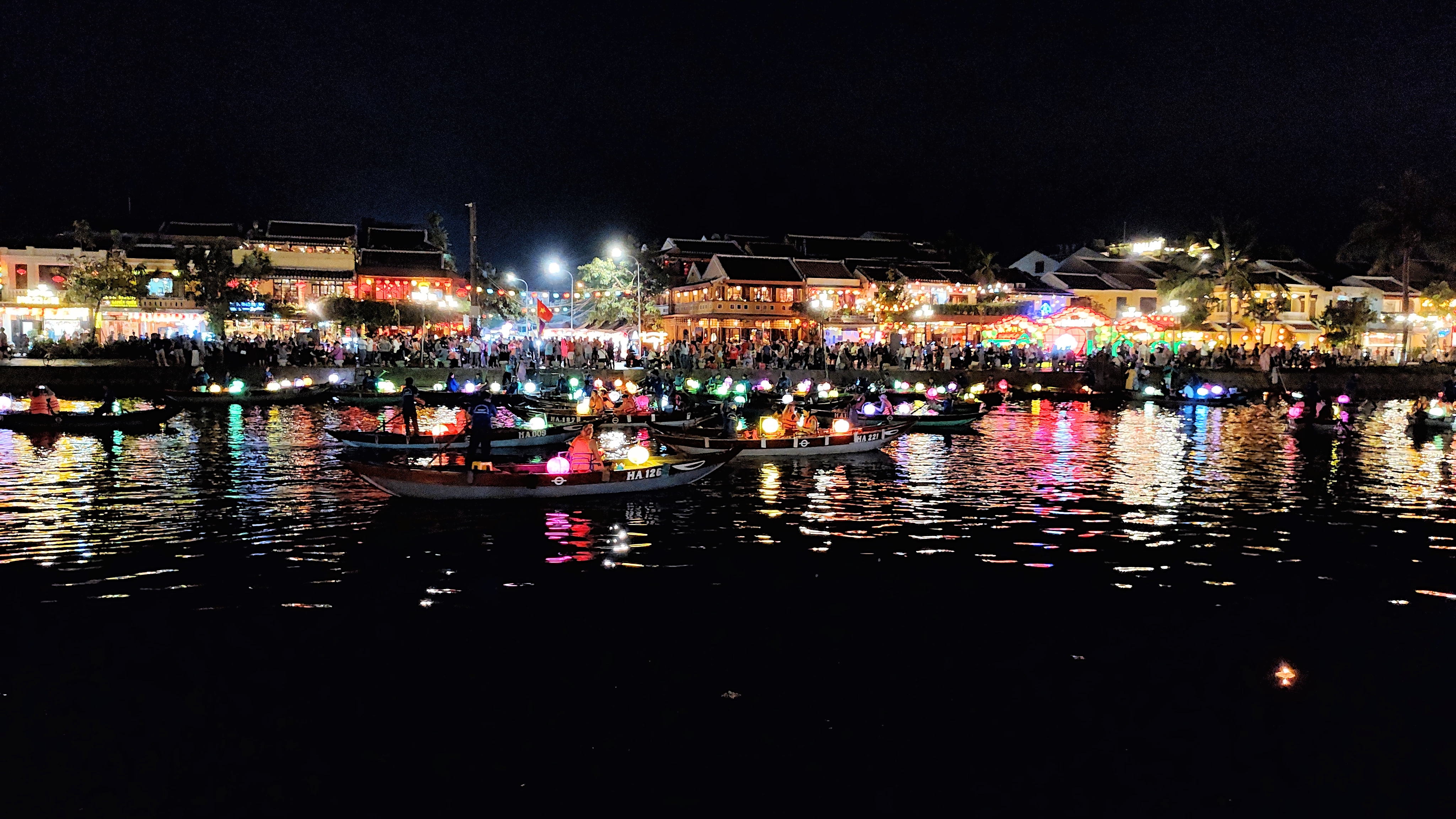

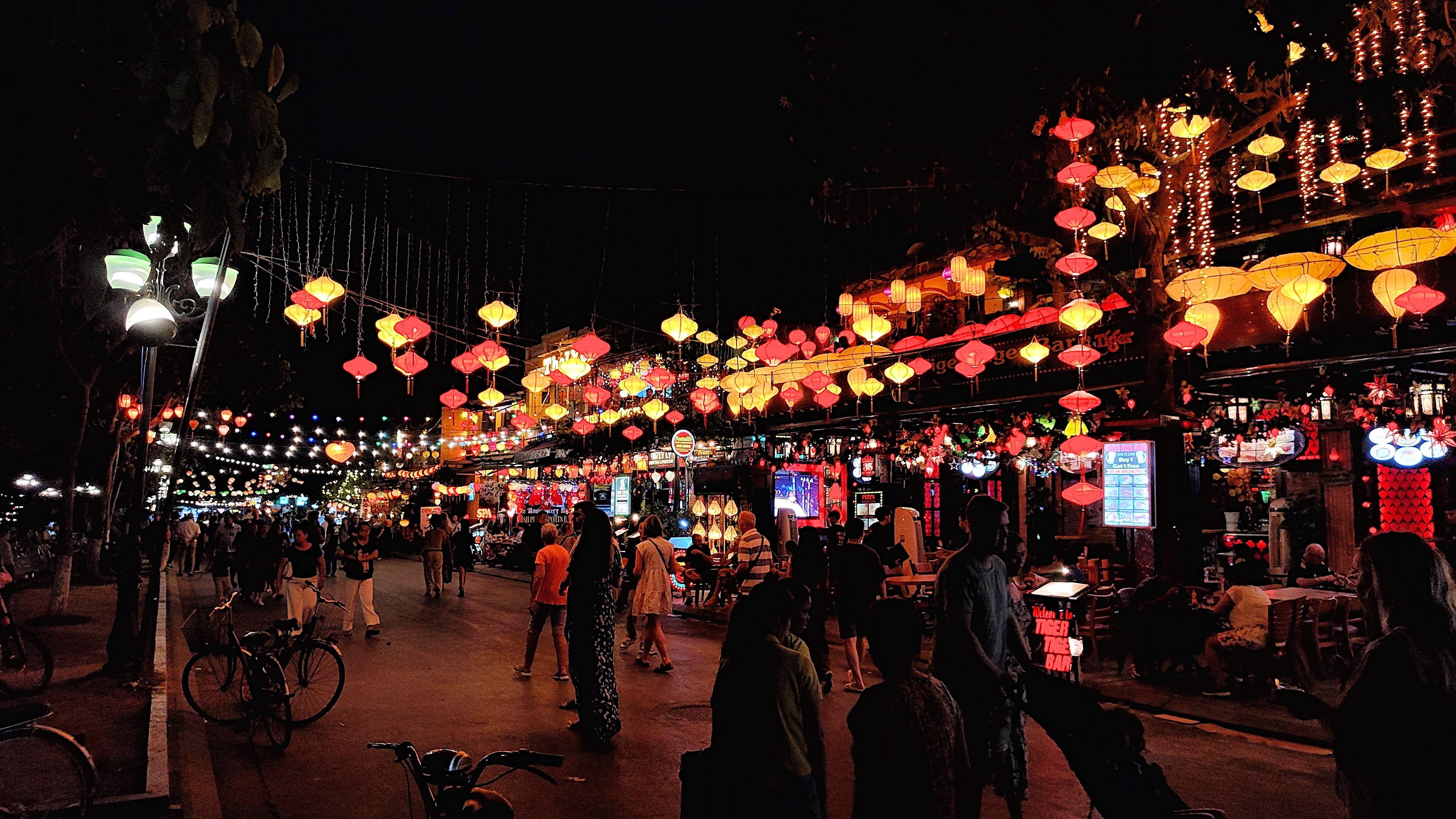
Contrast this with the quieter area of where I was staying just across a block from here.
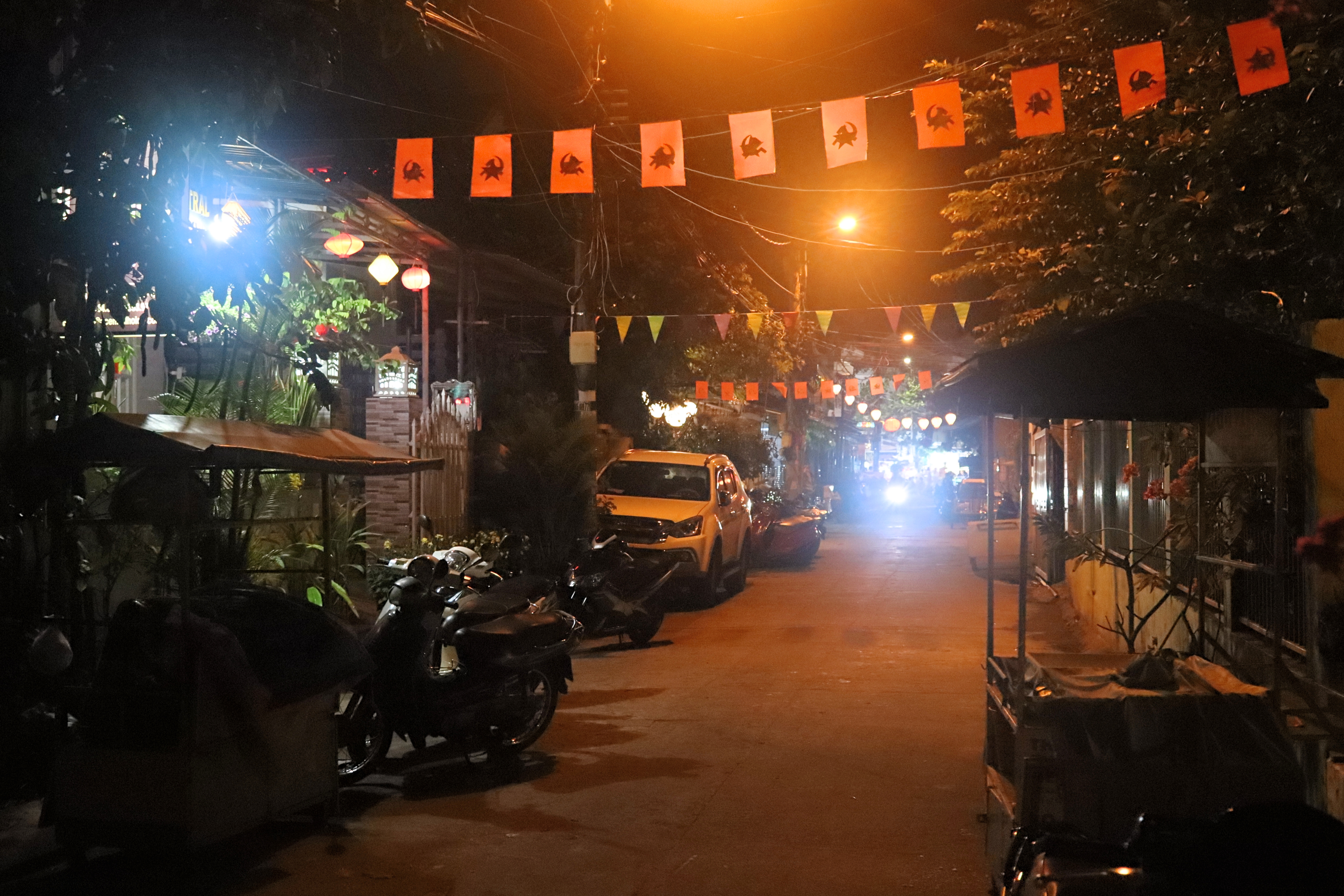
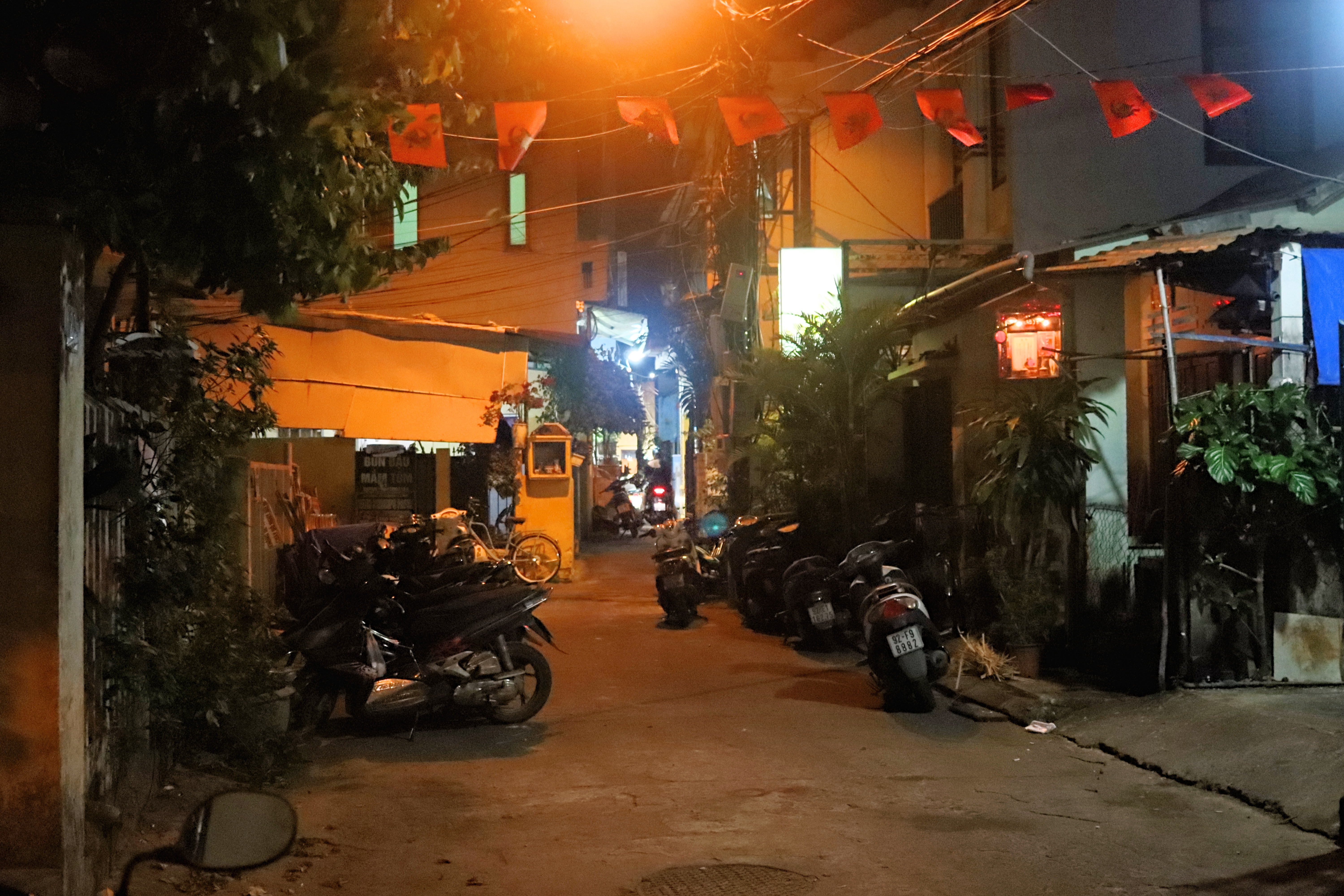
Day Tour:
Hidden Gems of Hoi An
The first tour in Hoi An was a Vespa (a small motorbike) tour to places outside of central Hoi An. This would include taking a basket boat ride in the nearby river, relaxing beside a rice paddy with some drinks, visiting a local art museum with items made from driftwood from the mountains, and dinner at a local’s home.
Boat Basket Ride
(in Cam Thanh)
After being picked up via Vespa scooter, I and the other tour members gathered together. In this small group were a lovely older Irish couple as well as a Korean-American woman. I also reunited with my first guide, Nick, from Da Nang. We were then whisked away to our first activity—a basket boat ride.
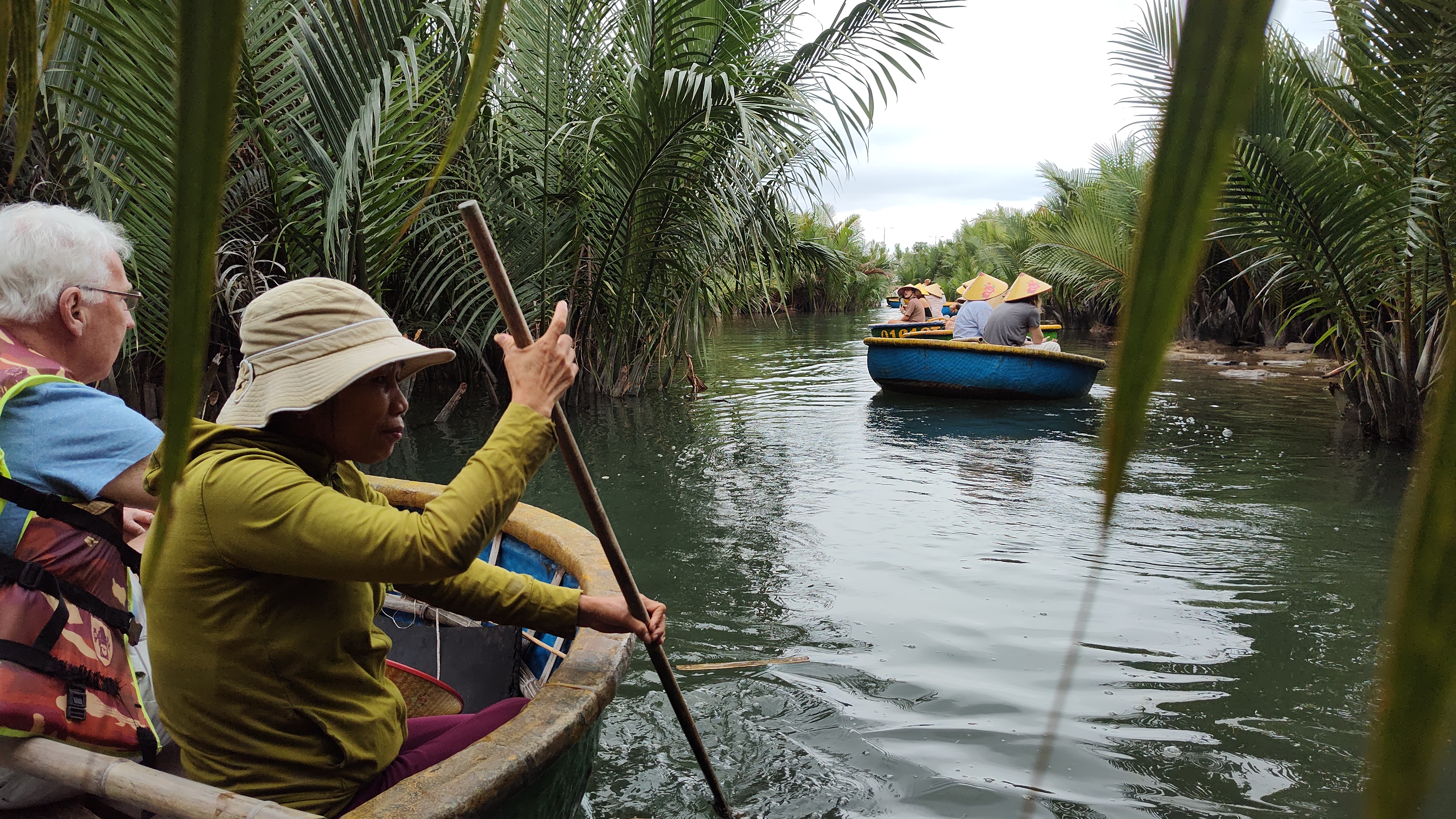
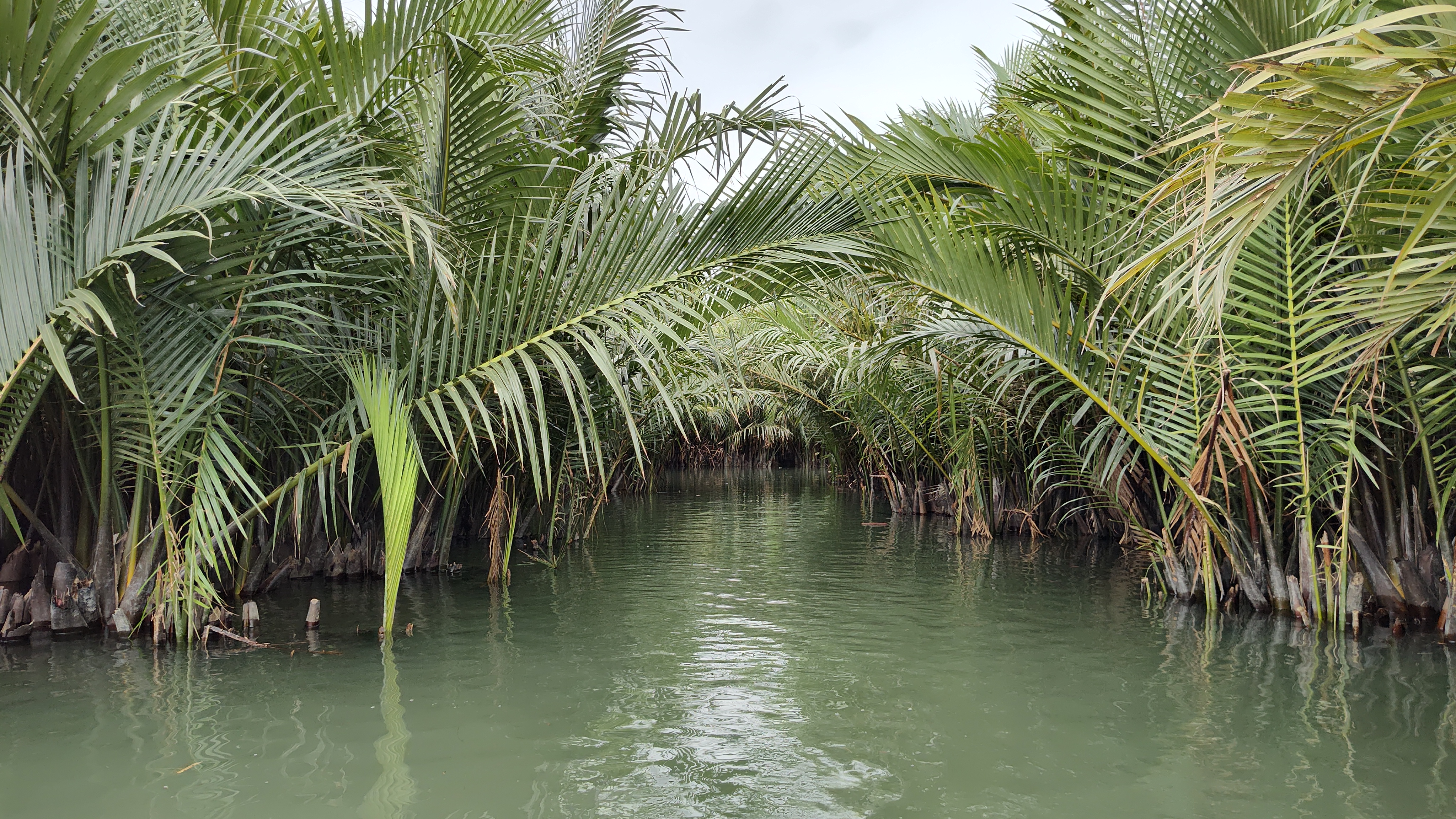
It was only our group that was at the docking area, so I thought it might be a quiet boat ride, but eventually we heard and saw the Korean and Chinese groups as all of our boats converged at the same point.
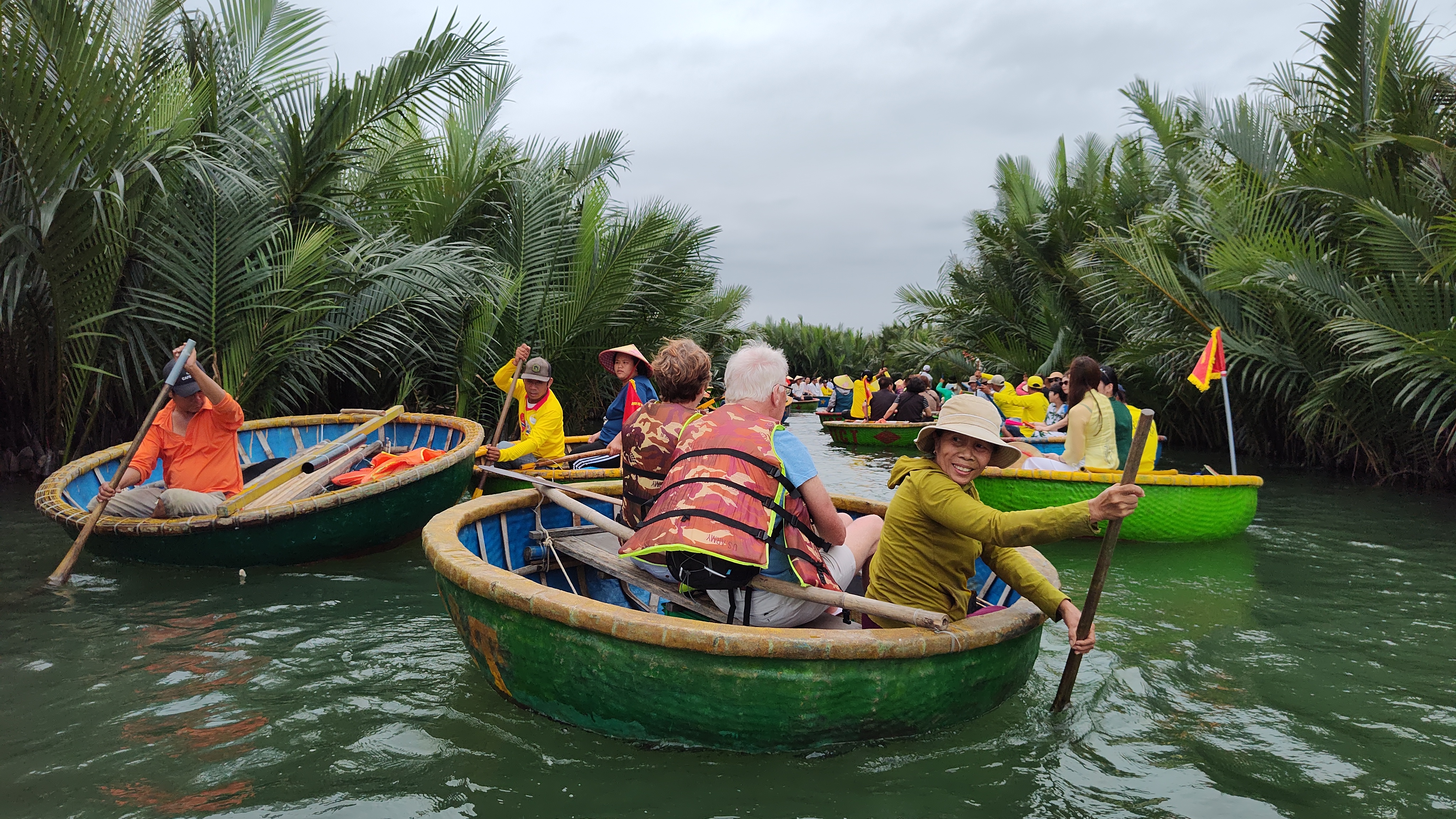
I had not seen any videos about this activity, but I found out there are plenty of them available to preview. Apparently, one of the thrills of doing this is having the local boat rower start spinning your boat around in circles (until you’re dizzy, at least that is what happened to me).
Another typical activity is for the boat rower to hand you a stick with a string and something hooked on the end (some kind of bait, but I couldn’t identify it) for you to try to catch a crab. Neither of us knew what we were supposed to try to catch, nor did either of us catch anything, but the woman from the Irish couple briefly did.
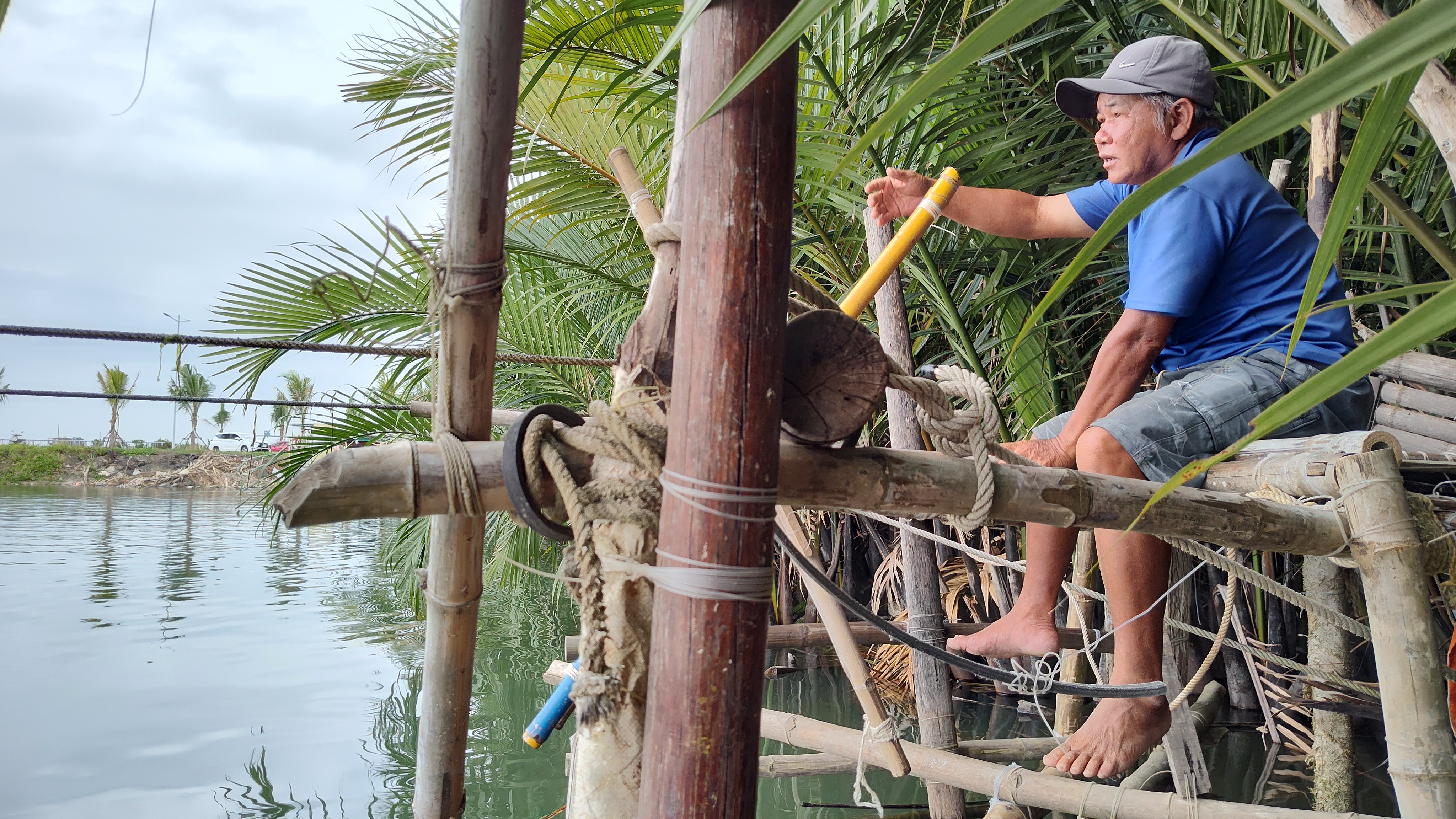
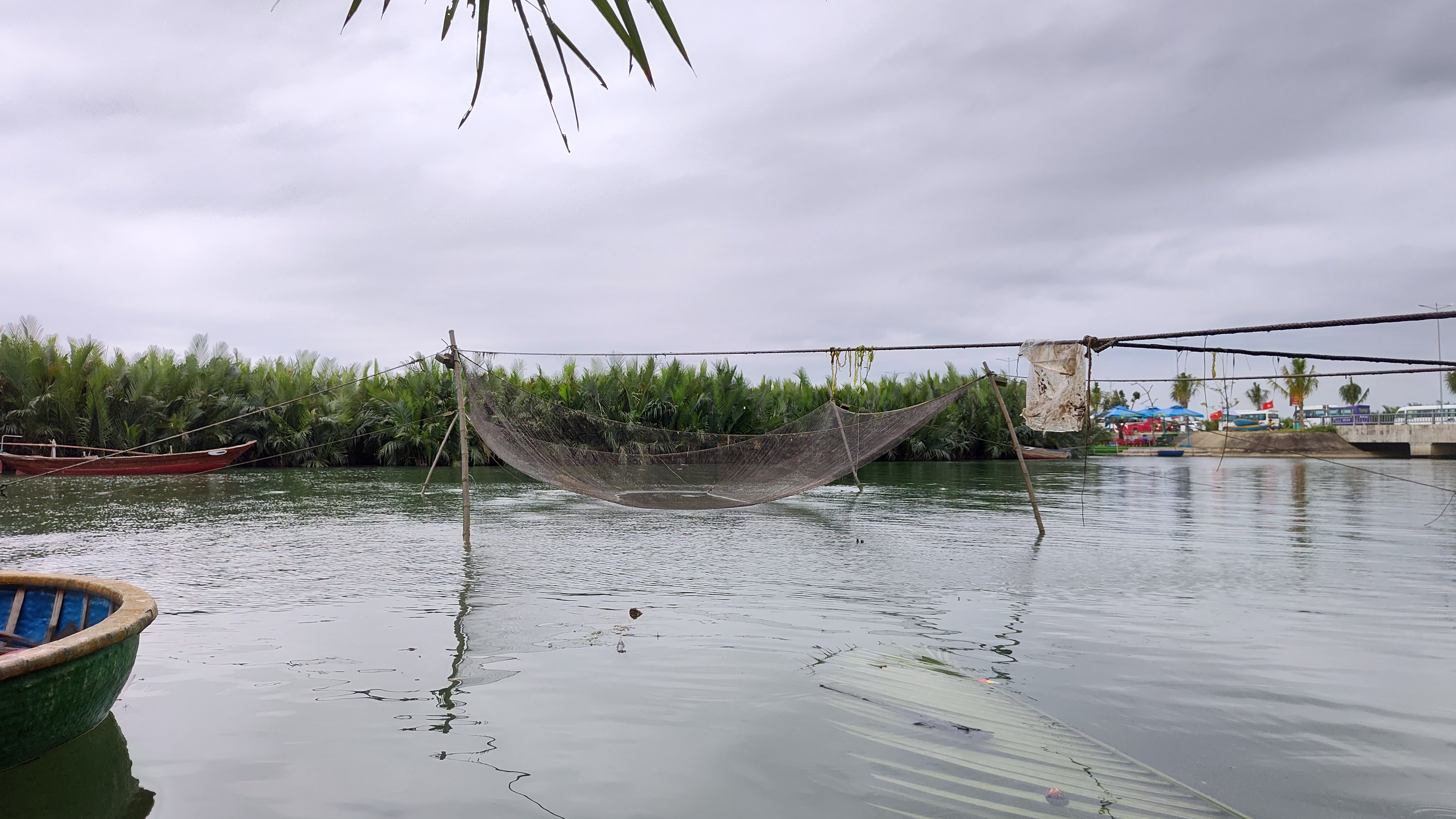
One of the stops along the boat ride includes having a chance to climb up onto the fisherman’s podium, where you can reel in the big fishing net. I would have tried it if I hadn’t also seen the legs of a big spider sticking out from behind the post, close to where you put your feet to go up. I saw its rather big legs that looked red, yellow, and black, but I never saw the thorax or abdomen. I tried to look it up, but I couldn’t find the exact name; there were only a couple possibilities. Anyway, here is the fisherman’s podium.
“Chilling Village” Coffee Shop (An My Village)

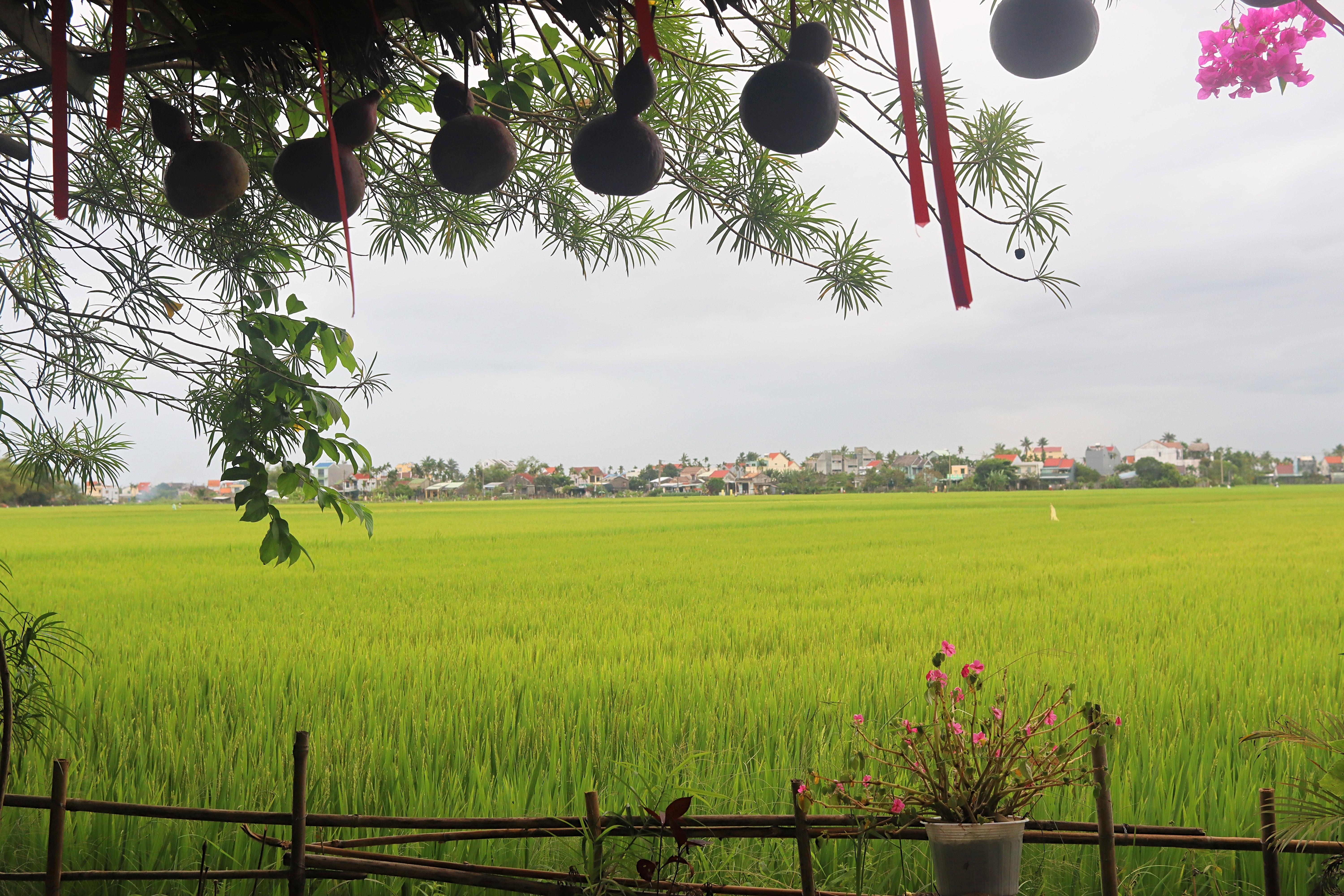
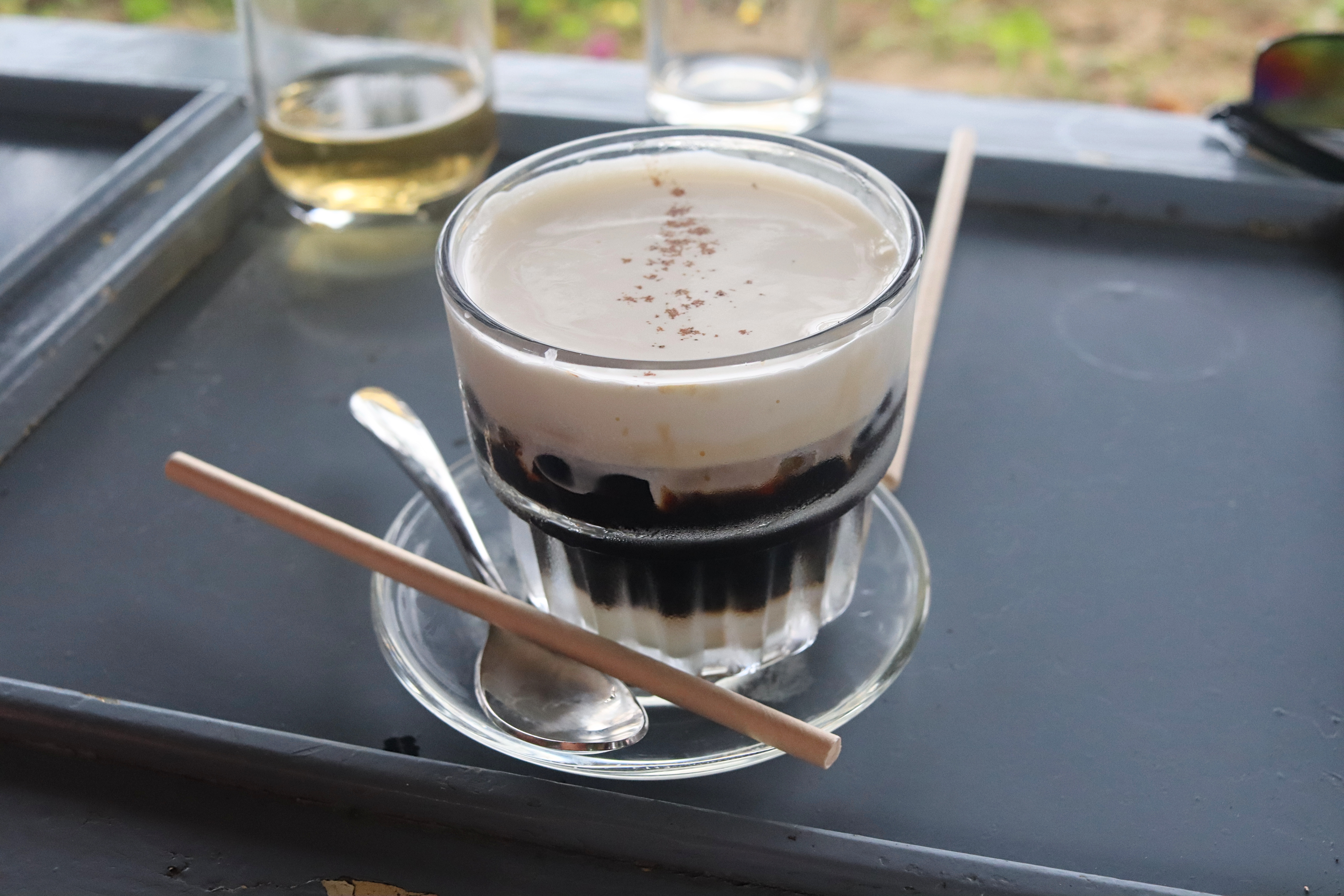
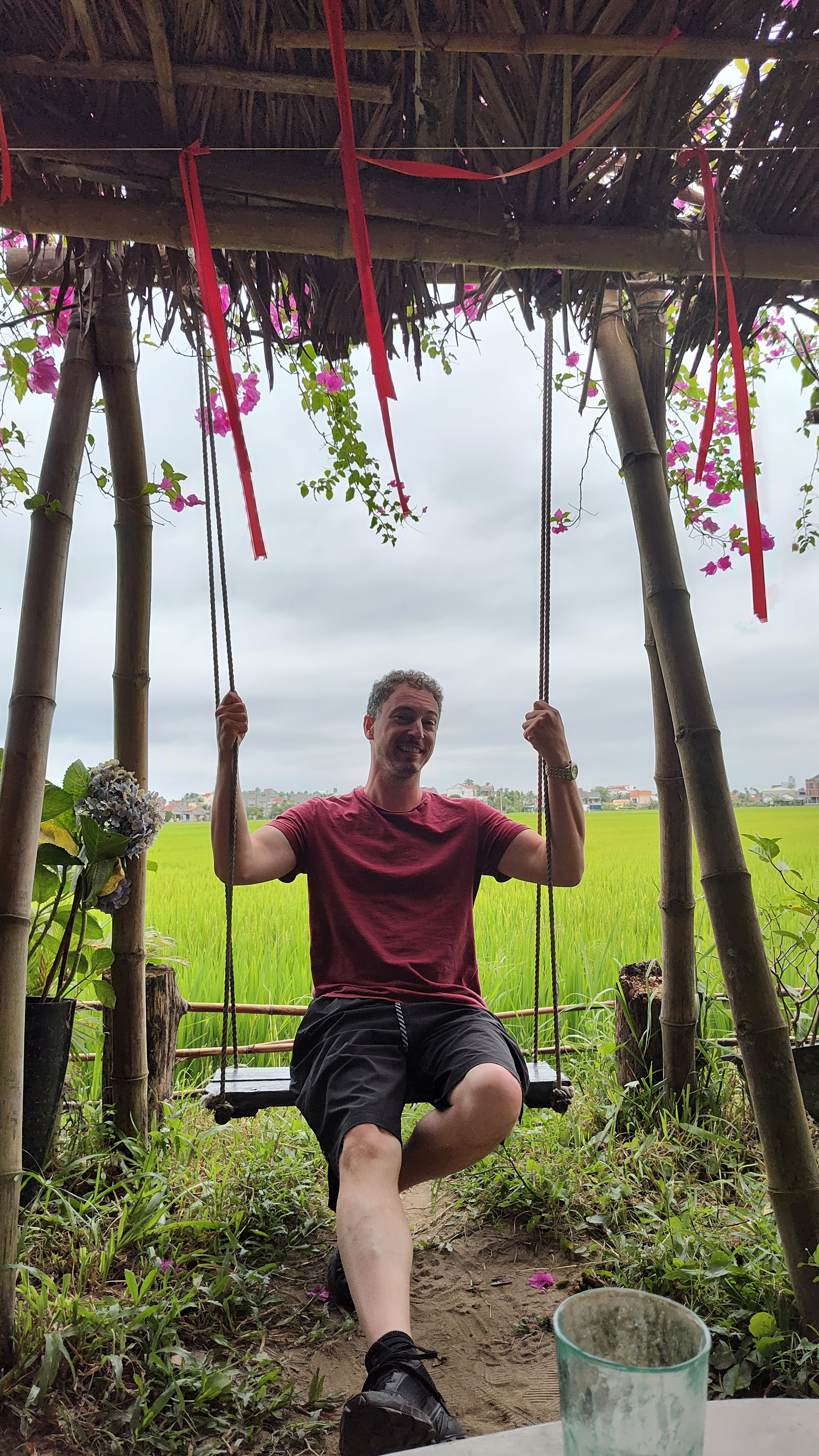
We then headed over for a chance to sit and relax with a view of the rice fields and a drink. Vietnamese coconut coffee is one of the specialties, so I decided this was the perfect time for one. It was tasty, and it’s now added to the coffee list for Vietnam.



Vegetable Village
(Tra Que Village)
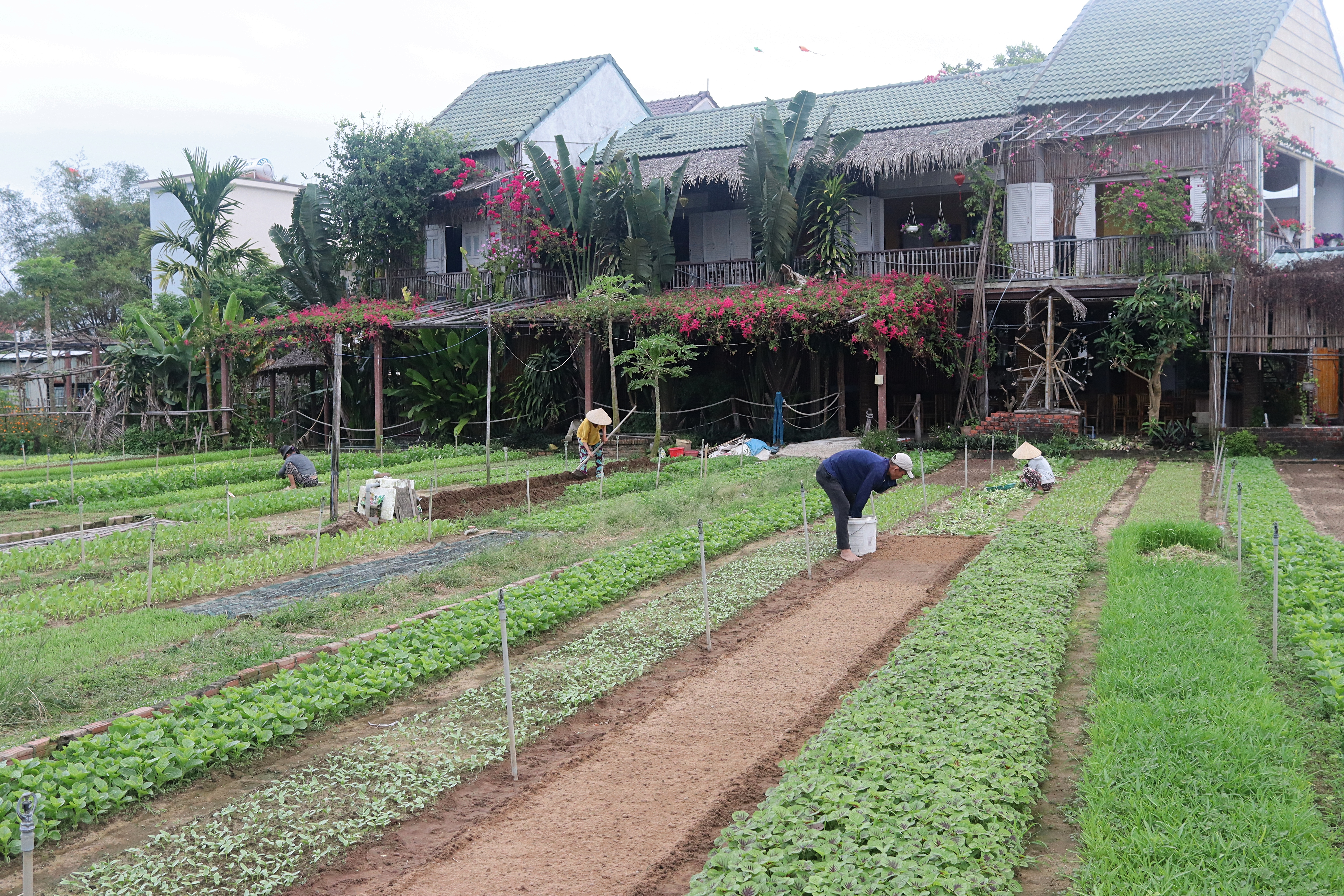
We then stopped by a local village where they grow and utilize a community garden.
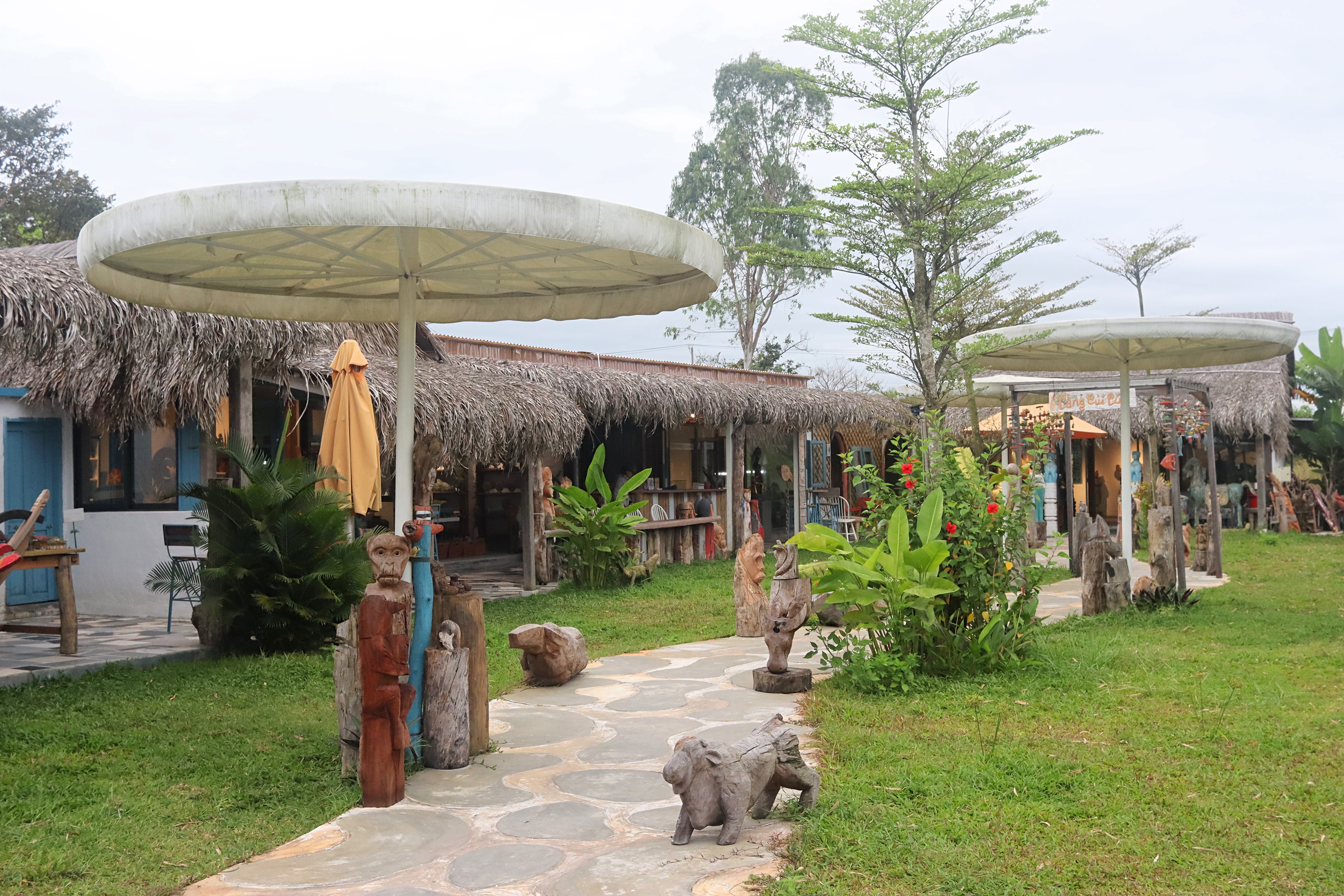
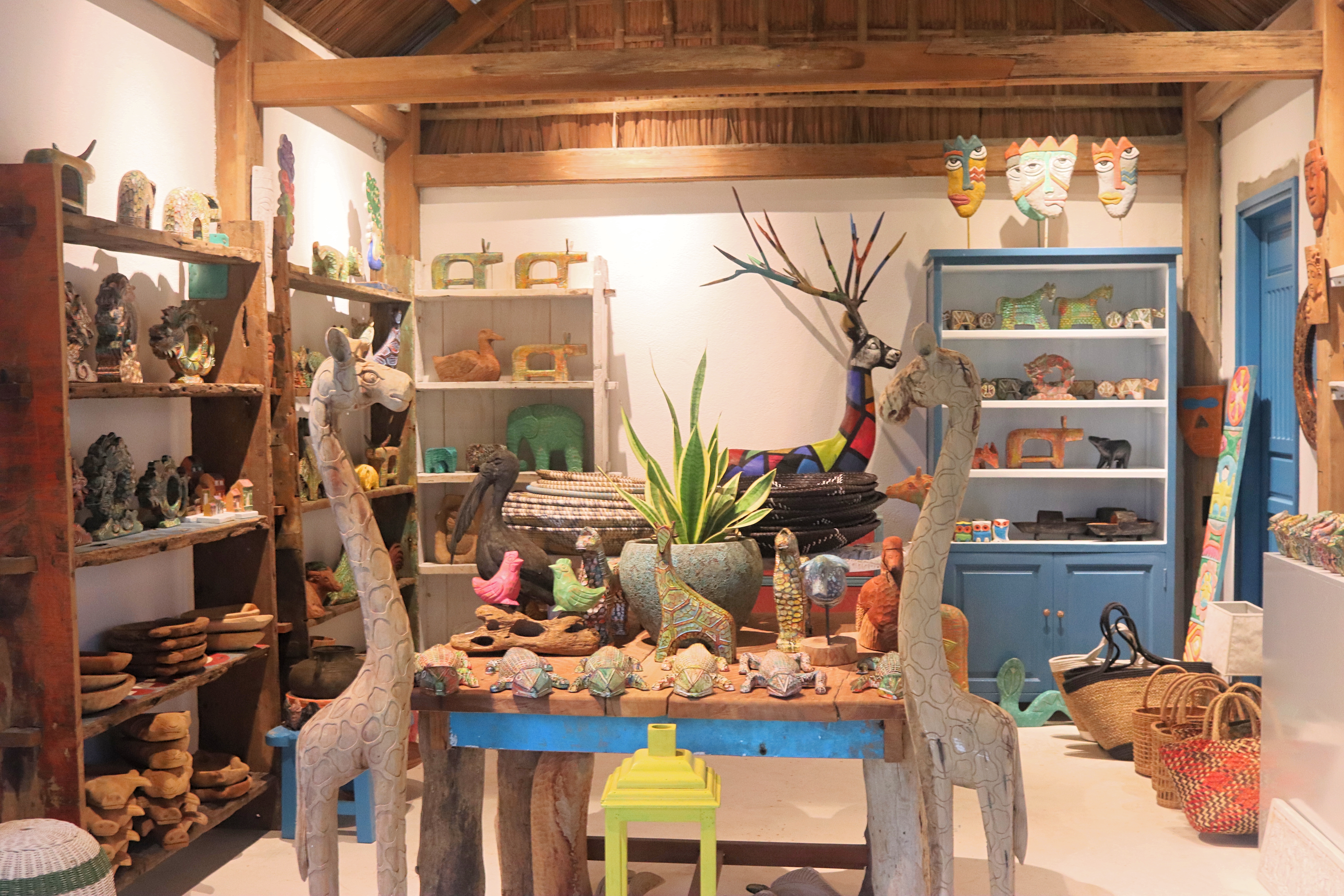
Driftwood Village
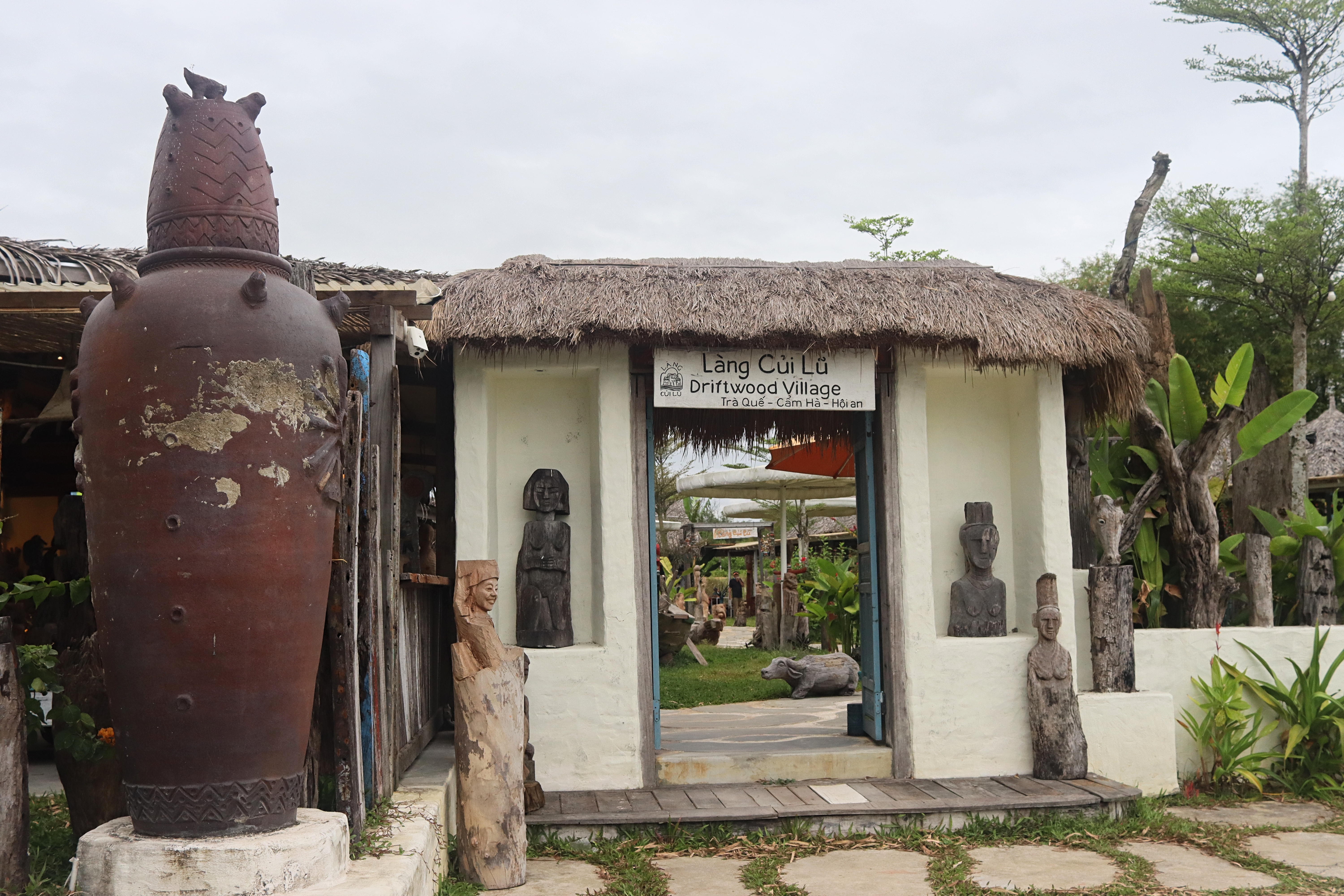
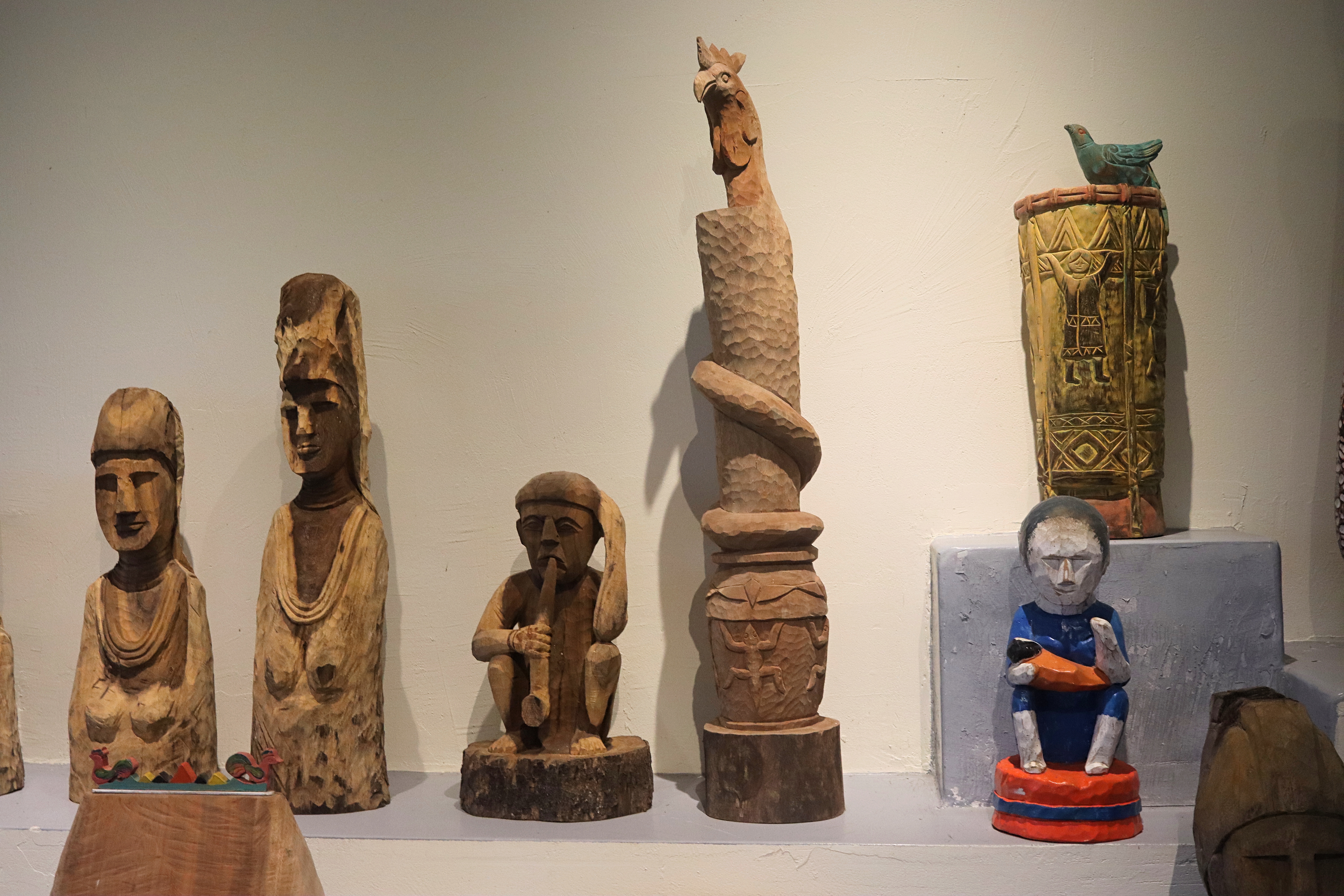
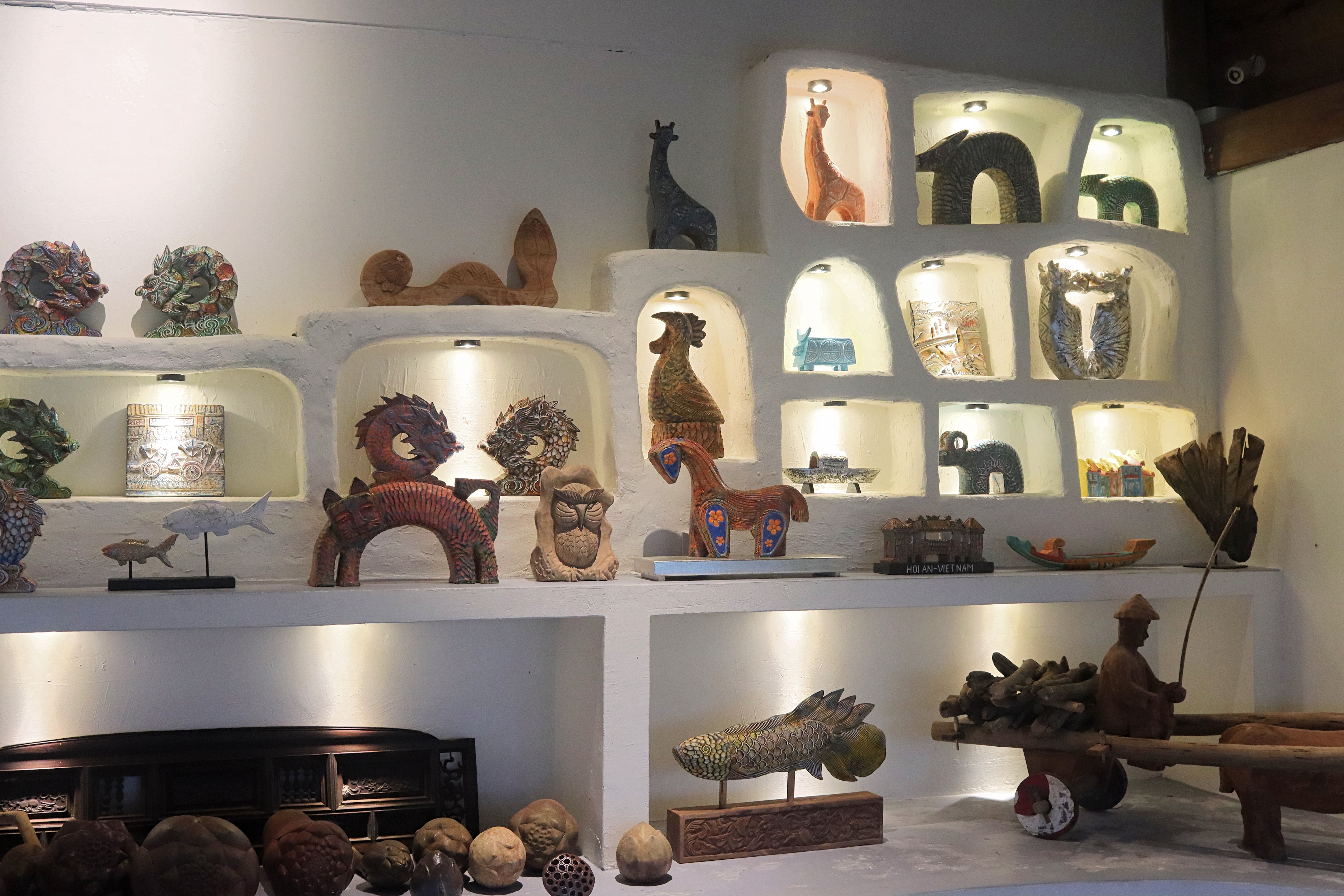
The next stop was to a craft museum of sorts, where items are made of driftwood that comes down from the nearby mountains. The artistry of their carving skills was lovely to look at.


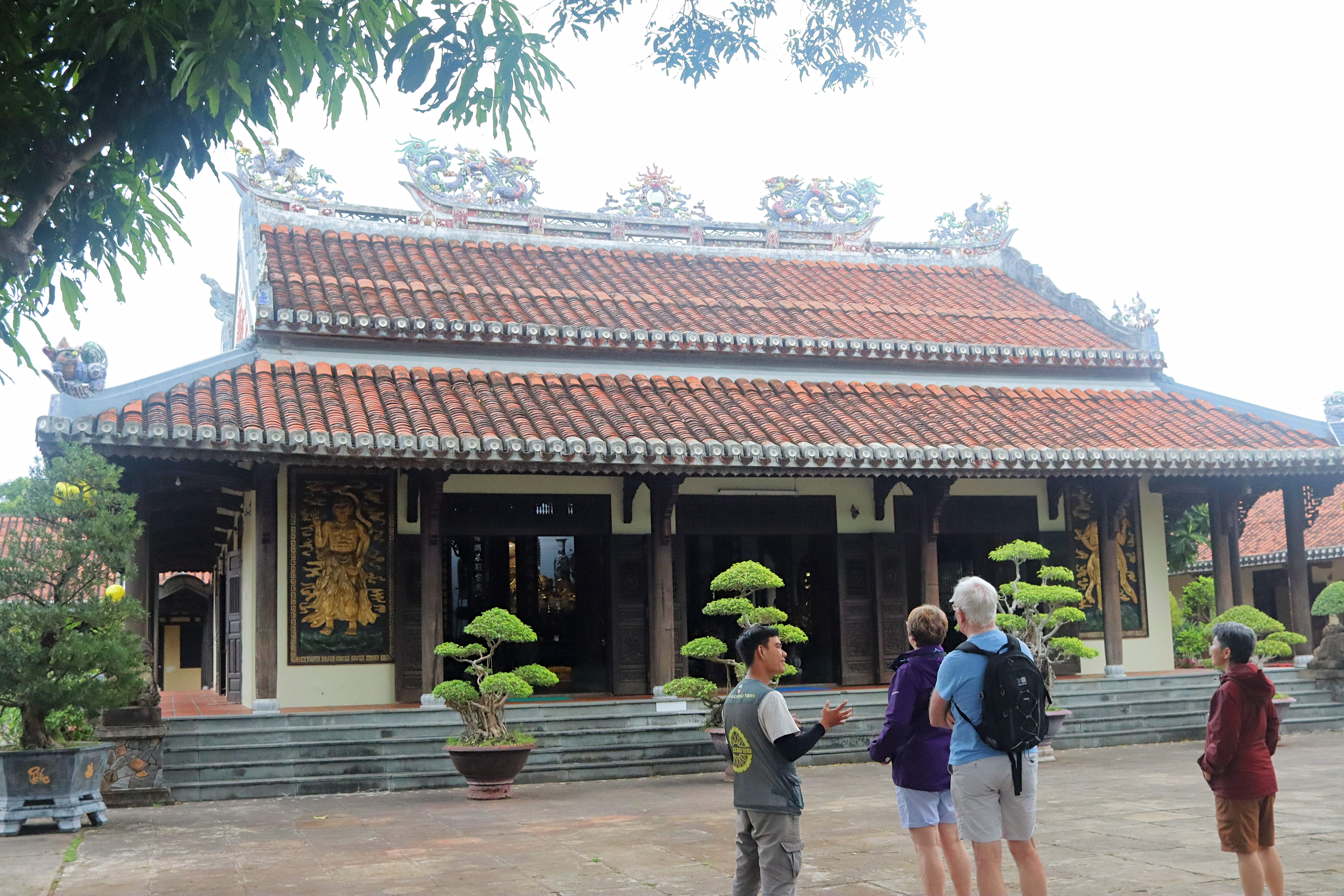
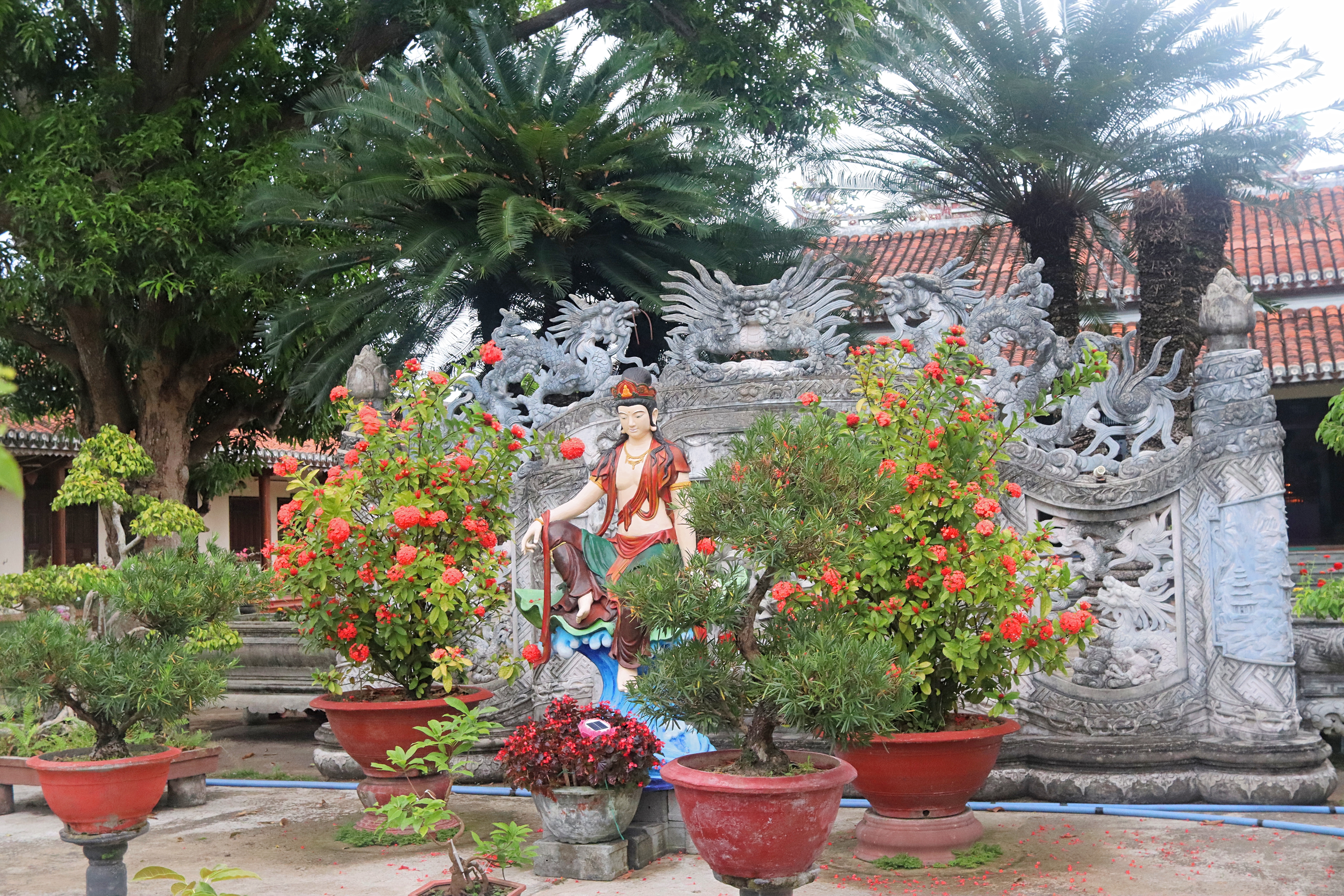
Chuc Thanh Pagoda
The last stop before dinner was at this pagoda. It is the oldest pagoda in Hoi An and is much revered for its mix of Vietnamese and Chinese design. It was created in the 17th century.

We finished the evening by driving to a local home for an outdoor dinner. Here, we were joined by an older British couple. There isn’t much to mention about dinner. It was pleasant, the weather cooperated enough, and the temperature was just right. When finished, we got back onto the motorbikes one last time to be escorted to our accommodations.
It was a lovely day—not stressful, not exhausting. The weather was cloudy and temperate, but still pleasant. There isn’t much more to say about it. But there will be more to say about this trip in the next chapter. Stay tuned!

The river trip, and the Pagoda, are especially beautiful, but the presentation of your dinner – wow! As always, great photos.
Thank you so much. Always appreciate it.