I haven’t done a domestic trip in Japan since my first year. After mulling around some travel ideas for my mid-March spring holiday, I decided to finally visit Osaka for the first time. Whenever I tried reading up on what to see and do in Osaka, I only ever really read about the food and how the people there (and in the general Kansai area) are different (nicer) than in Tokyo. This made it difficult to decide on what to do and how much time to spend there. I read that Osaka has a Universal Studios park there, but I wasn’t interested in that.
I did read about some other sites surrounding Osaka, such as Himeji, Nara, and Yoshino. Himeji has one of the few remaining castles in Japan that hasn’t been rebuilt. Although it has been renovated, it was done so strictly using historically accurate procedures.
Nara is most known for Todaiji Temple and its surrounding deer park. Yoshino has a mountain area with a cable car up to the top. So, I decided that rather than making the trip solely about Osaka, I would instead use Osaka as a base.
I will say that the weather during these four days was mostly awful (cold, wet, and windy). March is definitely a tricky time to travel, depending on where you go, as winter and spring are still duking it out. Apparently, winter won this round, unfortunately.
Day 1: Himeji Castle
(White Heron Castle)
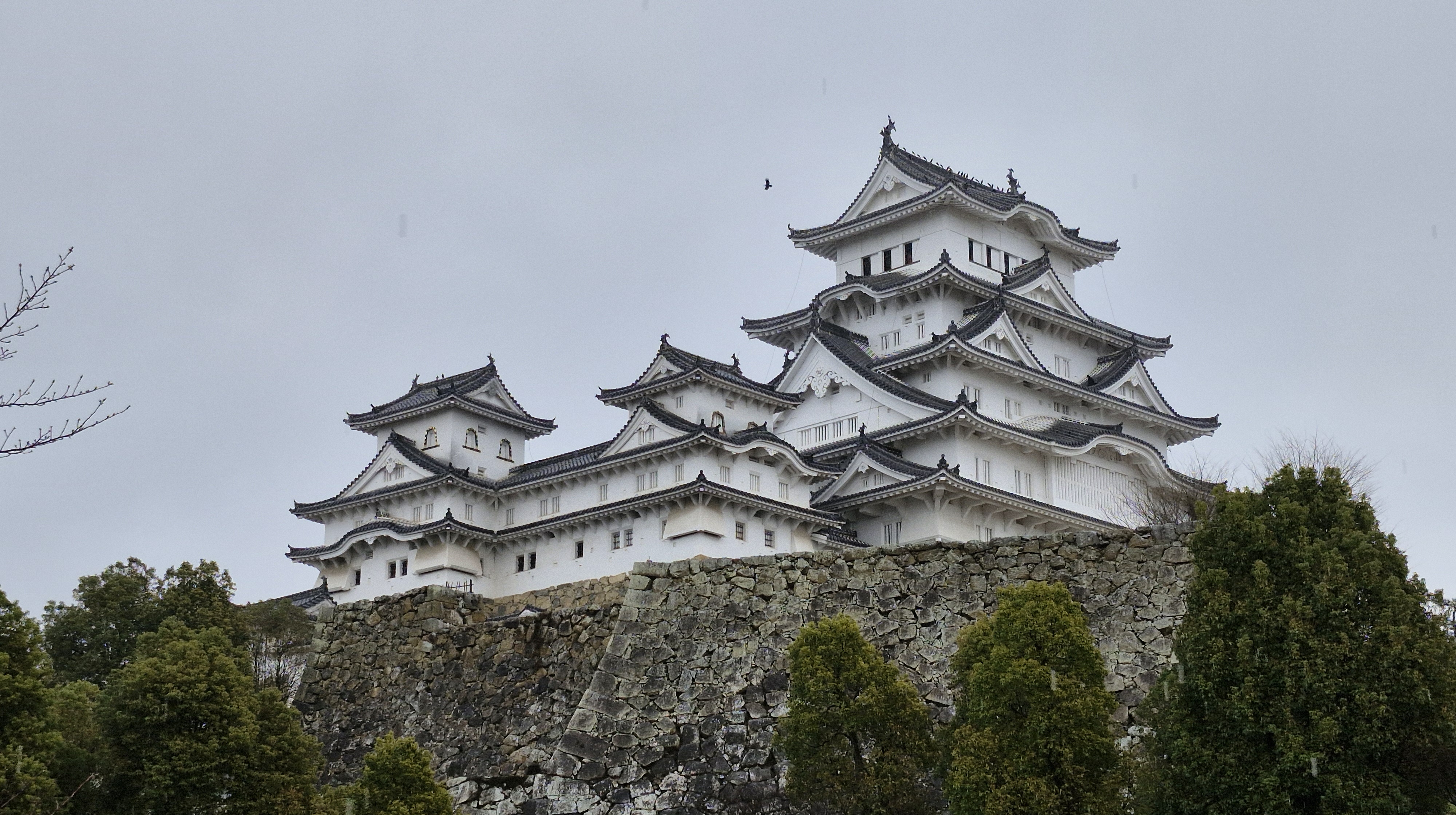
Himeji Castle, named for its white keep and plaster walls, is located about an hour west of Osaka along Osaka Bay. What began as a temporary fortress in 1333 for a military commander named Akamatsu Norimura would eventually become a castle by 1609. It highlights traditional Japanese wooden architecture and has one of the tallest wooden keeps ever built in Japan.

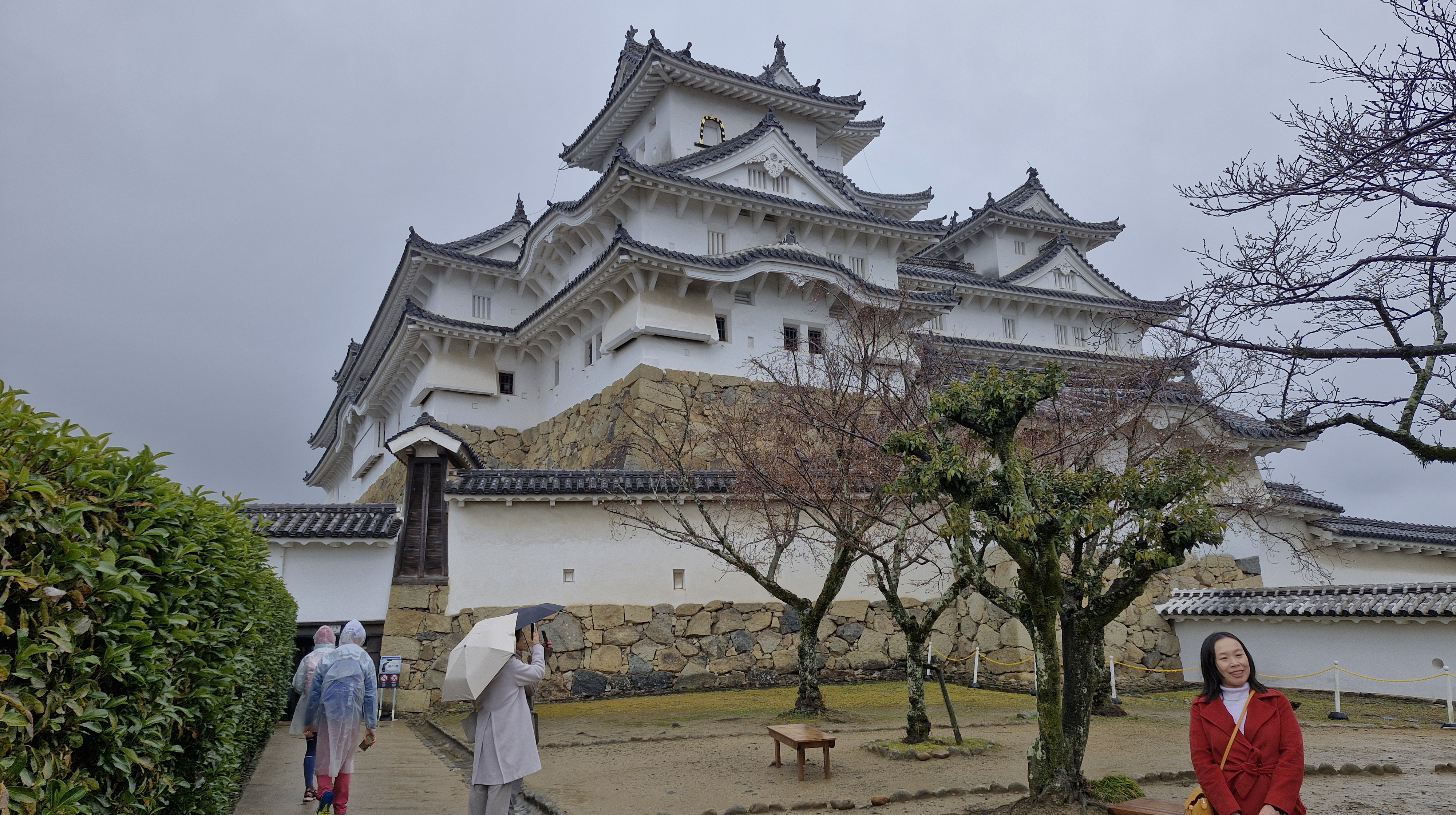
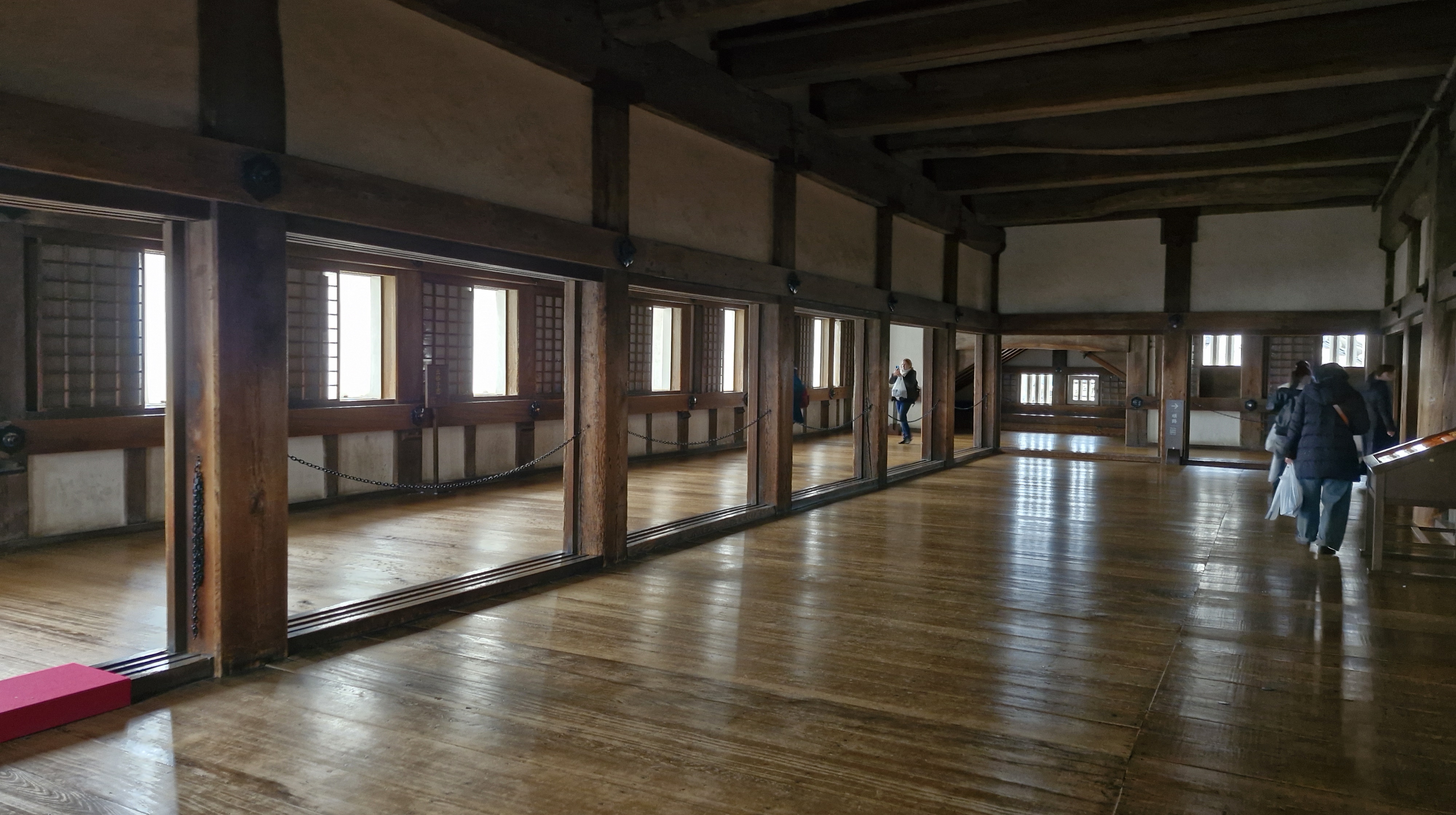
As I mentioned before, the weather made this a less than joyful visit, but I’m still happy that I finally made it here. The insides of the castle are now mostly bare, but it’s still interesting to see the wooden architecture that has withstood hundreds of years against fires and earthquakes (mostly). Although it was constructed all throughout the building to withstand attacks (inside and out), it ended up never being attacked. Instead, it functioned mainly as an administrative residence. While its foundation is made of stone, the rest of the castle is made entirely of wood, earth, and plaster.
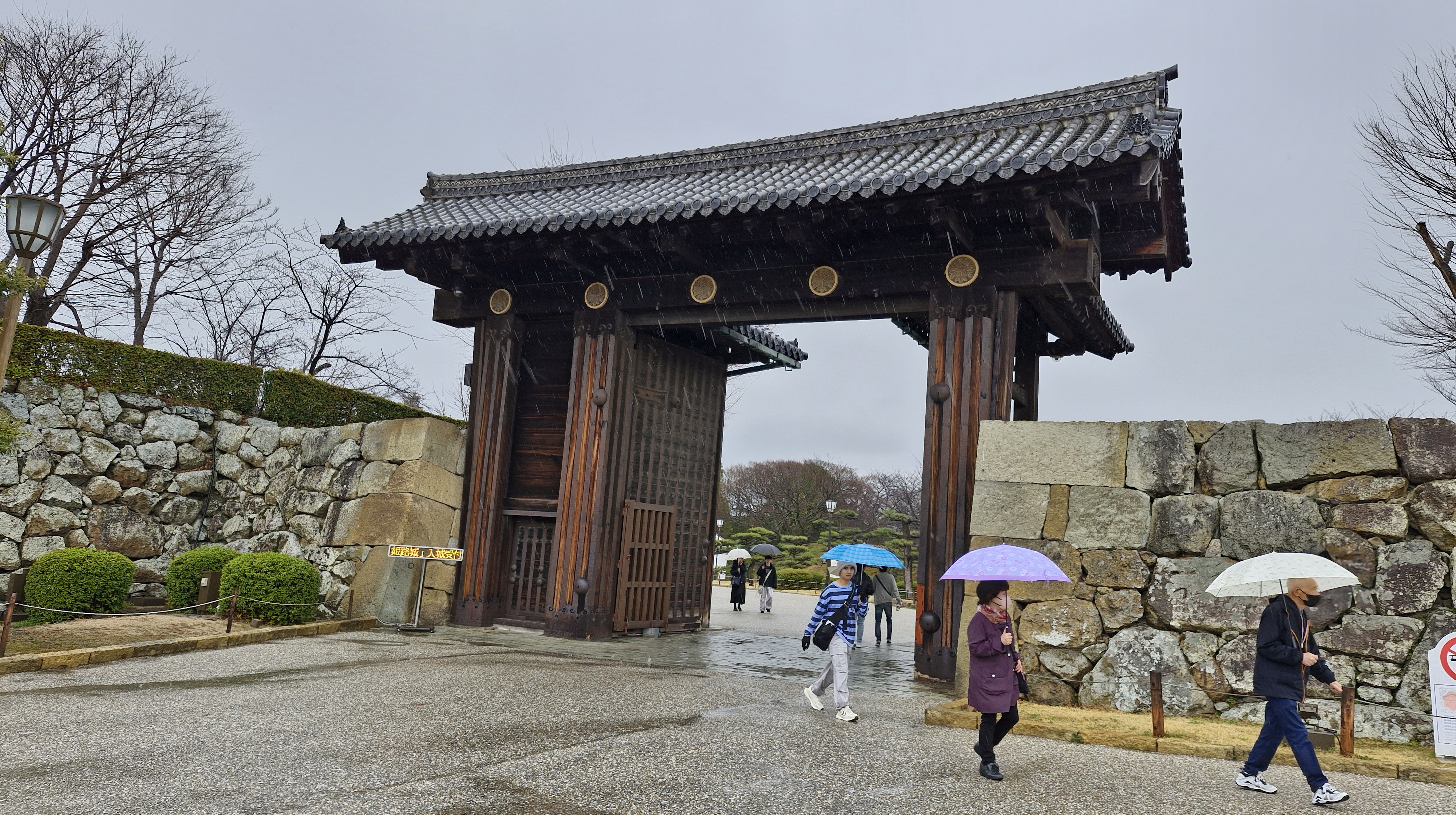

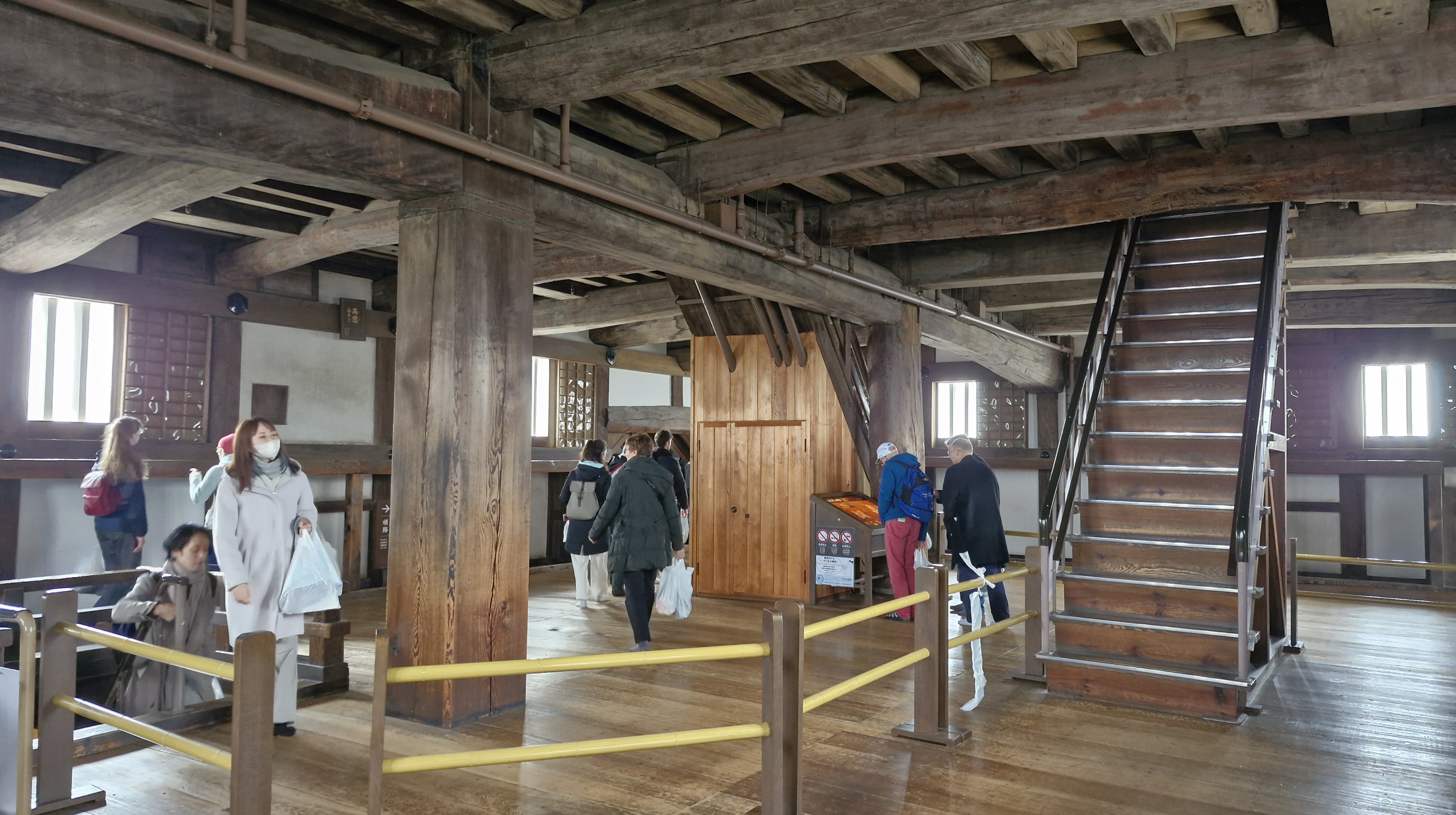
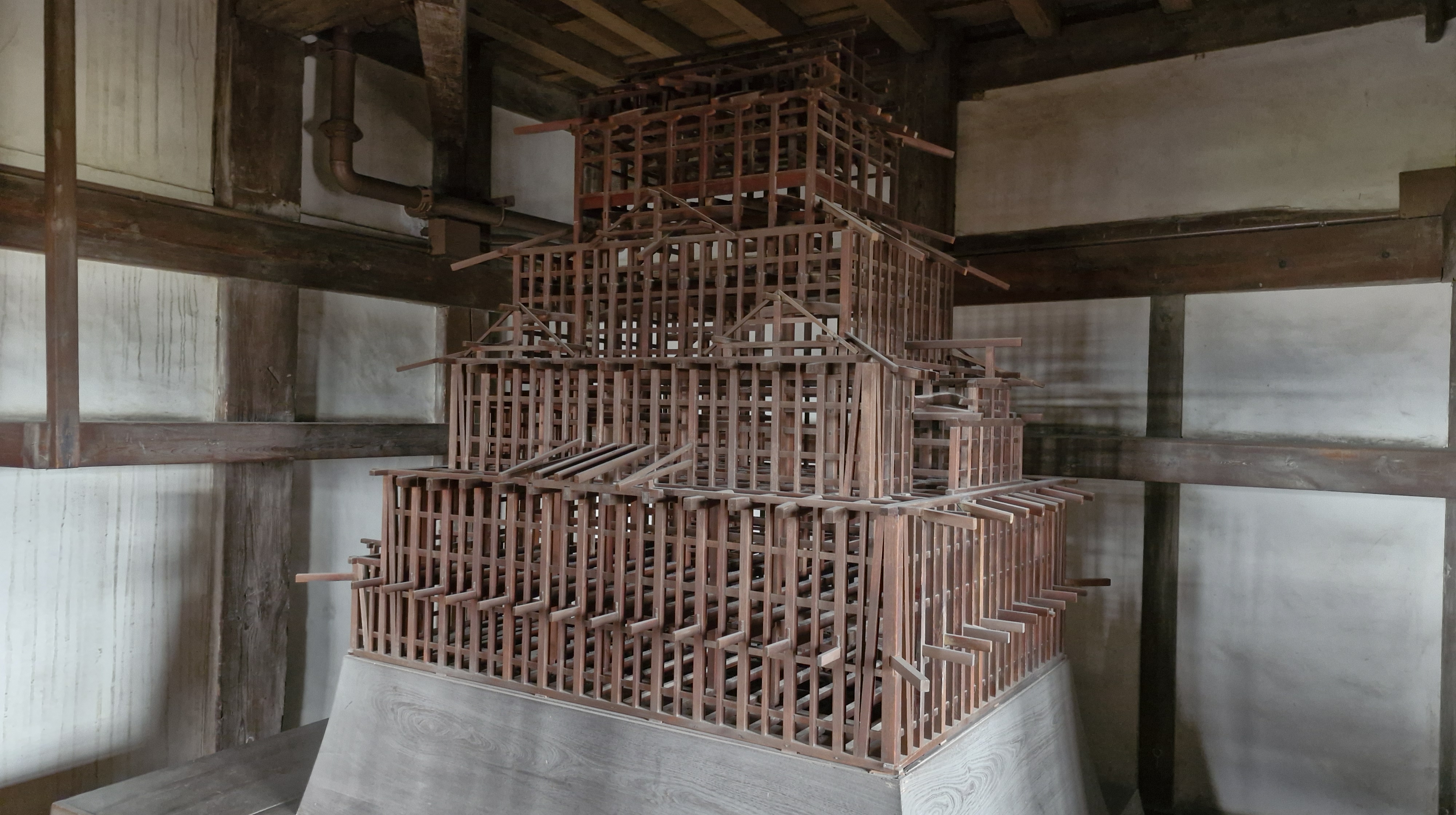
Below is a wooden blueprint for renovation workers to use to better understand the structure of the castle. It’s impressive to see the number of supporting beams.
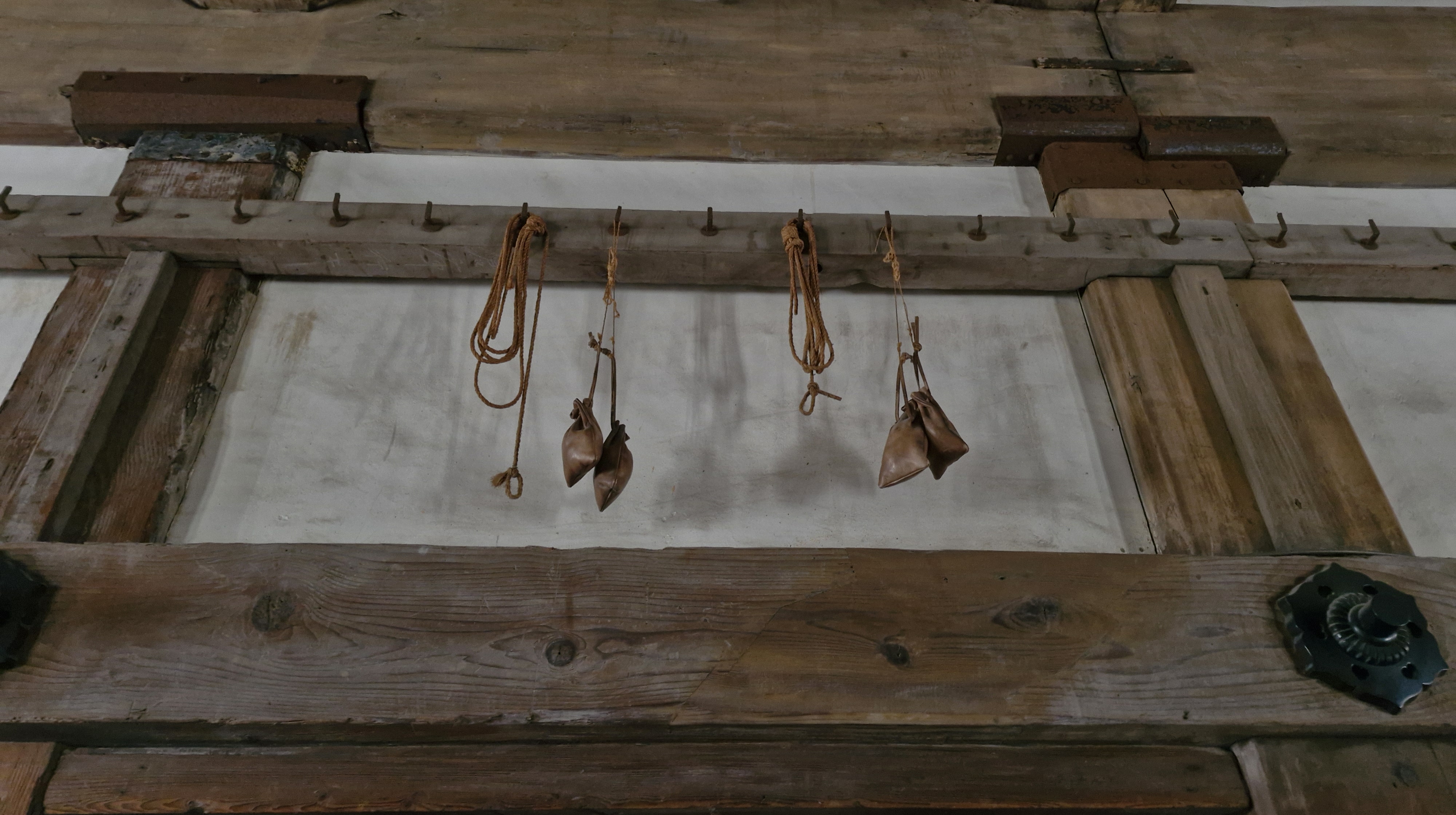
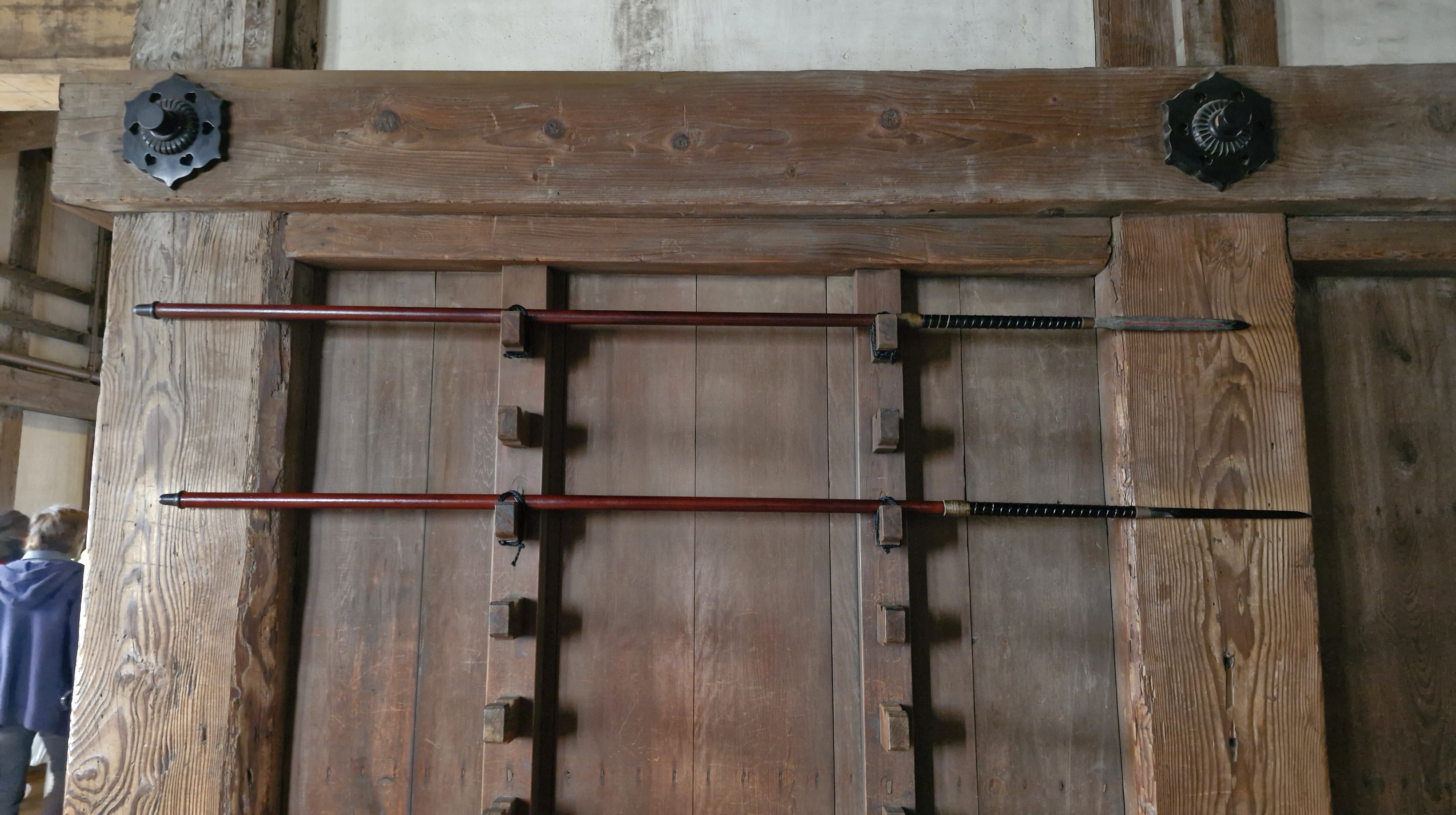
Although the castle is mostly bare, there are some items that remain.

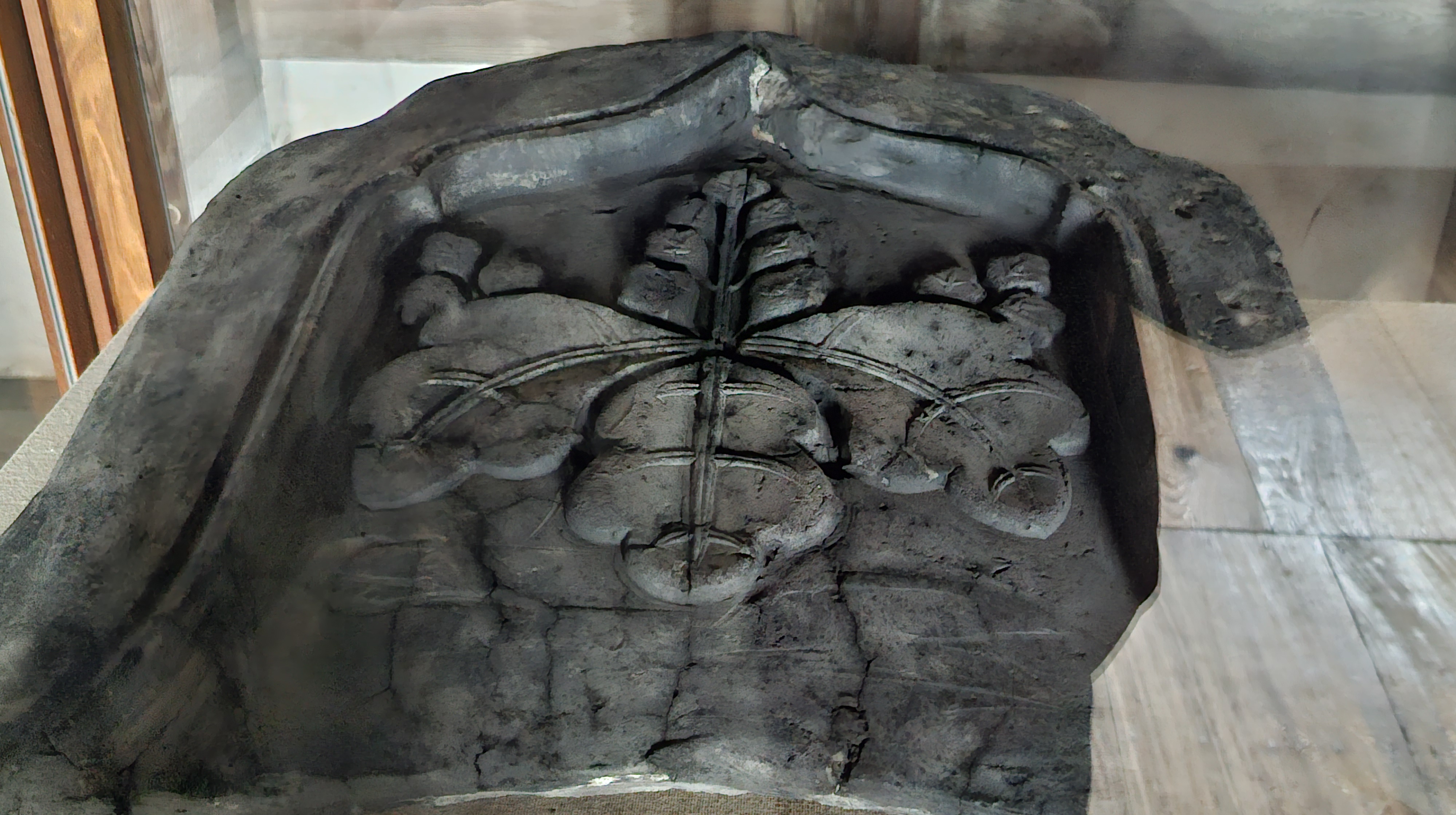
Some of the original roof tiles remain on display.

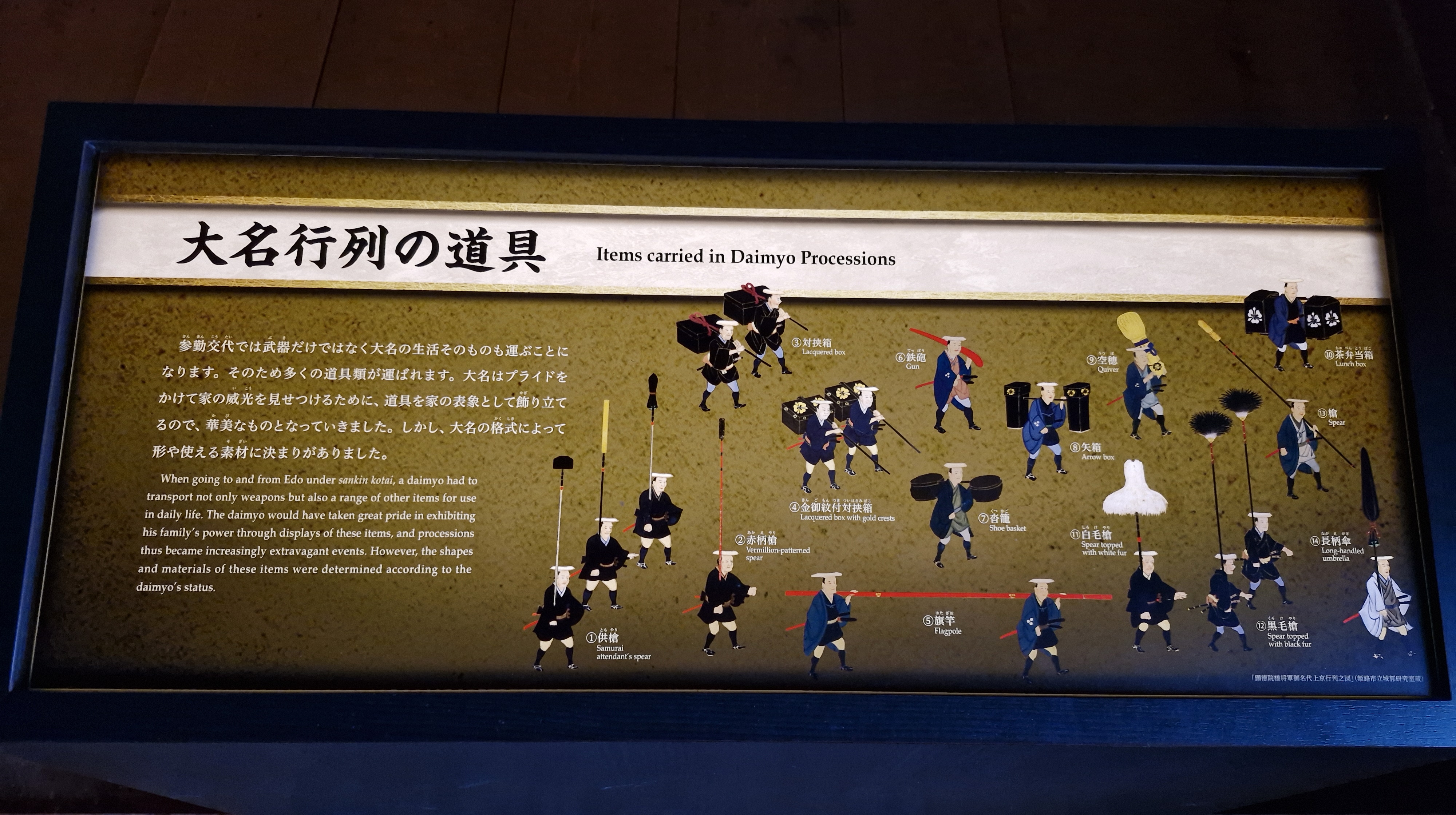
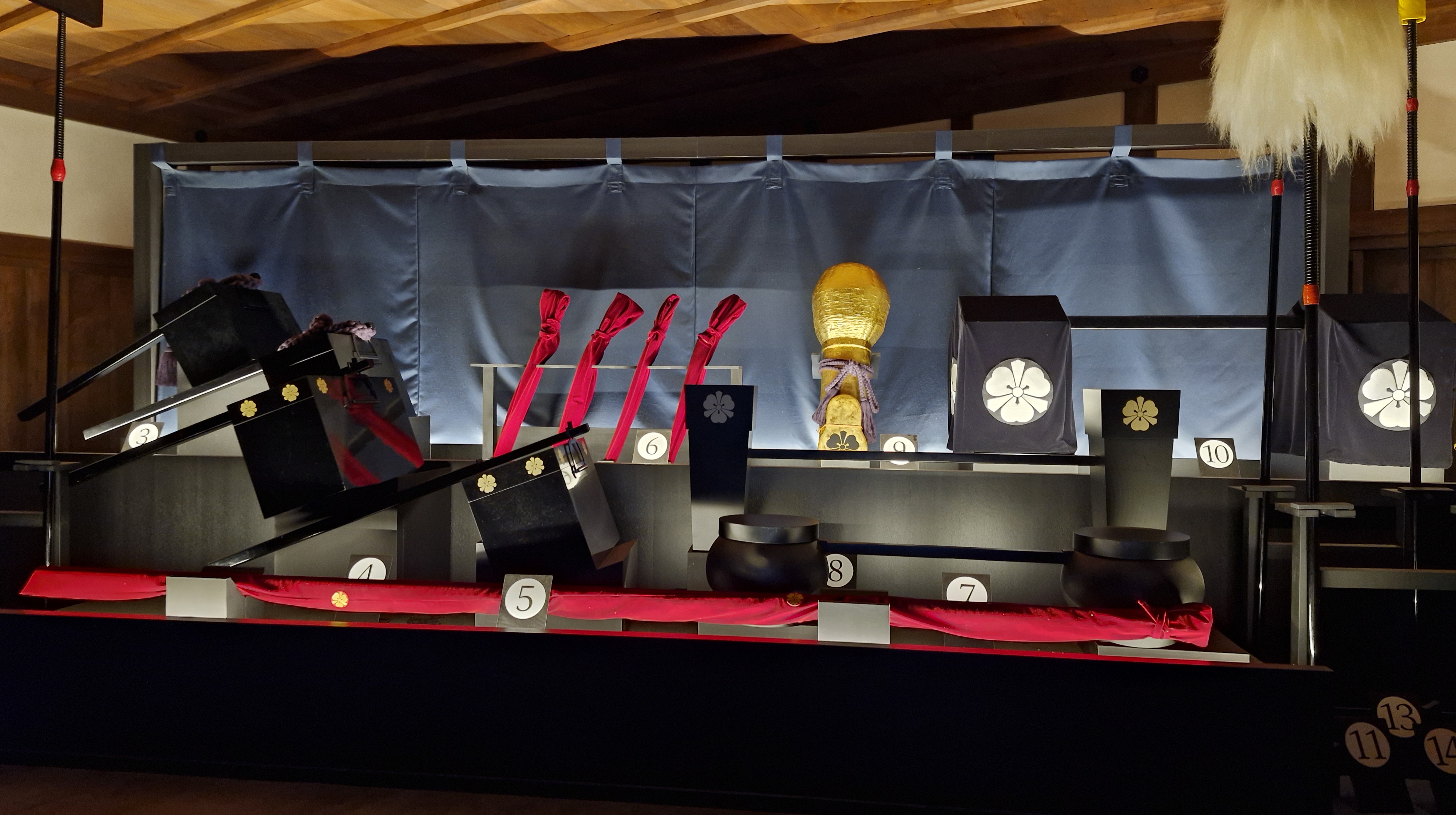
Some other display items about the castle’s processions.
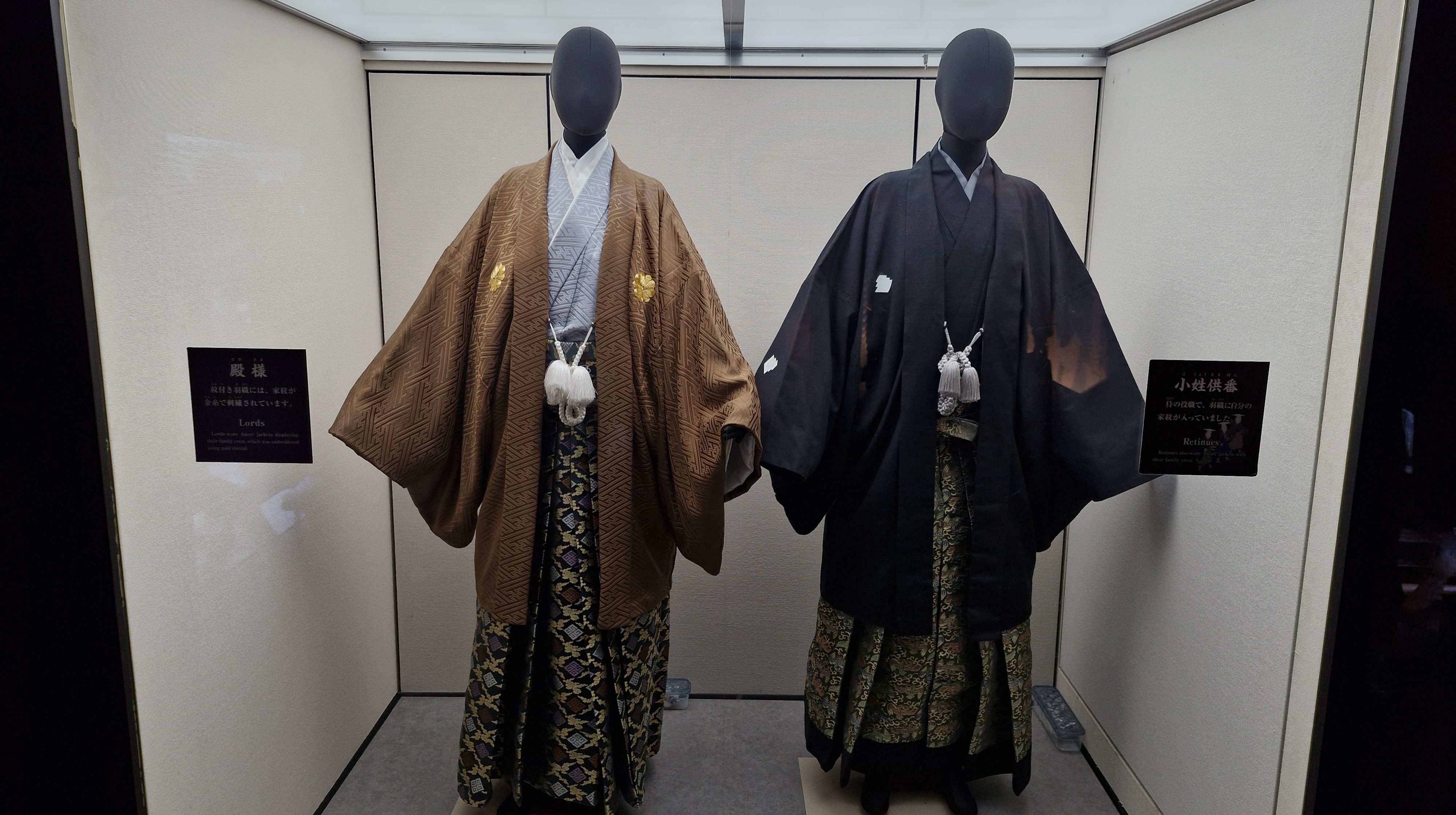
Some views from inside.


One last look

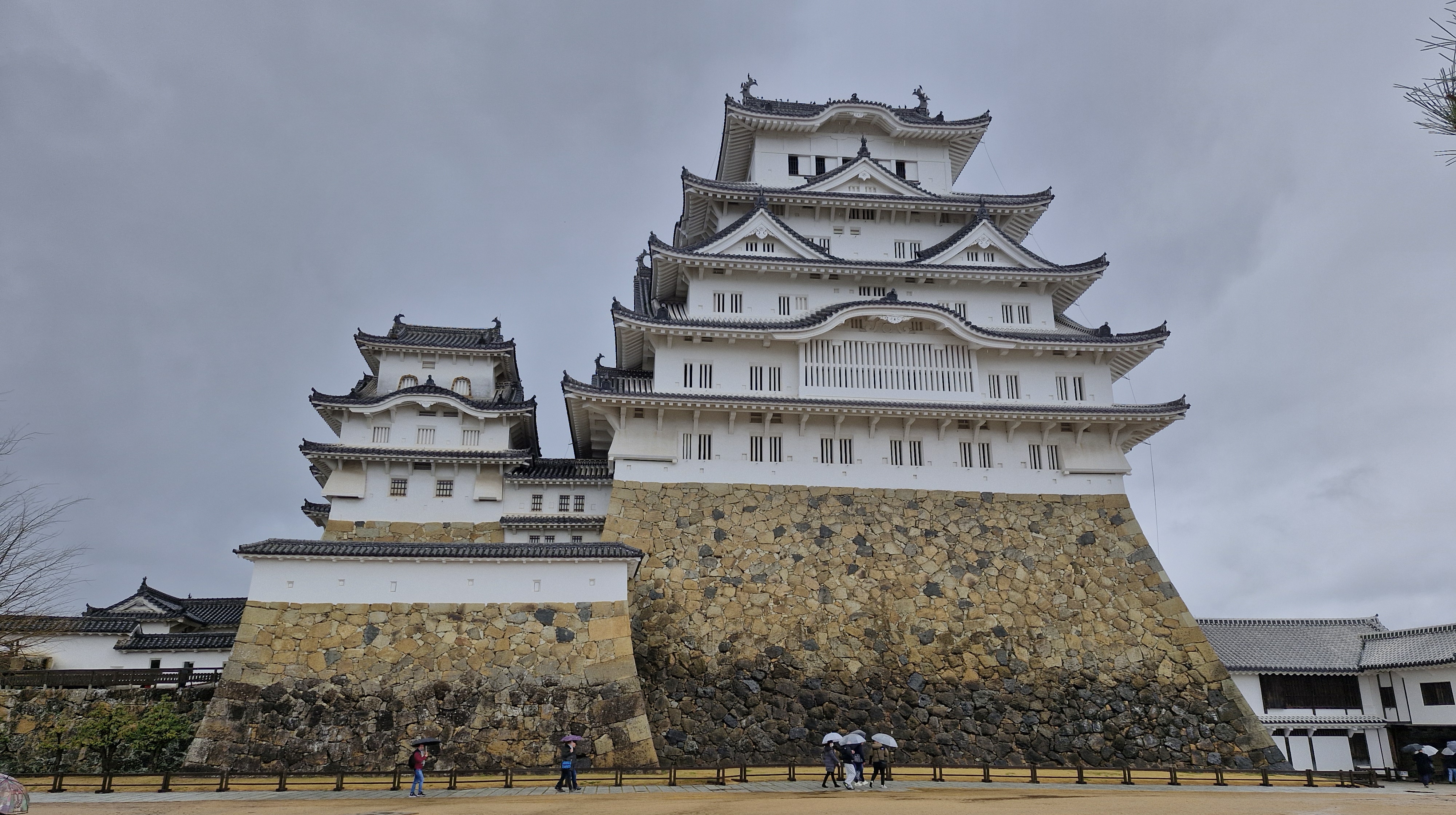
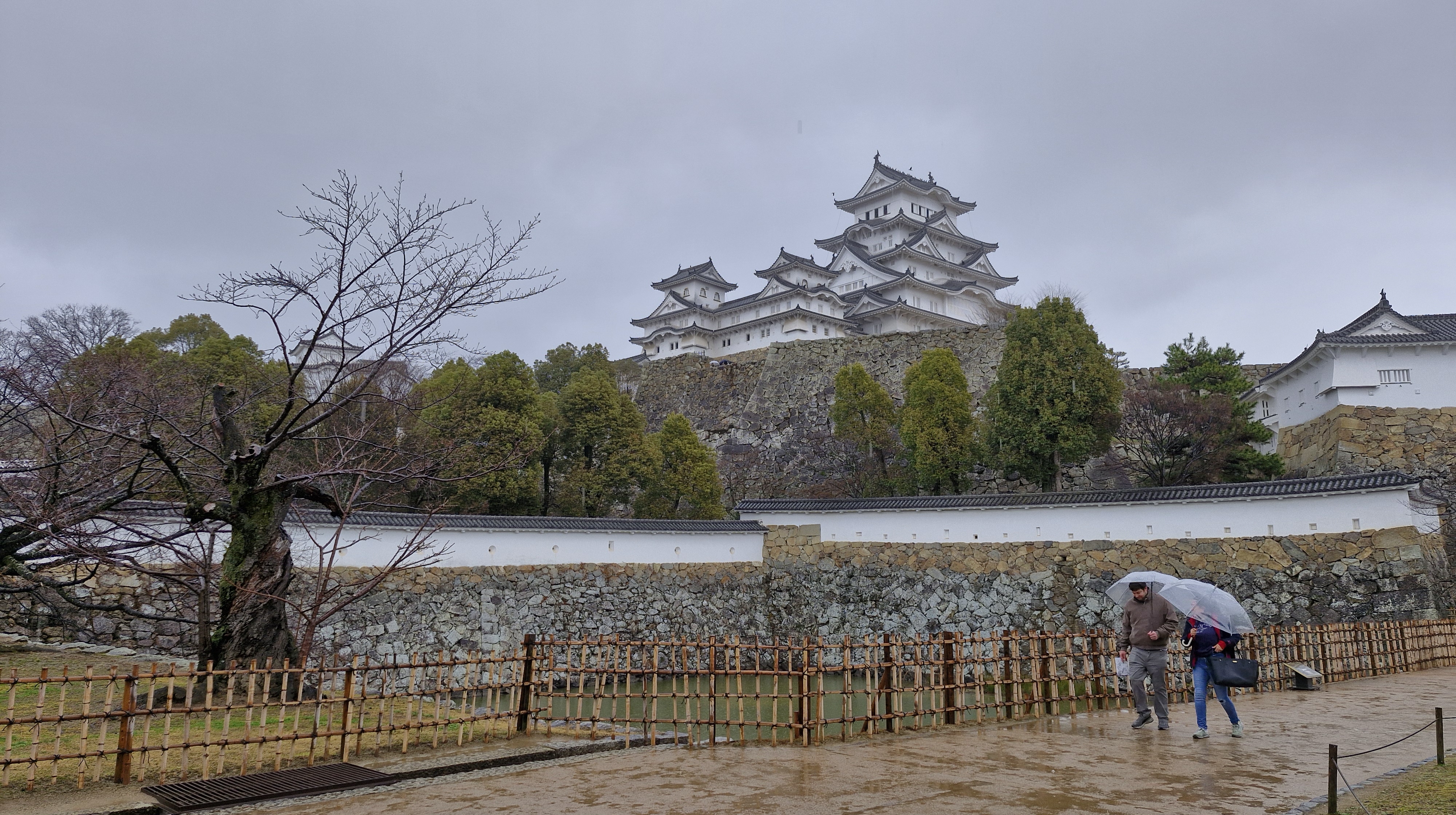
Since the weather was awful, I decided not to feel guilty about this being the only thing I did that day.
Day 2: Nara
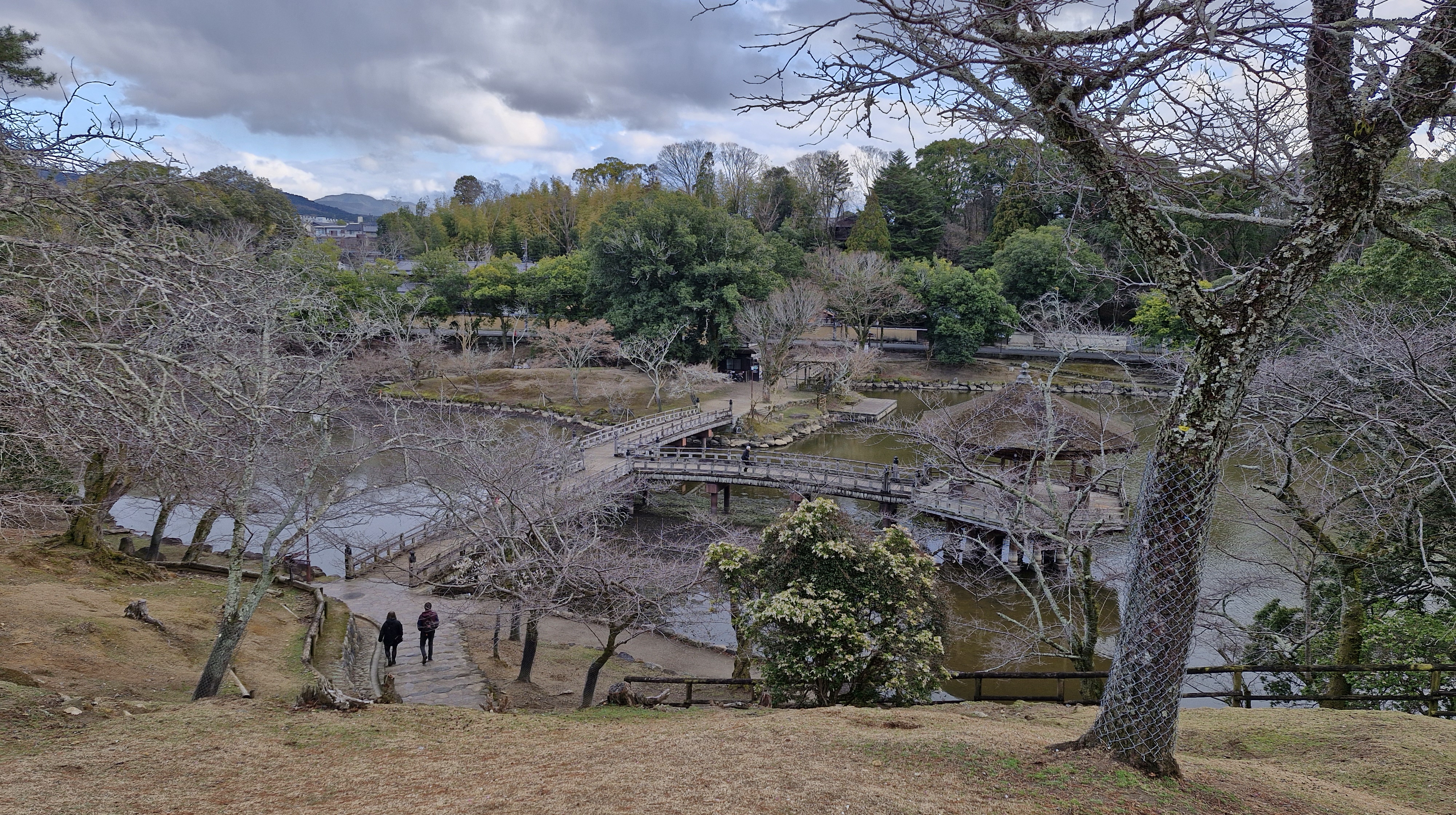
Southeast of Osaka is the area of Nara, named after the Nara period (710-794 AD). This was the time when Buddhism became the state religion. Among other things, Nara is known for being the site of Japan’s first capital.
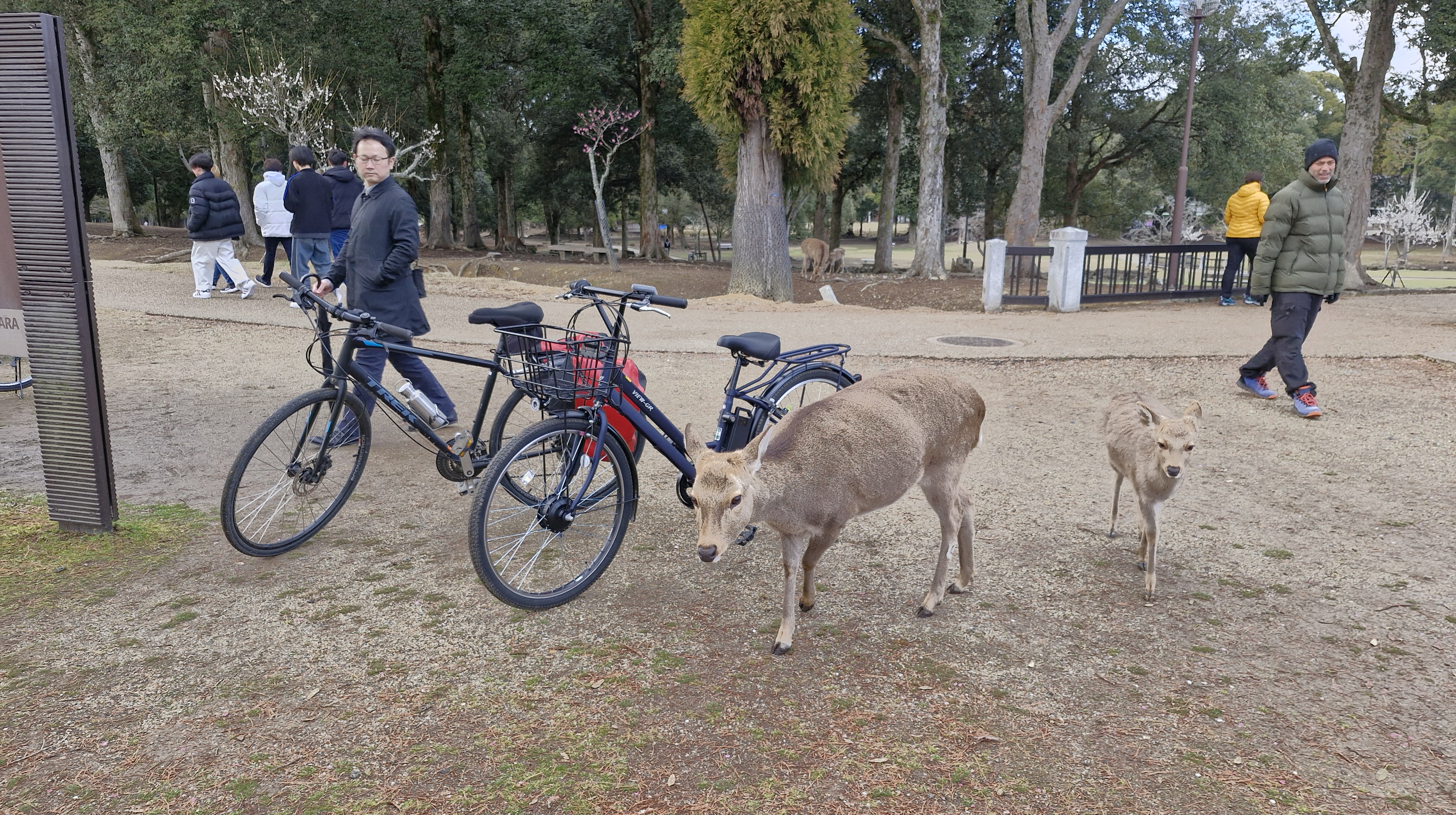
I signed up to do an e-bike (electrical power-assisted bike) tour, but had I known how cold it was going to be, I would have remembered to bring gloves and a hat. This tour is definitely better for spring or autumn. The day would also bring out random short bursts of rain, followed by sun. It ended up being just me and a couple from England. Our guide was an Australian man who, by this point, has spent more time in Japan than in Australia.
Todaiji Temple

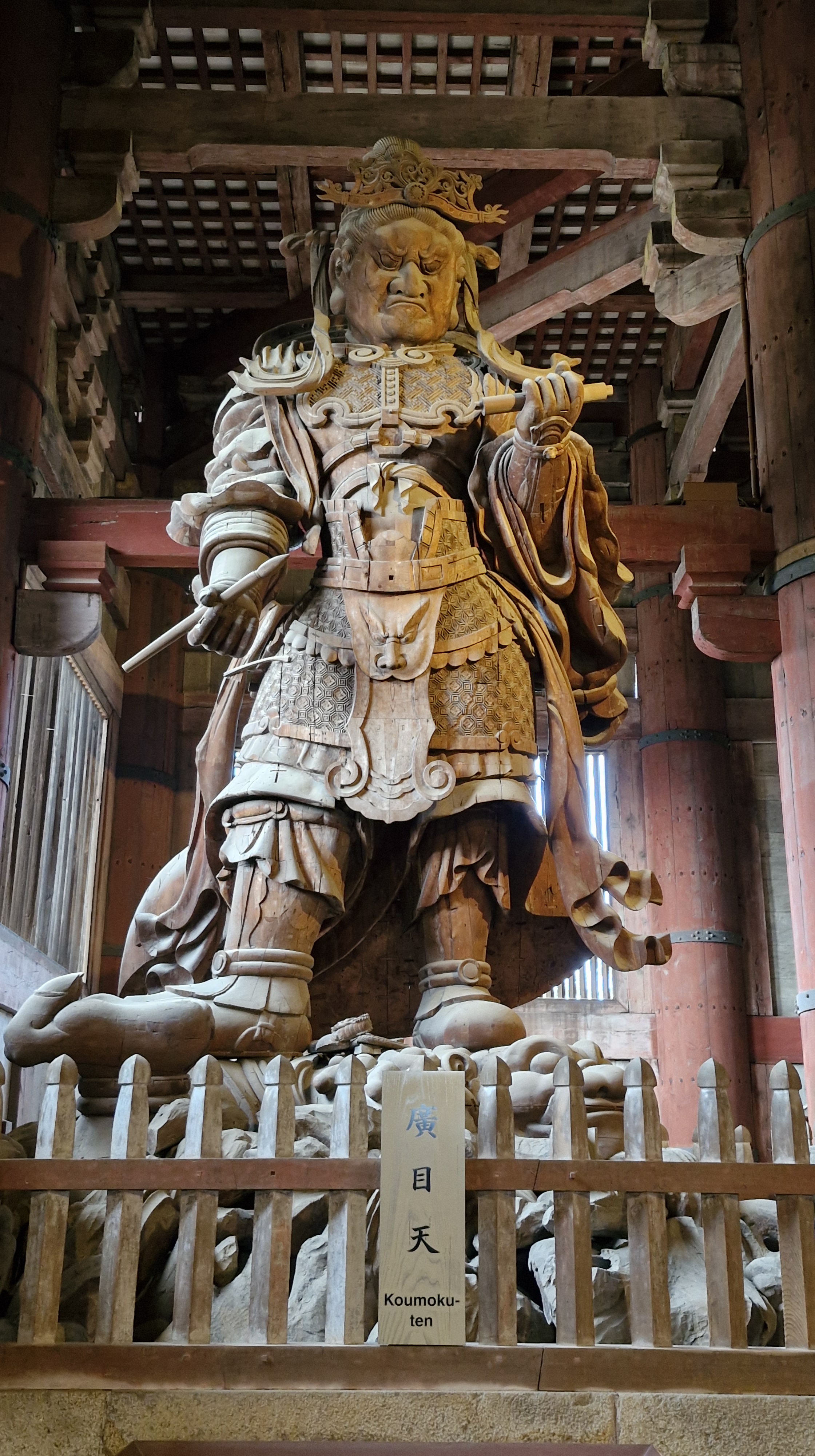
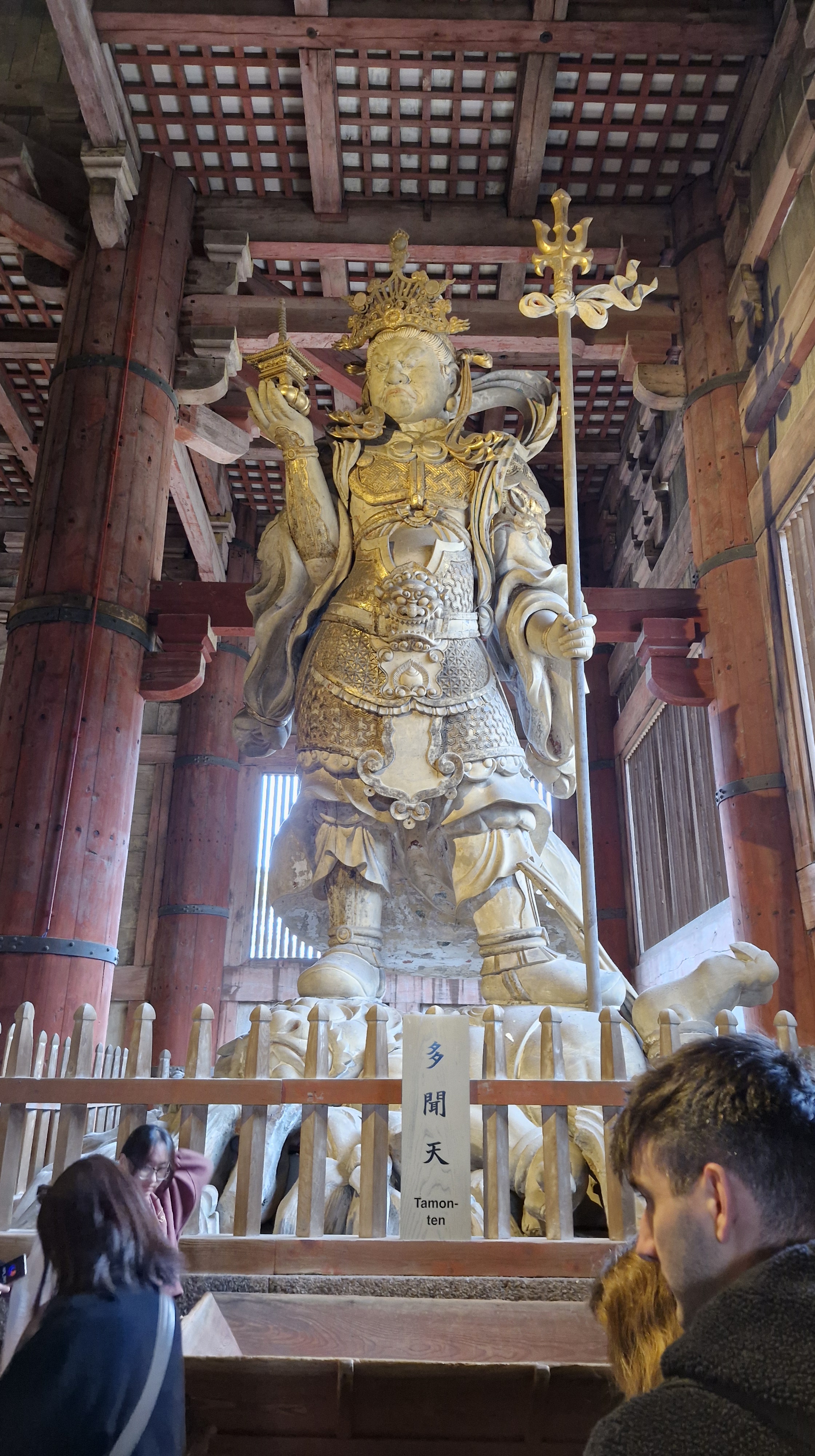
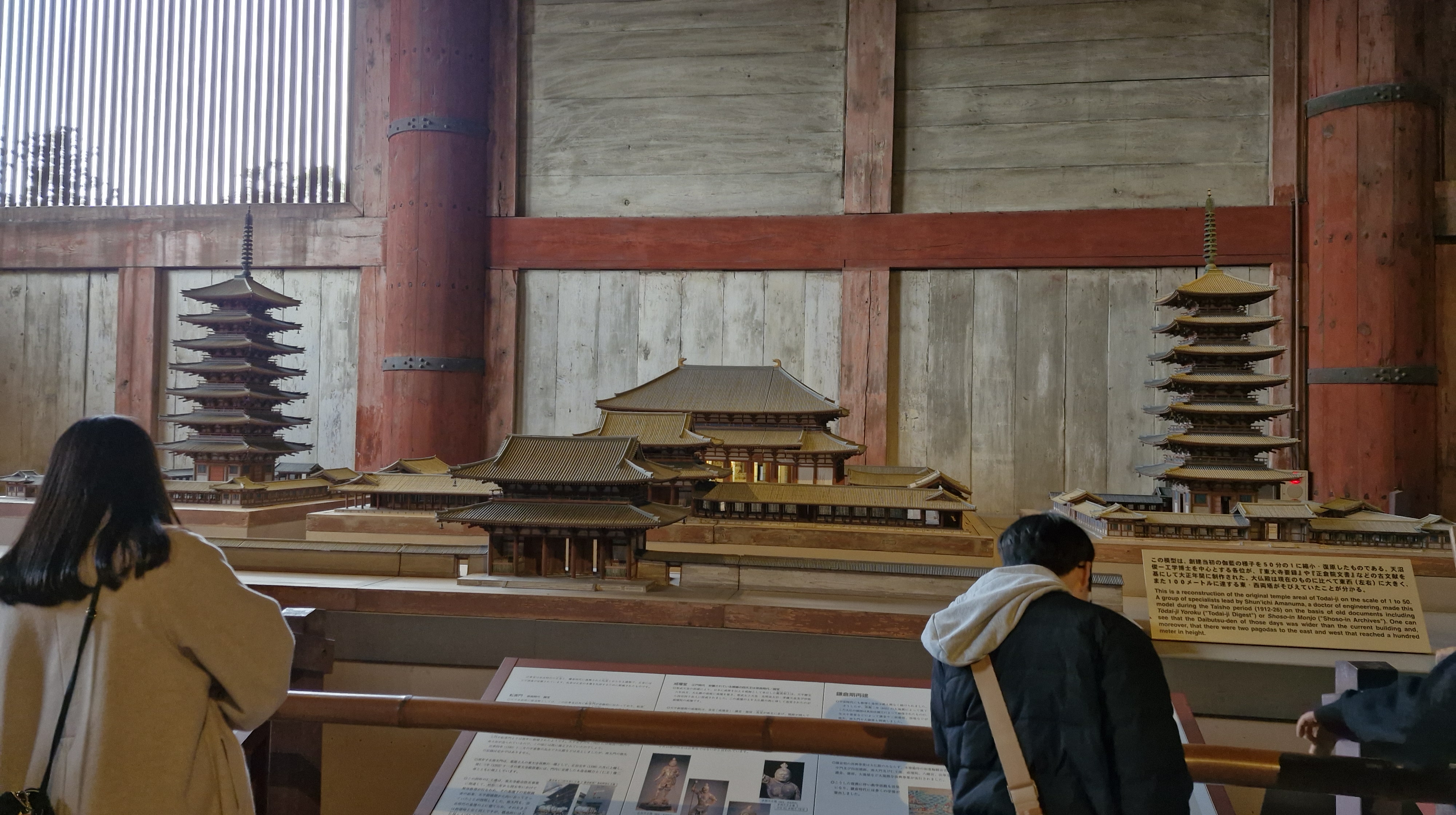
Perhaps the most well-known site to see here is the Todaiji Temple. It was founded in 738 AD and opened to the public in 752 AD. It is one of the largest wooden structures in the world. Inside it contains the largest metal Buddha statue in the world (made of cast bronze and plated in gold). The statue was damaged and repaired several times. The Buddha represented here is Vairocana Buddha (meaning “Buddha that shines throughout the world like the sun”). Currently, it is the head temple of the Kegon Sect of Buddhism. The Great Buddha Hall was burned during wartime in 1180 and 1567. The current structure is the third version of the temple. Apparently, the original structure was 33% bigger than the current temple.

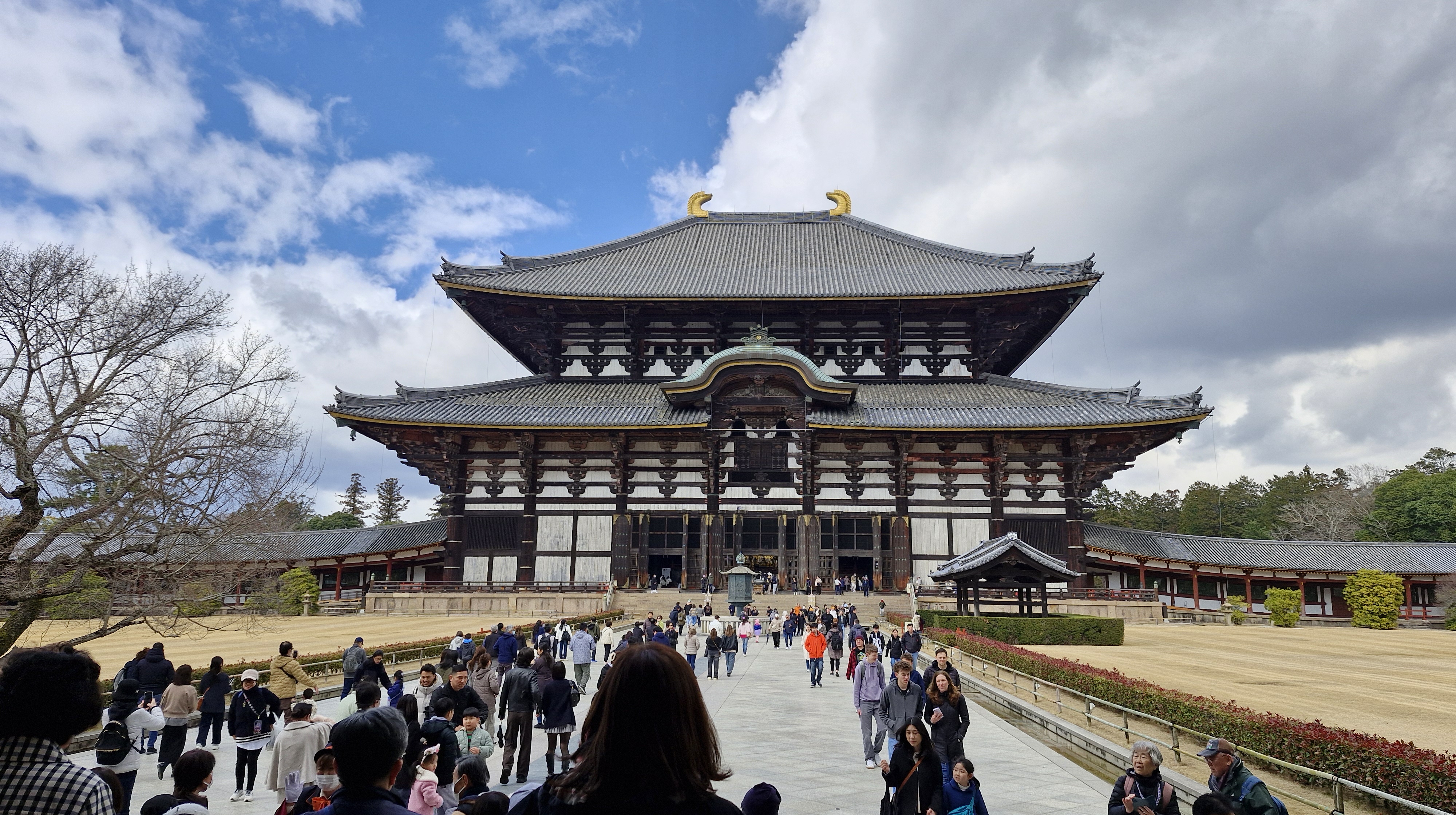

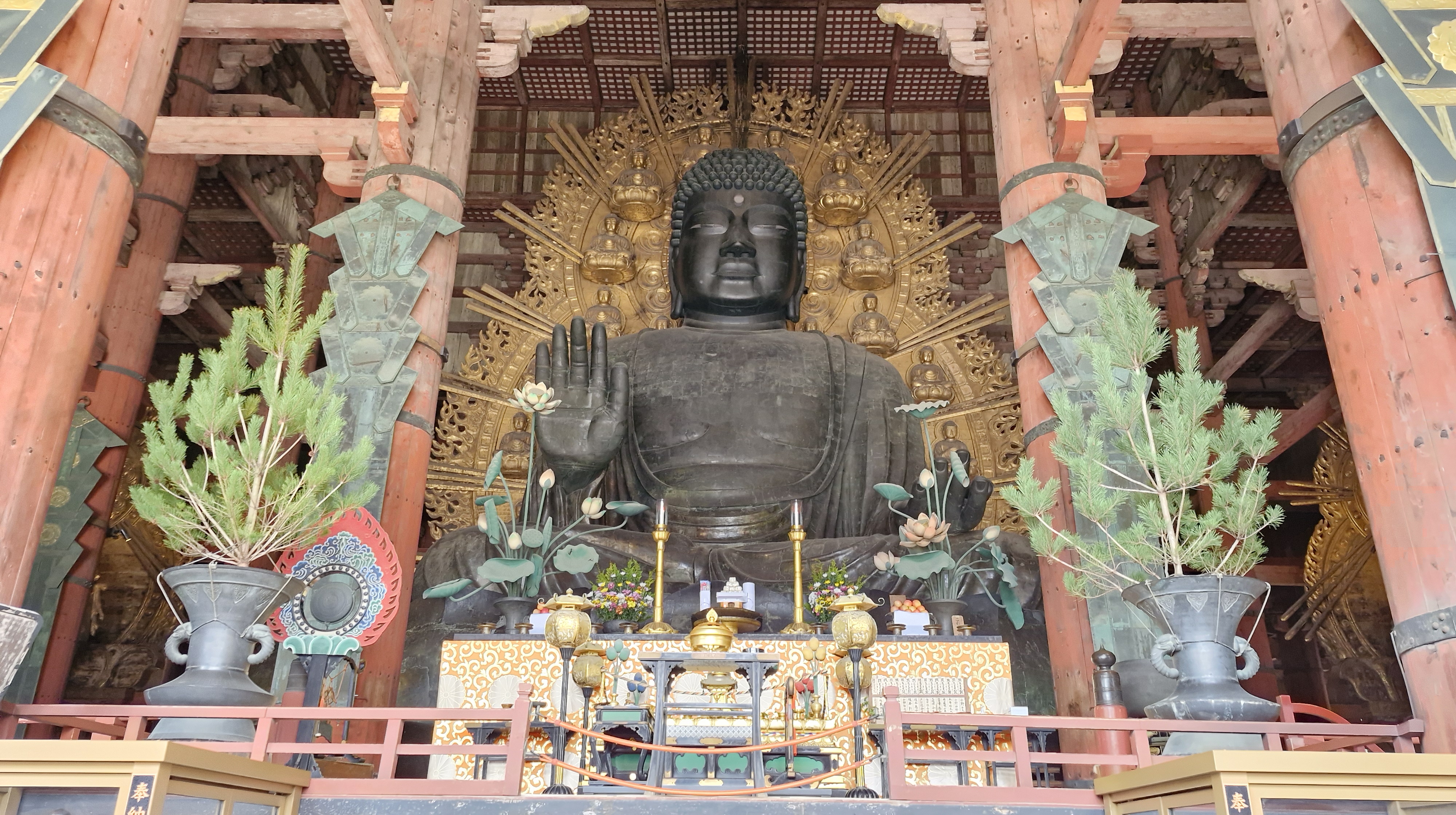
There were originally two seven-story pagodas constructed, but they did not survive. What remains is one of the gold coil pieces that stood atop the pagoda.
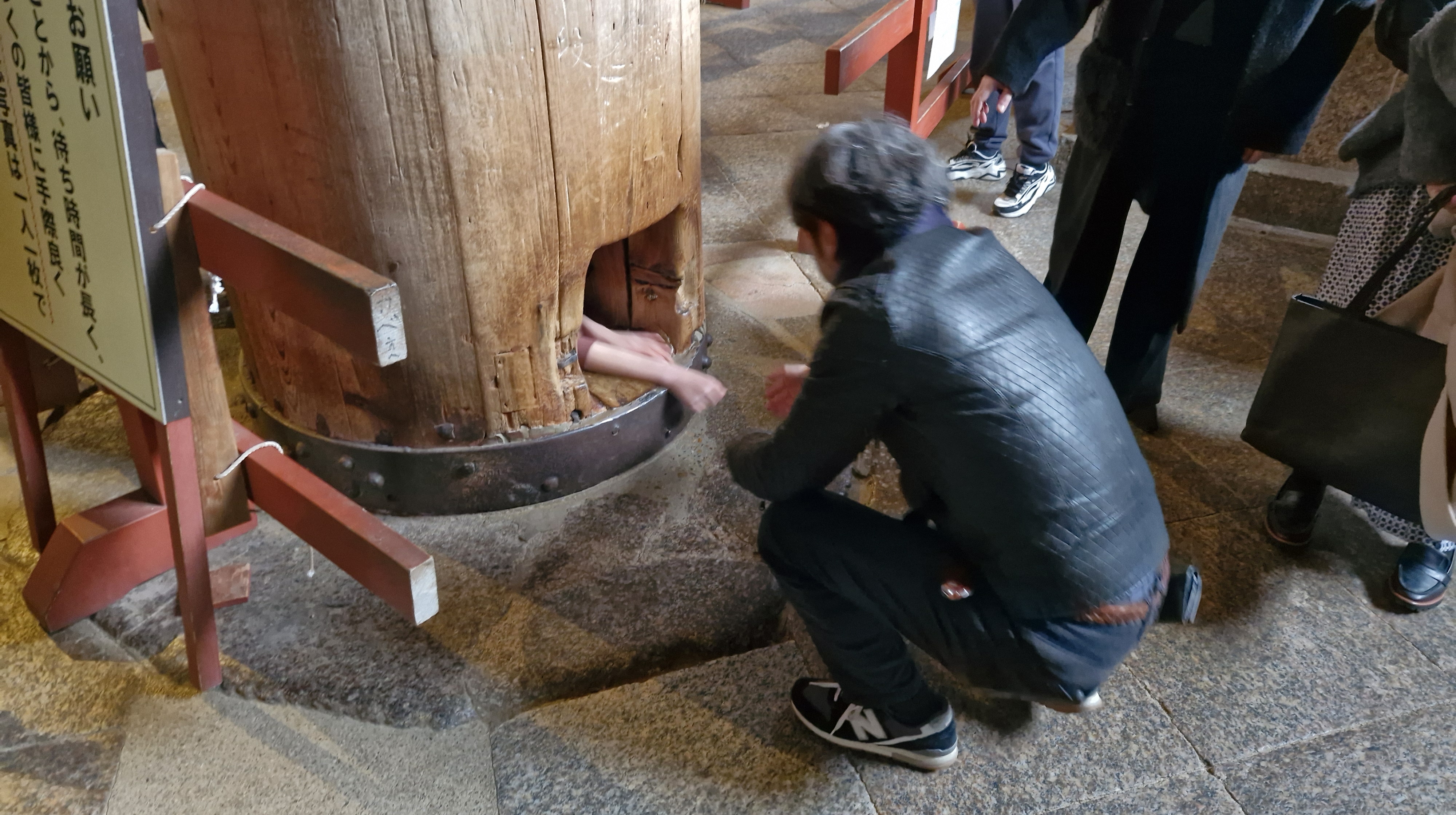
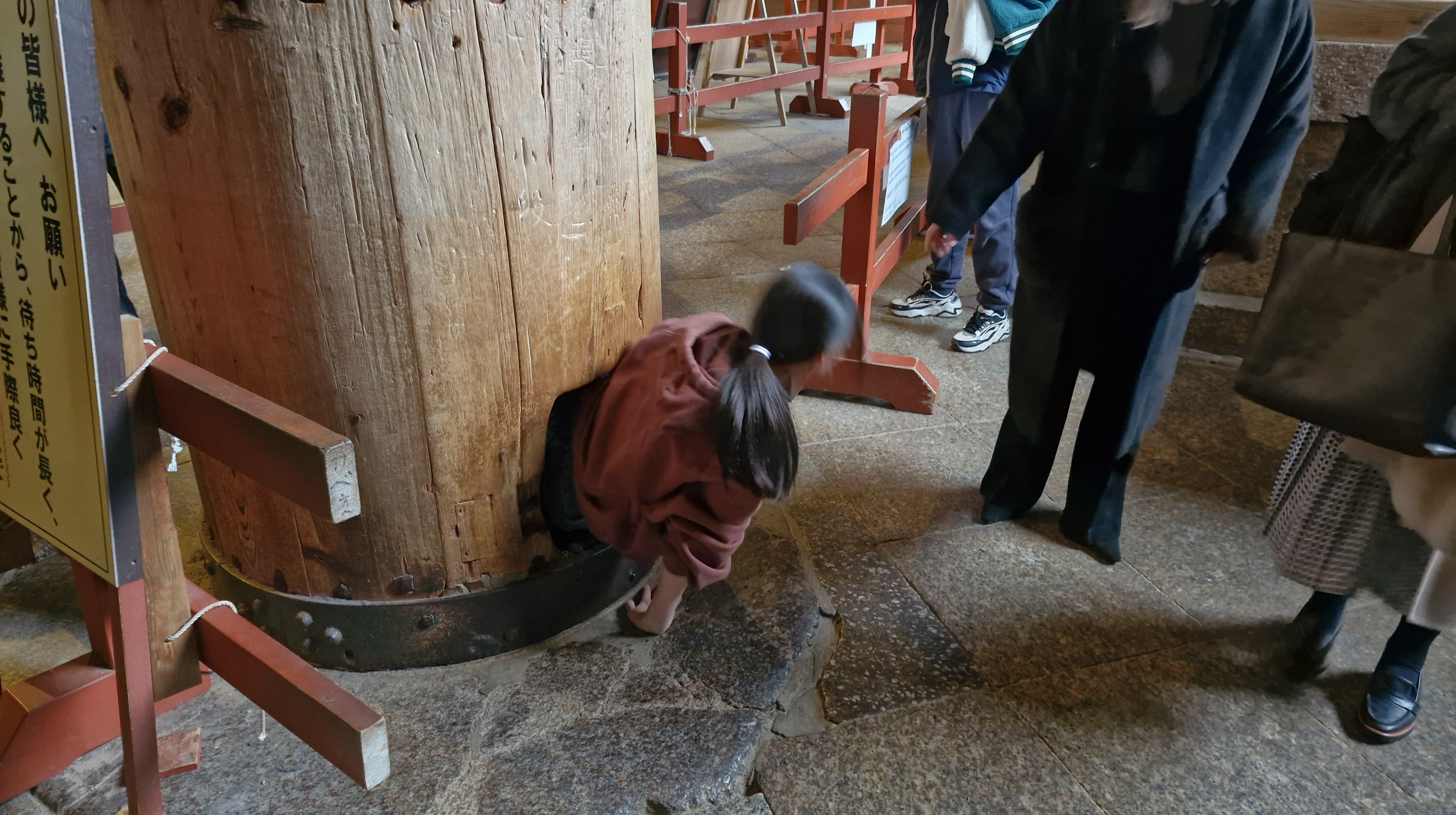
One of the pillars has a hole cut through it. Legend has it that the hole represents the nostril of Buddha and that anyone who can climb through it will be blessed with enlightenment. The exact origins can’t be confirmed, but people continue to enjoy trying to make it through (although it tends to be mostly kids that can fit).
Another part of the tour included visiting a knife-making shop. The family has reportedly been doing this for generations.
I know that I have mentioned multiple times previously that I have seen so many temples over the years that I am basically “all templed out.” However, seeing the size of the wooden architecture and statues does help it to feel more exciting for me.
Knife Shop
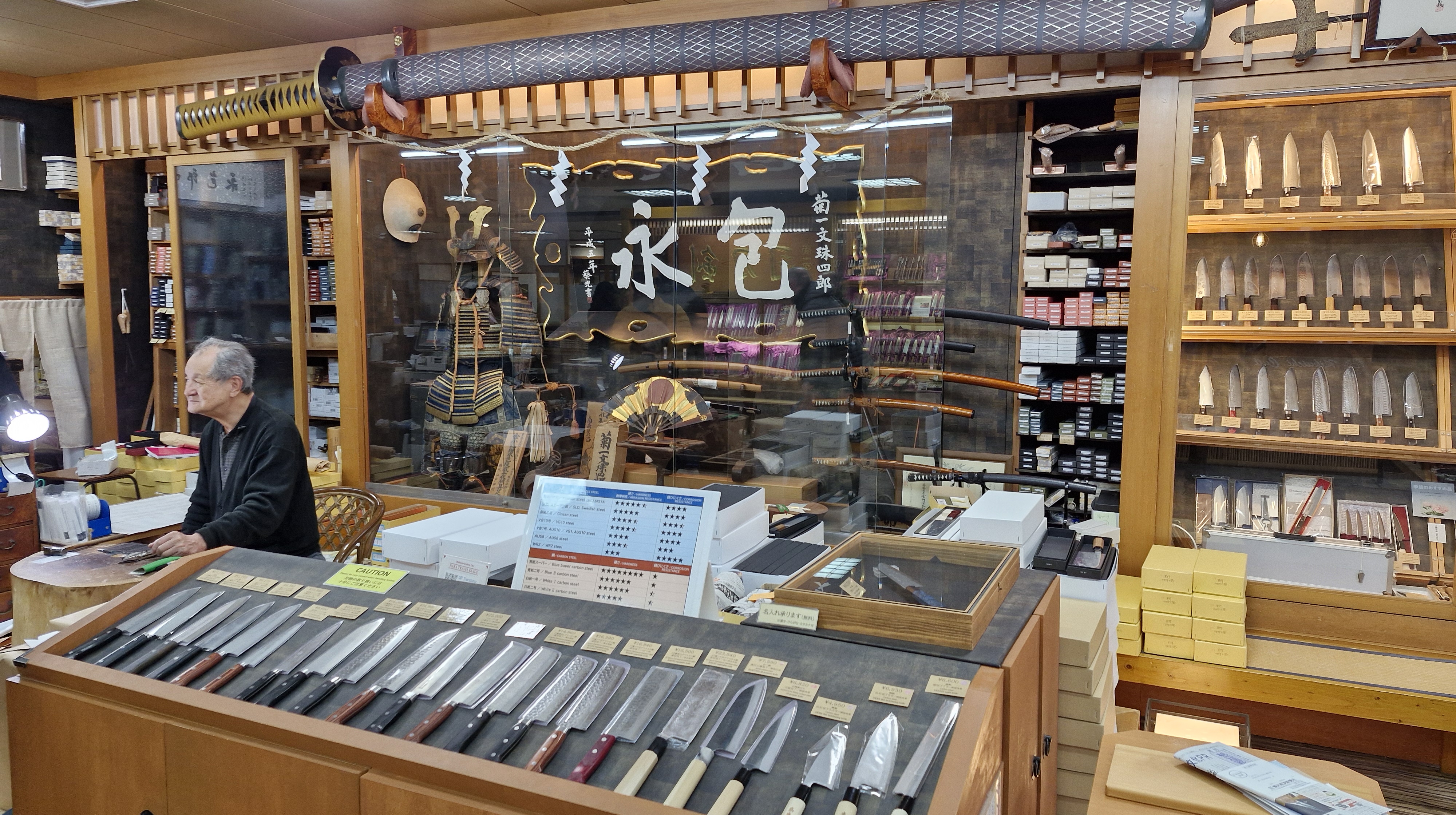
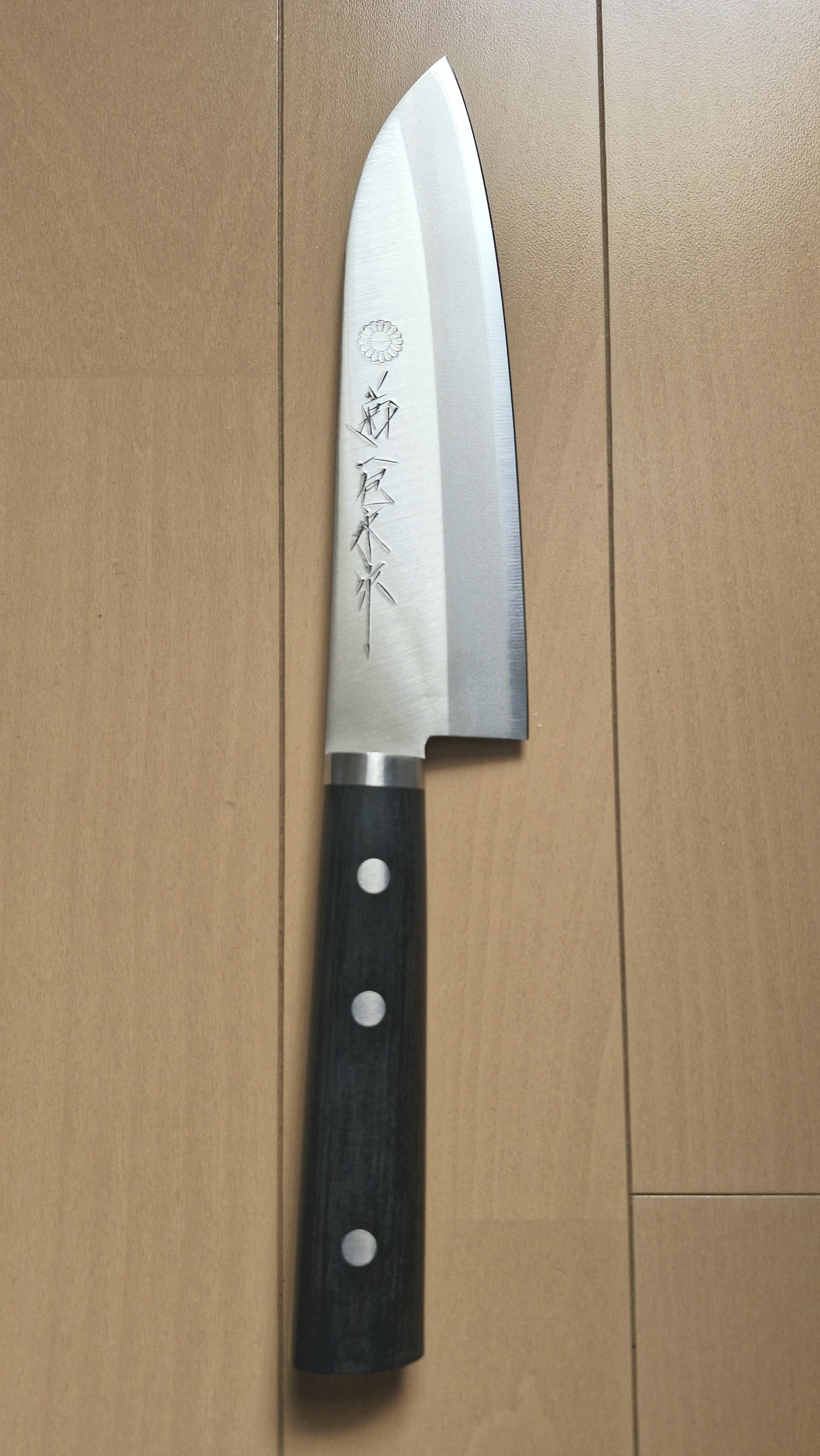
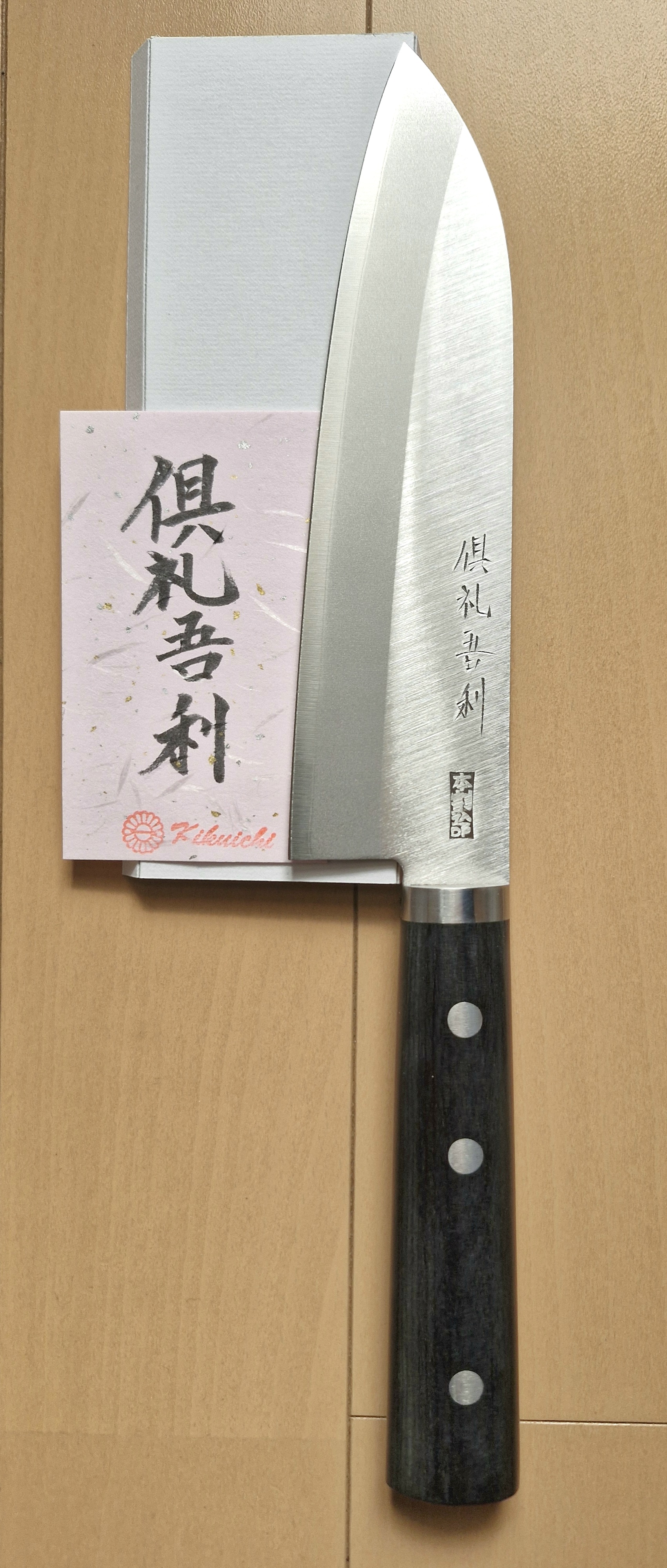
Our guide told us that the prices for knives here are noticeably cheaper than what you’d find in other cities. I wasn’t originally planning on buying one, but I finally caved and got a knife that is mostly carbon steel knife for myself. It helped to know that the maker will engrave your name in kanji for free. Since the sharp blade part is carbon steel, I just need to remember to make sure to dry it off completely after use to prevent rusting.
Deer Park
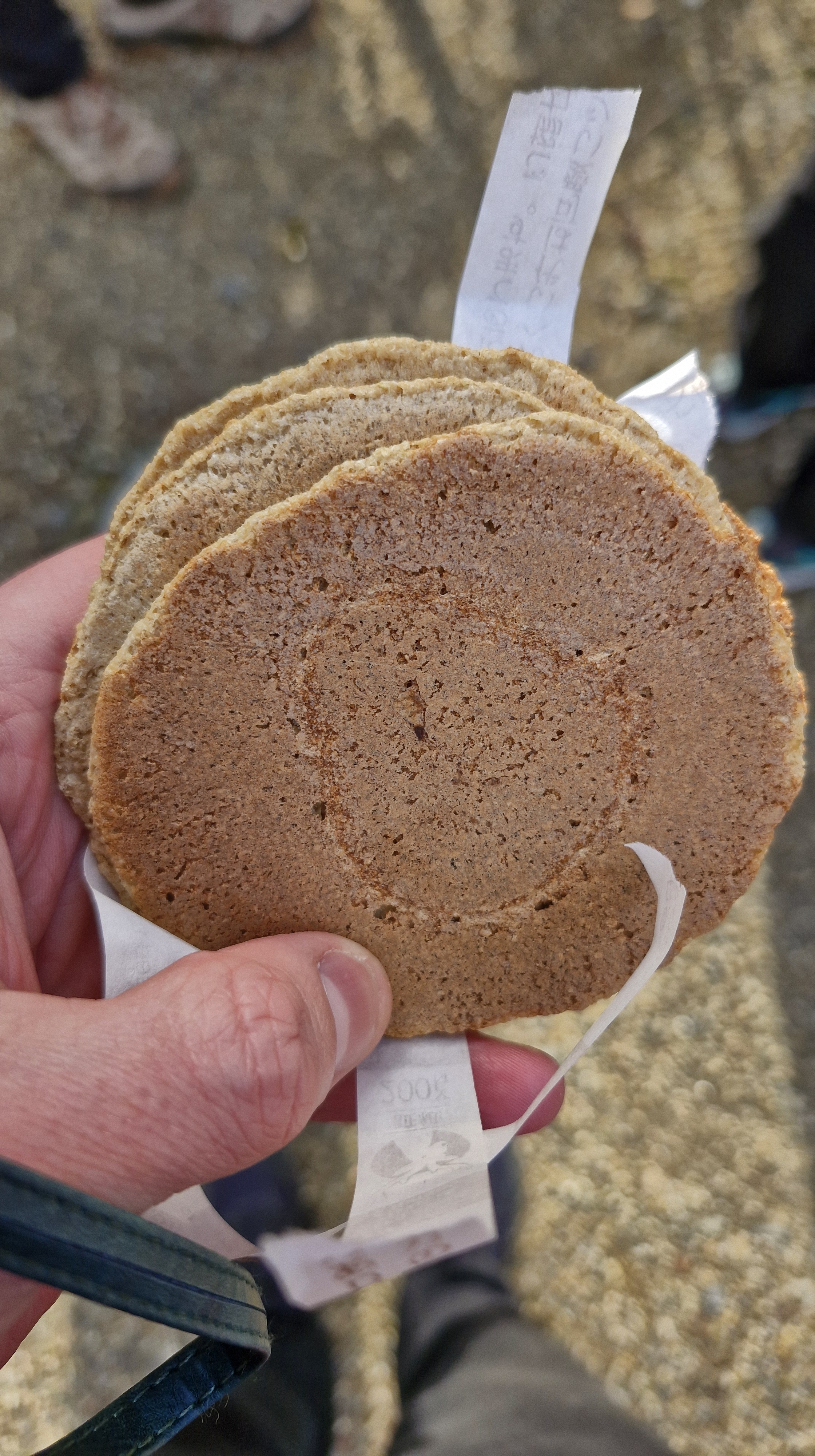
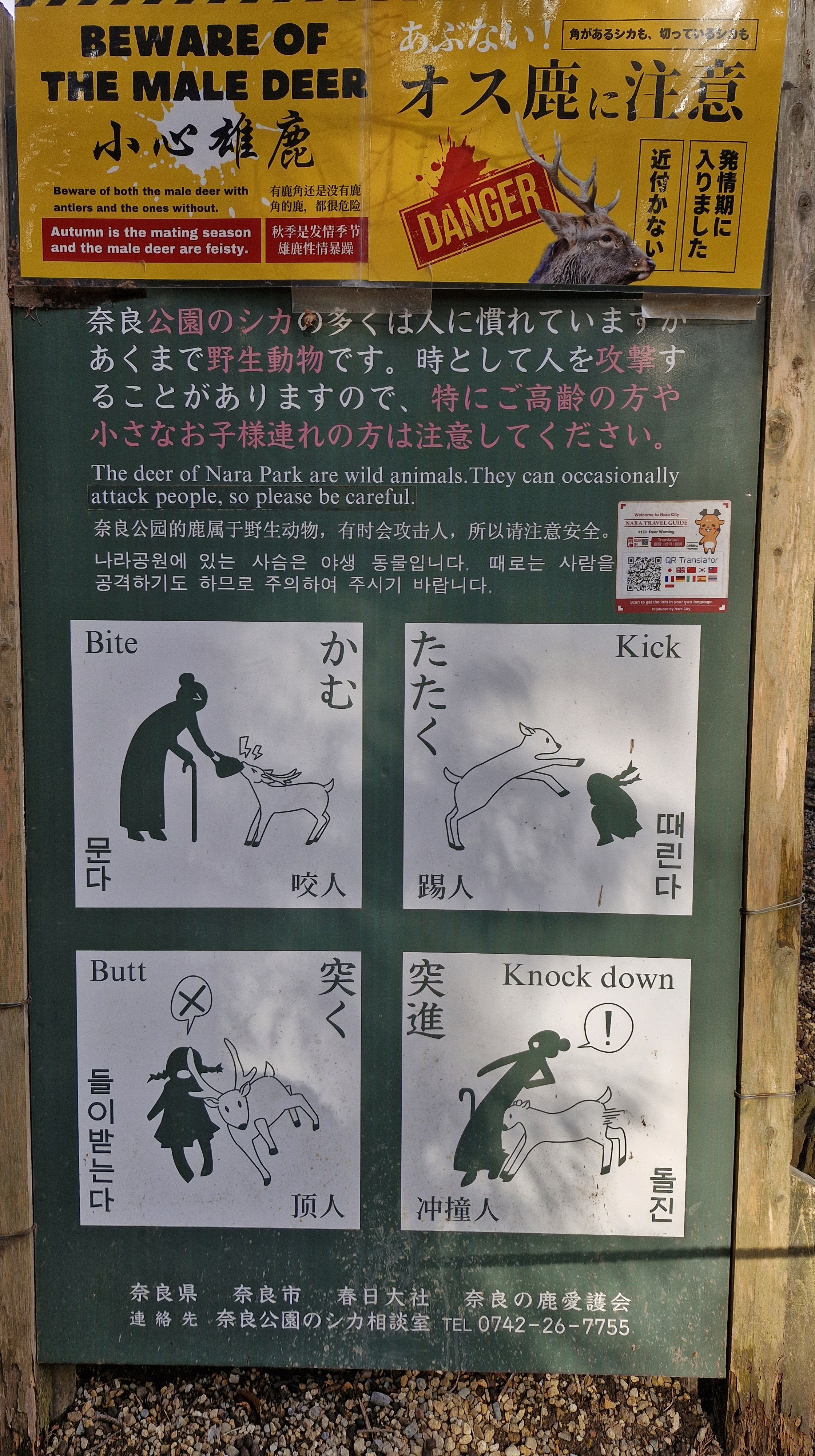
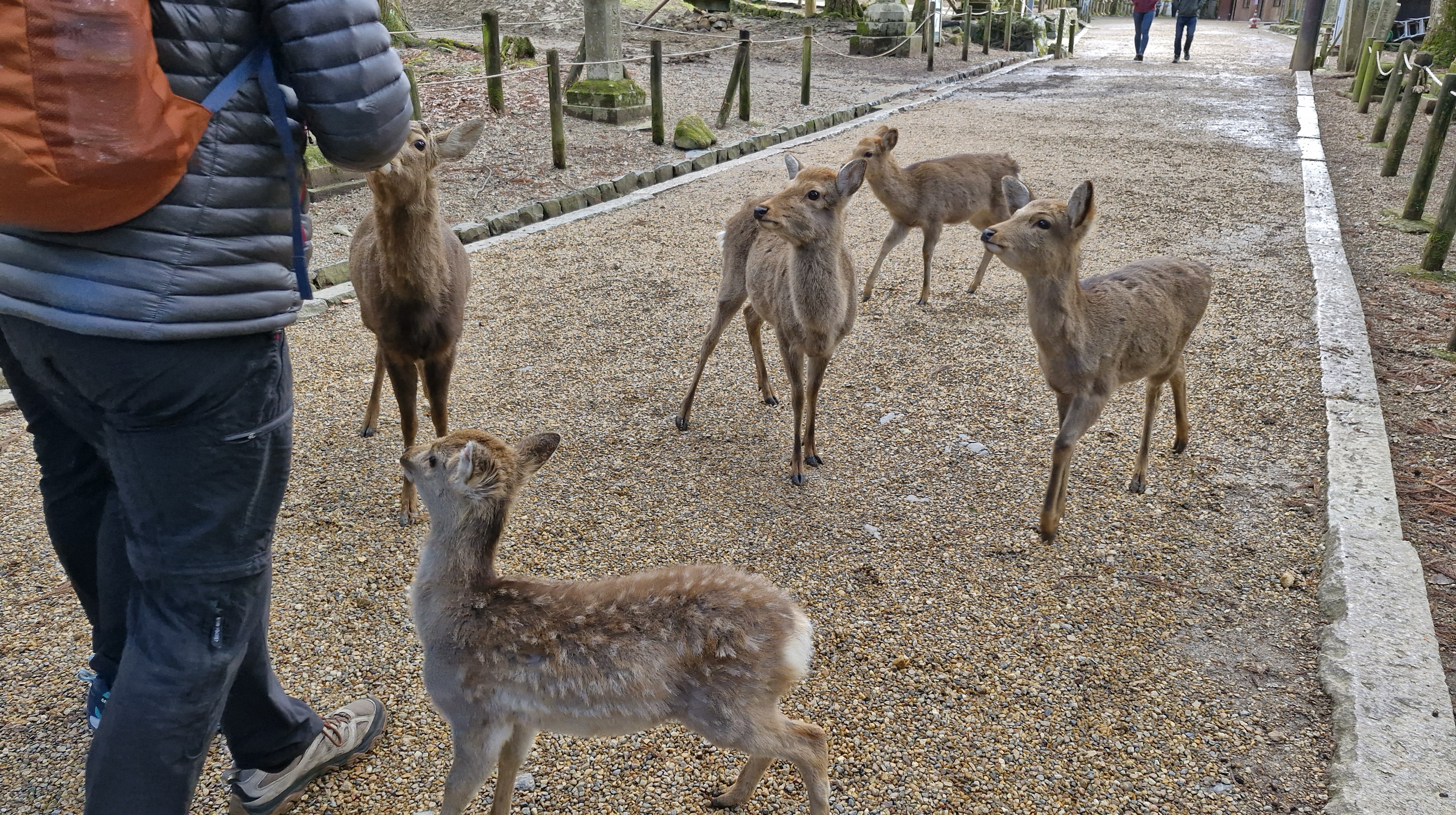
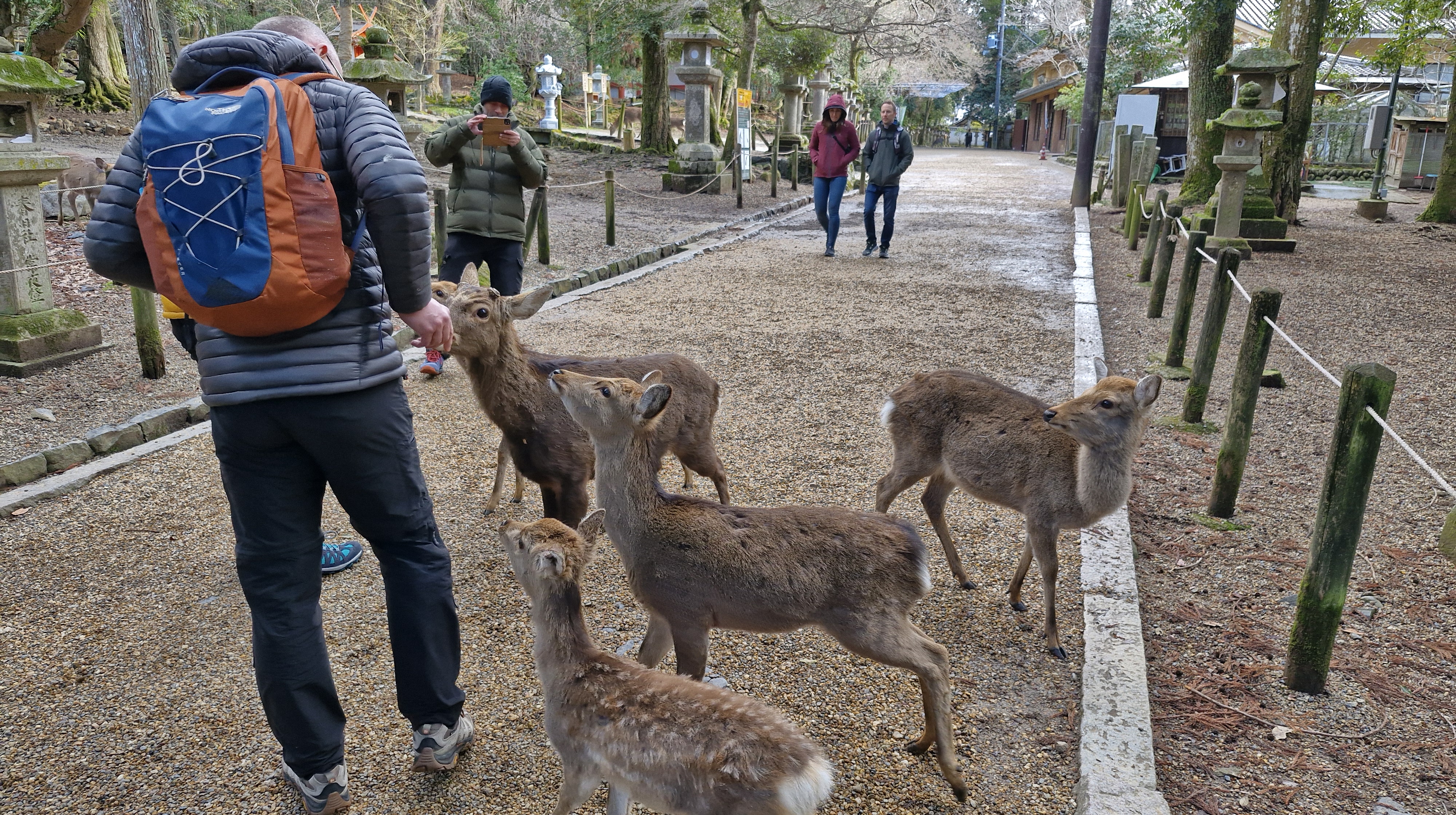
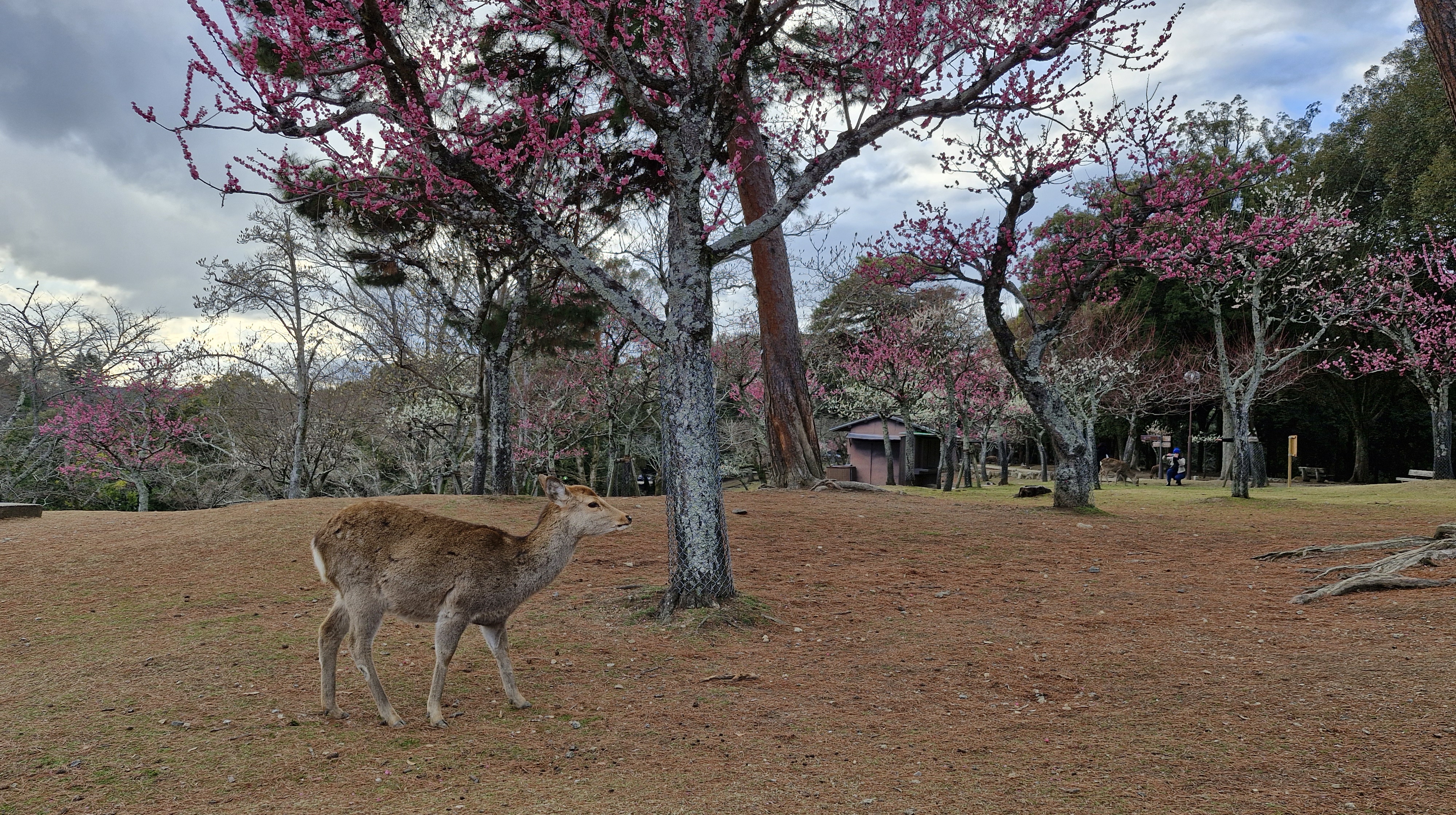
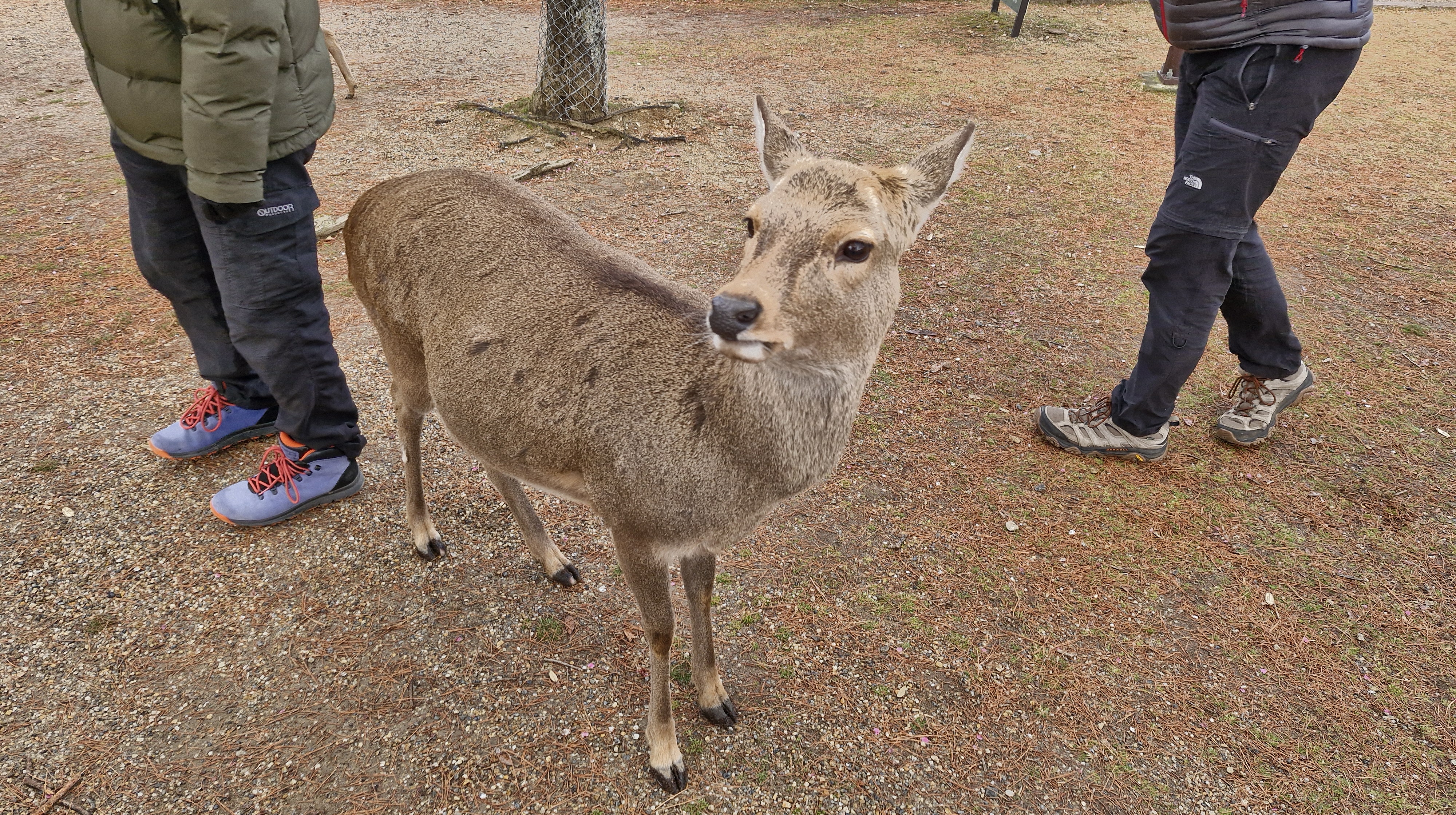
Another famous thing to do here is to feed the local deer. There is a standard food that can be purchased to give them. They are discs made of natural items that deer eat, such as grass and dead leaves, as well as rice flour as a binder. These deer are very comfortable going up to people to ask (demand) for these discs. The deer have also been trained to bow as a way to ask. However, they have become so emboldened that if they simply smell the scent on you, they will come up to you expecting to receive it. At one point, a deer even nipped my jacket pocket because it smelled the crumbs.
Shrines
We also walked around the shrines throughout the property. We were told that Japanese culture involves growing up being influenced by both Buddhism and Japan’s indigenous religion, Shintoism, rather than people following one or the other. Buddhism is associated with death and transformation, such as honoring relatives that have passed on and spirituality, while Shintoism is associated with celebrating life’s events (such as having a baby, weddings, graduating, etc.).

Shrines have “tori” gates at the entrance that represent the divide between the outside world and the sacred space. Inside, they may also have purification basins for visitors. We were told that shrines here are often painted with a reddish-orange color. Shrines also have exposed crossbars on the roof.
Temples, however, often have more elaborate gates called “sanmon.” Their main buildings also have tiled roofs with round ornaments called “hoju.” They may also have cemeteries connected to them, unlike shrines that view the dead as impure (a belief from Shintoism).

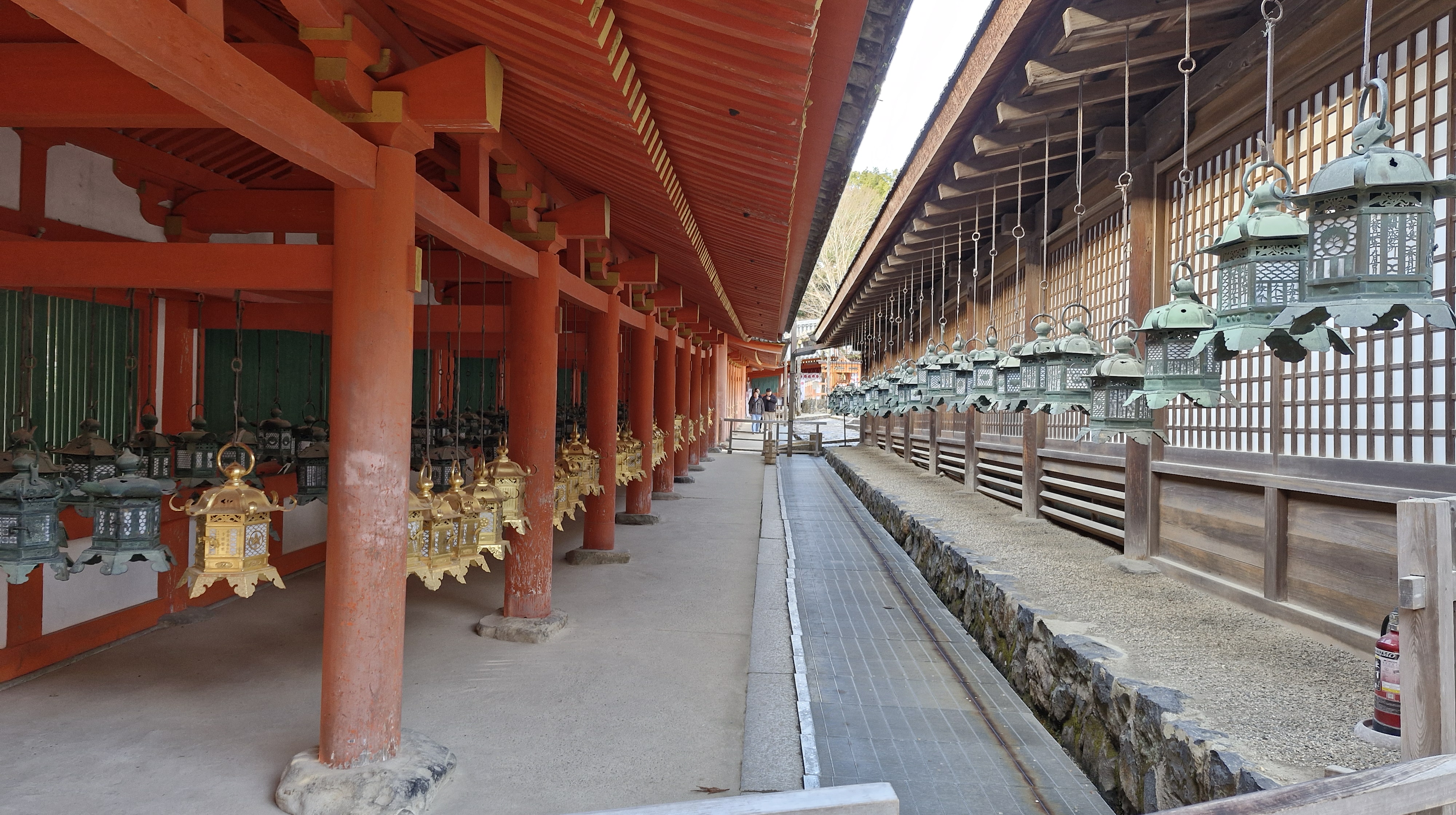
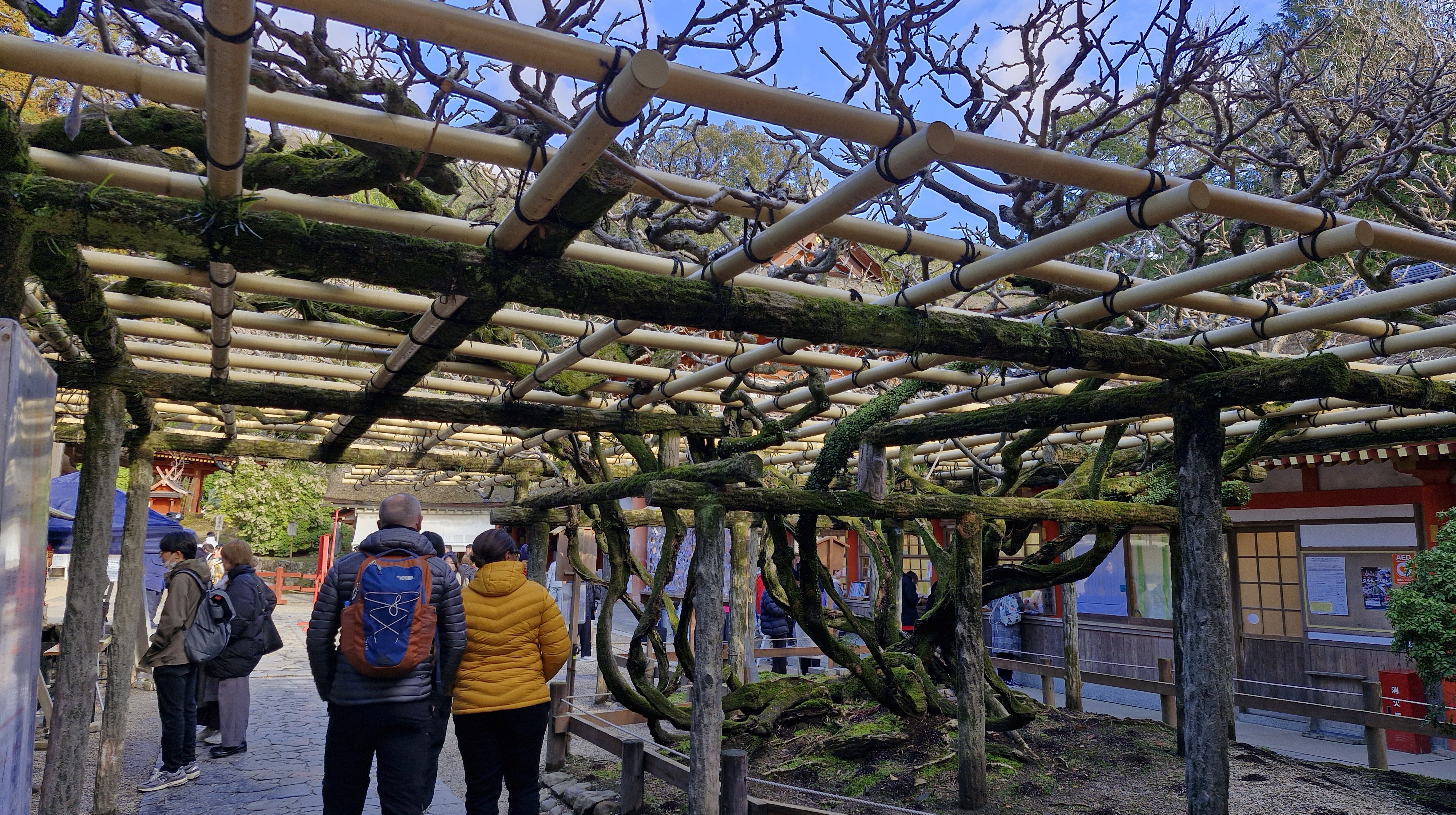
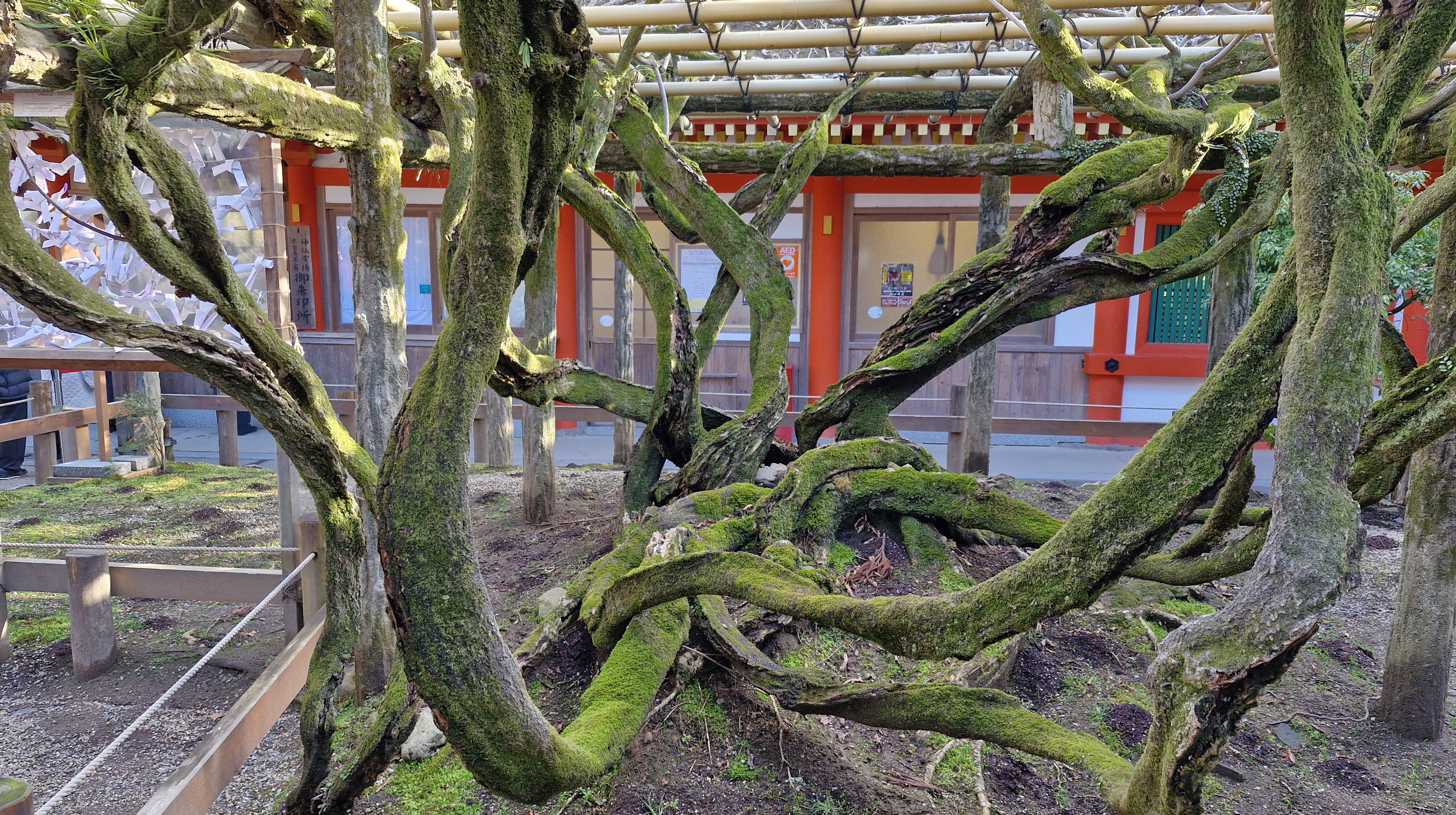


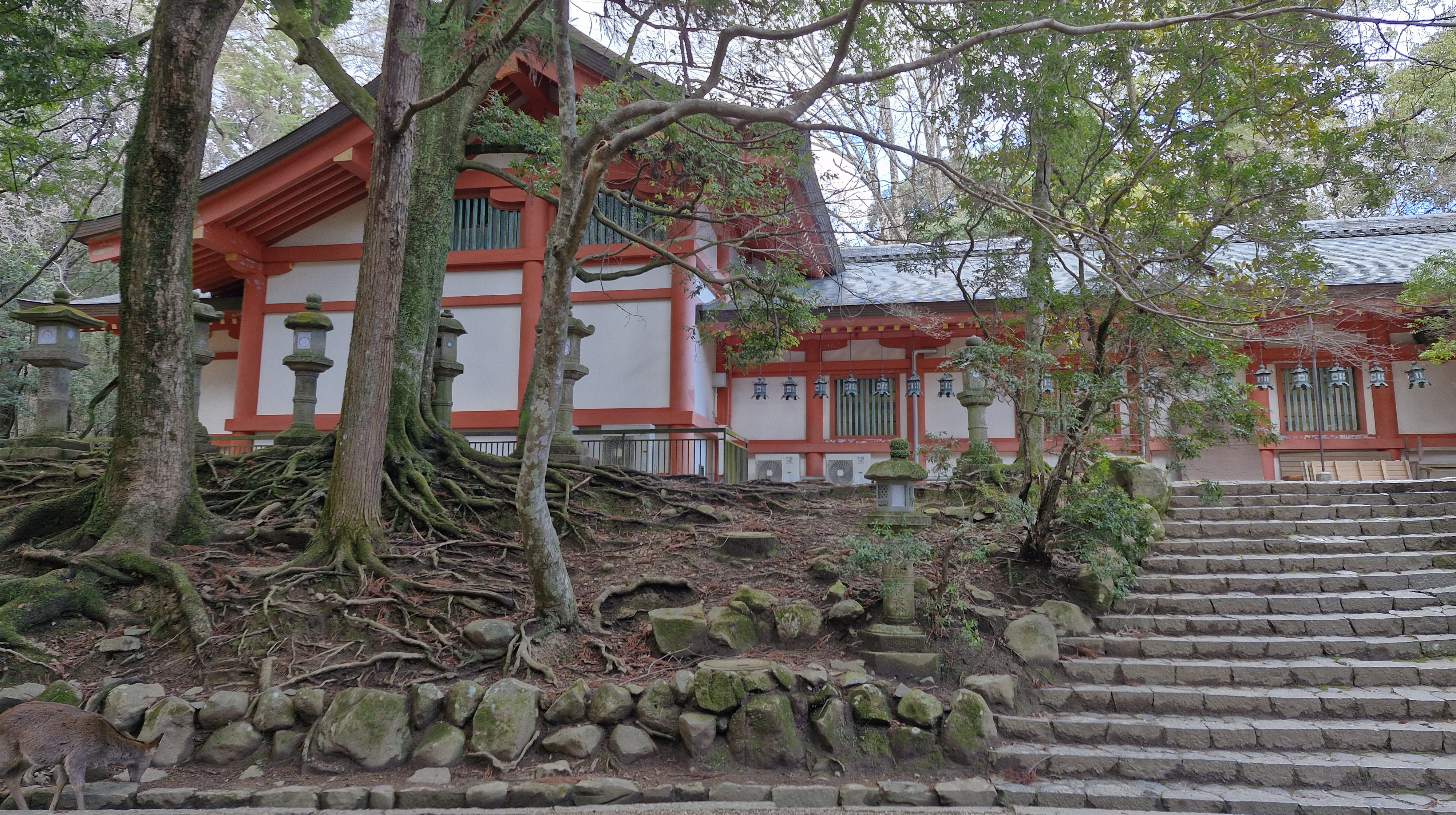
The last part of the tour was riding through the park area. This is also when it started to rain again briefly. By now my hands were also cold enough to want to leave. Luckily, we didn’t stay too long before heading back to the bike rental shop.
Day 3: Osaka
My original plan for the last day was to go outside of Osaka again to the Yoshino Mountain area. However, after the frigid temperatures of the previous day (and knowing that the sakura were not in bloom yet) I had to re-think this plan. I just got a strong feeling that I would have ended up disappointed. So, I decided to finally stay put and see some of Osaka.
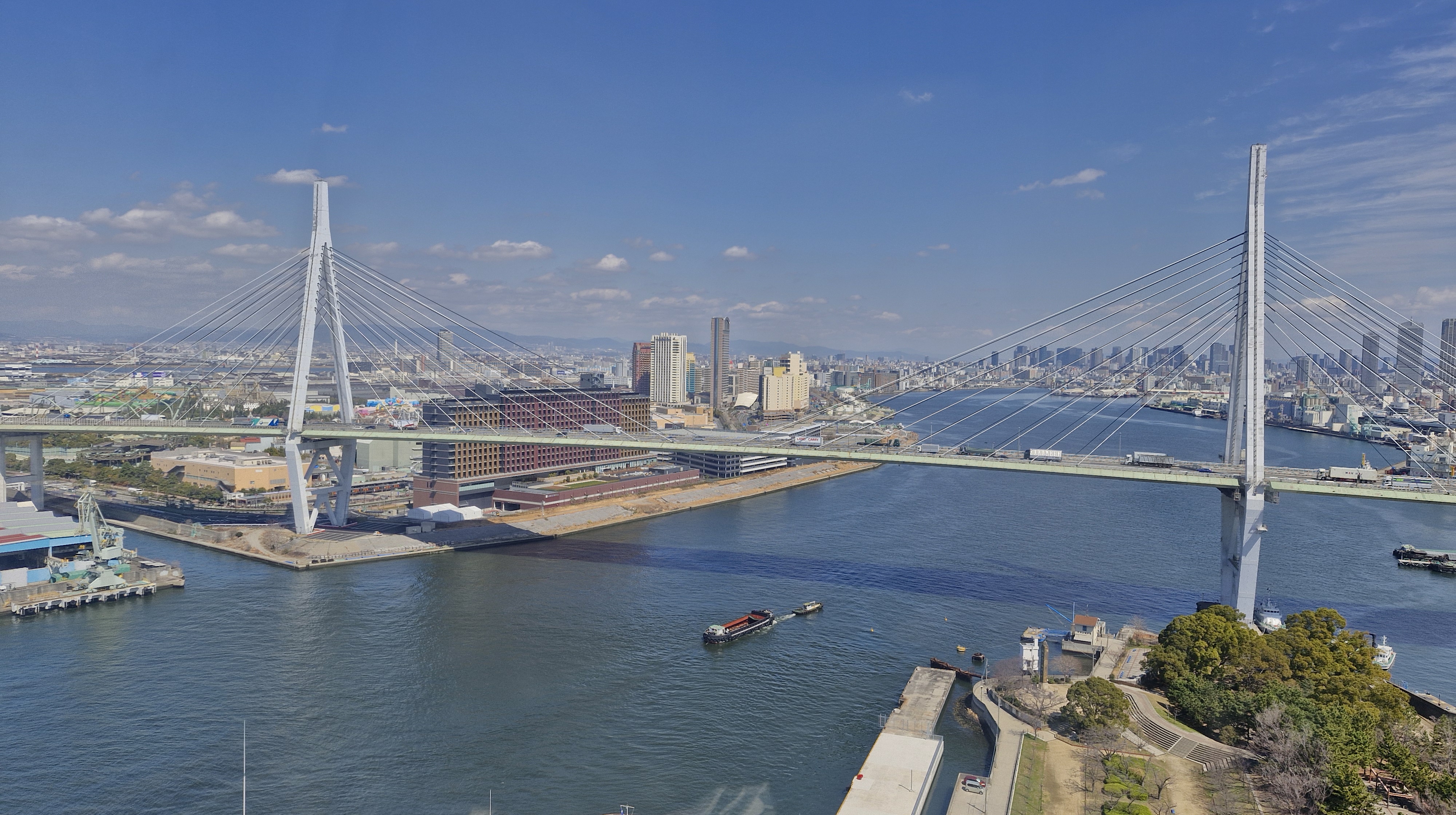
The weather that day, although still cold, was also quite sunny. I decided to head toward the Osaka Bay area to visit the Osaka Aquarium Kaiyukan. In addition to the aquarium, there is also the Ferris wheel overlooking the bay area, a Legoland, a cruise ship (I don’t know if this is always here), and other shops and markets.



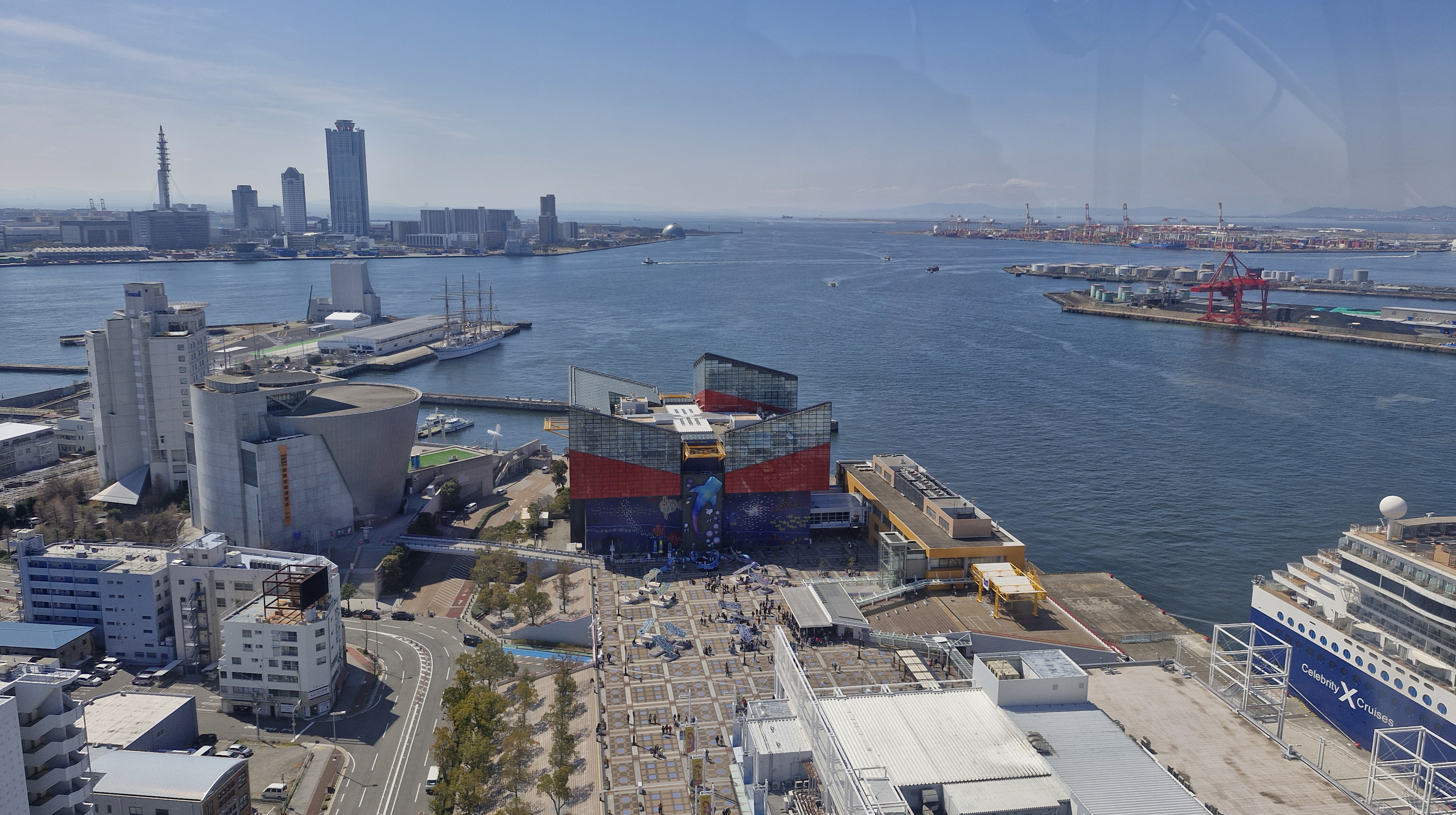
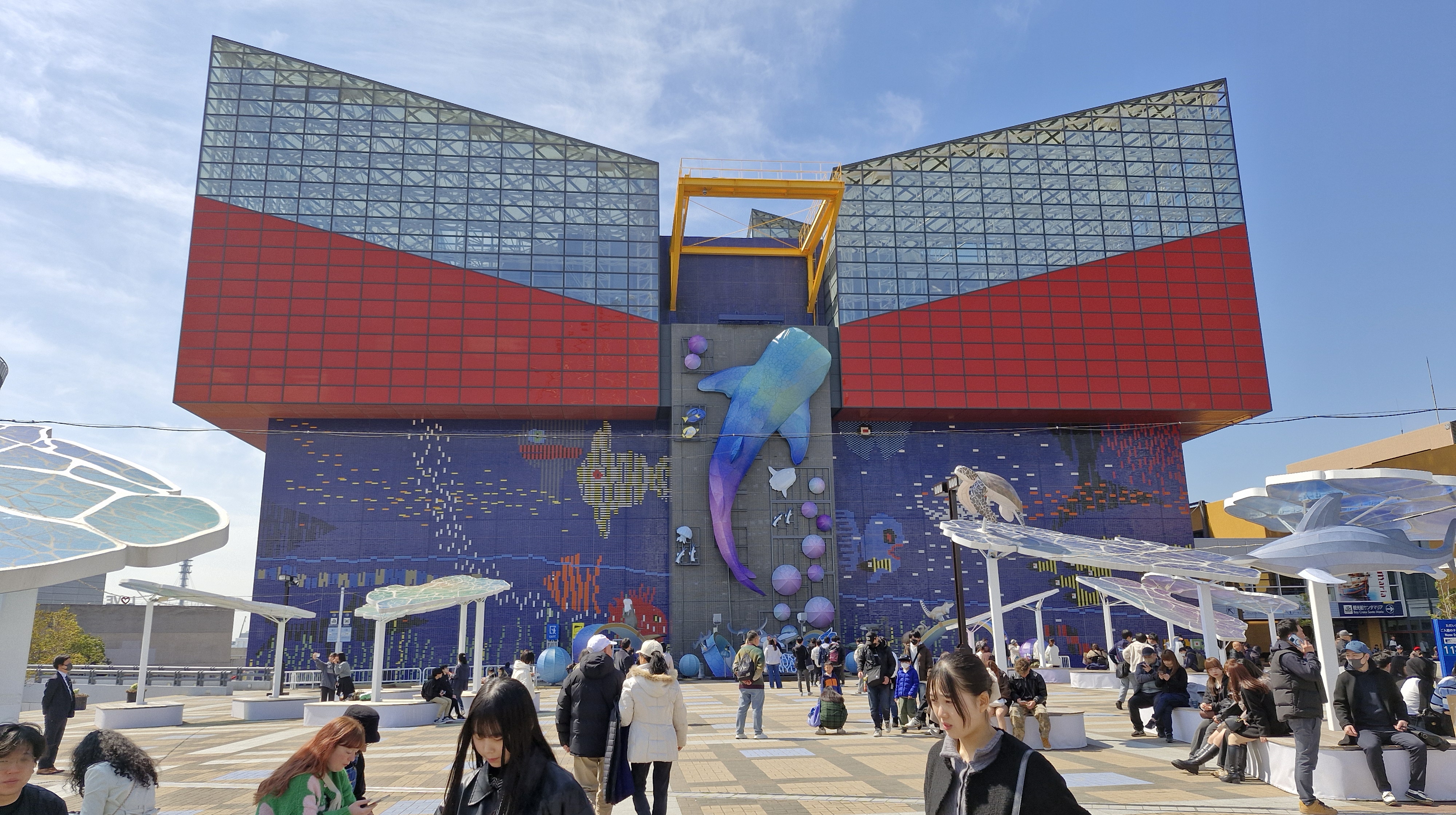
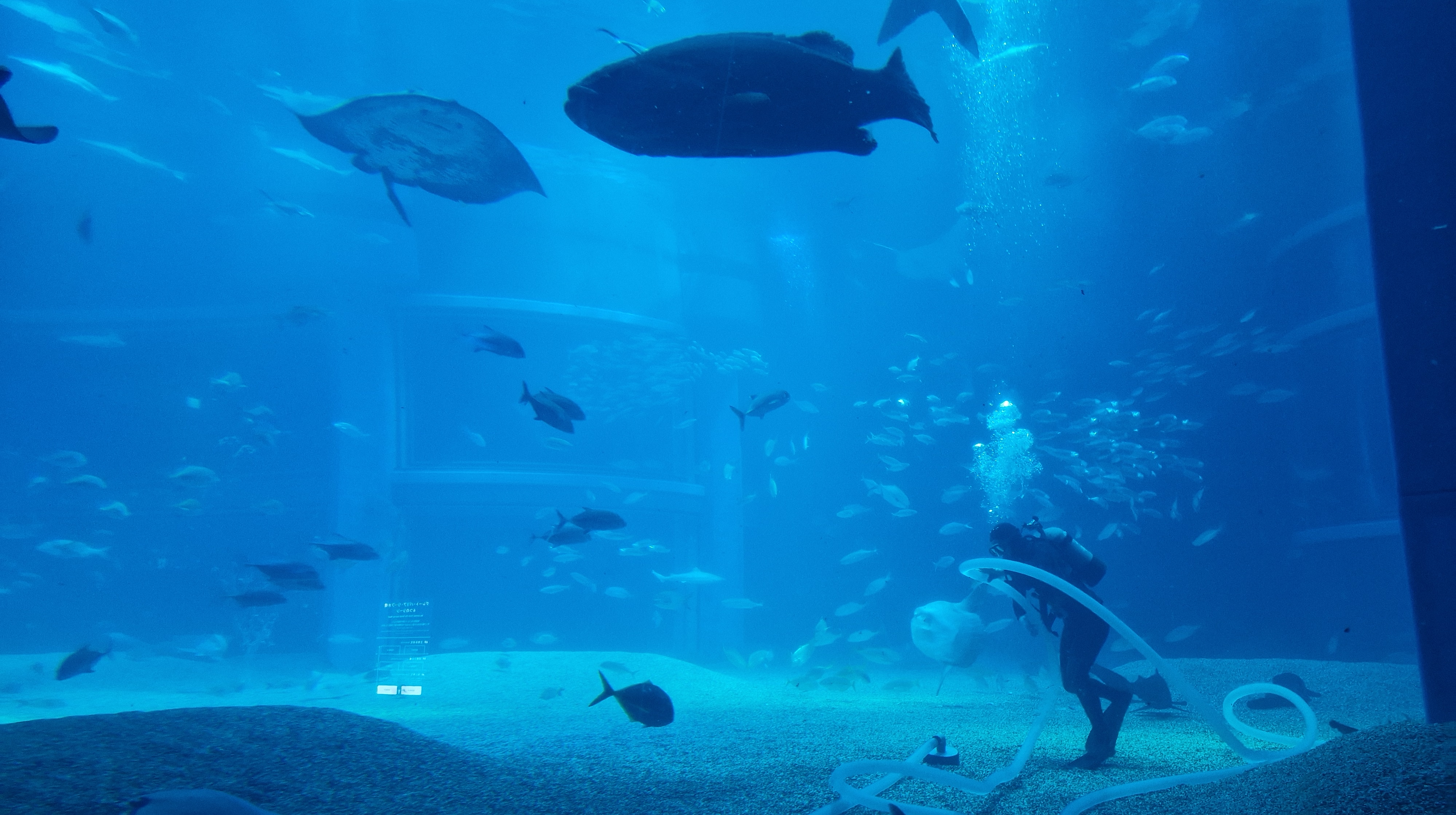
The aquarium was OK overall. The best attraction is the giant tank that is filled with fish, sharks, and manta rays. The tank is big enough so that there are multiple areas to walk along that become less crowded while still offering nice views.
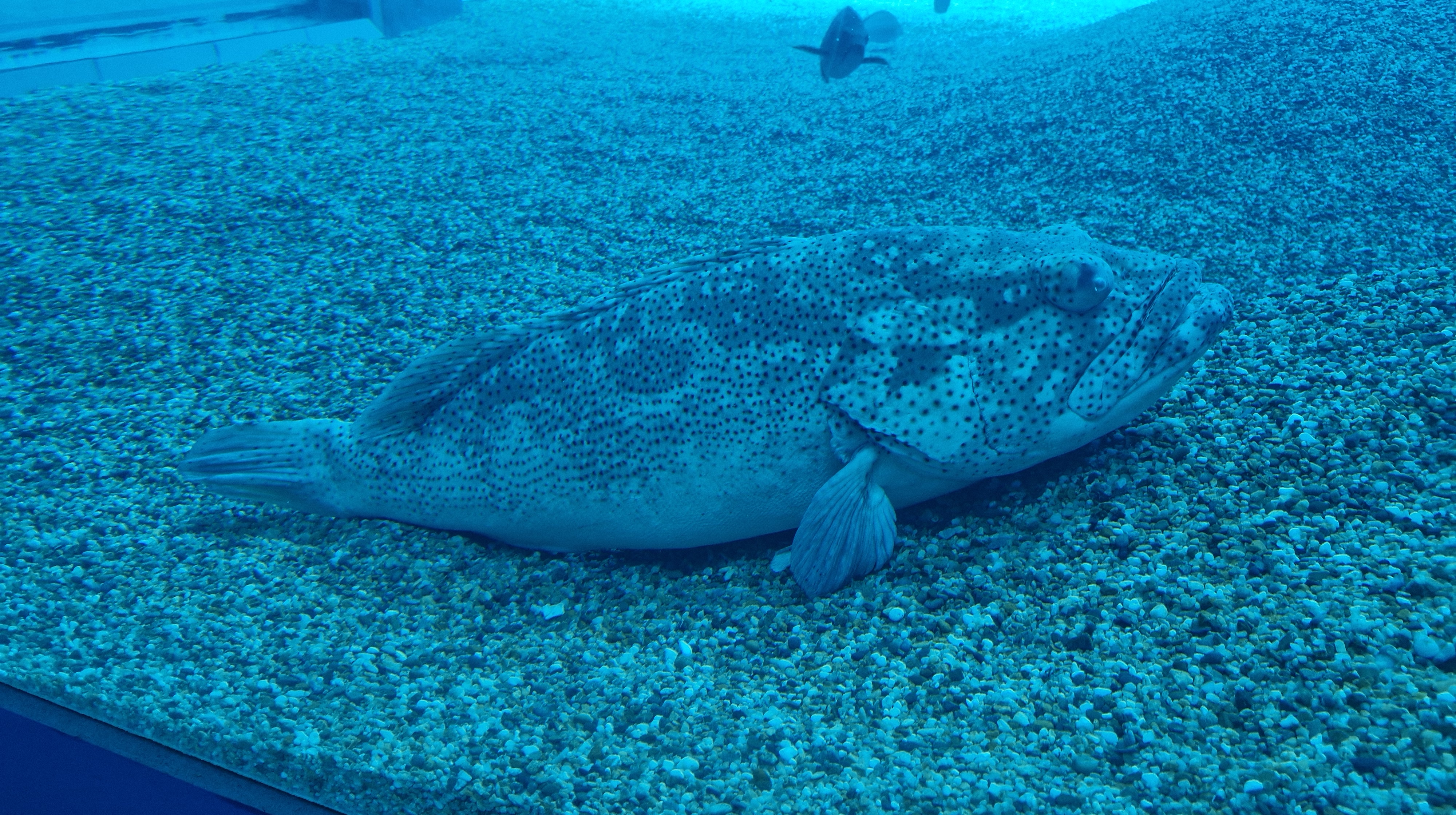
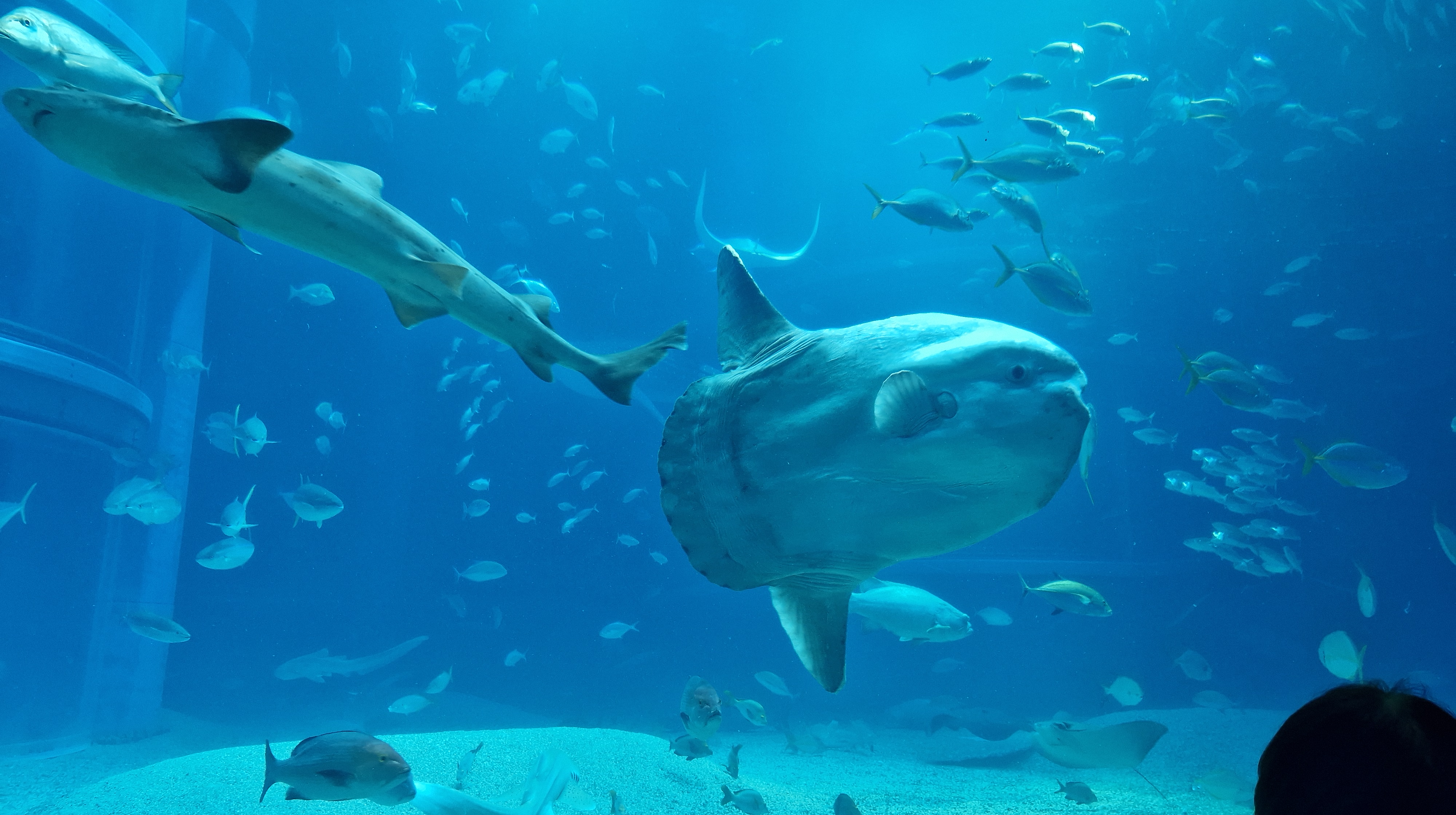
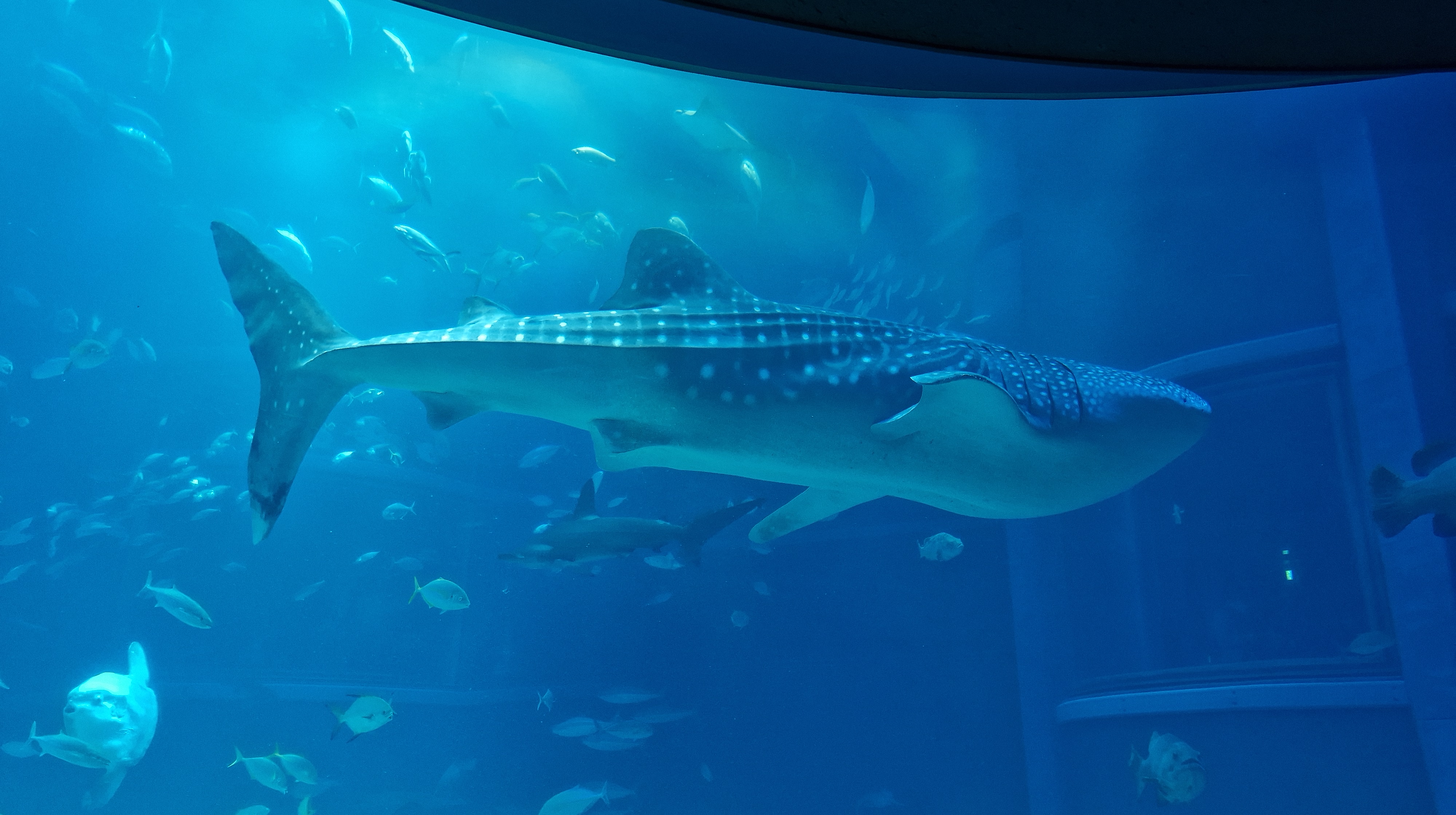

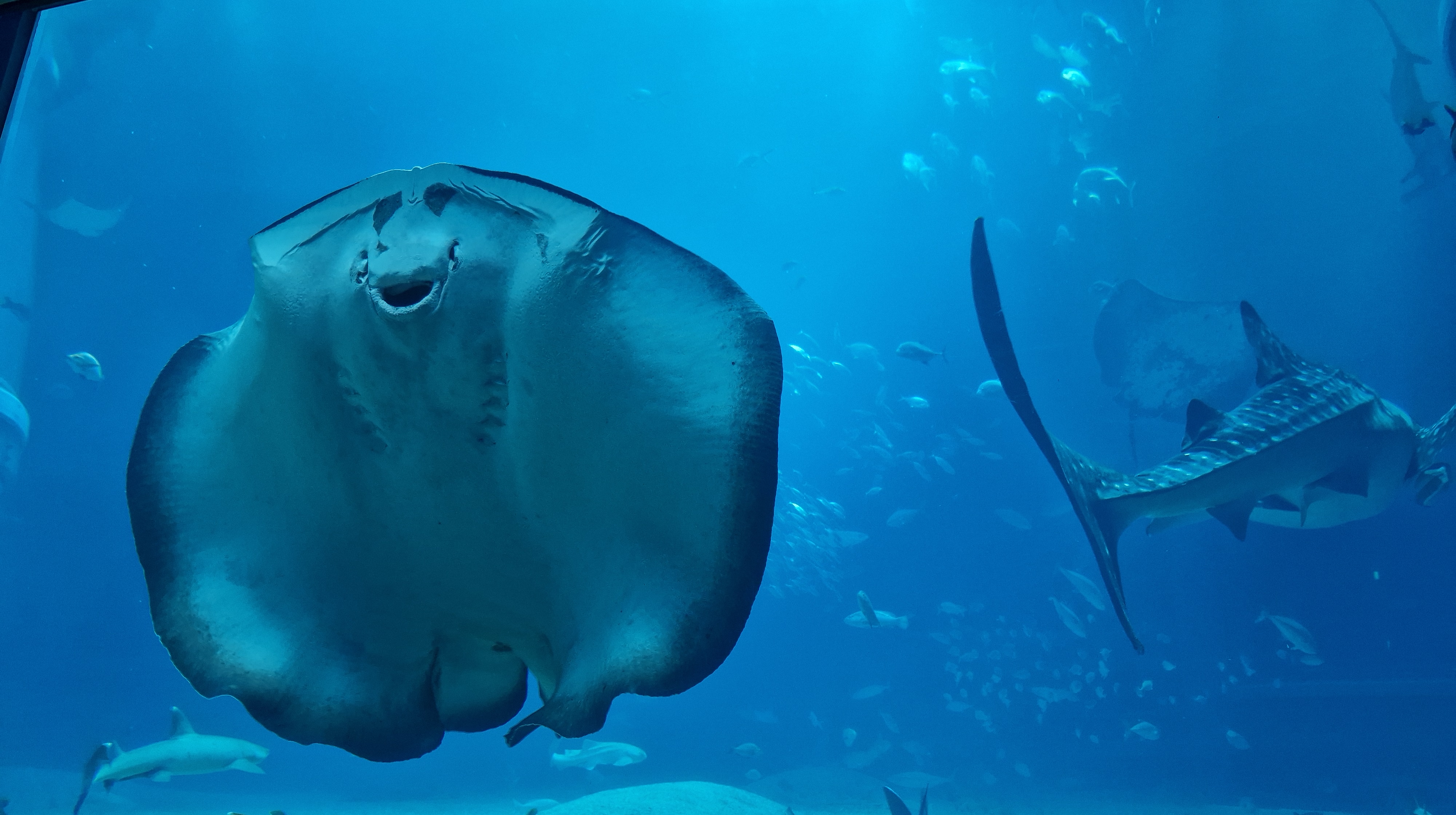
Other exhibits that were interesting were the crabs and jellyfish.
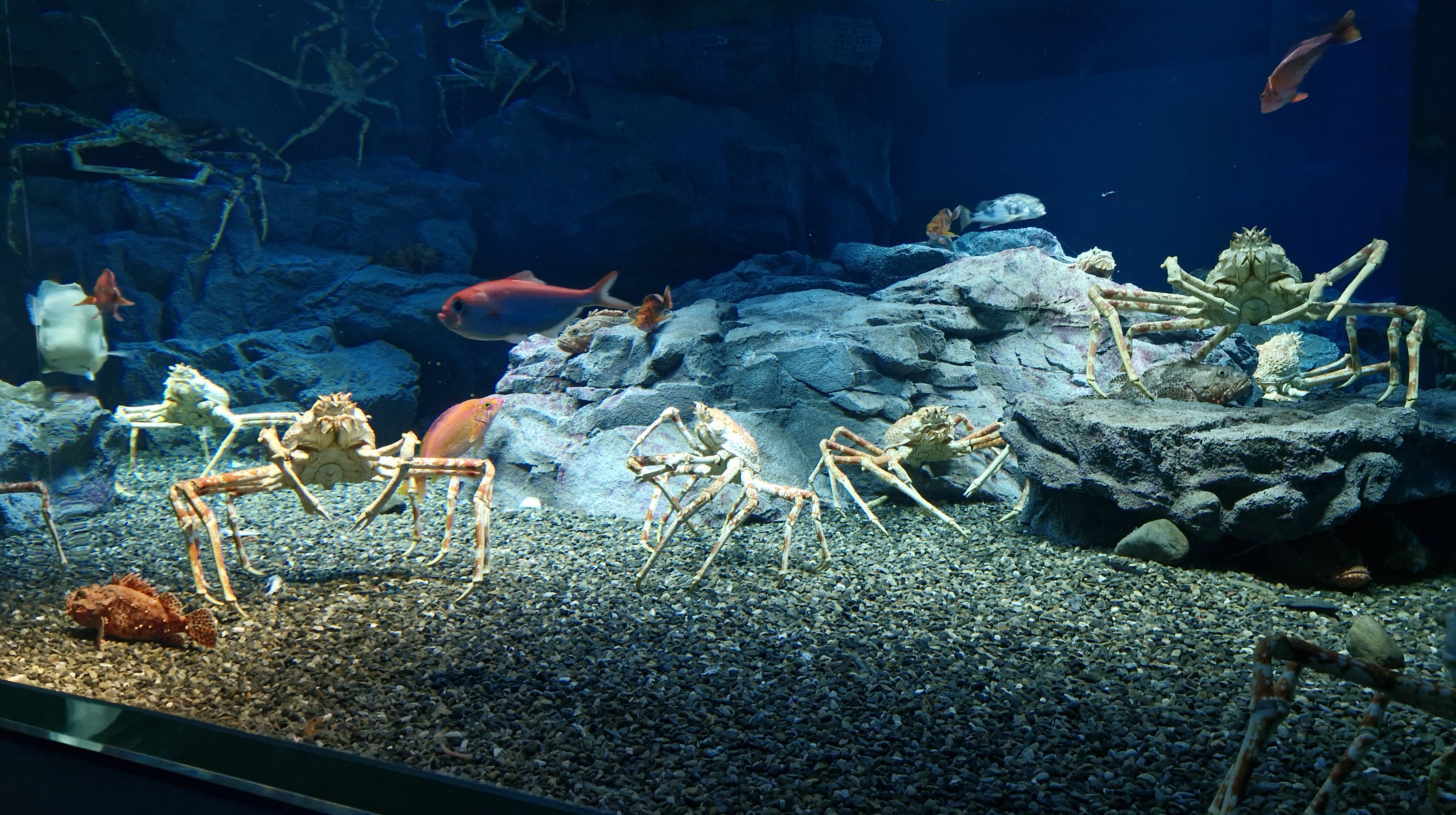
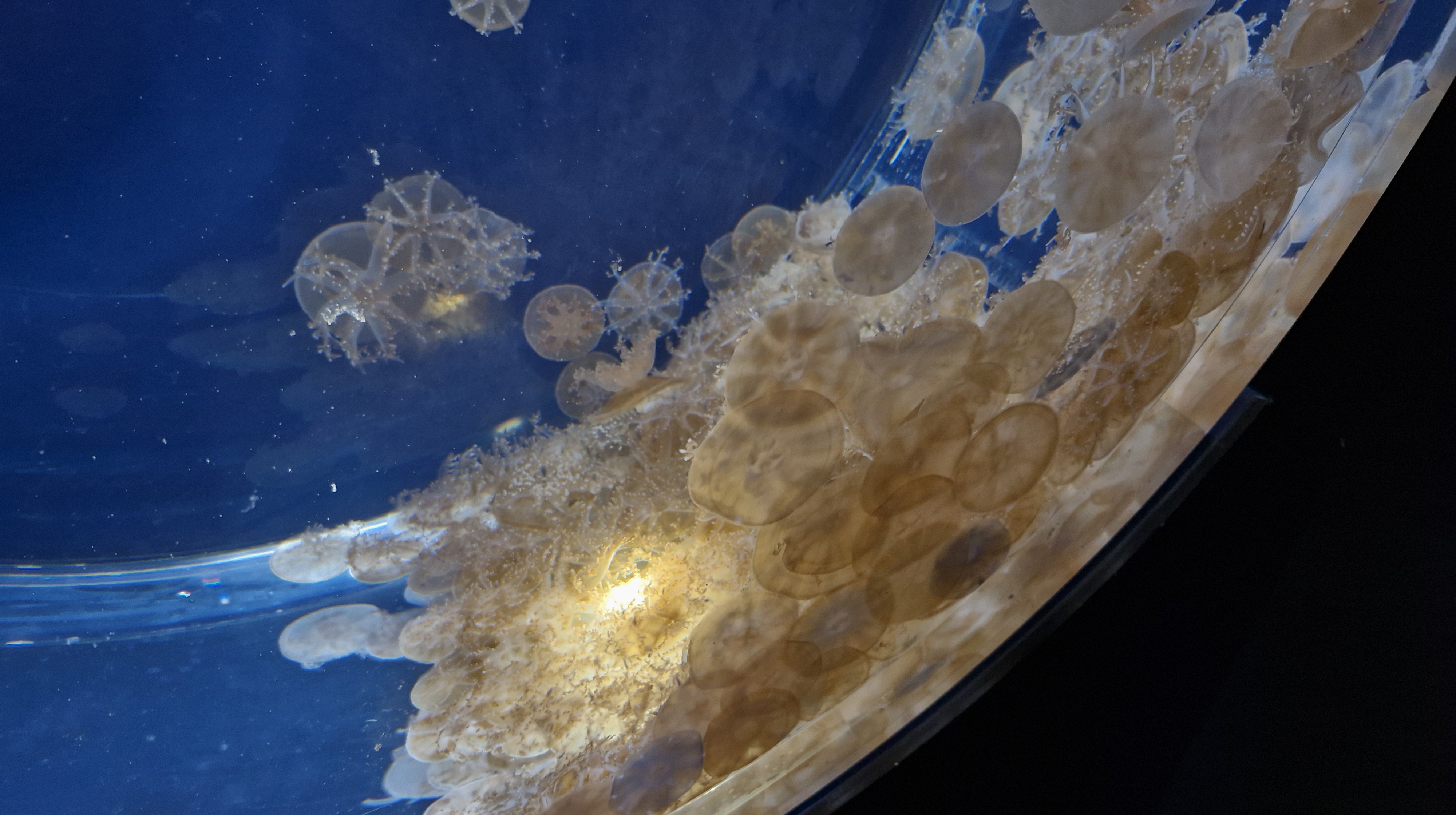

The part that I didn’t like was the area for the sea lions. Seeing them from below in the water was cool, but when I saw the above-water area for them, I thought it looked too small, even for just two sea lions.

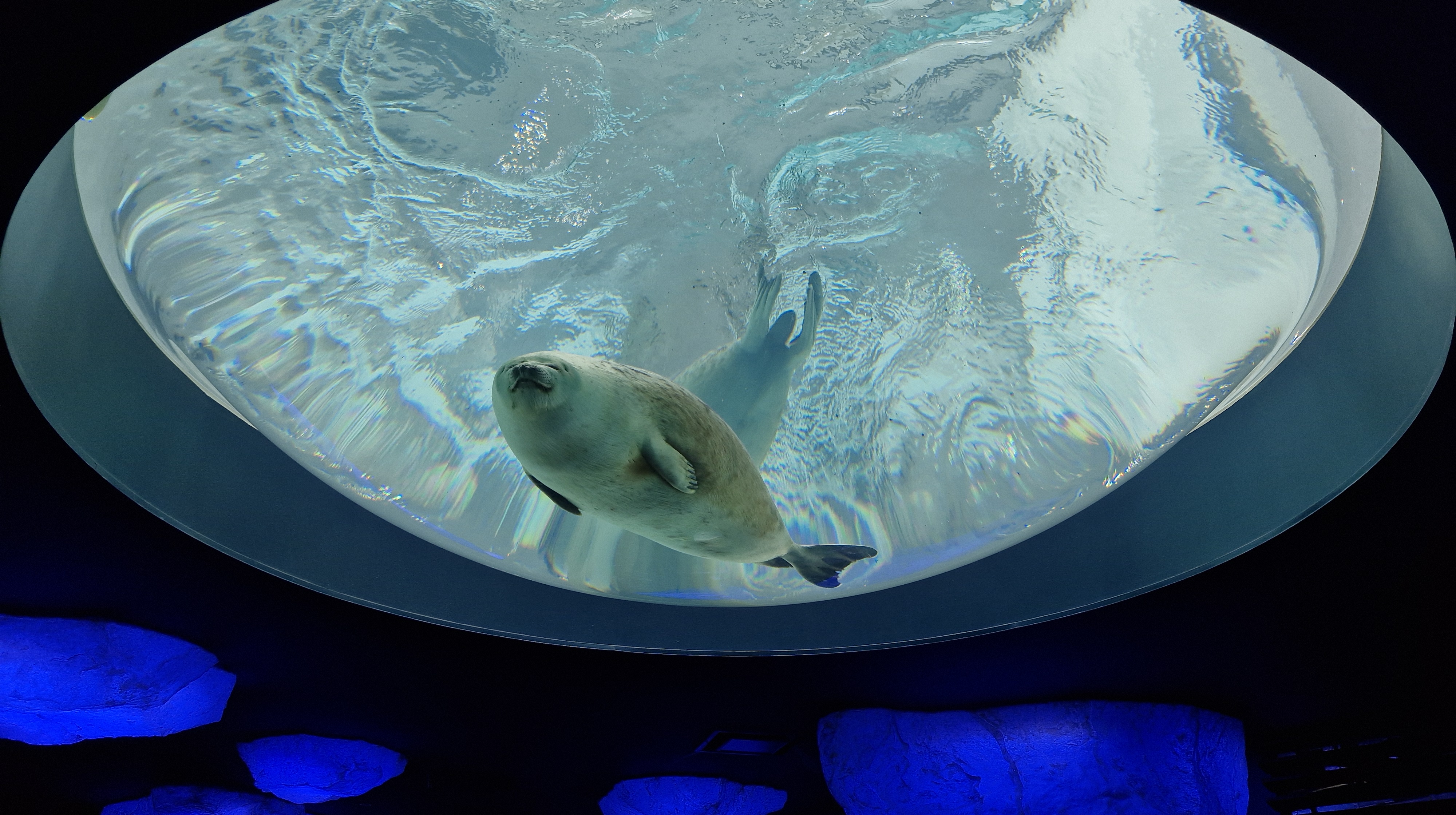
When the evening time came, I thought I owed it to myself to go out and see one of the areas here known for food, called Dotonbori. Unfortunately, this is when the rain decided to return, along with the wind. I checked my phone for the temperature, and it said 6 Celsius (43 Fahrenheit). I didn’t stay there long before realizing this just wasn’t going to be a good experience. I’m glad I didn’t sign up for the walking food tour that I had considered before coming to Osaka. Then again, even if I had, it might have been cancelled anyway.
I’m ashamed to say that although I did end up eating some famous food from here (okonomiyaki and takoyaki), I did so via ordering on Uber Eats (hangs head in shame). It’s not that I didn’t try to go out, but the weather was so cold and uninviting. The one time I did go out to eat at an okonomiyaki restaurant, there was a sign outside of it saying “Sorry, we are full” in English.

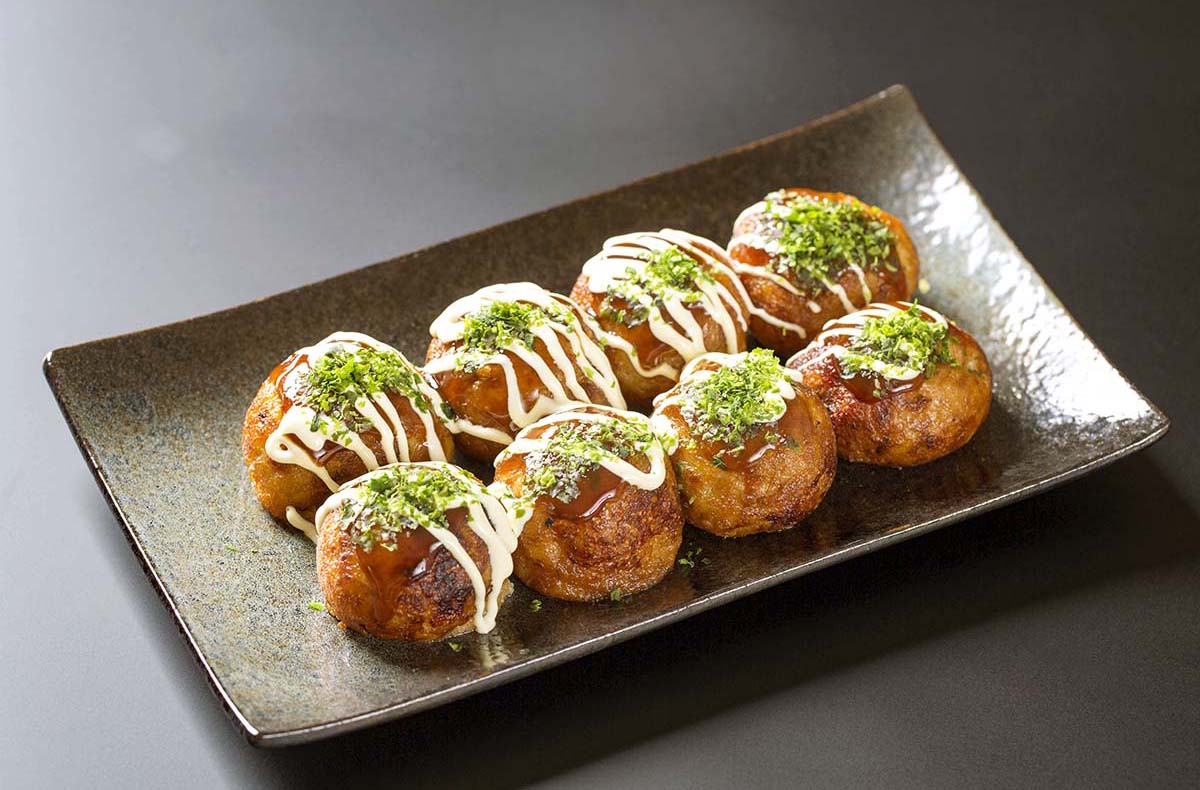
Takoyaki are ball-shaped dumplings that are grilled and filled with octopus, ginger, spring onions and tempura crumbs.
I may not have eaten them at a street stall or restaurant, but at least I consumed them.
Day 4: Iga-Ryu Ninja Museum
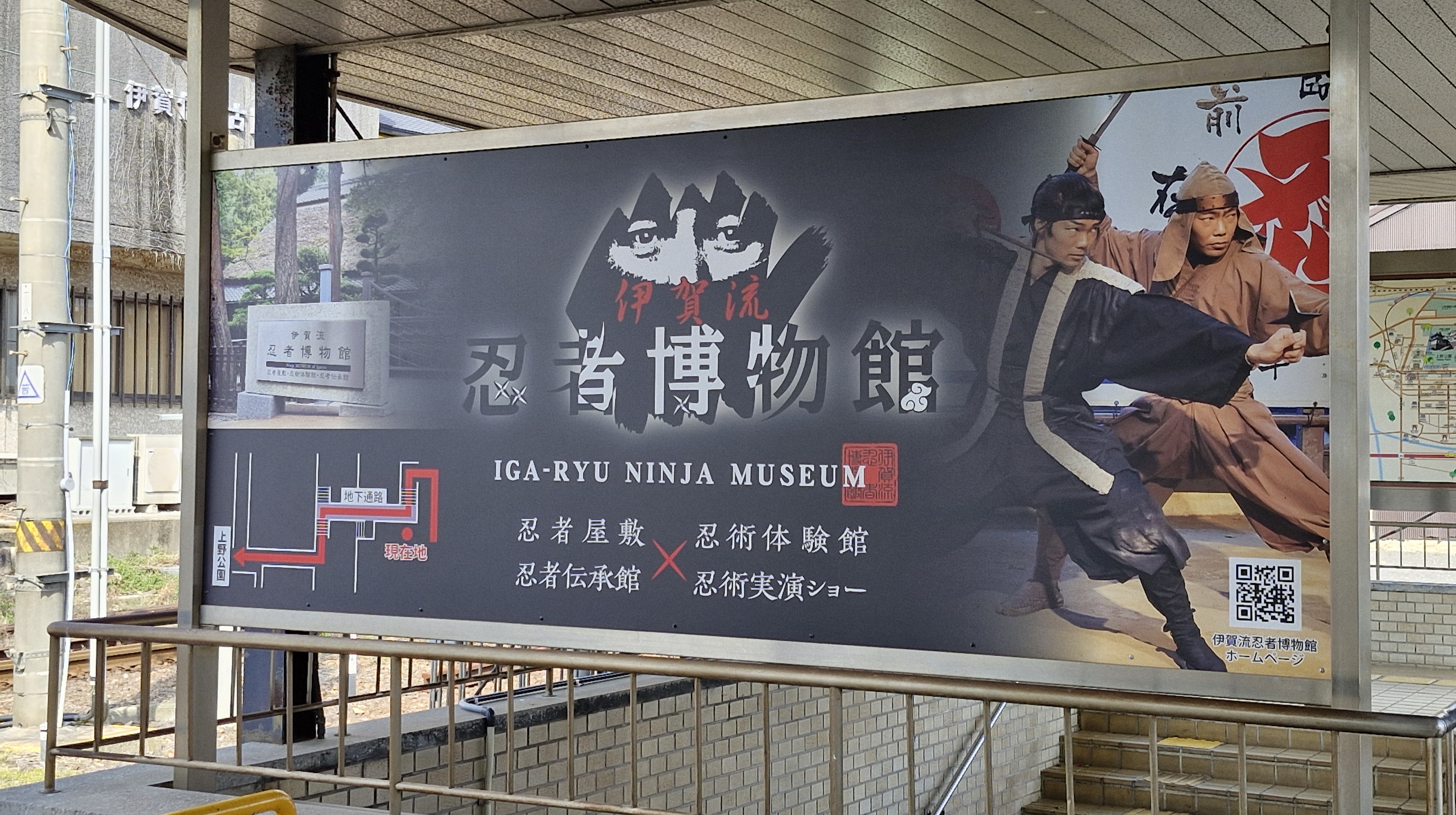
I had been debating whether to go far out of my way to visit here while on my way back to Tokyo. Ultimately, I decided that I should. It ended up being just OK, certainly not worth my huffing and puffing while pushing my small suitcase as fast as possible so as not to miss the 1:00 pm performance (I just made it in time).
I thought it would be interesting to see a museum all about ninjas and their ninjutsu methods. It’s fascinating how these ninjas were highly trained and often hired as espionage agents to gather information and assassinate enemies. In the museum pamphlet, it mentions that the art of ninjutsu is really about stealth and using intellectual solutions to combat. I didn’t know that Ninjutsu has different areas of study, including divination, psychology, and parapsychology, to fight enemies, as well as using astrology and medical horticulture to improve their standards of living. Among the schools that trained in ninjutsu, two that were considered the best were located in Iga-Ryu and in Koka-Ryu.
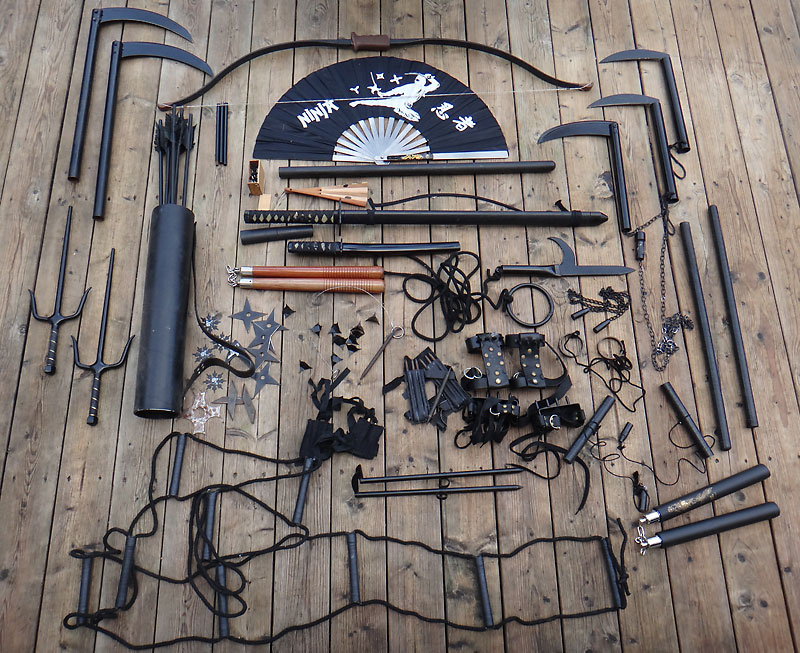
Some of the classic weapons that were used included shuriken (what we know as ninja stars), katanas (swords), kusarigama (a sophisticated weapon using a sickle attached to a metal weight by a chain), kunai (multi-purpose tools that resembled daggers), and fukiya (a blow gun with metal darts).
The performers said to not take any photos or video (the first bummer), and the fighting sequences were kid-friendly, which disappointed me some. The show was definitely tailored more for kids, including using cartoonish sound effects, as well as having the female ninja do a “kawaii” (cute) peace pose after each fight.
The most interesting part was when they showcased some of the traditional weapons used. This included throwing metal stars and darts at a board from far away. The performance also didn’t last too long, maybe 15-20 minutes.
I enjoyed reading about how highly trained and specialized ninjas had to be. This included special forms of communication via leaving tied knots from trees and using different sounding rice shakers, inflicting wounds on themselves in order to remember extremely important information that couldn’t risk being written down, how to tell if there is water nearby, and even knowing how to tell the weather forecast for the next day.
Overall, it was just an OK experience, but not worth going that far out of my way just to see it.
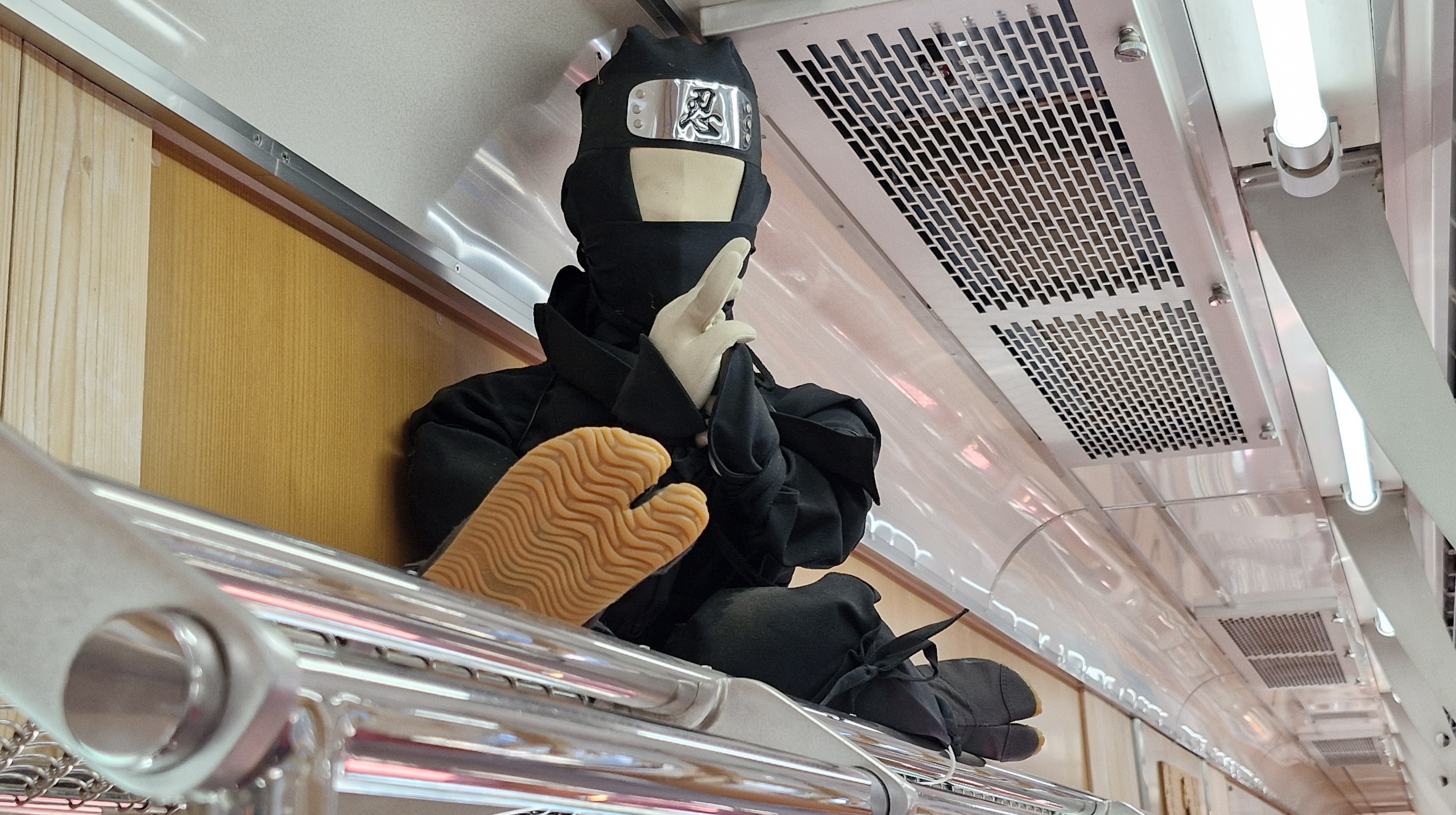
The most stressful part of the trip was trying to get to Nagoya to take the shinkansen back to Tokyo. If I had just left directly from Osaka, it would have taken just under two and a half hours. I traveled two hours outside of Osaka to Iga, and I missed several trains from my confusion about limited express rides requiring a special ticket. I ended up spending about five and a half hours in total trying to get back! It didn’t help that I hadn’t eaten much since breakfast (I didn’t want to risk spending even more money on overpriced food in touristy areas). Even when using Google Maps, travel can still sometimes be confusing and stressful.
While I’m happy that I did this trip, I think I will be set for a while before planning another one.


Your photography is outstanding. I especially appreciate the photo of tree roots at a temple, and photos of the aquarium.
Makes me homesick for Japan, and we were only there for 3.5 weeks (or so)!
I appreciate you enjoying the content 🙂
Sent from my iPhone
Hi Greg, WOW you are having an educated, illustrated and very interesting time. I always learn from your writings.🤗I still think you should do a side job for National Geographic
Thank you 🙂 I guess that’s up to National Geographic to determine.